SEO Strategy Guide for Creative and Graphic Design Studios
How Can Graphic Design Studios Make Their Work Easier to Find?
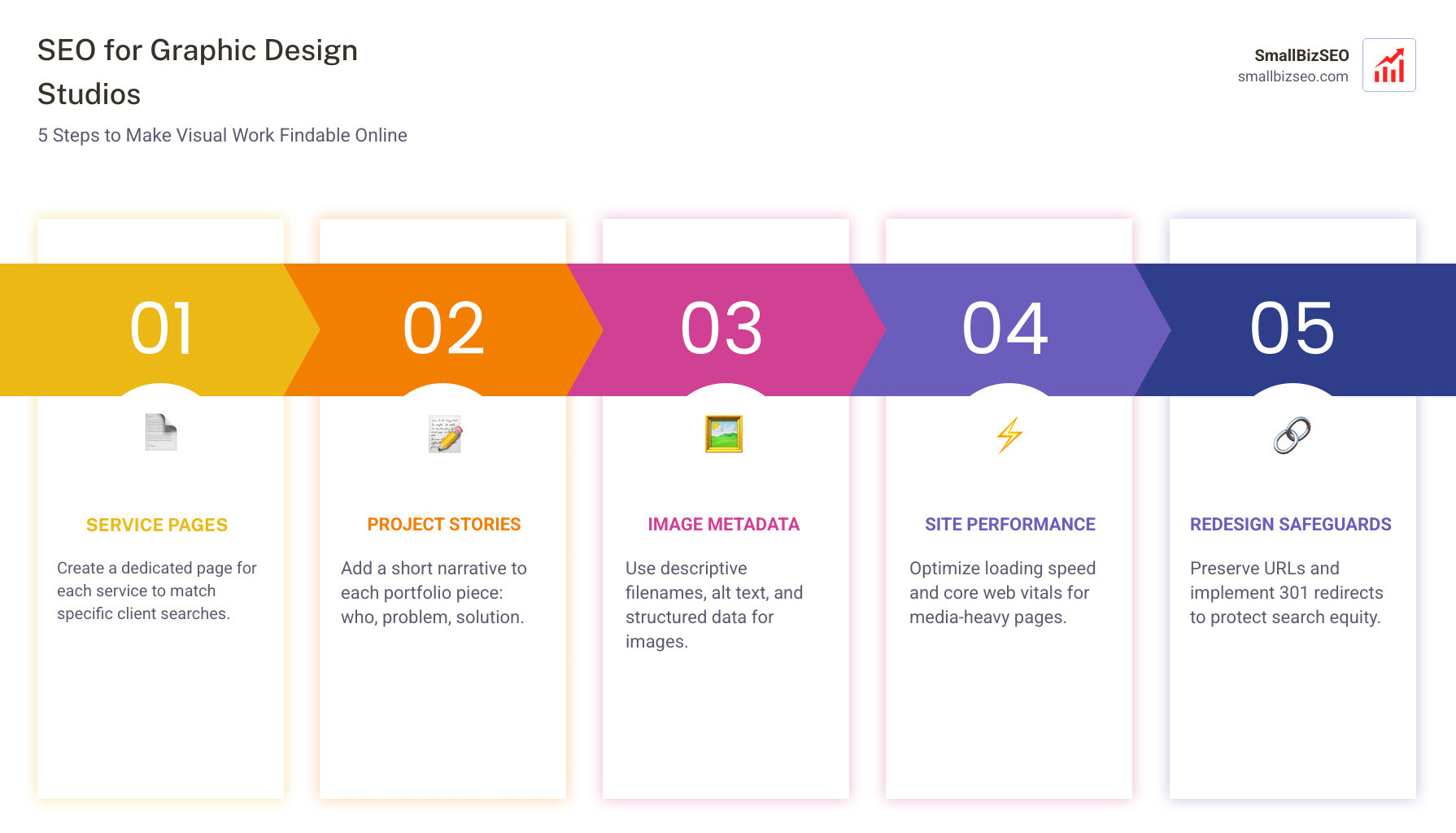
SEO for graphic design studios starts with making visual work understandable to search engines and useful to potential clients. Give each service its own clear page. Add a short, specific story to each portfolio project: who it helped, what problem you solved, and what you created. Use descriptive page titles, image alt text, and internal links. Then check that the site loads quickly and that old URLs still work after a redesign.
A beautiful portfolio can show your skill in seconds. But if its pages contain little text, search engines have less context for matching that work to a client’s search. The goal is not to cover your designs with copy. It is to give each project enough context to be found.
I’m Clayton Johnson, founder of SmallBizSEO. My work in content strategy, technical SEO, and search visibility shapes this guide to SEO for graphic design studios: make your expertise clear without losing what makes your work compelling.
What Are the Hidden Search Bottlenecks in Creative Portfolios?
SEO for creative studios helps search engines understand and show portfolio work to potential clients; visual projects need clear text, descriptive metadata, and crawlable pages. Search crawlers cannot look at an unlabelled graphic and understand the brand strategy behind it.
Many creative studios build websites that act like art galleries. They feature full-bleed imagery, interactive horizontal scrolling, and custom typography. However, search engines index text, document structure, and code relationships. When a portfolio entry consists only of high-resolution images placed inside an unindexed JavaScript lightbox, search engines see an empty container.
This visual-to-text gap leads to three primary indexing failures:
- Search bots crawl past text-free case studies without registering topic relevance.
- Client searches for specific design capabilities go unmatched because the page lacks written context.
- Heavy uncompressed image files slow down page delivery, leading to crawl abandonment and lower rankings.
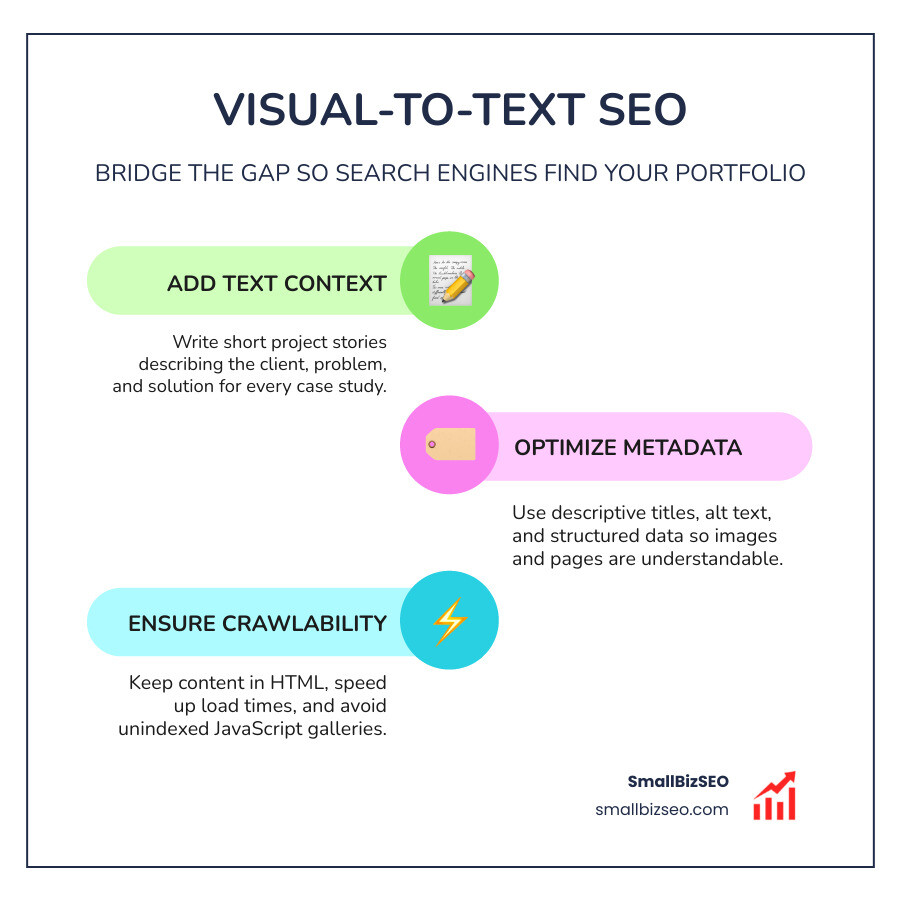
To solve these bottlenecks, we bridge visual craft with a readable semantic text layer underneath.
What Are the Three Core Pillars of SEO for Graphic Design Studios?
Effective studio SEO connects specific services to what prospective clients search for, makes portfolio work understandable to search engines, and builds trust with useful evidence. It organizes your expertise into structured landing pages, contextual case study narratives, and accessible media assets. Reviewing standard guidelines like the Image SEO Best Practices from Google Search Central helps ensure visual files reinforce crawlable text.
| Search Query Type | Example Query | Intent & Conversion Potential |
|---|---|---|
| Generic Vanity Keyword | "graphic design" | Low conversion; highly competitive informational traffic |
| Broad Agency Search | "branding agency" | Moderate competition; generic inquiries with varying budgets |
| Vertical Commercial Query | "brand identity designer for startups" | High conversion; qualified buyers with clear project needs |
| Specialized Technical Query | "packaging design studio for beverage brands" | Highest conversion; specific intent matched to distinct expertise |
Why Is Vertical Keyword Specialization Essential in SEO for Graphic Design Studios?
Broad search terms like "graphic design" attract huge search volume, but they rarely generate qualified client leads. A long-tail search query such as "brand identity designer for startups" or "packaging design for specialty food" signals an active buyer with an allocated budget.
Targeting capability-plus-industry terms prevents wasted clicks. In our B2B SEO playbook for companies tired of irrelevant clicks, we explain how vertical landing pages filter out job seekers and students while capturing decision-makers.
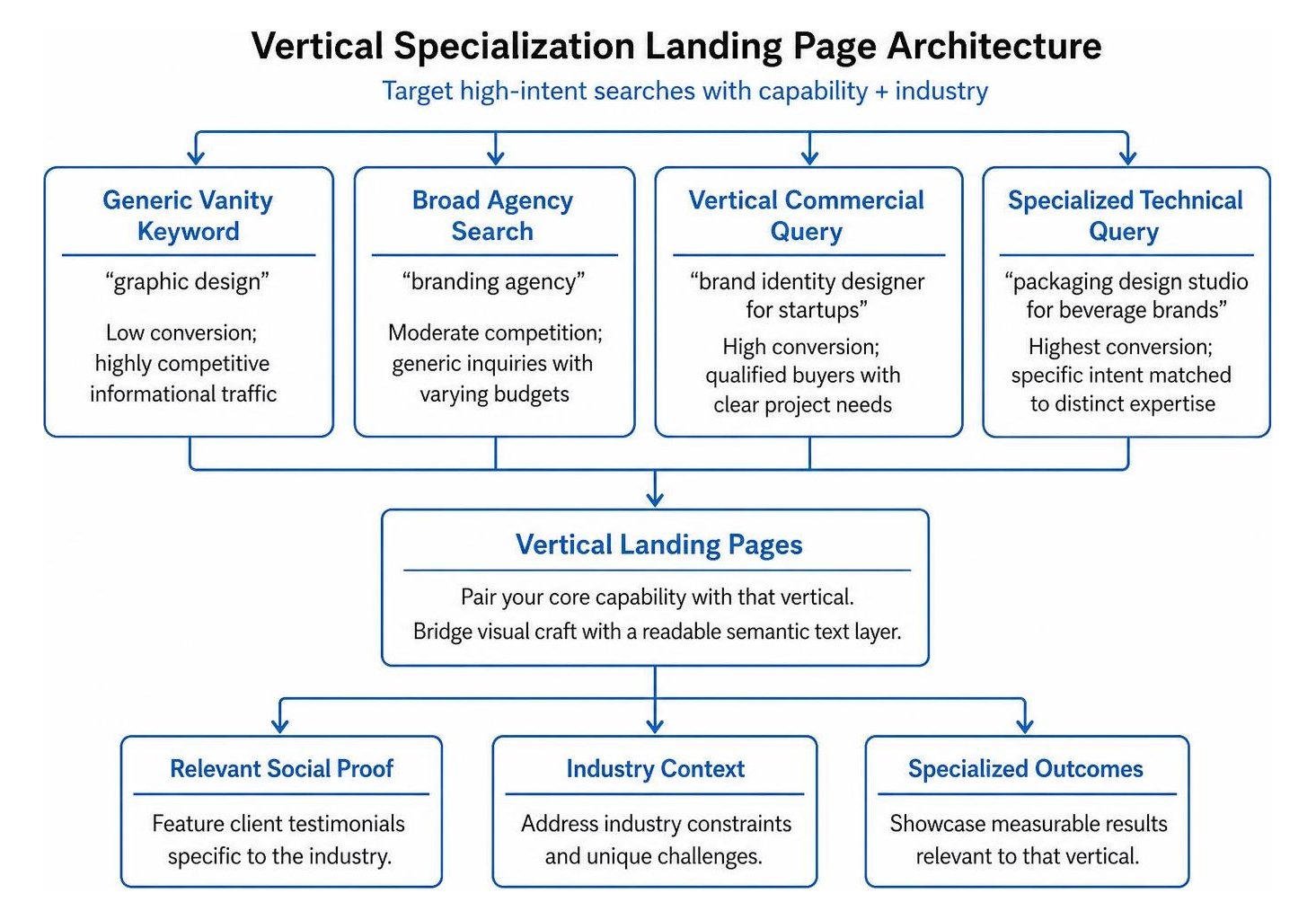
To structure specialized landing pages:
- Identify your most profitable client industries (such as tech, healthcare, or hospitality).
- Create dedicated service pages that pair your core capability with that vertical.
- Feature relevant client testimonials, industry constraints, and specialized outcomes on each page.
How Do You Optimize Case Studies and NDAs in SEO for Graphic Design Studios?
A successful case study balances imagery with a concise 200 to 600-word written story. Implementing our portfolio SEO blueprint for creatives seeking consistent freelance work gives search bots the narrative context required to index your creative solutions.
Each case study should follow a clear structure:
- The Challenge: The client's initial market position, industry hurdles, and business goals.
- The Strategic Solution: The reasoning behind typography, color theory, layout systems, and visual identity choices.
- The Deliverables: The complete list of assets produced (e.g., design systems, packaging suites, style guides).
- The Outcome: The measurable business impact, such as increased conversions or brand recognition.
When strict non-disclosure agreements (NDAs) prevent you from naming a client, use thought leadership and anonymized problem-solving breakdowns. Describe the project as "Visual Identity System for an Enterprise Fintech Platform" rather than omitting the work entirely. Pairing anonymized project breakdowns with actionable advice aligns with small business content strategies that drive real inbound inquiries.
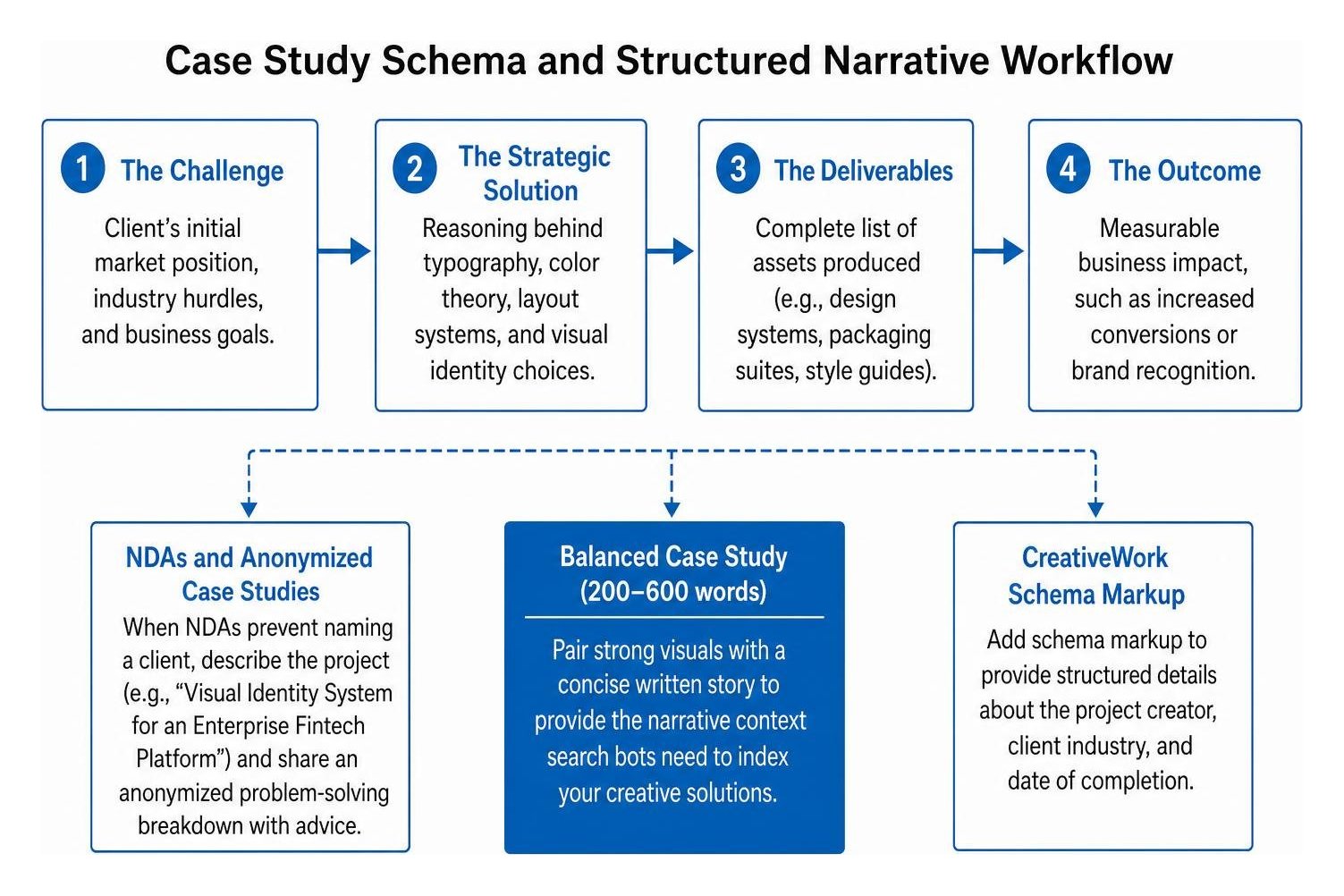
Add CreativeWork schema markup to provide structured details about the project creator, client industry, and date of completion.
How Do You Optimize Visual Media and Metadata for Google Image Search and AI Citations?
Image search and AI answer engines rely on text labels, contextual copy, and structured schema to interpret visual media.
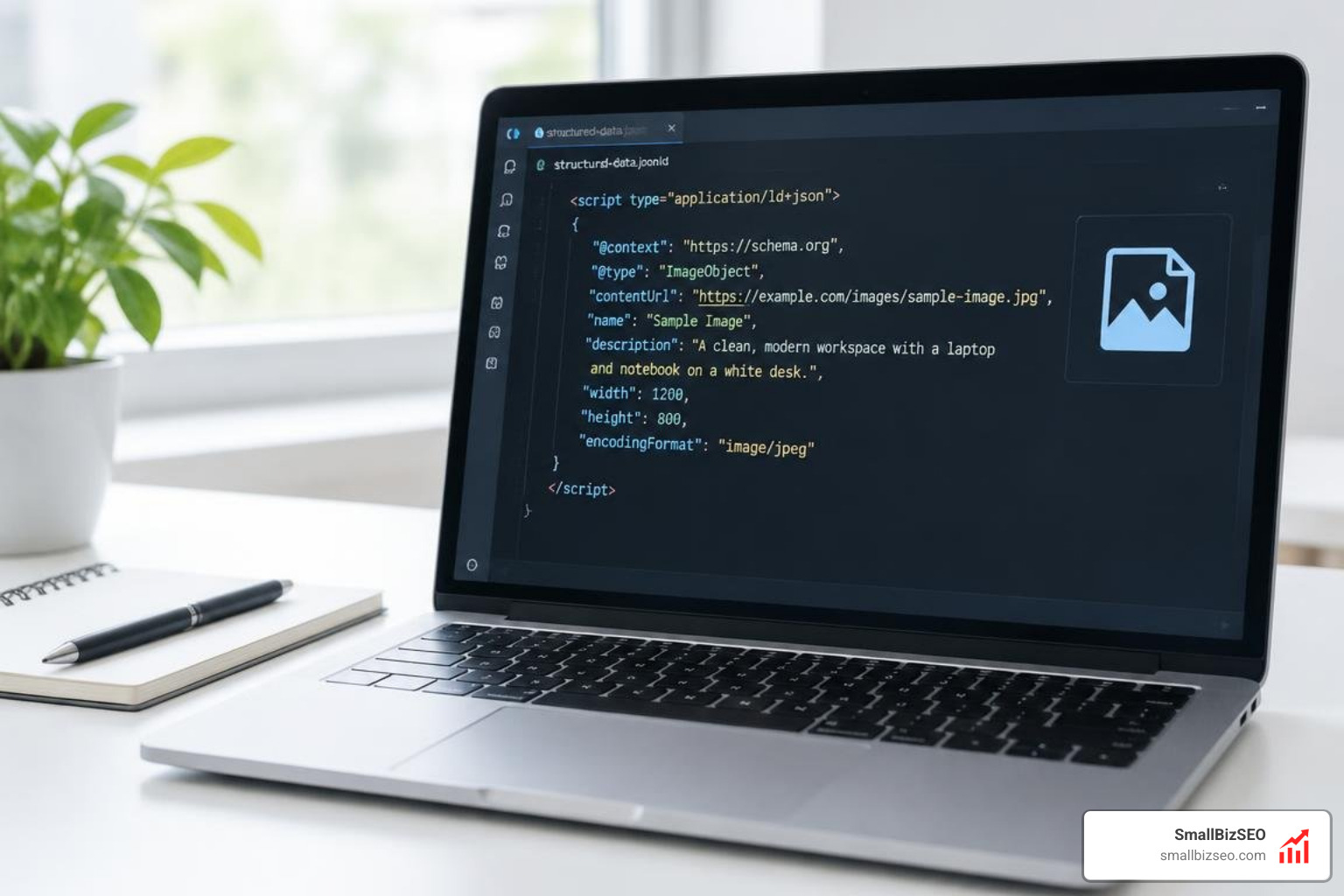
Follow these steps to optimize every visual asset:
- Descriptive Filenames: Rename generic camera exports like
IMG_0042.jpgto keyword-descriptive names such assustainable-cosmetics-packaging-system.webp. - Concise Alt Text: Write accurate alt text describing the image content and design medium for accessibility and indexing.
- Next-Gen Formatting: Compress imagery into modern WebP or AVIF formats to maintain crisp resolution at low file sizes, as detailed in our guide on visual content optimization.
- Structured Data: Implement
ImageObjectschema so search engines can read the author, license, and subject matter directly.
These structured data signals also power modern discovery through answer engine optimization for designers. Furthermore, maintaining complete profiles on design platforms like Behance, Dribbble, and Awwwards earns authoritative editorial links back to your primary site, which strengthens your overall domain authority.
How Can Technical SEO, Redesign Protection, and Better Measurement Help Studio Traffic?
Studios can protect and grow search traffic by keeping pages crawlable, preserving URLs during redesigns, and tracking which visits lead to qualified inquiries. A high-performing portfolio requires clean technical infrastructure to ensure search engines index assets without performance bottlenecks.

Partnering with an experienced web design SEO company helps studios maintain fast Core Web Vitals while preserving creative design aesthetics.
What Technical SEO and Core Web Vitals Fixes Prevent Visual Asset Bloat?
Heavy visual assets often degrade Google's Core Web Vitals, specifically Largest Contentful Paint (LCP) and Cumulative Layout Shift (CLS). Google targets an LCP under 2.5 seconds, but agency sites with autoplaying background videos often take twice as long to load.
To resolve these technical speed bottlenecks:
- Replace heavy hero background videos with static, compressed hero images paired with CSS-based micro-interactions.
- Set explicit
widthandheightattributes on all image and video tags to prevent layout shifts during page rendering. - Lazy-load portfolio imagery below the fold so browsers only load images as the visitor scrolls down.
- Use a global Content Delivery Network (CDN) to serve cached media assets rapidly from edge servers.
How Can Studios Avoid the Redesign Trap and Protect Search Equity?
Design studios frequently update their websites every few years. However, launching a redesign without mapping old URLs to new ones can eliminate accumulated search rankings overnight.
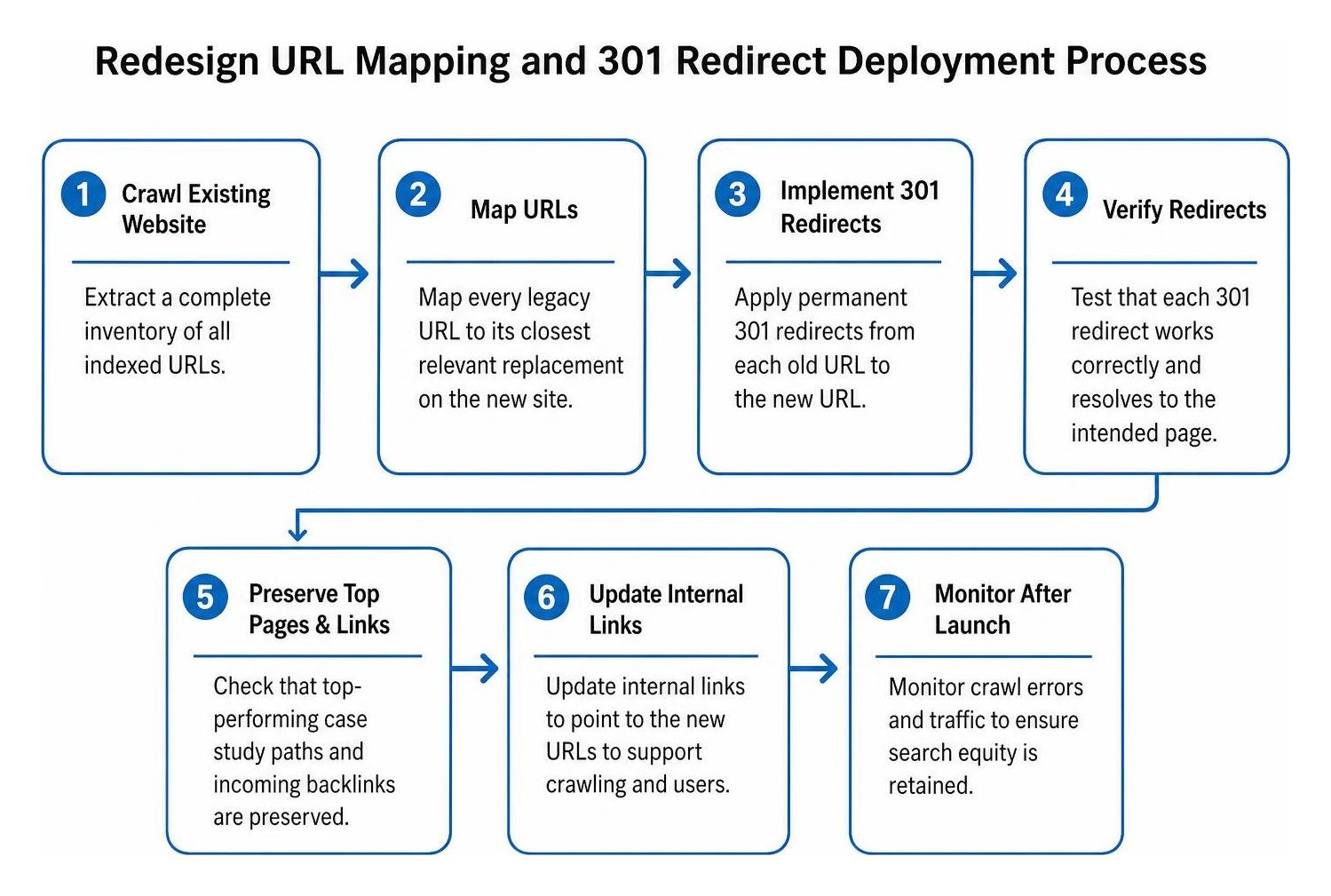
Follow this redirect checklist before launching a new studio site:
- Crawl your existing website to extract a complete inventory of all indexed URLs.
- Map every legacy URL to its closest relevant replacement on the new site using permanent 301 redirects.
- Check that top-performing case study paths and incoming backlinks are preserved.
- Test all redirect paths on a staging server to eliminate redirect chains or 404 errors.
- Submit the updated XML sitemap in Google Search Console immediately following deployment and monitor indexation status.
How Should Creative Studios Measure Pipeline Value and Adapt to Search Trends?
Traffic volume alone does not determine search success; lead quality and pipeline revenue do. Track user conversions by setting up Google Analytics 4 custom events for contact form submissions, email link clicks, and proposal requests.
Evaluate your search footprint regularly by running an SEO visibility audit by SmallBizSEO to identify technical crawl errors and emerging keyword opportunities. Review quarterly search trends to incorporate evolving industry terms—such as new design tools, AI-assisted workflows, and design system frameworks—into your ongoing service content.
Turn Your Studio Portfolio into an Inbound Growth Engine
A graphic design website does not have to choose between visual elegance and organic search discoverability. By building a clear text layer across your portfolio, targeting specialized industry verticals, and maintaining clean technical performance, you can ensure your creative work is found by the clients who value it most.
At SmallBizSEO, we provide technical SEO, content strategy, and link-building services built on our data-driven Velocity framework to deliver fast rankings and transparent, measurable growth. If you are ready to make your design studio visible to high-value clients, explore our strategic SEO solutions and turn your portfolio into a consistent source of inbound inquiries.