Portfolio SEO Blueprint for Creatives Seeking Consistent Freelance Work

How Can SEO for Portfolio Websites Help You Find More Clients?
SEO for portfolio websites helps potential clients find your work when they search for the services you offer. Start by naming your specialty on your homepage, creating a page for each strong project, and explaining the problem you solved. Then make sure those pages load quickly, work on phones, and give visitors an easy way to contact you.
Referrals may bring most of your work today. SEO gives people who have never heard of you another way to discover your skills and judge whether you are a good fit.
I’m Clayton Johnson, founder of SmallBizSEO. My work connects SEO, useful content, and clear answers to help businesses earn visibility and qualified leads; this guide applies that approach to SEO for portfolio websites.
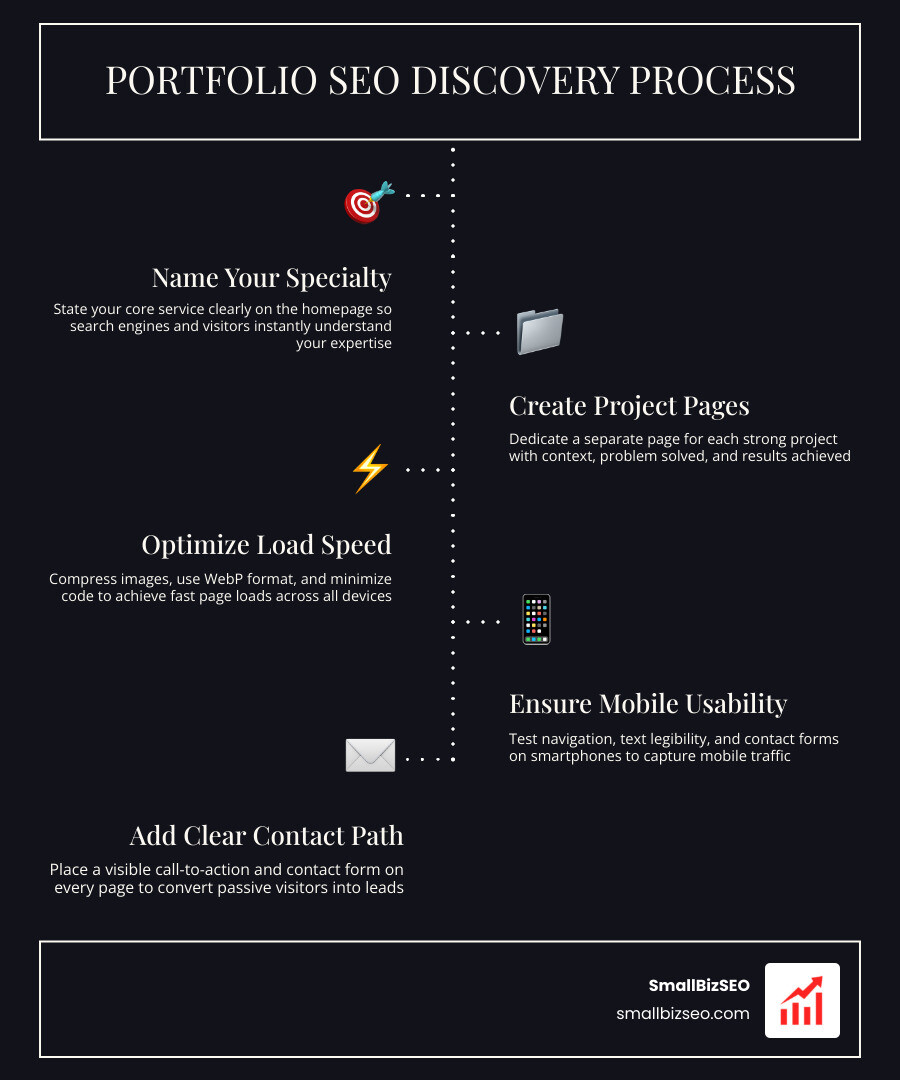
SEO for portfolio websites terms to learn:
Why Consistent Client Discovery Demands SEO for Portfolio Websites

A beautiful portfolio website without search optimization sits quietly on the internet like an unlisted phone number. When clients look for specialized talent, they turn to search engines to find proven partners. If your site lacks crawlable text, structured data, and targeted keywords, it remains invisible to high-intent buyers ready to hire.
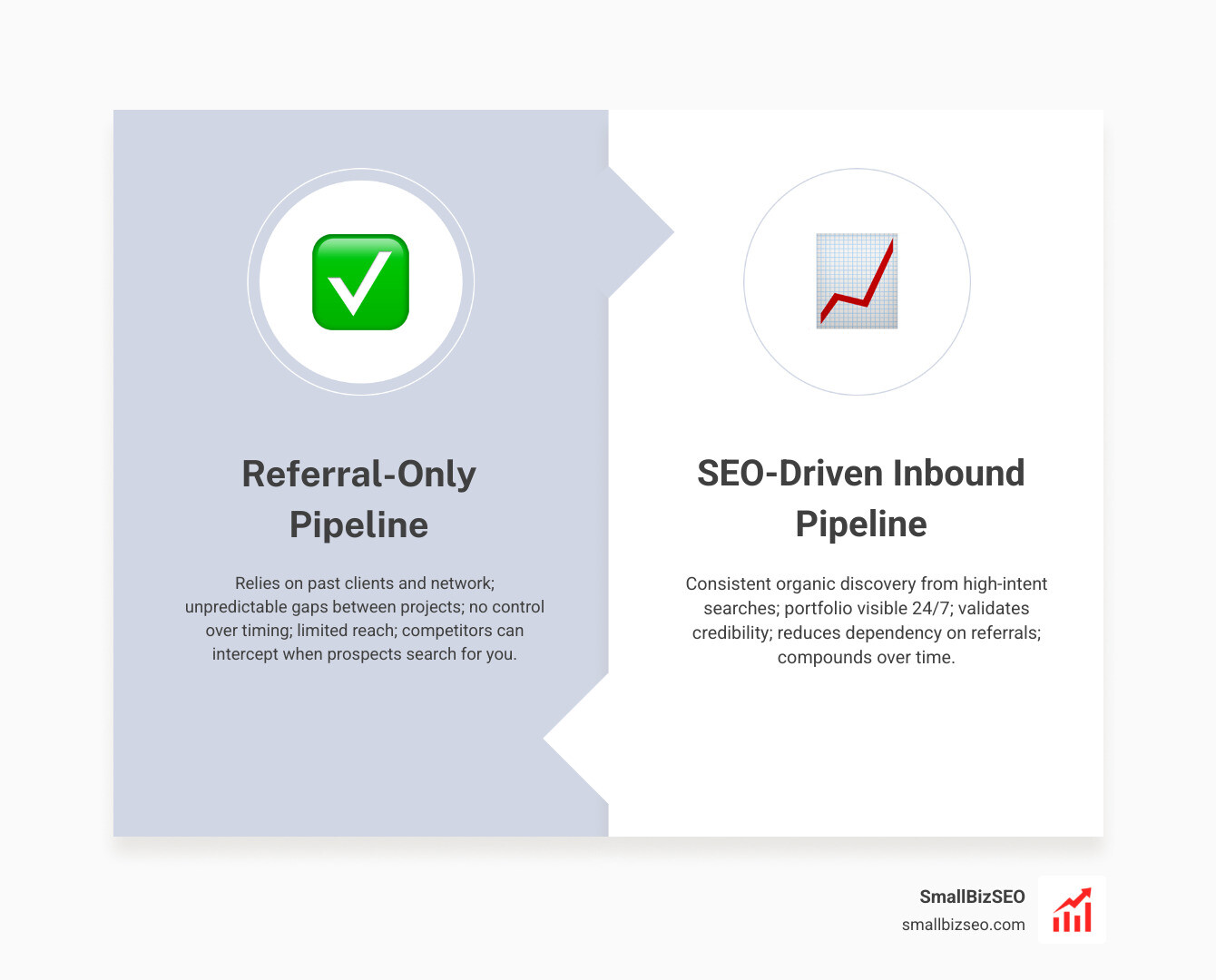
Do Freelancers Relying on Word of Mouth Need SEO for Portfolio Websites?
Yes, freelancers who rely on word of mouth still need search visibility because referrals fluctuate, leaving gaps between projects. When someone hears your name, their first instinct is to look you up online. Ranking at the top of search results validates your reputation, showcases your latest work, and protects your brand from competitors targeting your niche.
Search behavior studies show that over 96.98% of desktop clicks and 97.56% of mobile clicks go directly to results on page one. A portfolio website with no optimization often averages a search position of 36 or worse, rendering it practically invisible. A practical portfolio case study demonstrated that implementing structured improvements took a creator's site from total obscurity to consistent organic search impressions within just twelve days.
| Acquisition Channel | Pipeline Stability | Client Intent | Long-Term Compounding |
|---|---|---|---|
| Referrals Only | Unpredictable feast-or-famine cycles | Medium to High | Minimal asset value |
| SEO-Driven Inbound | Steady, continuous discovery | High transactional intent | Builds domain equity over time |
What Is Answer Engine Optimization and How Does It Help Creatives?
Answer Engine Optimization (AEO) is the practice of structuring your portfolio content so artificial intelligence assistants and search answer engines can easily read, parse, and cite your background. While traditional search indexing catalogs pages, AEO focuses on entity recognition to feed direct recommendations into platforms like ChatGPT, Claude, and Perplexity.
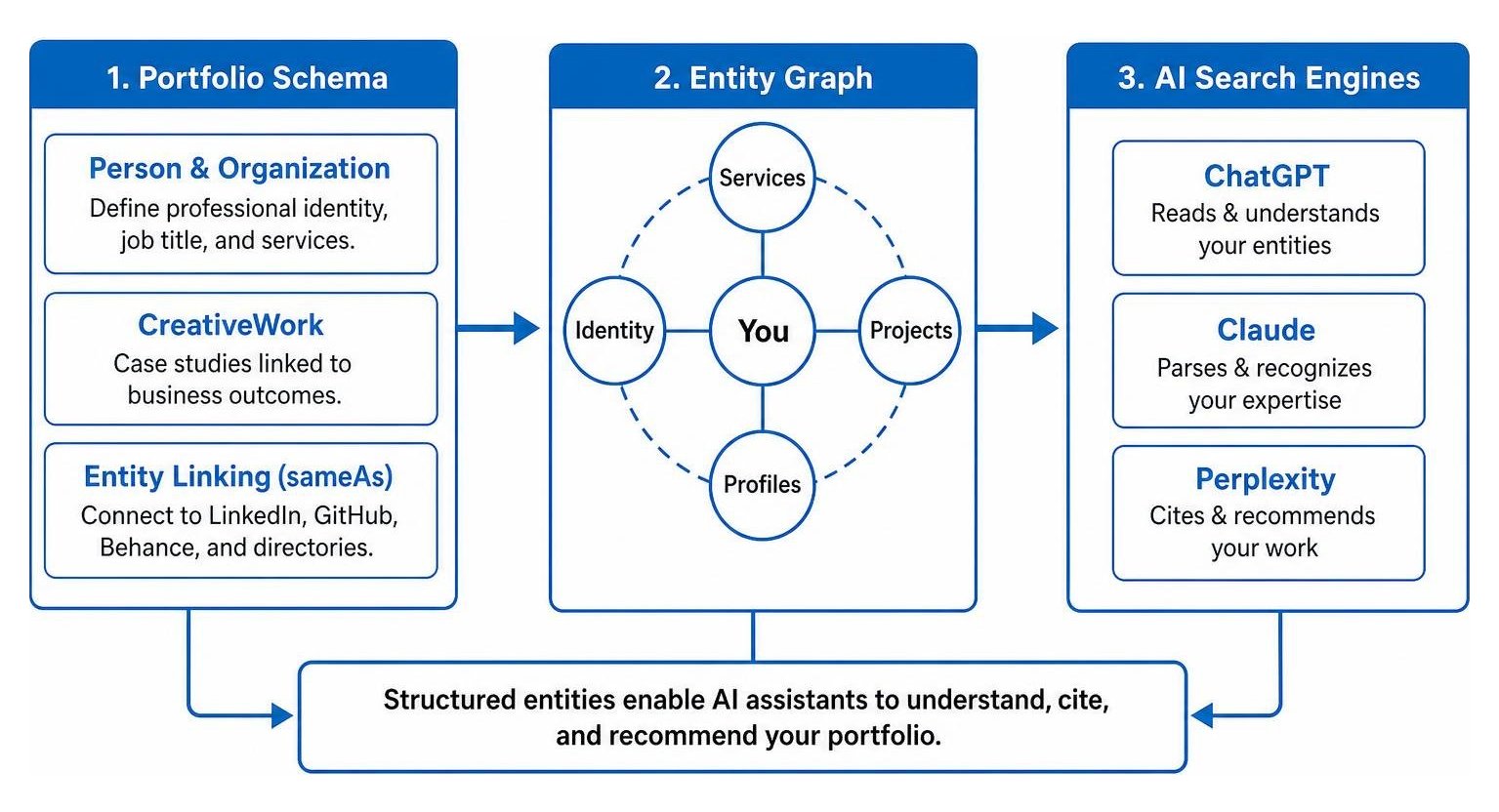
To make your portfolio answer-ready, we implement structured JSON-LD markup:
- Person and Organization Schema: Define your exact professional identity, job title, and primary service capabilities.
- CreativeWork Schema: Wrap around case studies, linking individual projects to specific business outcomes.
- Entity Linking with sameAs: Connect your personal domain to verified external profiles such as LinkedIn, GitHub, Behance, and professional directories. This establishes a recognizable identity graph across the web.
The Step-by-Step Blueprint to Optimize Your Portfolio Pages
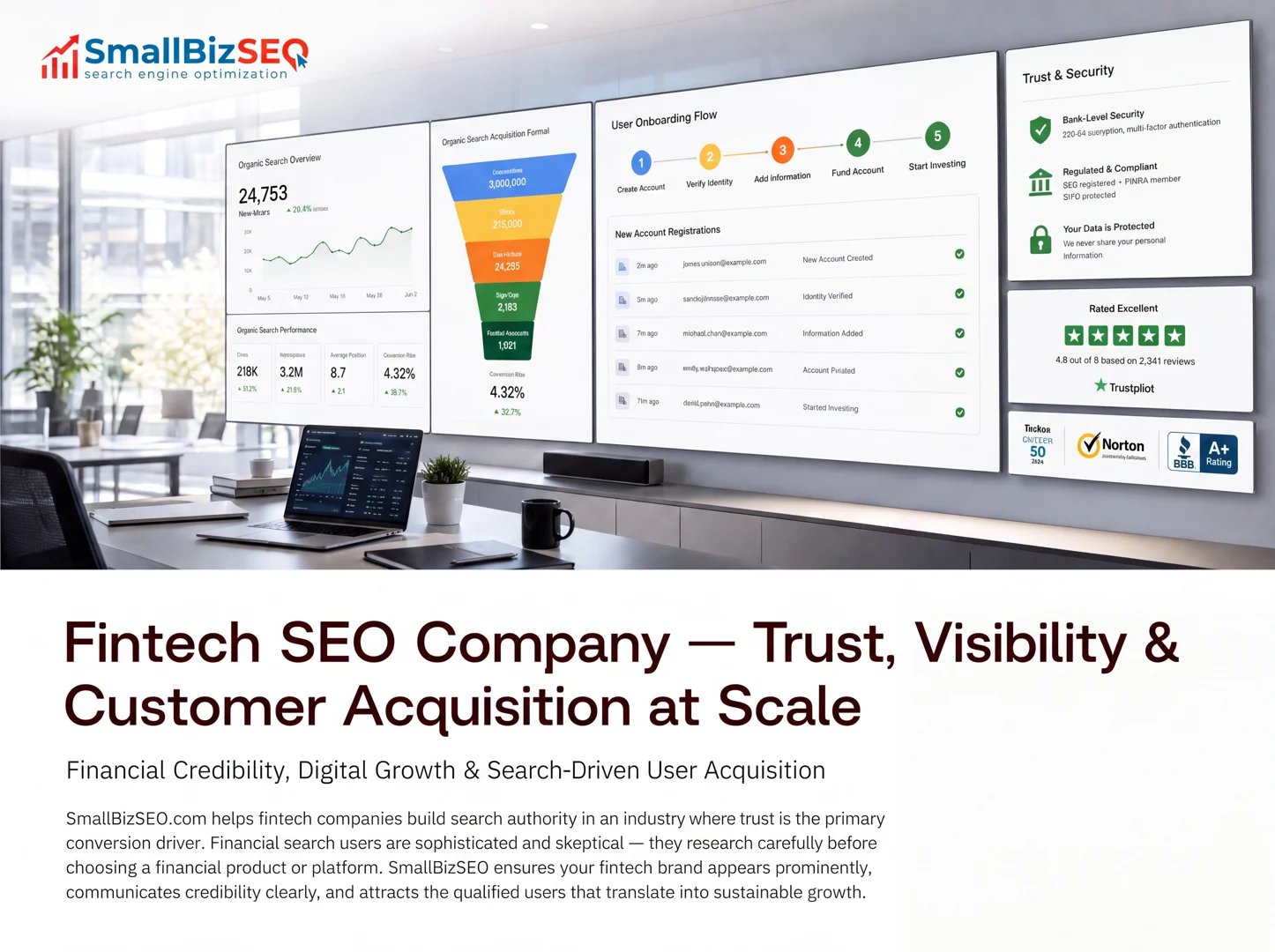
Optimizing your portfolio requires a clean balance of technical performance, intentional page hierarchy, and discoverable media assets. Following standard Image SEO Best Practices | Google Search Central ensures your creative assets bring qualified visitors to your site rather than slowing it down.
How Do You Master Keyword Strategy and Technical SEO for Portfolio Websites?
Mastering keyword strategy starts by pairing your core creative skill with your target industry vertical instead of relying on generic job titles. Rather than targeting broad terms like "freelance designer," optimize for high-intent queries such as "B2B SaaS product designer portfolio" or "ecommerce branding specialist."
To turn these keywords into rankings, apply the technical SEO wins for developer portfolios across your site:
- Semantic HTML Structure: Use clean semantic elements such as
header,main,article,section, and sequentialh1throughh3tags to give crawlers an unambiguous content outline. - Core Web Vitals Optimization: Maintain fast Largest Contentful Paint (LCP) by preloading primary web fonts and serving modern image formats.
- Smooth Interaction Responsiveness: Minimize heavy client-side JavaScript execution to ensure low Interaction to Next Paint (INP) scores on mobile devices.
- Crawl Guides: Submit a clean XML sitemap and lightweight robots file to speed up indexing.
Most creators begin seeing noticeable ranking movements within 4 to 8 weeks after resolving technical bottlenecks.
How Should You Structure Project Pages and Visual Assets for Maximum Visibility?
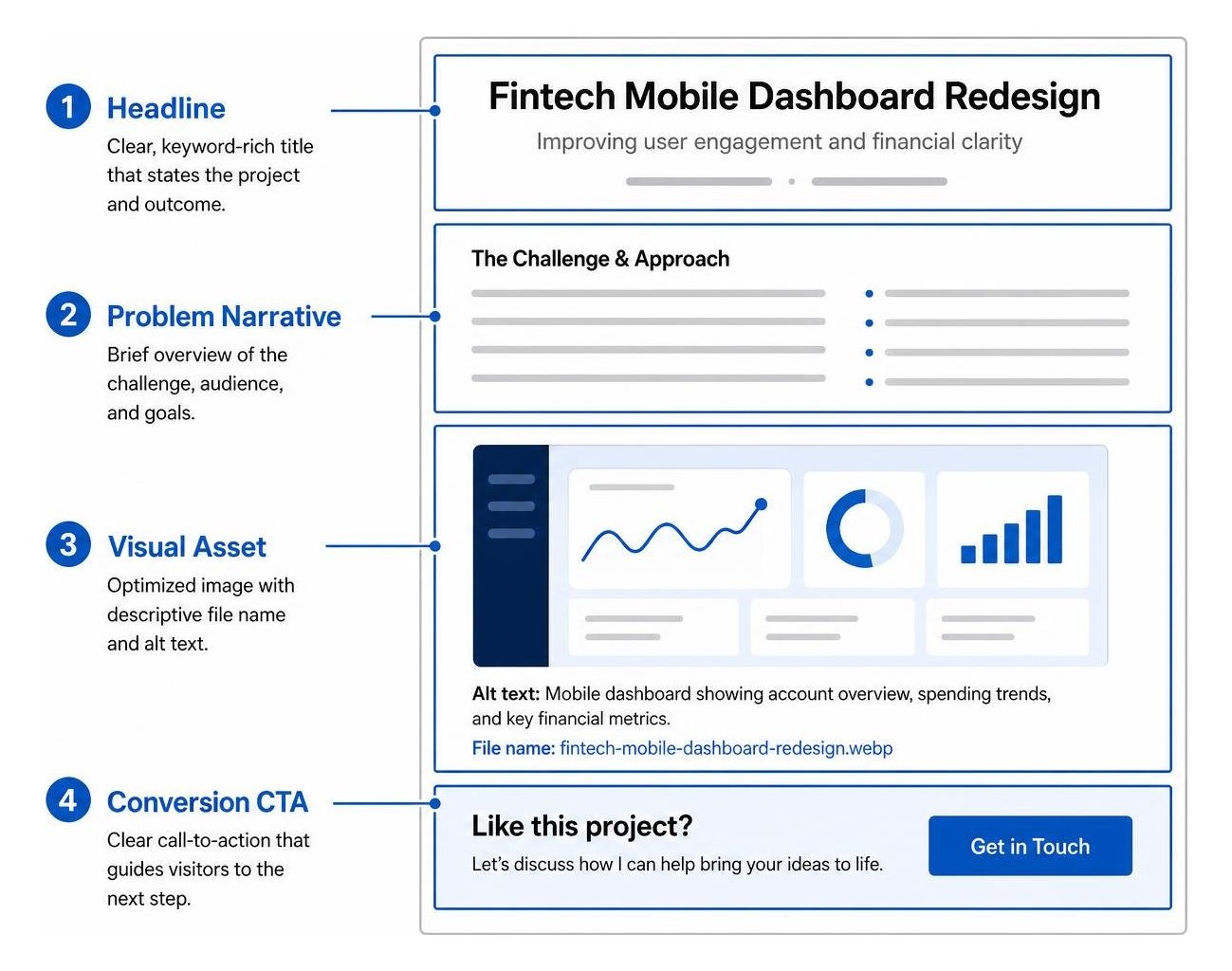
Structure every project page as an in-depth case study that pairs visual design with descriptive text. Image-only galleries prevent search engines from understanding what problems you solved, who you helped, and what tools you used.
Using proven on-page SEO techniques alongside visual content optimization strategies, we build each case study around a clear storytelling framework:
- Project Overview: State the client industry, your specific role, and project goals in the first 100 words.
- The Challenge and Approach: Write 200 to 500 words detailing your process, constraints, and creative decisions.
- Measurable Outcomes: Highlight concrete results, whether that means higher conversion rates, improved user engagement, or brand growth.
- Image File Preparation: Replace generic camera labels with hyphenated, descriptive names, such as
fintech-mobile-dashboard-redesign.webp. - Descriptive Alt Text: Add context-rich alternative text describing the visual subject and its function within the case study.
Should You Add a Blog and Local Landing Pages to Build Authority?
Adding targeted blog articles and localized service pages accelerates your domain's authority and captures clients searching in your immediate geographic area.
You do not need to publish every day. A focused cluster of three to five comprehensive articles explaining your workflow, teardowns of industry trends, or actionable client guides demonstrates clear expertise to search algorithms.
If you offer location-based services, build dedicated local landing pages matching your city and core capability. Keep your Name, Address, and Phone number (NAP) data consistent across your website footer and your Google Business Profile to win local map pack placements.
Measuring Search Performance and Avoiding Costly Portfolio Mistakes
Tracking your search performance reveals exactly what queries bring clients to your doorstep. Set up Google Search Console immediately to track query impressions, click-through rates, and index coverage.
Watch out for these common portfolio mistakes:
- Thin Content Galleries: Publishing image grids without contextual background text.
- Keyword Cannibalization: Creating multiple near-identical pages targeting the exact same phrase.
- The Redesign Trap: Redesigning your portfolio without mapping 301 redirects destroys years of accumulated search authority. Use our website redesign SEO checklist to preserve your URLs and link equity during any visual overhaul.
Turn Your Creative Portfolio into an Inbound Client Engine
A well-optimized portfolio works for you around the clock, turning passive searches into direct client inquiries. By pairing technical speed and semantic structure with descriptive project case studies, you build an asset that steadily grows your freelance pipeline.
If you are ready to uncover hidden technical roadblocks and outrank competitors in your creative niche, get a custom SEO visibility audit from our team at SmallBizSEO today.