7 Proven Search Tactics That Fill Airport Parking Spaces Fast

How SEO for Airport Parking Captures High-Intent Travelers
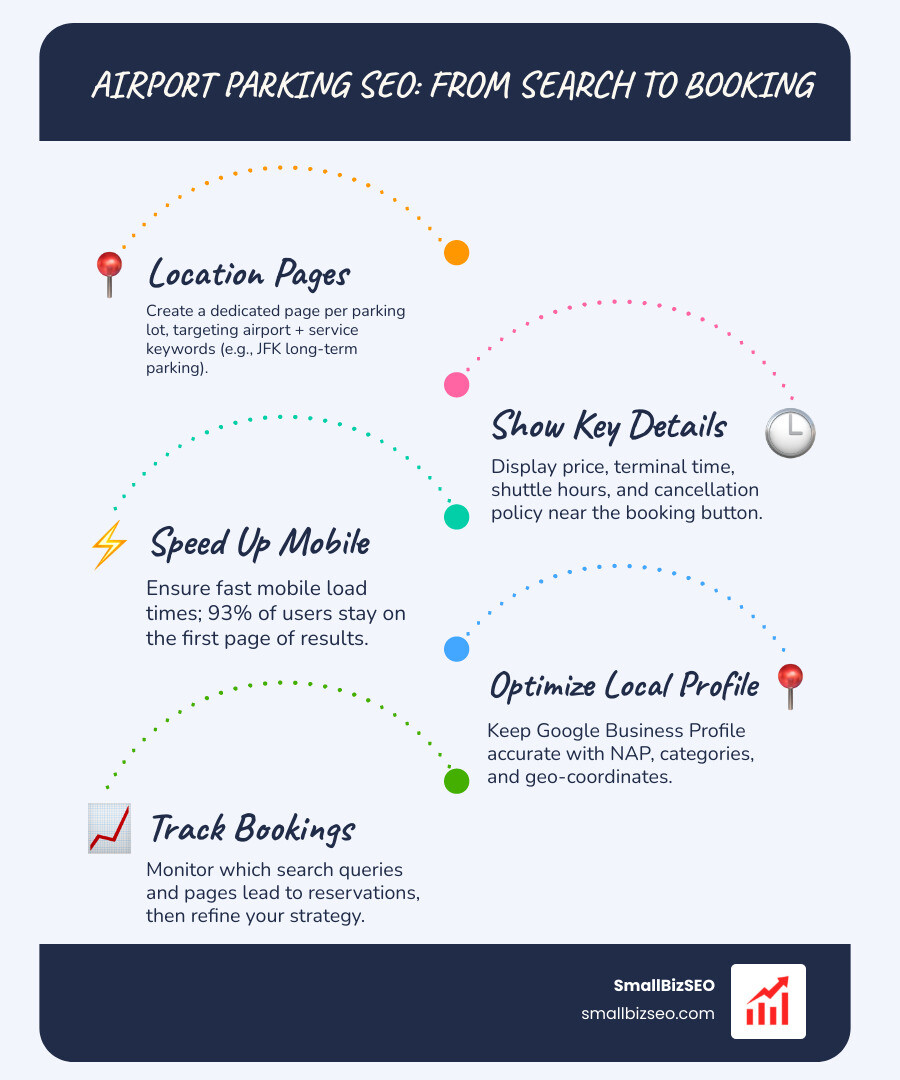
To improve SEO for airport parking, start with a page for each parking location. Target searches that name the airport and the service, such as long-term or shuttle parking. Show the price, terminal travel time, shuttle hours, and cancellation rules near the booking button. Then make the page fast on mobile, keep your Google Business Profile accurate, and check which searches lead to reservations.
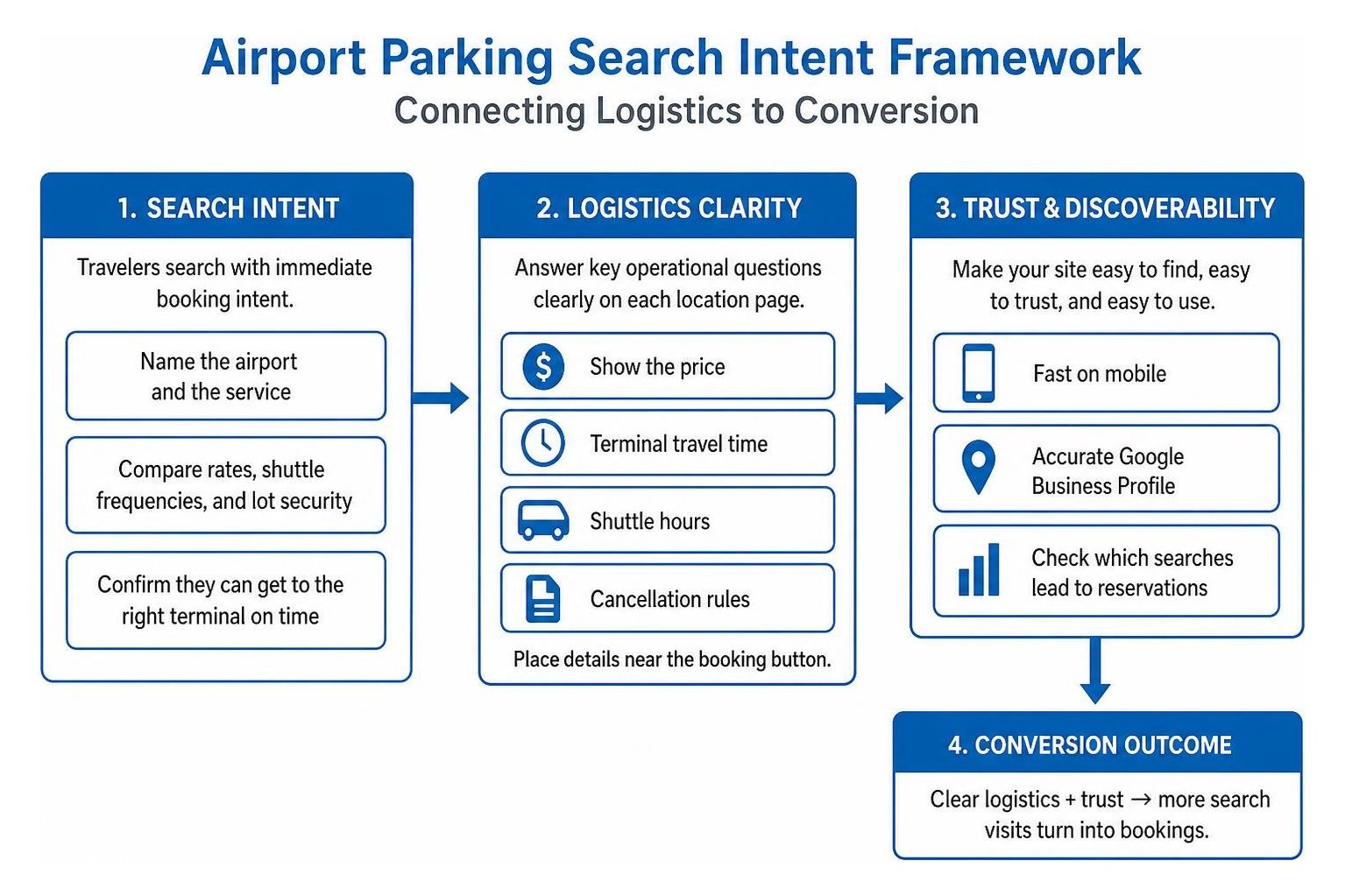
Airport parking searches are about more than finding a nearby lot. Travelers need to know whether they can get to the right terminal on time and what happens if their flight changes. Answering those questions clearly helps turn search visits into bookings.
I'm Clayton Johnson, founder of SmallBizSEO. My work in technical SEO, content strategy, and answer-ready search guides shapes this approach to SEO for airport parking: make each page easy to find, easy to trust, and easy to book from.
SEO for airport parking vocab explained:
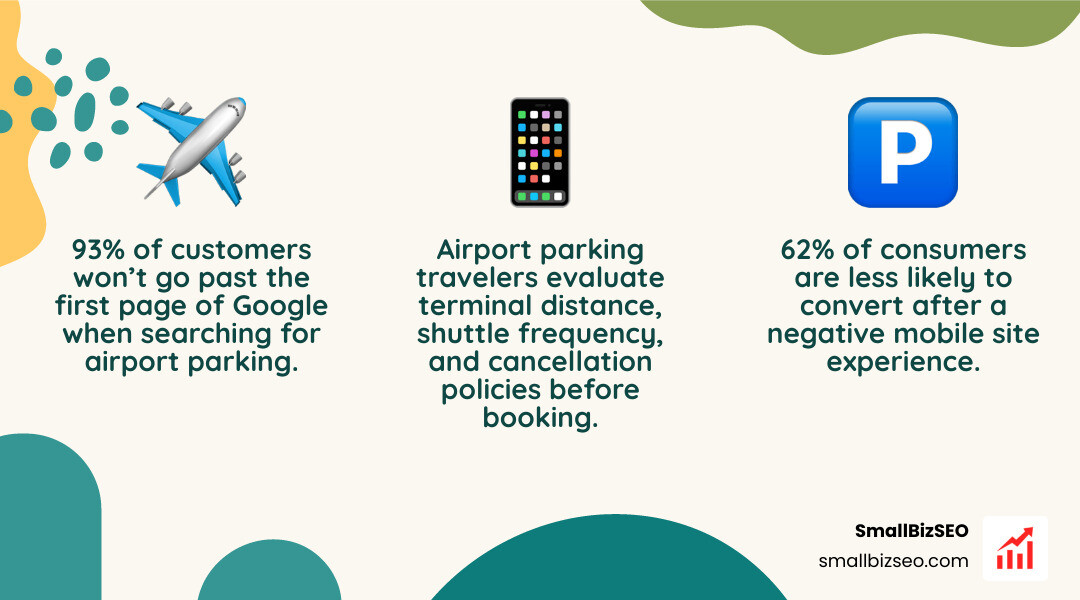
Airport parking travelers have immediate booking intent. They are rarely browsing for entertainment; they have a confirmed flight and need a secure place to leave their vehicle. Research shows that 93% of customers won’t go past the first page of Google, and 62% of consumers are less likely to convert if they have a negative mobile site experience. Winning their business requires capturing organic visibility at the exact moment they compare rates, shuttle frequencies, and lot security.
Why Is SEO for Airport Parking Different from Traditional Local SEO?
Airport parking SEO differs from standard local business SEO because it blends local geographic proximity with high-stress travel logistics and e-commerce booking intent. A standard local business targets customers living within a small radius. In contrast, an airport parking facility serves outbound travelers arriving from regional feeder markets miles away, all converging on specific airport terminals.
When travelers search for parking, they evaluate precise operational criteria:
- Terminal Distance and Transfer Time: Exact driving or shuttle time to domestic and international departure gates.
- Shuttle Logistics: Frequency of departures, operating hours (such as 24/7 continuous loops), and on-demand pickup instructions.
- Service Models: Distinctions between offsite shuttle lots, curbside valet, meet-and-greet, and official airport parking facilities.
- Contingency Policies: Clear rules regarding delayed return flights, grace periods, and cancellation refunds.
Capturing these travelers requires aligning your website architecture with travel logistics. Applying specialized travel industry search optimization ensures your site addresses these specific booking scenarios rather than treating parking like a static storefront.
How to Structure Location Landing Pages for Maximum Booking Intent
To convert organic visitors into confirmed parking reservations, airport landing pages must prioritize operational clarity over generic marketing copy. When a traveler lands on your page, their primary friction points—cost, schedule, and safety—must be answered immediately above the fold.
High-converting airport landing pages rely on structured, modular design blocks:
- Above-the-Fold Reservation Widget: Allow users to select check-in/check-out dates, times, and parking types with an immediate pricing estimate.
- Transparent Rate Schedules: Provide clear daily, weekly, and overstay rates without hidden service fees.
- Live Shuttle and Transfer Data: State exact shuttle intervals (e.g., "Departs every 10–15 minutes") and early-morning availability.
- Flight Delay Contingency Notes: Explain how late-night flight changes are handled to reduce booking anxiety.
- Semantic Keyword Integration: Naturally incorporate terms like "long-term airport parking," "economy parking shuttle," and "valet airport parking."
| Page Feature | Standard Parking Page | High-Converting Airport Landing Page |
|---|---|---|
| Primary Focus | General address and hours | Airport proximity, terminal transfer time, and reservation engine |
| Pricing Display | Hourly flat rate table | Dynamic multi-day rate calculator with transparent fee breakdown |
| Logistics Details | "Parking available on site" | Exact shuttle schedule, luggage assistance, and gate drop-off locations |
| Trust Assets | Generic company overview | Security features (CCTV, gated entry), cancellation terms, verified customer reviews |
| Mobile Experience | Basic static text | Fast-loading, single-tap booking interface with GPS directions |
Core Technical and Local Tactics to Scale Organic Parking Revenue
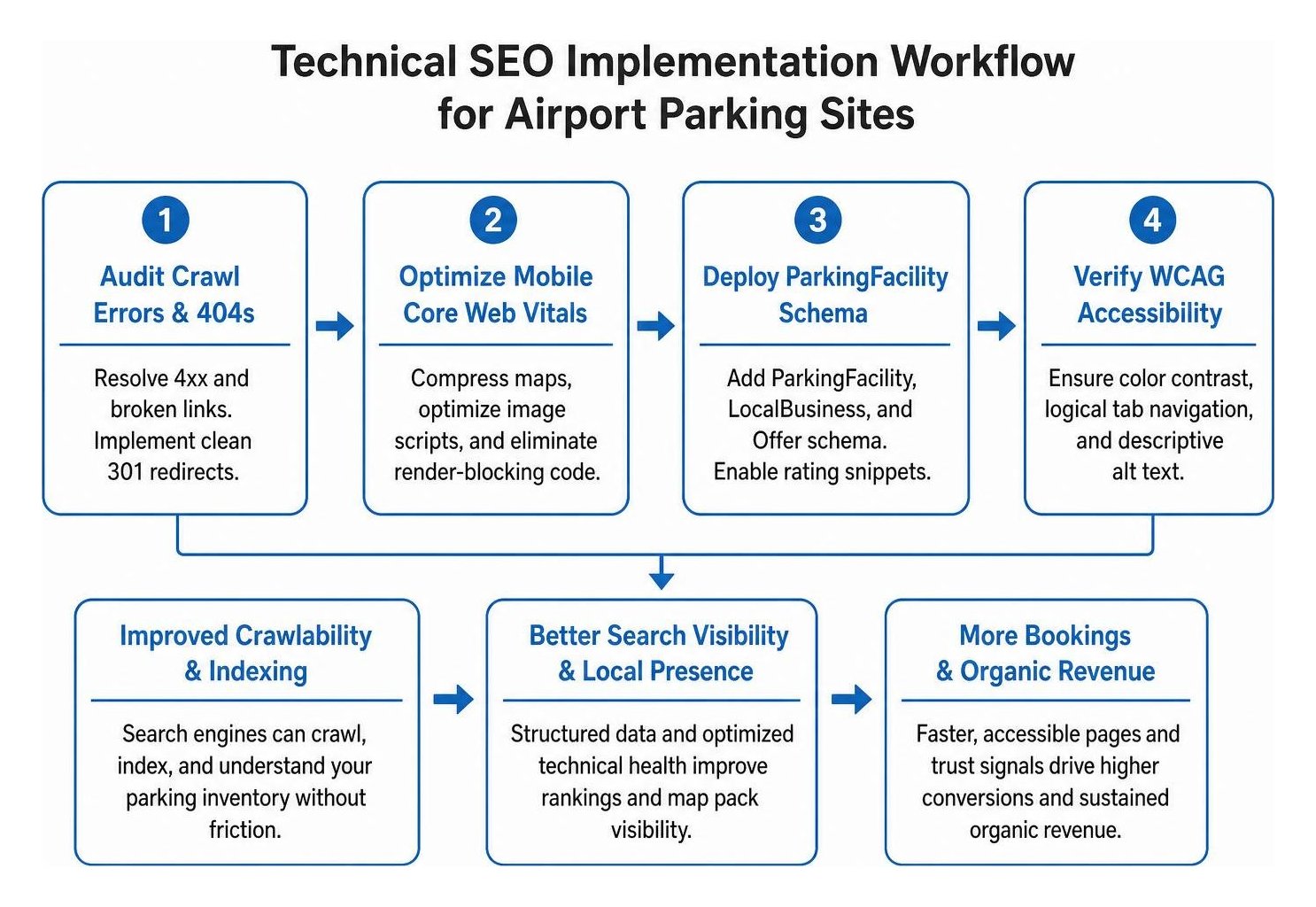
A technically sound website ensures search engines crawl, index, and understand your parking inventory without friction. By eliminating crawl errors, speeding up page delivery, and deploying schema markup, operators build a stable platform for sustained organic revenue. For complex multi-lot operators, partnering with a dedicated airport parking SEO company accelerates technical remediation and keyword visibility.
What Are the Essential Technical SEO for Airport Parking Factors?
Technical SEO for parking sites directly influences both search indexing and user conversion rates. Slower websites see immediate drops in completed reservations. Across the parking industry, mobile performance scores often fluctuate dramatically, leaving significant room for operators to gain an advantage by optimizing their site architecture.
Prioritize these technical health factors:
- Core Web Vitals and Mobile Speed: Compress facility maps, optimize image scripts, and eliminate render-blocking code to ensure pages load instantly on mobile devices.
- Resolving 4xx and Broken Links: Industry audits reveal hundreds of legacy 4xx errors on unmaintained parking portals. Implement clean 301 redirects for modified landing pages to protect crawl equity.
- Structured Data Implementation: Add
ParkingFacility,LocalBusiness, andOfferschema markup. Embedding structured rating snippets enables rich review stars directly in search engine results pages. - Accessibility and WCAG Standards: Over 20% of users navigate with assistive technologies or visual impairments, including color vision deficiencies. Maintain high color contrast on reservation buttons, ensure logical tab navigation, and provide descriptive alt text for facility maps.
How Do Google Business Profile and Map Packs Drive Direct Bookings?
Local map listings generate substantial direct traffic for airport parking operators, frequently driving hundreds of high-intent visitors each month. When travelers search for nearby lots while planning their route, Google Map Pack visibility captures immediate navigational demand.
To maximize your local map presence:
- Maintain Precise Name, Address, and Phone (NAP) Consistency: Ensure your business details match across your website, local directories, and navigation platforms.
- Optimize Primary and Secondary Categories: Select specific classifications such as "Airport Parking Lot," "Parking Garage," or "Valet Parking Service."
- Pin Exact Entry Coordinates: Set your Google Maps marker precisely at the vehicle entrance gate rather than the center of the lot to prevent driver confusion.
- Feature Real Facility and Shuttle Imagery: Upload professional photos showing your shuttle fleet, secure fencing, well-lit parking bays, and check-in booths.
- Deploy Strategic Local Signals: Implement proven local SEO strategies and refine your Google Map Pack optimization to consistently rank in the top three local positions.
Future-Proofing Visibility with AI Search, Trust Signals, and Efficient Organic Growth
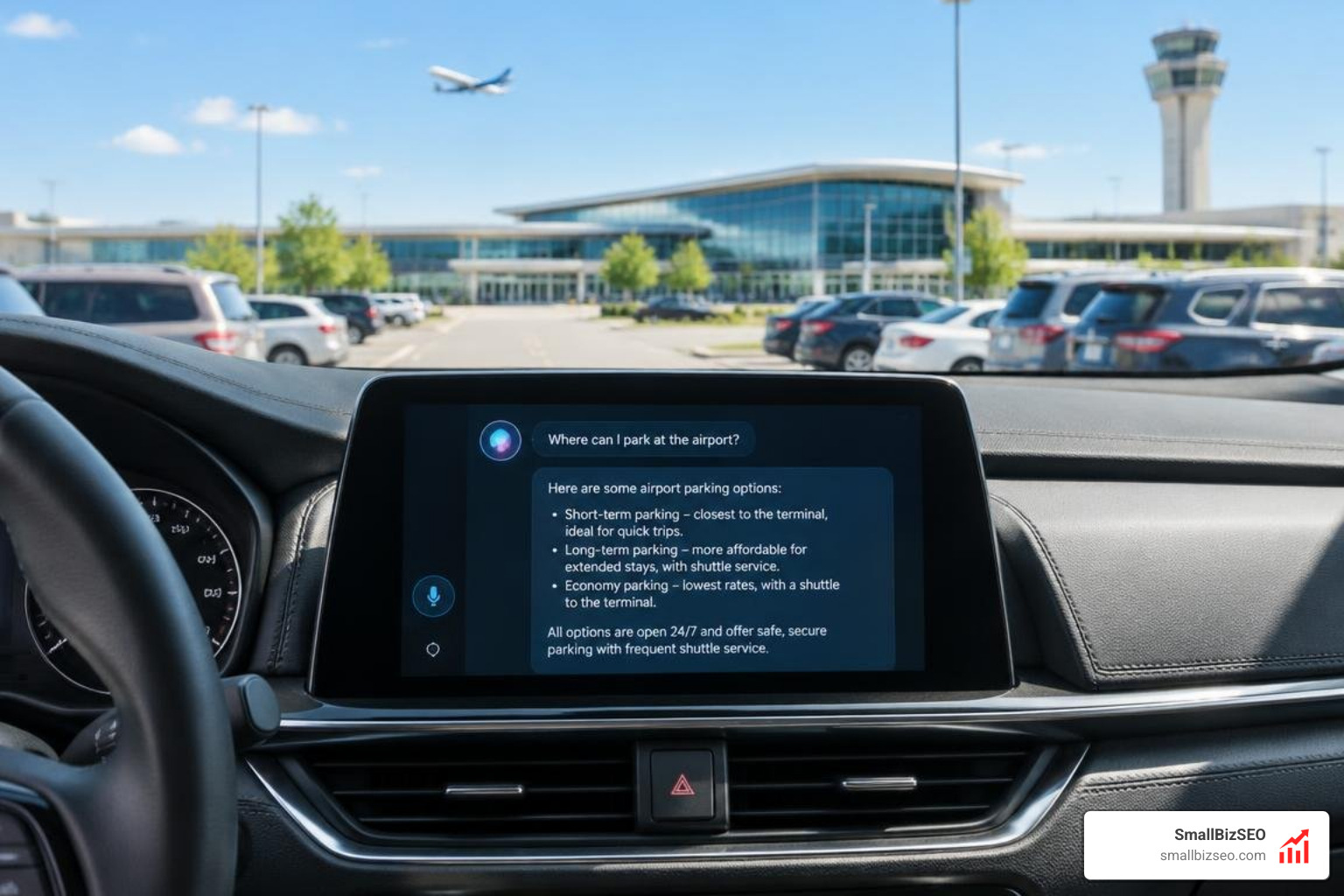
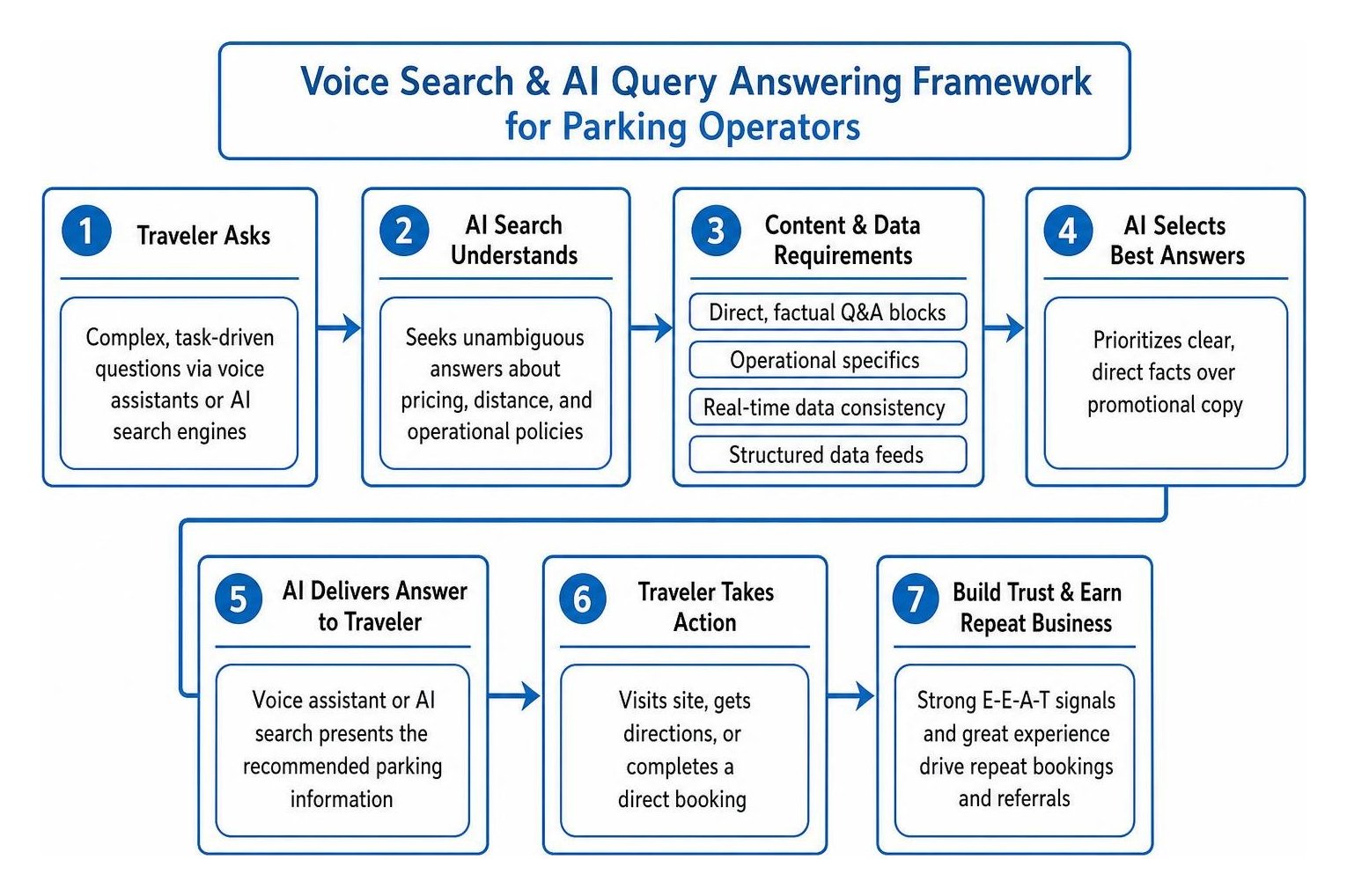
Search behavior has shifted from fragmented keyword queries to complex, task-driven questions across AI search engines and voice assistants. To maintain long-term market share, independent operators must build answer-ready content and unmistakable trust signals that allow them to compete effectively against large aggregators.
How Can Parking Operators Optimize for AI Search and Voice Assistants?
AI search engines and conversational voice assistants prioritize clear, direct facts over promotional copy. When a traveler asks an assistant for parking recommendations, the engine seeks unambiguous answers regarding pricing, distance, and operational policies.
Follow these practices for Answer Engine Optimization (AEO) and Generative Engine Optimization (GEO):
- Provide Direct, Factual Q&A Blocks: Structure your FAQ section with clear questions such as "How often does the airport shuttle run?" followed by concise 2–3 sentence answers containing exact figures.
- Detail Operational Specifics: Clarify height restrictions, electric vehicle charging availability, oversized vehicle accommodations, and luggage policies.
- Maintain Real-Time Data Consistency: Ensure rates and operational hours published on your site match your structured data feeds and external directory profiles, as outlined in our voice search and AI parking optimization guide.
How to Build Trust Signals and Compete Against Aggregators on a Budget
Large booking aggregators often dominate generic keywords with substantial advertising budgets, yet smaller and mid-sized operators can capture high-margin direct bookings by targeting long-tail queries and showcasing authentic trust signals (E-E-A-T).
Key strategies for competing efficiently:
- Build Verified Review Profiles: Actively collect customer reviews on your Google Business Profile and website, focusing on staff friendliness, lot security, and shuttle punctuality.
- Target Long-Tail Intent: Create content for specific travel scenarios, such as "overnight parking with EV charging" or "military discount airport parking."
- Optimize Visual Assets for Universal Search: Tag all parking lot and shuttle images with descriptive alt text to capture image carousels in search results.
- Evaluate Organic Gaps: Request a comprehensive SEO visibility audit to identify unindexed pages, site speed bottlenecks, and high-value keyword opportunities that your competitors overlook.
Accelerate Your Direct Parking Bookings
Competing for search engine visibility in the airport parking industry requires more than basic keyword placement. By combining operational transparency on location pages, robust technical health, active Google Business Profile management, and AI-ready answer blocks, your parking facility can outrank aggregators and drive sustainable direct reservations.
At SmallBizSEO, we help parking operators scale their online presence through our data-driven "Velocity" framework. We provide technical site enhancements, high-intent content strategies, and authority building to ensure your business captures travelers at every stage of their trip planning. Explore our specialized SEO packages or contact our SEO team today to audit your search performance and grow your booking revenue.