Step-by-Step Guide to SEO for the Travel Industry
Step-by-Step Guide to SEO for the Travel Industry
How Can Travel Businesses Get Found and Win More Direct Bookings?
Start with the trips you sell and the places you know. Build useful destination and activity pages around what travelers search for, link them to clear booking pages, and make the whole site easy to use on a phone. Track inquiries and bookings, not just visits.
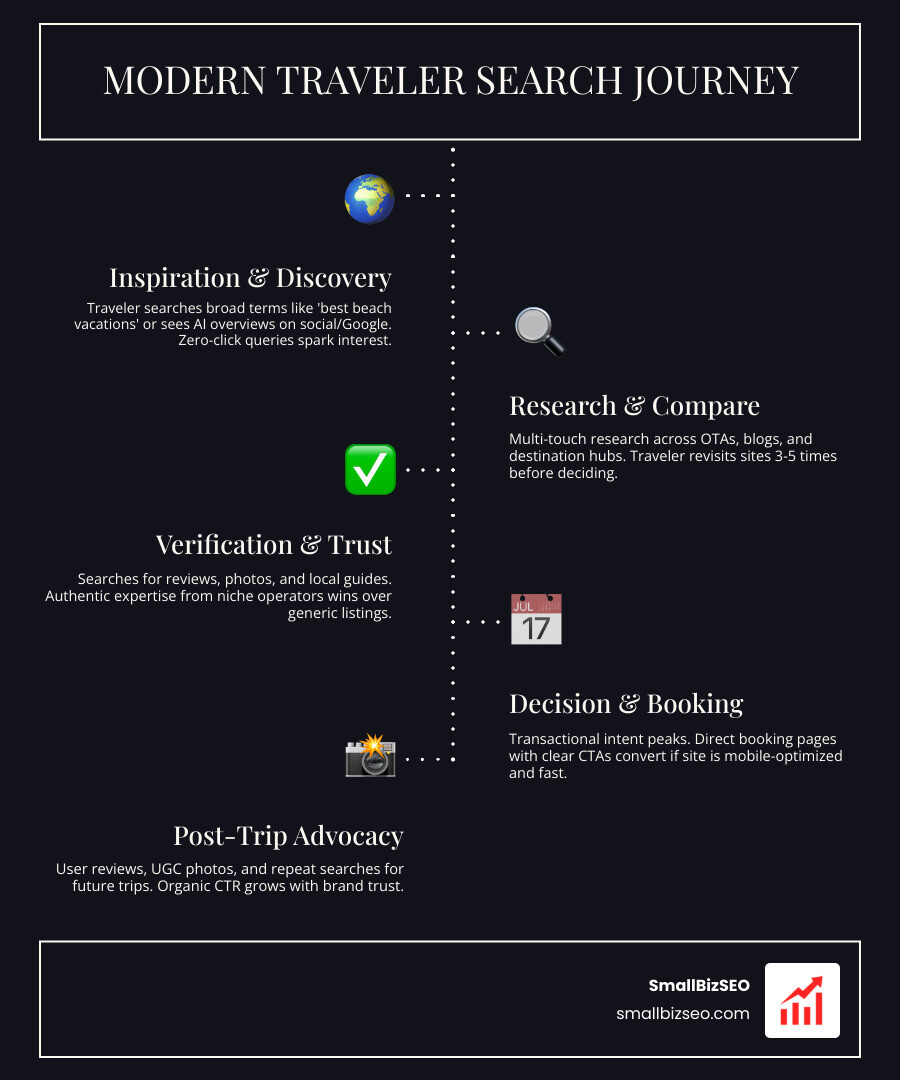
Travelers may discover a trip through Google or an AI answer, then compare options before they book. That gives smaller businesses a chance to win with specific, information that broad travel listings often lack.
I'm Clayton Johnson, a digital marketing and SEO strategist whose work connects content, digital PR, and search visibility. I bring that approach to SEO for travel industry businesses, with a focus on helping useful expertise get found and trusted across search and AI tools.
Terms related to SEO for travel industry:
- enterprise local SEO
- search engine optimization for law firms
- SEO for enterprise companies
Why Is SEO for Travel Industry Success Different?
Travel SEO is uniquely complex because buying decisions involve high financial risk, emotional investment, and extended research cycles spanning weeks or months. Unlike simple ecommerce purchases, travelers rarely convert on their first visit. Instead, they visit a travel website 5 to 10 times across multiple devices while evaluating logistics, pricing, seasonality, and itineraries.
Search engines treat travel as a deeply visual, location-dependent ecosystem. The top organic result earns a 27.6% click-through rate (CTR), and the top three positions capture 54.4% of total clicks. Because major search engines dedicate extensive screen space to interactive maps, flight modules, and hotel packs, capturing organic real estate requires a blend of location relevance, technical speed, and rich structured data. Keeping pace requires understanding how search evolves with new discovery platforms to stay visible across evolving search interfaces.
How Has AI-Powered Search Transformed the Travel Landscape?
AI search tools now act as personalized trip planners, answering multi-part itinerary questions directly within search results and conversational interfaces. Roughly 56% of leisure travelers use AI tools for planning, booking, or in-destination recommendations.
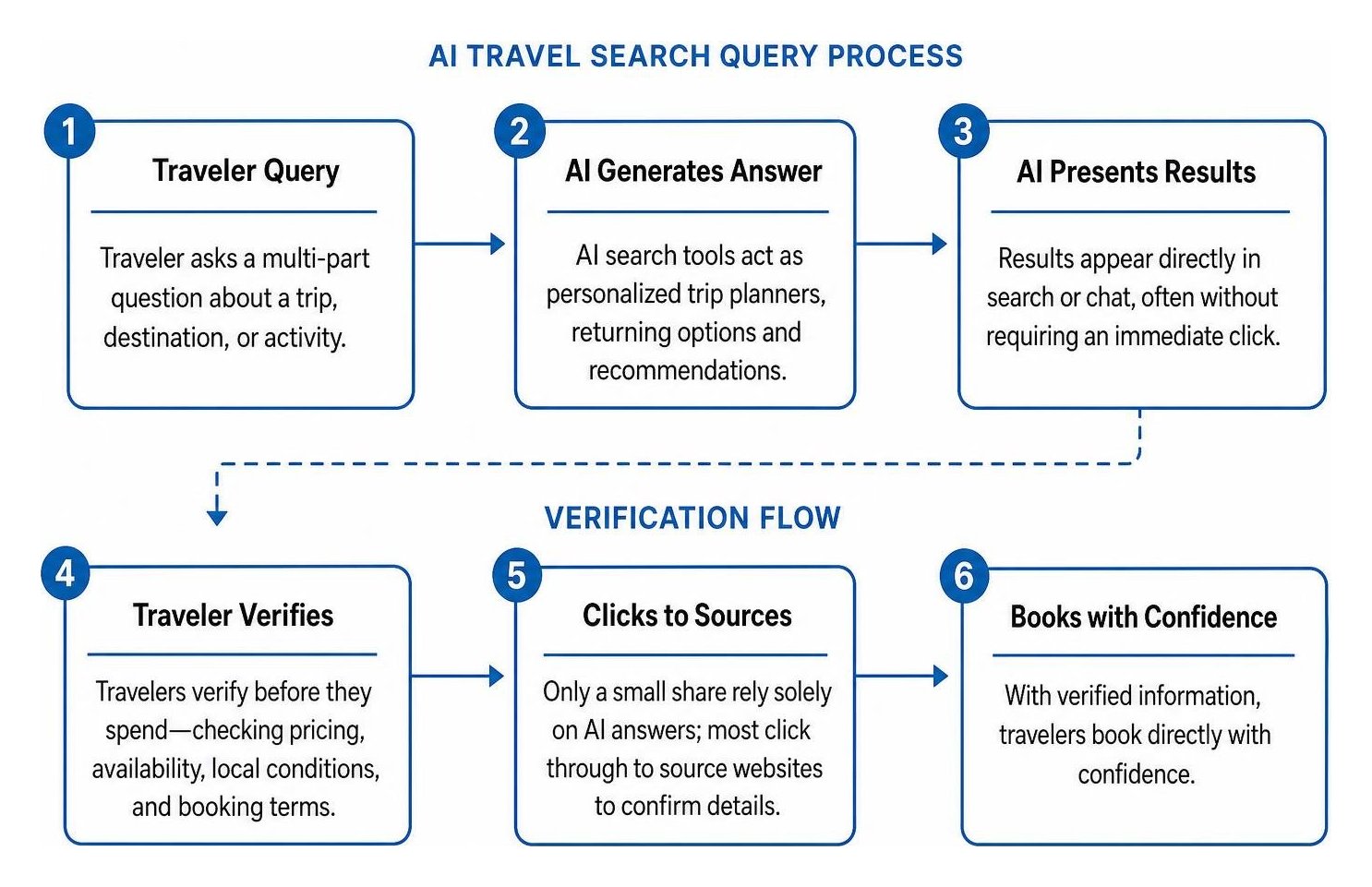
While roughly 68% of search engine queries now resolve without an immediate click, travel businesses possess a powerful structural advantage: travelers verify before they spend. Only 8% of AI users consider automated answers sufficient on their own, while 51% click through to source websites to confirm pricing, local conditions, and booking terms. Winning in this environment means shifting from keyword stuffing toward Answer Engine Optimization and optimizing for generative engine discovery.
How Can Independent Brands Compete Against Online Travel Agencies?
Independent tour operators and boutique hotels beat massive Online Travel Agencies (OTAs) by dominating hyper-specific, long-tail search intent that mass aggregators cannot address. Large OTAs like Expedia and Booking.com rely on programmatic, templated listings. They struggle to answer detailed local questions such as "dog-friendly boutique hotels near hiking trails" or "guided 3-day family sea kayaking trips."
| Strategy Element | Large OTAs (Expedia, Booking.com) | Independent Travel Businesses |
|---|---|---|
| Keyword Focus | Broad head terms ("Hotels in Rome") | Specific long-tail queries ("Family wine tours Tuscany") |
| Content Depth | Automated, templated listings | Firsthand local expertise and detailed guides |
| Visual Assets | Stock crowdsourced imagery | High-definition, original operator photography |
| Conversion Focus | Aggregated price comparisons | Tailored itineraries and direct customer service |
By targeting long-tail searches and publishing deep local insights, independent operators capture high-intent travelers ready to book.
Mapping Keyword Strategy Across the Four Traveler Journey Stages
A winning travel keyword strategy distributes content across every stage of the traveler funnel rather than focusing solely on transactional keywords. Tour operators often make the mistake of targeting only "book now" searches, missing the massive audience researching destinations weeks in advance.
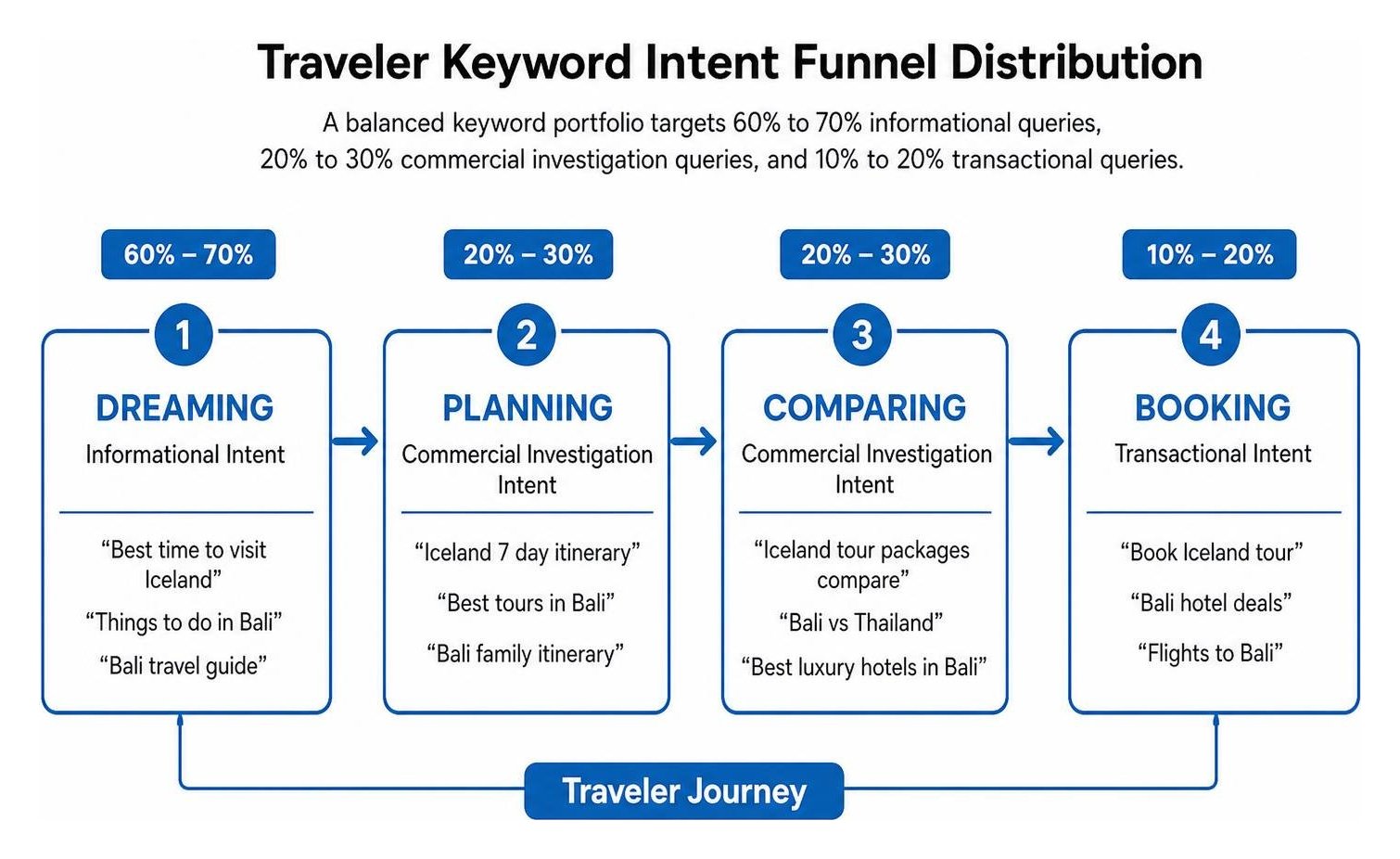
A balanced keyword portfolio targets 60% to 70% informational queries, 20% to 30% commercial investigation queries, and 10% to 20% transactional queries. A comprehensive roadmap for expanding organic keyword visibility helps balance these intent tiers effectively.
What Are the Core Stages of the Traveler Booking Funnel?
The traveler booking funnel consists of four distinct phases: Dreaming, Planning, Comparing, and Booking.
- Dreaming (Inspiration): Broad exploration queries where travelers seek ideas (e.g., "best warm places to visit in winter"). Deliver visually inspiring listicles and photo-rich destination overviews.
- Planning (Research): Detailed logistical queries (e.g., "how many days do you need in Kyoto"). Target these with comprehensive itinerary guides and transit breakdowns.
- Comparing (Evaluation): Commercial investigation where searchers weigh specific providers or tour styles (e.g., "self-guided vs small group hiking tours Alps"). Create honest comparison guides and review roundups.
- Booking (Transaction): High-intent transactional queries (e.g., "private catamaran sunset tour Key West"). Provide streamlined booking pages with transparent pricing and live availability.
Aligning content types to search intent is essential; learn more about optimizing content around search intent to maximize conversion potential at every touchpoint.
How Should You Plan Seasonal SEO for Travel Industry Peak Demand?
Publish and update seasonal travel content 3 to 6 months before search volume peaks to give search engines adequate time to index, crawl, and rank your pages. If your peak booking window for summer excursions opens in March, your optimized guides must be live, interlinked, and indexed by November.
Maintain permanent, evergreen URLs (such as /best-fall-foliage-tours/ instead of date-stamped URLs) so your pages accumulate backlink equity over time. Refresh seasonal guides annually by updating dates, pricing, schedules, and local recommendations. Managing these updates requires building an organized publishing calendar to stay ahead of regional booking surges.
Designing High-Performing Travel Site Architecture and Technical Foundations
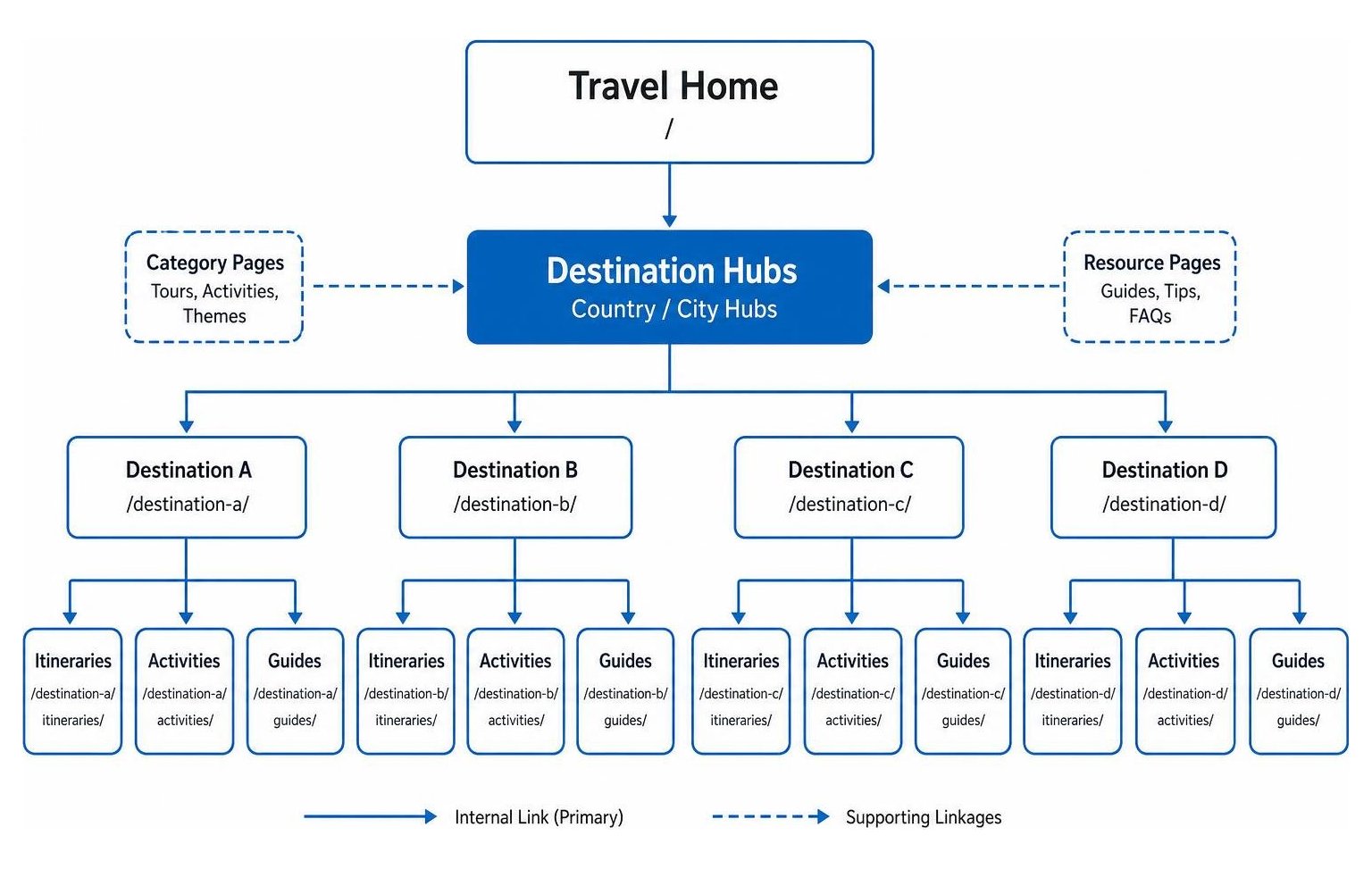
The ideal site architecture for a travel website is a hierarchical hub-and-spoke model that organizes destination and activity pages logically. A clean architecture allows search engine bots to crawl deeply into product catalogs without wasting crawl budget on duplicate or low-value pages.
Large travel websites often suffer from faceted navigation issues where search filters generate millions of thin, parameter-heavy URLs. In one common scenario, an accommodation platform saw its index swell to 2.3 million URLs; after properly configuring canonical tags and managing crawler rules with robots.txt, the index was trimmed to 180,000 high-value pages.
Mobile optimization is equally critical, as mobile devices generate over 60% of all travel searches and 62% of hotel website visits. Ensuring rapid mobile load speeds and clean navigation is central to preparing for mobile-first indexing.
How to Structure Destination Hubs and Itinerary Pages
Structure your site with top-level destination hubs that link down to sub-regions, specific activities, and individual bookable itineraries.
Keep your URL structures clean, descriptive, and hierarchical:
- Hub Page:
/destinations/costa-rica/ - Category Page:
/destinations/costa-rica/wildlife-tours/ - Product/Itinerary Page:
/destinations/costa-rica/manuel-antonio-guided-walk/
This structure ensures any page on your website can be reached within three clicks from the homepage. Internal links should flow naturally downward from hubs to specific tours, upward back to parent destinations, and horizontally between related activities. This interlinking builds topical relevance across your entire catalog, reinforcing strategies for building topical authority across destination clusters.
Which Schema Markup Types Drive Rich Visibility for Travel Sites?
Implement comprehensive JSON-LD structured data across all travel pages to help search engines understand entities, routes, pricing, and ratings. Rich results enhance search listings with star ratings, price ranges, and itinerary stops, driving higher engagement.
Essential schema types include:
TouristTrip: Define multi-day itineraries, destinations visited, and tour inclusions.TouristAttraction: Detail specific landmarks, visitor facilities, and physical locations.LodgingBusiness/Hotel: Mark up accommodation amenities, check-in times, and room categories.Product&Offer: Provide clear pricing, availability, and currency data for bookable excursions.BreadcrumbList: Clarify site hierarchy for search engine crawlers and users.AggregateRating: Showcase verified customer review scores directly in search engine snippets.
Search case studies demonstrate that schema-marked travel pages achieve a 25% to 82% CTR uplift. Review technical specifications on Schema.org to ensure proper entity and property formatting across your tour listings.
High-Converting Content and Visual Optimization for Tourism
Travelers purchase experiences based on visual storytelling, making optimized imagery, videos, and authentic customer reviews central to organic engagement.
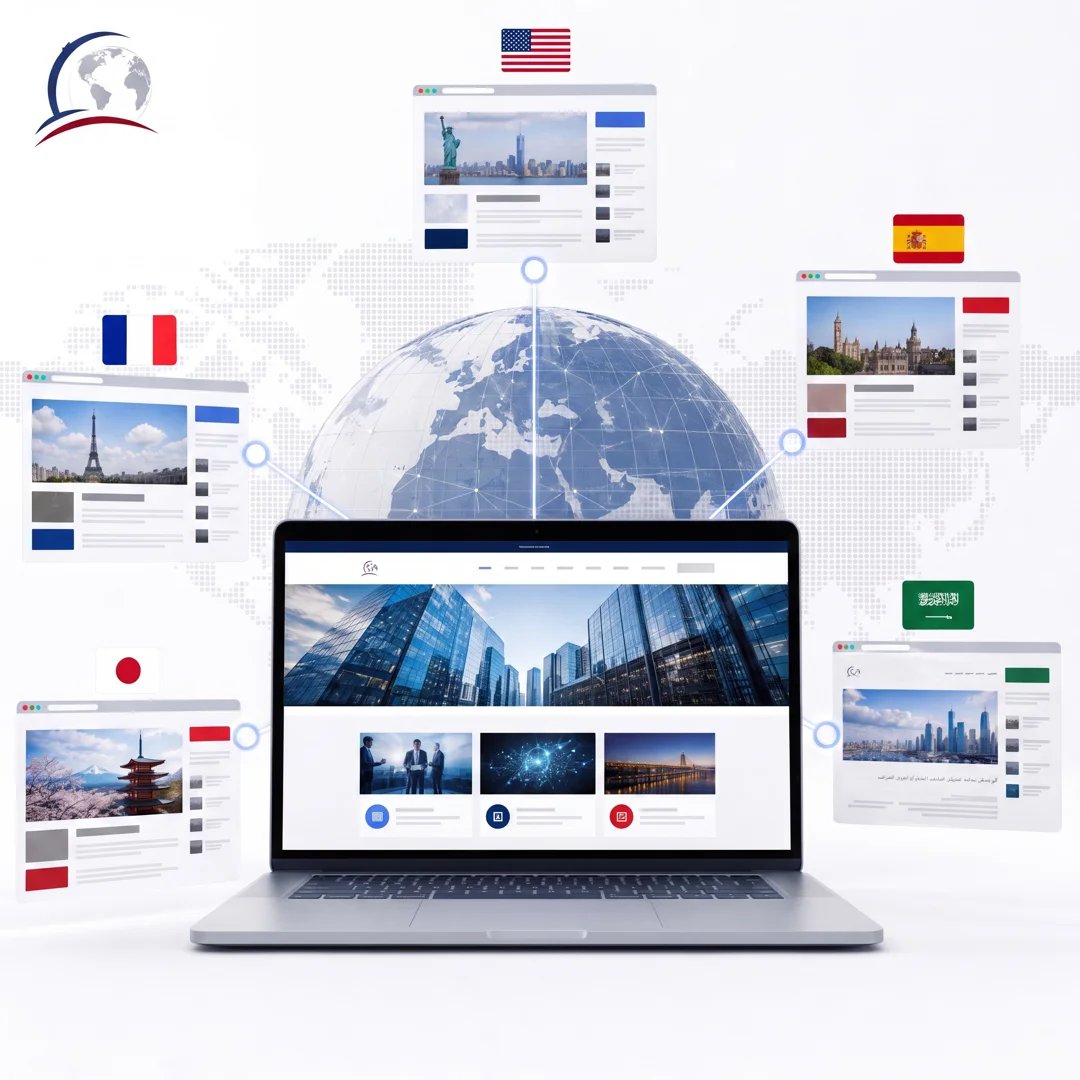
Travel websites featuring optimized visual media generate 40% more engagement than text-heavy pages, while video-rich landing pages capture 50% more organic search traffic. However, uncompressed visual assets are the leading cause of poor Core Web Vitals scores. To maintain fast mobile load times:
- Compress all hero banners and gallery images to under 200KB.
- Serve modern next-gen image formats like WebP or AVIF.
- Implement lazy loading for all media assets below the fold.
- Set explicit width and height attributes on images to prevent Cumulative Layout Shift (CLS).
For additional media techniques, explore optimizing media assets for search engagement and enhancing video search visibility.
How to Optimize Content to Get Cited by AI Answer Engines
To get cited by AI answer engines and search overview modules, format your content with concise, fact-dense answer blocks at the beginning of each major section. Large Language Models (LLMs) extract clear, authoritative definitions that directly answer user queries.
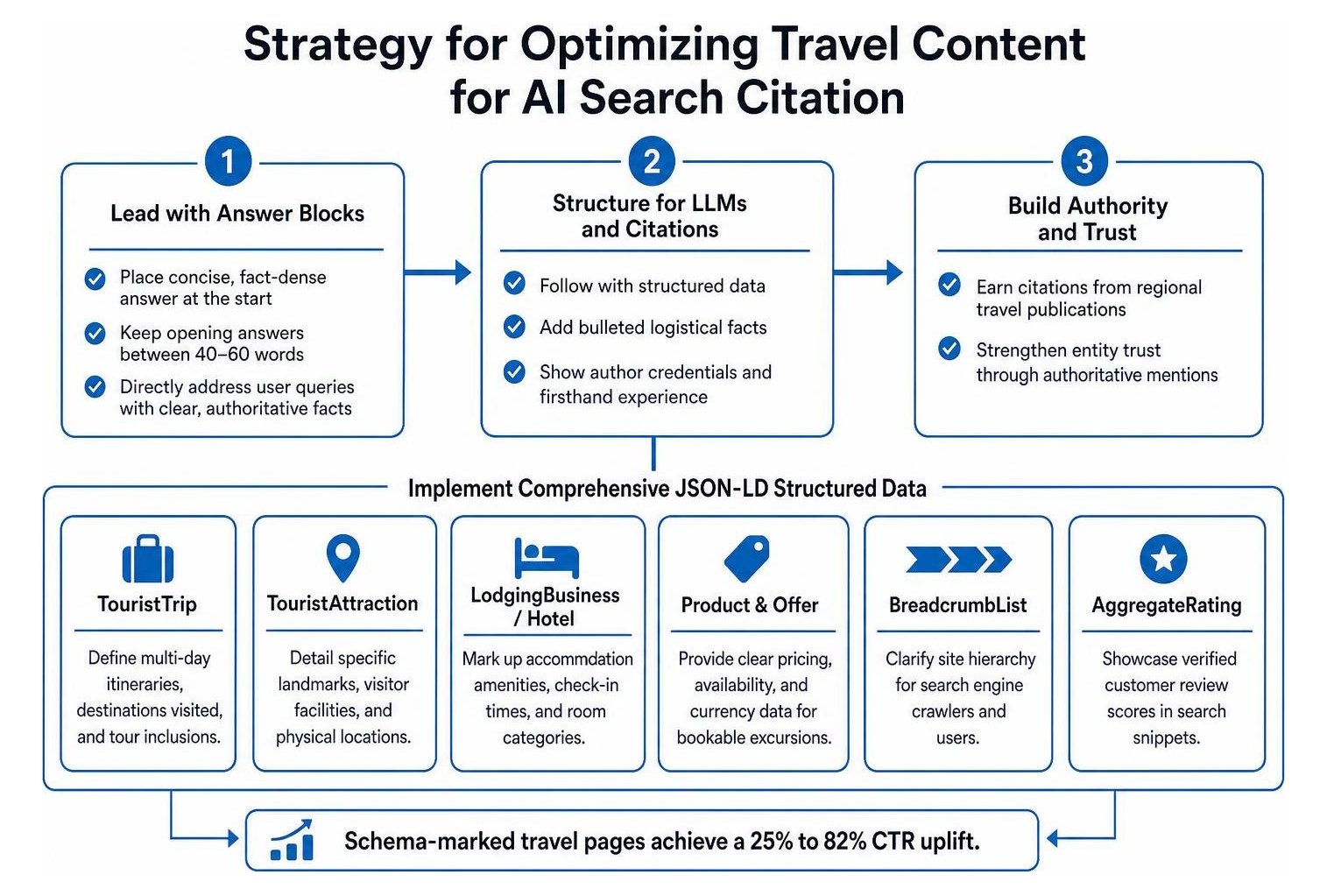
Keep opening answer blocks between 40 and 60 words. Follow direct answers with structured data, bulleted logistical facts, and clear author credentials that demonstrate experience. Building authoritative brand citations across regional travel publications reinforces entity trust, following proven methods for formatting content to appear in LLM responses.
What Are the Costly Mistakes in SEO for Travel Industry Websites?
The most common travel SEO mistakes stem from thin content, unoptimized media, and treating search optimization as a one-time setup rather than an ongoing operational discipline.
- Boilerplate Title Tags: Using identical titles like
Tours - Brand Nameacross dozens of regional pages reduces click-through potential. Titles kept within the 40 to 60 character range earn a 33.3% higher CTR. - Thin Destination Pages: Publishing 200-word destination pages that provide no real value to travelers. Aim for comprehensive guides covering logistics, best times to visit, local customs, and neighborhood breakdowns.
- Unmanaged Faceted Search: Allowing search filters to create millions of duplicate, indexable URLs that waste search crawl budgets.
- Ignoring Local Visibility: Failing to optimize Google Business Profiles for physical tour desks or properties. Discover how to avoid traffic loss by avoiding critical local visibility mistakes.
- Static Content Neglect: Letting pricing, seasonal dates, and local business recommendations expire. Outdated guides quickly lose rankings to fresh competitors.
Frequently Asked Questions About Travel SEO
How long does travel SEO take to show measurable booking results?
Most travel businesses see initial organic traffic growth within 3 to 6 months, while competitive destination rankings and compounding bookings mature over 6 to 12 months. Long-tail keywords and localized activity searches often rank within 1 to 3 months. Because travel planning involves seasonal lead times, content published today captures bookings for upcoming seasons.
How much do professional travel SEO services typically cost?
Professional travel SEO campaigns generally range between $3,000 and $10,000 per month depending on the website's scale, technical complexity, and market competition. While paid advertising costs remain fixed—often exceeding $150 to $190 per inquiry in competitive travel niches—a compounding SEO strategy can reduce ongoing acquisition costs to under $3.00 per inquiry over time.
What metrics should travel businesses track to evaluate SEO success?
Travel brands should track direct organic bookings, inquiry form submissions, non-branded keyword visibility, and assisted conversion paths in web analytics. Monitoring mobile page performance, crawl coverage in Google Search Console, and citation frequency in AI engines ensures your organic funnel consistently produces high-margin direct revenue.
Scale Your Travel Bookings with Proven Search Optimization
Winning organic travel search requires blending technical precision, intent-driven destination hubs, and compelling visual storytelling. As traveler discovery behaviors shift across mobile search engines and AI assistants, businesses that provide verified, local insights will capture high-intent travelers and build lasting direct revenue.
At SmallBizSEO, we help tourism and hospitality brands grow their search presence using our data-driven Velocity framework. By focusing on technical crawl health, E-E-A-T-aligned content creation, and clear reporting, we help you reduce reliance on costly third-party booking channels. Explore how partnering with SmallBizSEO for search growth can turn your destination expertise into a compounding engine for direct travel bookings.