Pest Control SEO Survival Guide: Get More Leads
Why SEO for Pest Control Helps Turn Local Searches Into Calls
SEO for pest control helps nearby customers find your business when they need an inspection or treatment. Start by completing your Google Business Profile, creating a page for each major pest service, and making it easy to call from a fast mobile site. Then collect genuine customer reviews and track which searches lead to booked jobs.
That work matters because a homeowner searching for termite treatment may be ready to hire, while someone identifying an insect may still be researching. Your pages should answer both needs without treating every search as the same.
I'm Clayton Johnson, founder of SmallBizSEO, where I help small businesses connect technical SEO, useful content, and authority building with qualified leads. In this guide, I apply that approach to SEO for pest control so you can choose where to focus first.
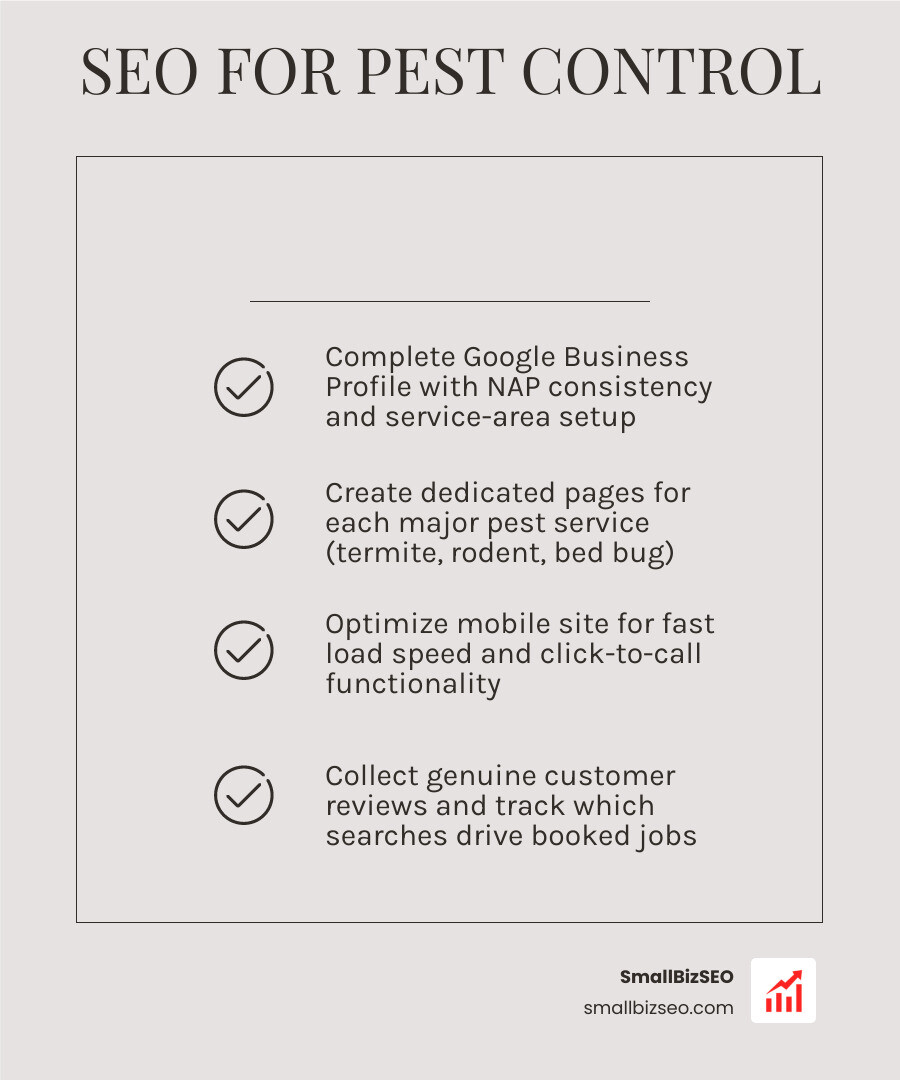
SEO for pest control terms made easy:
Why SEO for Pest Control Drives High-Intent Exterminator Leads
Pest control search queries are driven by immediate necessity, with roughly 70% of bookings being urgent and time-sensitive. When a homeowner spots termites or rodent droppings, they turn directly to search engines on their smartphones to find an immediate solution. Organic visibility captures these high-intent customers at the exact moment an infestation occurs.
Relying solely on rented ad visibility has become unsustainable for many independent exterminators, where commercial auction costs for competitive pest management queries frequently range from $34 to $90 per click. By building organic search equity, extermination businesses create a permanent digital asset that lowers customer acquisition costs over time.
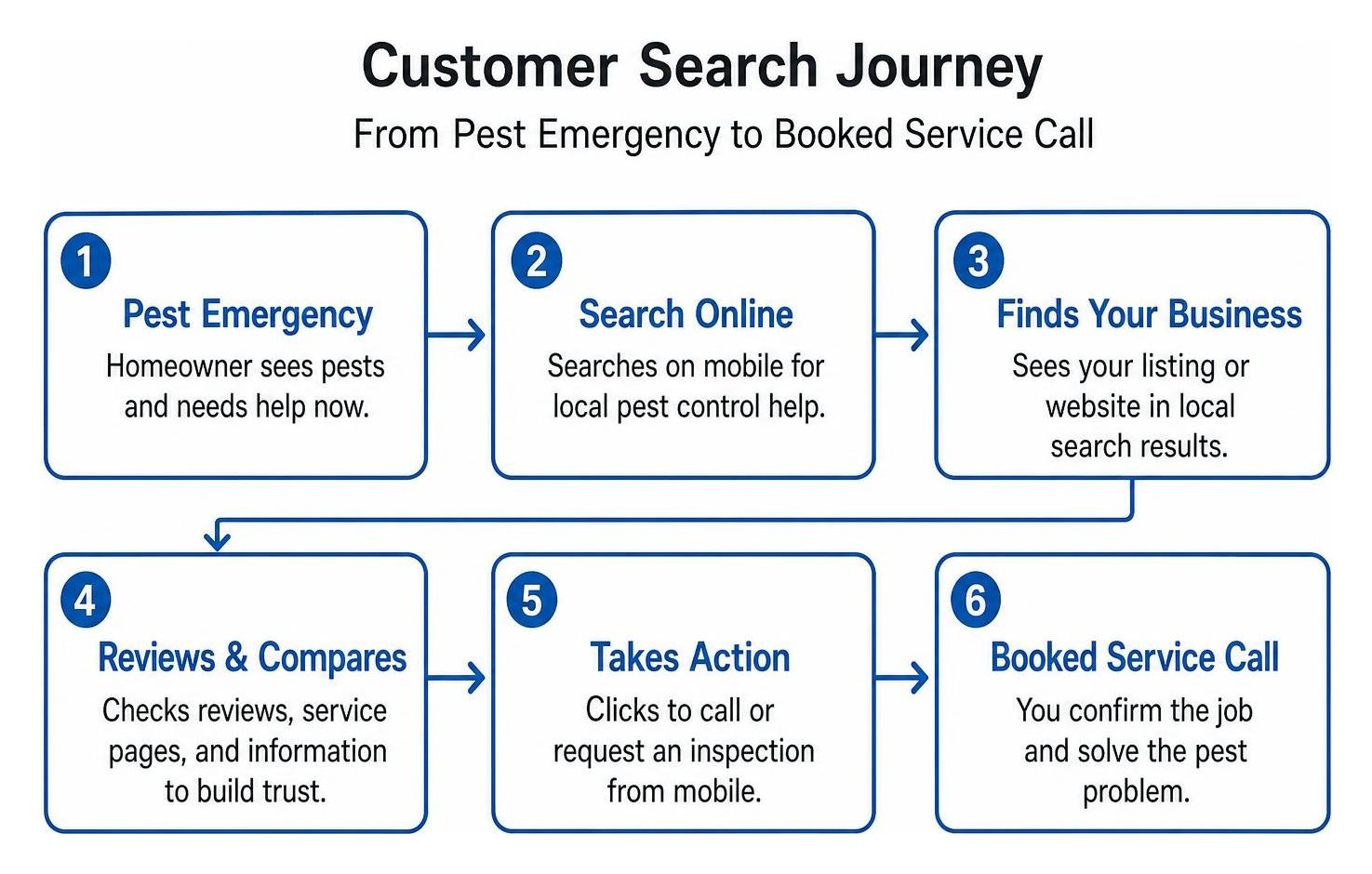
Emergency search queries (such as "emergency bed bug treatment") convert at 15% to 20%, while preventative maintenance queries convert at 5% to 8%. An effective search strategy captures both transactional emergency searches and top-of-funnel pest identification questions, guiding property owners smoothly toward phone calls and scheduled inspections.
Core Strategies to Dominate Local Search Rankings and Conversion
Dominating local search results requires combining Google Business Profile optimization with a high-performance website structured for lead conversion. Because 60% of pest control searches happen on mobile devices, your website must load in under three seconds and feature prominent click-to-call buttons above the fold.
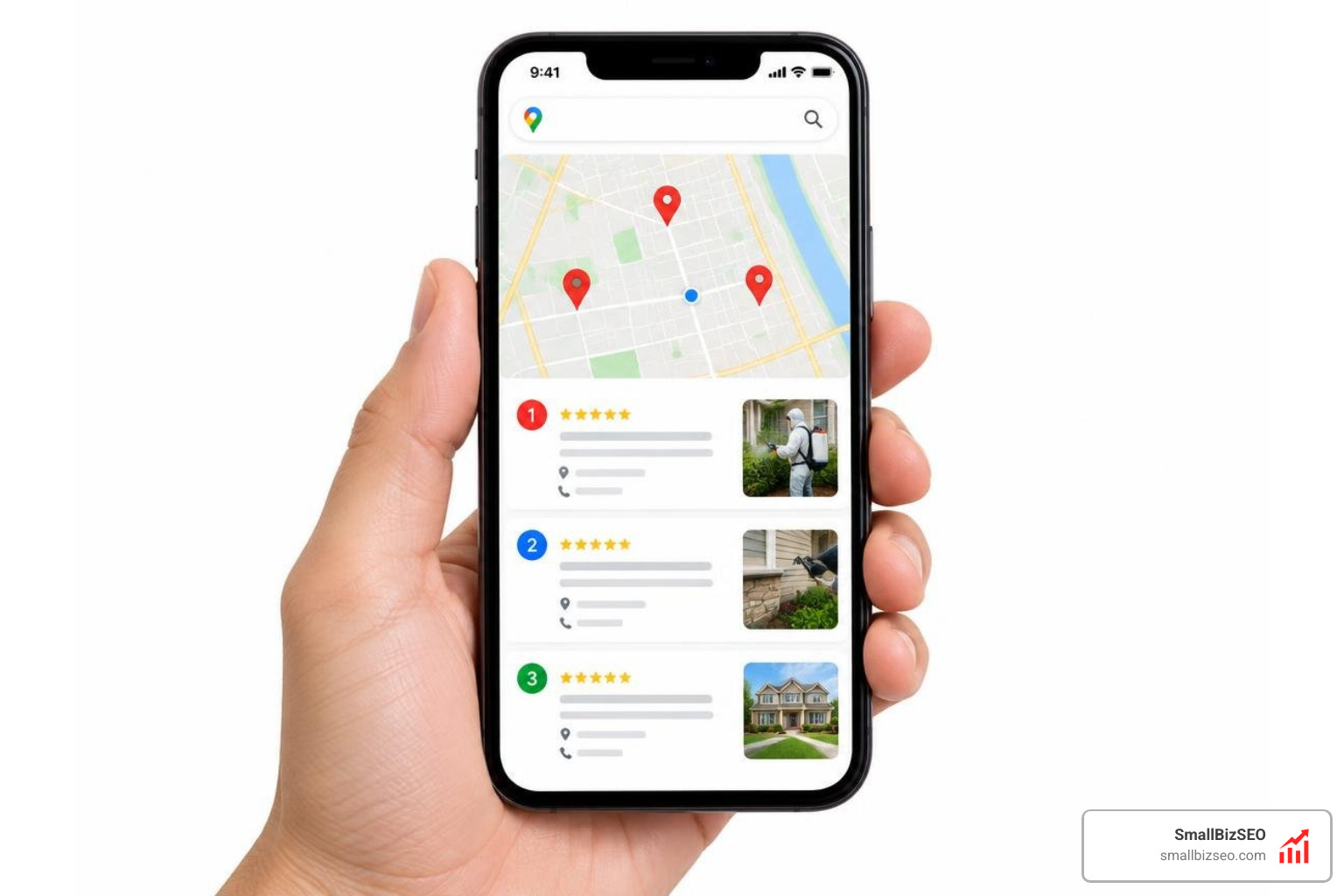
To convert traffic into booked jobs, companies need clear conversion architecture. When contractors master local home services SEO, they implement local schema, maintain consistent directory citations, and follow best practices outlined in this pest control SEO guide.
How Does Google Decide Who Ranks in the Local Map Pack?
Google determines local map pack rankings using three core criteria: relevance, distance, and prominence. The local map pack captures 40% to 50% of all clicks on local-intent searches, making it the most valuable digital placement for an exterminator.
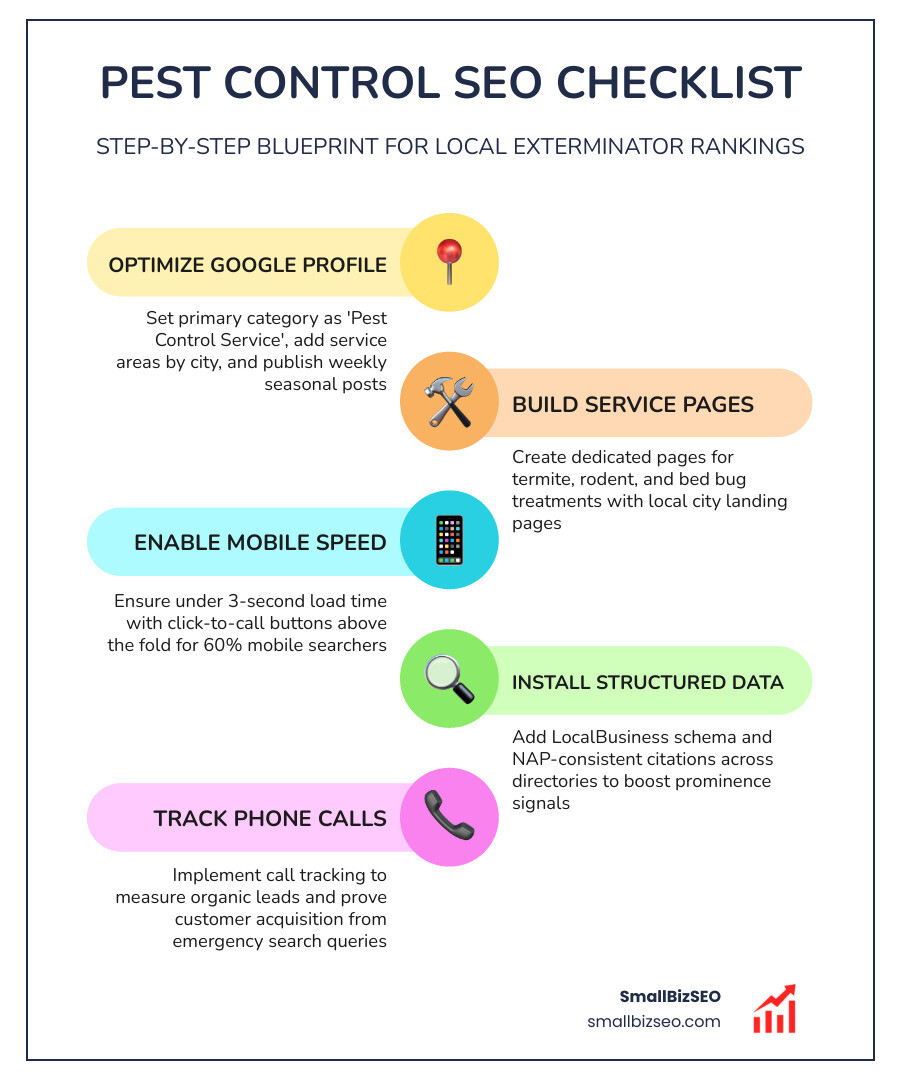
To maximize map pack visibility:
- Set Precise Primary Categories: Choose "Pest Control Service" as your primary category, and add secondary categories like "Animal Control Service" or "Bird Control Service."
- Define Service Areas Accurately: Configure your profile by designated cities and postal codes rather than setting an unverified geographic radius.
- Maintain NAP Consistency: Ensure your Name, Address, and Phone number match across all online directories. Working with a dedicated local SEO company helps streamline citation cleanup.
- Publish Regular Profile Updates: Add weekly posts sharing seasonal pest warnings and upload real photos of service trucks and technicians.
How to Build High-Converting Service Pages and SEO for Pest Control
A single generic services page cannot rank for individual pest problems across multiple service areas. Instead, build a hub-and-spoke website architecture featuring dedicated landing pages for each major pest type, including termites, rodents, bed bugs, ants, and stinging insects.
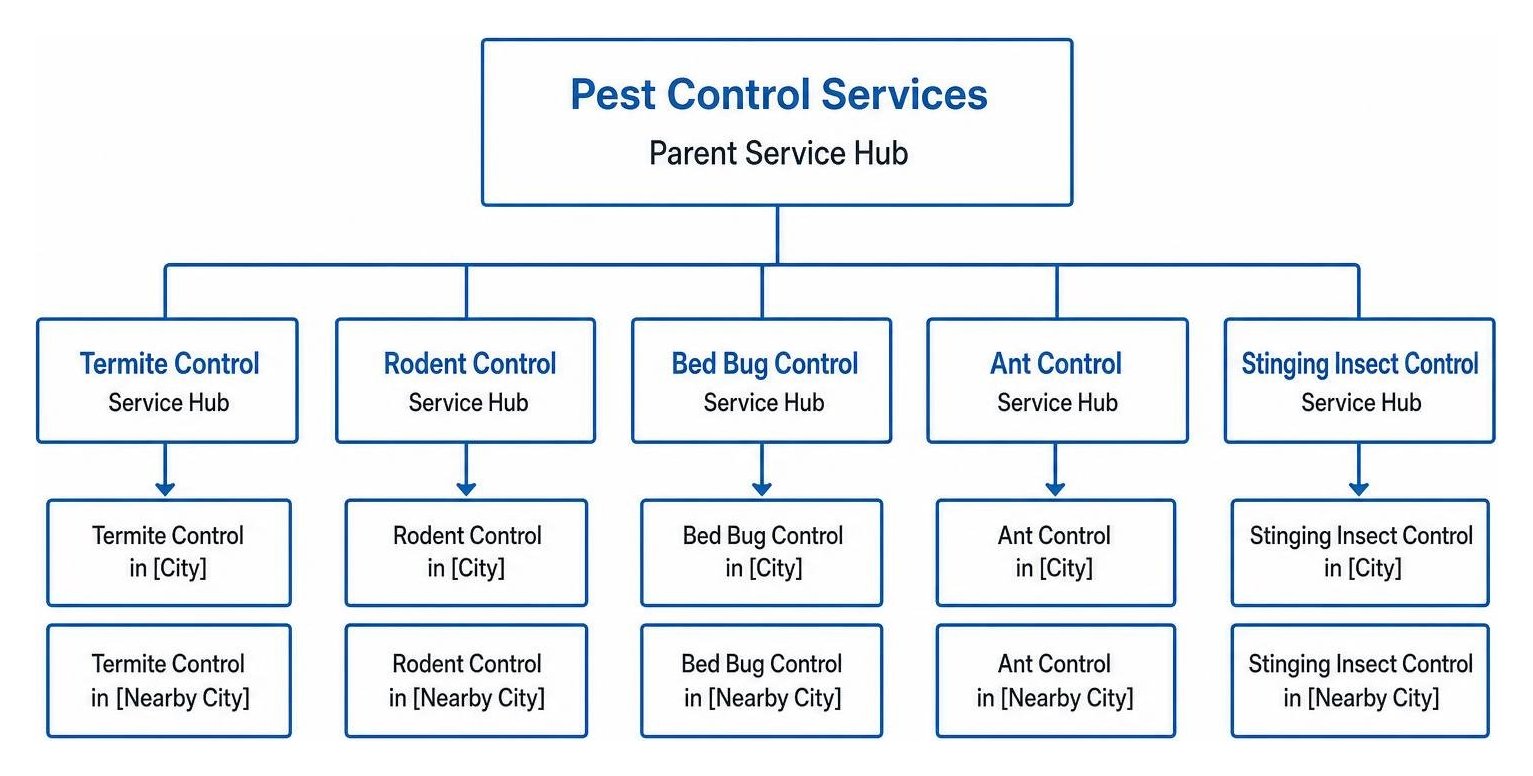
Following our guide to SEO for pest control companies, structure your content into focused topic clusters. Create dedicated city landing pages for surrounding municipalities with unique, helpful localized content rather than duplicate boilerplate text, mirroring the strategic search methods highlighted in SEO for pest control.
What Technical and On-Page Factors Matter Most for Exterminator Sites?
Technical search factors ensure that search engine bots can easily crawl and index your service pages while providing visitors with a seamless experience.
Key technical and on-page requirements include:
- Clean URL Structure: Use clean, descriptive slugs such as
/termite-control/rather than generic parameters. - Mobile Site Speed: Optimize images and code to pass Core Web Vitals, keeping mobile load times under two seconds.
- Structured Data Implementation: Add schema markup to clarify your service offerings and geographic boundaries directly to search algorithms.
- Strategic Header Tags: Place your primary service and city keywords inside the H1 tag, using H2 and H3 subheadings for specific treatment methods and inspection procedures.
How Online Reviews and Local Backlinks Impact SEO for Pest Control
Customer reviews are one of the strongest ranking signals for local prominence. Businesses with 50 or more Google reviews generate 266% more leads than businesses with fewer than 10. Furthermore, 88% of consumers choose companies that respond to all reviews over businesses that leave feedback unanswered.
Off-page authority also depends on acquiring quality local and industry backlinks. Partner with regional chambers of commerce, sponsor community charity events, and publish insights in pest management publications to build authoritative domain signals. This community-focused link acquisition strategy aligns with the authority principles detailed in our guide to SEO for animal trappers.
Maximizing Return on Investment and Long-Term Organic Growth
A dedicated organic strategy delivers compounding returns over time. Building organic search equity creates lasting visibility that drives an average long-term return on investment of 550%.

Pest control demand follows predictable seasonal shifts, with summer search volume often doubling or tripling winter volume. Rather than pausing SEO efforts during the off-season, maintain steady content publishing and technical optimization throughout the winter. When competitors scale back, consistent maintenance allows your company to secure top rankings at a lower cost before the spring pest surge. You can evaluate your current digital performance by opting to request an in-depth SEO visibility audit.
How Can Pest Control Companies Measure Organic SEO ROI?
Measuring SEO success requires tracking revenue-generating conversions rather than vanity traffic numbers. Implement dynamic call tracking and analytics goals to tie organic visits directly to completed phone calls and form submissions.
| Performance Metric | Target Benchmark | Business Impact |
|---|---|---|
| Organic Cost Per Lead (CPL) | $25 – $70 per inquiry | Delivers highly cost-effective customer acquisition |
| Emergency Query Conversion Rate | 15% – 20% | Generates immediate, high-margin dispatch calls |
| Preventative Query Conversion Rate | 5% – 8% | Builds long-term recurring service contracts |
| Review Response Rate | 100% within 24 hours | Increases map pack ranking prominence and customer trust |
| Speed to Lead Response Time | Under 5 minutes | Prevents lost bookings to competing local providers |
For multi-location operators and growing businesses, maintaining consistent reporting across every market is essential. As explored in our guide on SEO for home service franchises, unifying local data tracking across all service territories protects your marketing budget and accelerates customer acquisition.
Turn Local Searches Into Booked Exterminator Jobs
Winning the local pest control market comes down to visibility, speed, and trust. By establishing a fully optimized Google Business Profile, publishing granular service pages, maintaining fast mobile load times, and generating authentic customer reviews, your company can reliably capture homeowners when urgent infestations arise. Focus on these foundational search pillars to lower customer acquisition costs and secure consistent, year-round service contracts.