Web Content SEO: A Practical Writing and Review Workflow

What Is Web Content SEO, and How Do You Get Started?
Web content SEO is the practice of planning, writing, and organizing a page so it answers a real customer question clearly and can be understood by search engines. Start with the reader's task, confirm the page belongs on the site, and build an evidence-based brief before drafting.
This is a writer and editor workflow rather than a broad technical SEO checklist. The aim is to produce a useful, accurate page with a clear next step, relevant internal links, and a review process that catches unsupported claims before publication.
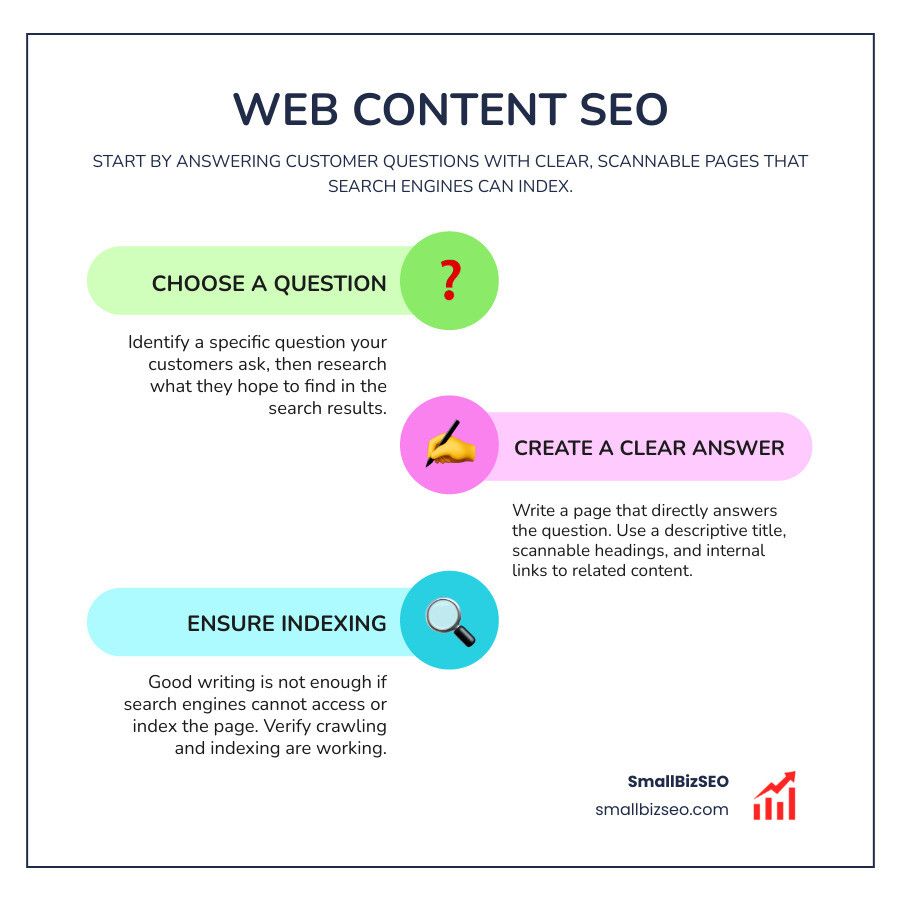
Core Pillars of Web Content SEO
A useful web content SEO process connects a customer's question to a page that the business can support with accurate information. Search engines discover and process pages in different ways, but writers should focus on the parts they can verify: the page's purpose, its evidence, its structure, and whether the intended page is accessible for indexing.
How Does Search Intent Inform a Content Brief?
Search intent is a working hypothesis about what a searcher is trying to accomplish. Informational, navigational, commercial, and transactional labels can help a writer frame that hypothesis, but many searches have mixed intent. Review the search results to learn the common formats, questions, and expectations, then decide what the business can genuinely offer. Research informs the page; it does not require copying competing pages or rule out a sales page automatically.
Use this original writer brief worksheet before drafting:
| Brief item | What to record |
|---|---|
| Audience and task | Who needs help and what they are trying to do |
| Primary question | The specific question the page should answer first |
| Page type | Guide, service page, comparison, FAQ, or another useful format |
| Actual business offer | The service, product, process, or information the business can accurately provide |
| Evidence required | Sources, firsthand experience, policy details, examples, or documentation needed to support claims |
| Exclusions | Claims, audiences, locations, prices, or outcomes the page should not imply |
| Next step | The accurate action a reader can take after finding an answer |
| Relevant internal links | Existing pages that help the reader continue their journey |
| Reviewer and acceptance check | The person responsible for confirming the page meets the brief |
Hypothetical small-service-business example: A vague draft says, “We offer quality solutions.” A more useful version might say, “Our [service] helps [customer type] with [specific need] through [documented process]. Availability is limited to [defined service coverage], and [important limitation] applies.” The bracketed details must be replaced only with facts the business can verify; the example does not claim results.

How Should Writers Optimize On-Page Elements?
On-page optimization helps readers and search engines understand what a page covers. Write descriptive, concise titles and snippets that accurately set expectations; their ideal length can vary by context and display. Use headings to organize the answer, not merely to repeat keywords.
- Title and meta description: Describe the page's topic and value honestly, using language that fits the searcher's task.
- Heading structure: Use a clear hierarchy so readers can scan major questions and supporting details.
- Image alt text: Describe meaningful images in context. Decorative images can use empty alt text when they add no informational value.
- URLs: Keep existing URLs stable when possible. For new pages, choose a clear, readable slug that fits the site's conventions rather than forcing a keyword into every URL.
- Internal links: Point to genuinely relevant pages that help a reader take the next logical step, such as this guide to foundational on-page SEO or SEO-friendly content writing.
What Does E-E-A-T Mean for Evidence and Authorship?
E-E-A-T refers to Experience, Expertise, Authoritativeness, and Trustworthiness. It is not a proprietary scoring hierarchy or a substitute for evidence. Match each claim to appropriate support, distinguish firsthand experience from general advice, and identify the author or team truthfully. Independent mentions, reviews, and citations may add useful context, but they do not automatically validate a claim.
Google's helpful-content guidance emphasizes content made to help people, with a clear purpose and sufficient information to meet their needs. For editors, that means checking whether the page answers its stated question, explains limits where needed, and avoids unsupported promises.
Step-by-Step Execution and Long-Term Content Growth
A practical web content SEO workflow moves from a verified customer need to a reviewed, measurable page. It does not guarantee rankings, and it does not require a rigid site architecture. The following steps keep the work grounded in reader value and business facts.
What Is a Practical Drafting and Review Workflow?
- Choose the customer question and check the existing-page fit. Confirm whether an existing page can answer the question better than creating a new one.
- Gather verified sources and the real offer. Collect approved details about the service, process, limitations, and supporting evidence before writing.
- Draft the direct answer and useful steps. Lead with the answer, then explain the process, choices, or constraints a reader needs to understand.
- Review claims and limits with a human reviewer. Check that statements are supported, qualifications are clear, and authorship reflects the real individual or team behind the page.
- Set an accurate next step. Invite the reader to contact the business, compare an option, or use another resource only when that action fits the page.
- Add relevant internal links. Use links to support the reader's journey, not to meet a fixed quota. For example, a writer planning a related article might consult keyword content optimization guidance before finalizing the brief.
- Preview the page on mobile and test functional forms. Check the reading experience, navigation, and any forms or calls to action that readers need to use.
- Confirm the intended page is accessible and indexable. Technical review should verify that the correct page can be reached and is eligible for indexing; following guidelines alone does not guarantee indexing.
- Publish, then measure and improve. Use the evidence collected after publication to decide what needs attention. For a broader review routine, see these professional blog SEO practices.
How Should Internal Links and Site Structure Support Readers?
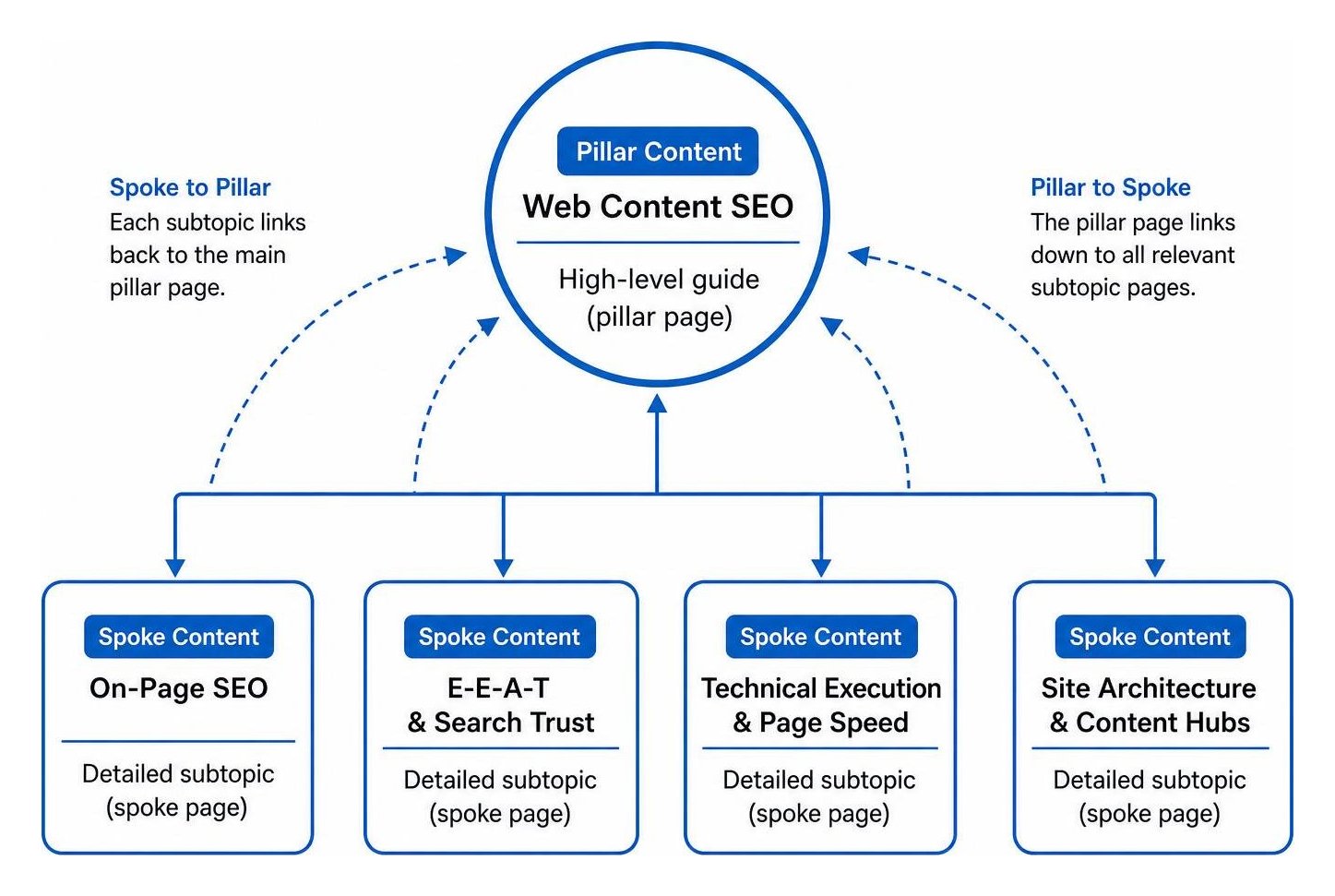
Organize pages in ways that make sense for readers and maintainers. Topic hubs can be useful when related content benefits from clear navigation, but a rigid pyramid is not required. Internal links should connect a reader to the next relevant resource, such as a content hub guide, without promising faster indexing or a ranking outcome.
How Do You Measure and Review Content Performance?
Google Search Console can show search impressions and clicks, which help explain how often a page appeared and was selected in Google Search. Qualified inquiries, form completions, and engagement should be evaluated separately in properly configured analytics or business systems. Treat these signals as context, not proof that one content change caused an outcome.
When a page underperforms, review the original intent, tracking setup, seasonality, technical accessibility, and the accuracy of the offer before deciding to revise, consolidate, or remove content. Content age alone does not establish decay, and pruning should not be automatic. A systematic content-pruning review can help teams document those decisions.
What Should the Final Acceptance Check Include?
Before publication, assign a reviewer and confirm that each material claim has evidence, the intended customer question is answered, internal links work, the next step is accurate, and the reviewer has recorded approval. This final check helps the team publish a page that is useful, supportable, and easier to maintain over time.
Turn Web Content into a Useful, Reviewable Asset
Web content SEO works best as a repeatable writing and review process: identify the customer's question, support the answer with evidence, structure the page clearly, connect readers to useful next steps, and revisit the page when the data or business offer calls for it.
For help building that process, explore SEO content services or book a conversation to discuss the current site, content goals, and review needs.