SEO and Search Basics: From Discovery to Useful Visits
What Is SEO, and How Does Search Work?
SEO helps people and search systems find pages that answer a need. It includes making important pages accessible, understandable, and useful, then checking whether the changes help real visitors. It does not guarantee indexing, rankings, visits, or citations in AI-generated responses.
Plain-language glossary
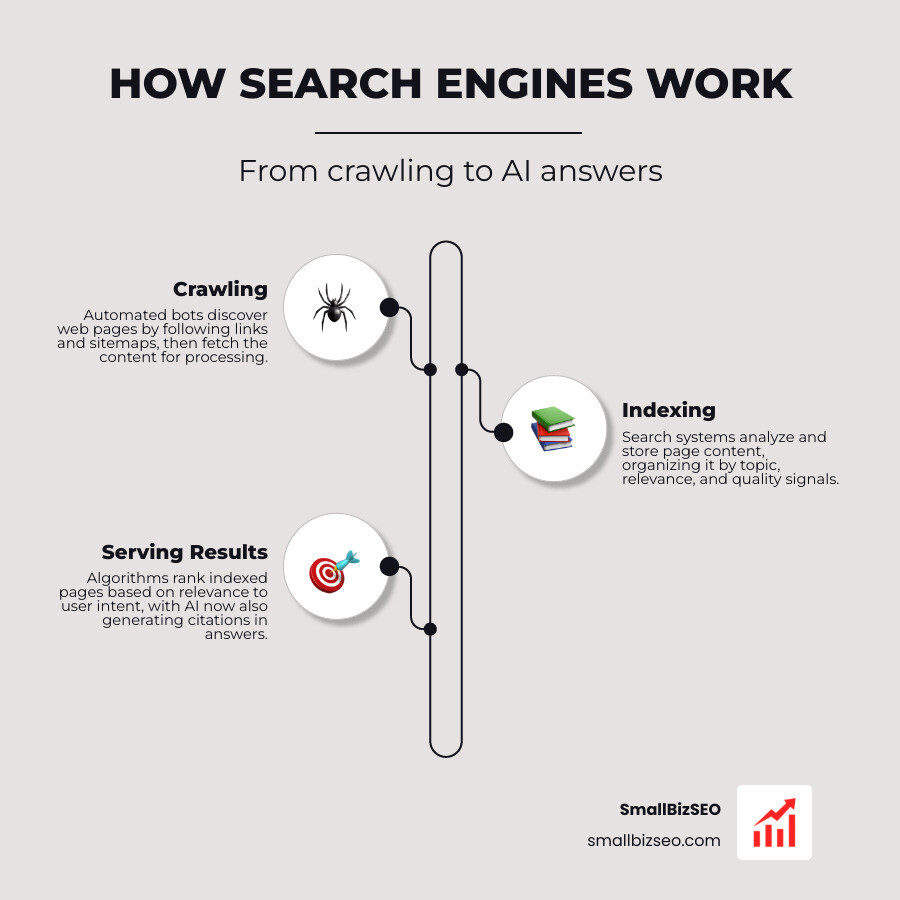
- Crawl: A search engine requests and retrieves a page. Discovering its URL is a related but separate step.
- Index: A search engine has processed a page and may be able to consider it for results. Crawling and indexing are different steps.
- Rank: Where a result appears for a particular search at a particular time. Rankings can vary by query, device, and context.
- Impression: A recorded appearance of a result in a search report. It is not the same as a visit.
- Click: A searcher selecting a result. A click does not by itself show whether the visit was useful.
- Conversion: A meaningful action defined by the business, such as a completed inquiry. It should be measured with validated tracking and appropriate privacy controls.
Search engine optimization is the work of improving a site's accessibility, usefulness, and clarity for people and search systems. Rather than relying on formulas, start with an important page and the question it should answer.
How Does Google Discover and Process Content?
Google can discover many pages through links and other signals. Logical navigation and useful content can make a site easier to explore. Google may render a page to understand its content, but that rendering may not match every visitor's experience or every device configuration.
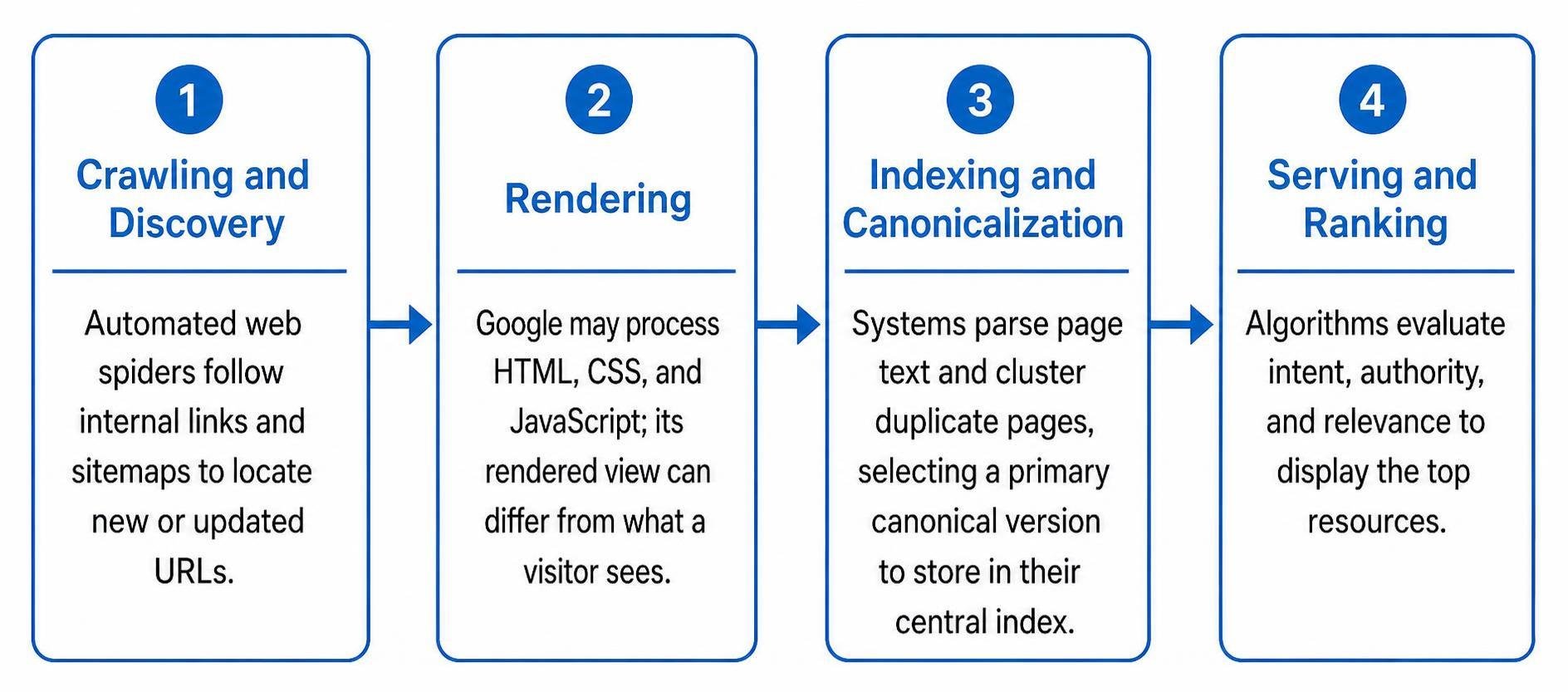
- Discovery and crawling: Google finds a URL and attempts to fetch its content.
- Rendering: Google may process page resources, including JavaScript. What Google receives can differ from what an individual visitor sees.
- Indexing: Google analyzes the page and may add information about it to its index.
- Serving results: Google selects and orders results for a query using many contextual signals.
The URL Inspection tool can help investigate Google's view of a specific URL. Crawling, indexing, and ranking are separate outcomes, none is guaranteed, and changes can take time to be reflected. See the Google Search Central SEO starter guide for the primary guidance.
The stages above describe Google broadly. Other search and AI products can use different systems, data sources, and presentation methods, so it is not accurate to describe every product as following the same process.
How Can You Use Search Intent Carefully?
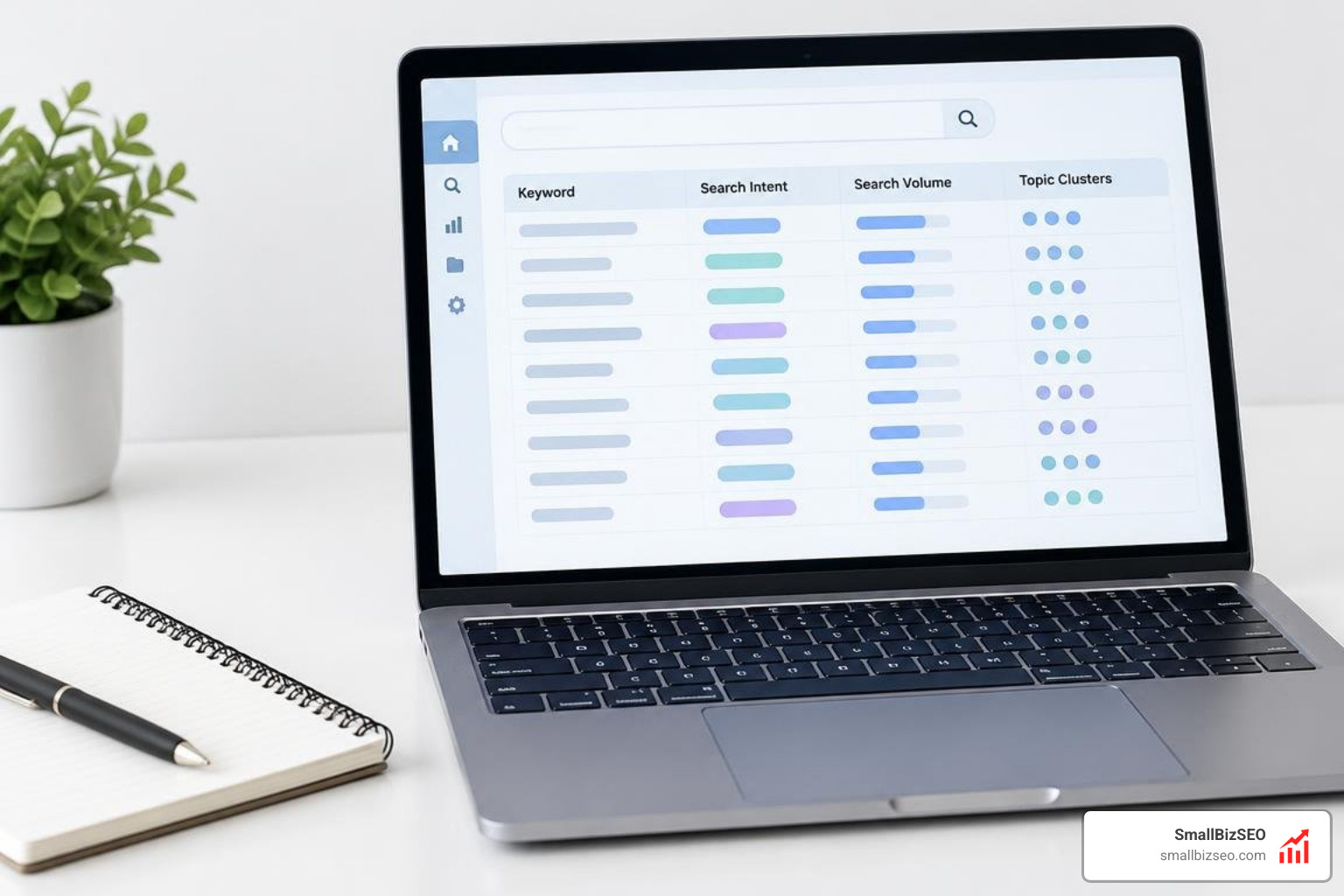
Intent categories are useful hypotheses, not fixed labels. A search can reflect one or several needs:
- Informational: A person may want an explanation, instruction, or tutorial.
- Navigational: A person may be seeking a specific brand, portal, or page.
- Commercial: A person may be comparing solutions, tools, or providers.
- Transactional: A person may be ready to begin an inquiry or purchase.
Review the results already shown for a query, the wording people use, and the task the page is meant to support before deciding what to improve.
On-site search data can reveal questions visitors type into your own website when that data is available, collected with consent, and reviewed in a privacy-conscious way. It is optional evidence, not a requirement for every site.
Keyword mapping can help teams see where similar topics overlap, but it does not require one page for every phrase or eliminate every duplication risk. Use clear page purposes, descriptive headings, and search-intent guidance to decide whether a page should be improved, consolidated, or left distinct.
What Are the Core Pillars of Website Optimization?
Website optimization brings together useful content, public-page access, usability, and earned recognition. These are areas to inspect and improve, not a promise of a particular search outcome.
What Should You Check Across On-Page, Technical, and Off-Page SEO?
Use each area to define an activity, a question to validate, and its practical limit:
| Area | Activity | Question to validate | Limit to remember |
|---|---|---|---|
| On-page SEO | Write useful, truthful copy with descriptive titles, headings, and links. | Does the page answer the customer's task clearly? | Clear wording does not guarantee a ranking. |
| Technical SEO | Check that public pages are reachable, usable, and understandable to visitors and crawlers. | Can important content and actions be accessed and tested? | A usable page can still be excluded from an index. |
| Off-page SEO | Earn legitimate editorial mentions where the work is genuinely relevant. | Is the mention independently chosen and useful to its audience? | Paid links intended to influence rankings are not a substitute for earned trust. |
For on-page work, focus on ordinary descriptive titles, headings, and links that help people navigate the page. There is no reliable keyword-density, word-count, or schema formula that makes a page succeed.
Helpful on-page SEO starts with the page's purpose and the information visitors need. Technical SEO can help identify access, rendering, navigation, and usability issues, but every change still needs testing.
How Can You Use E-E-A-T Thoughtfully?

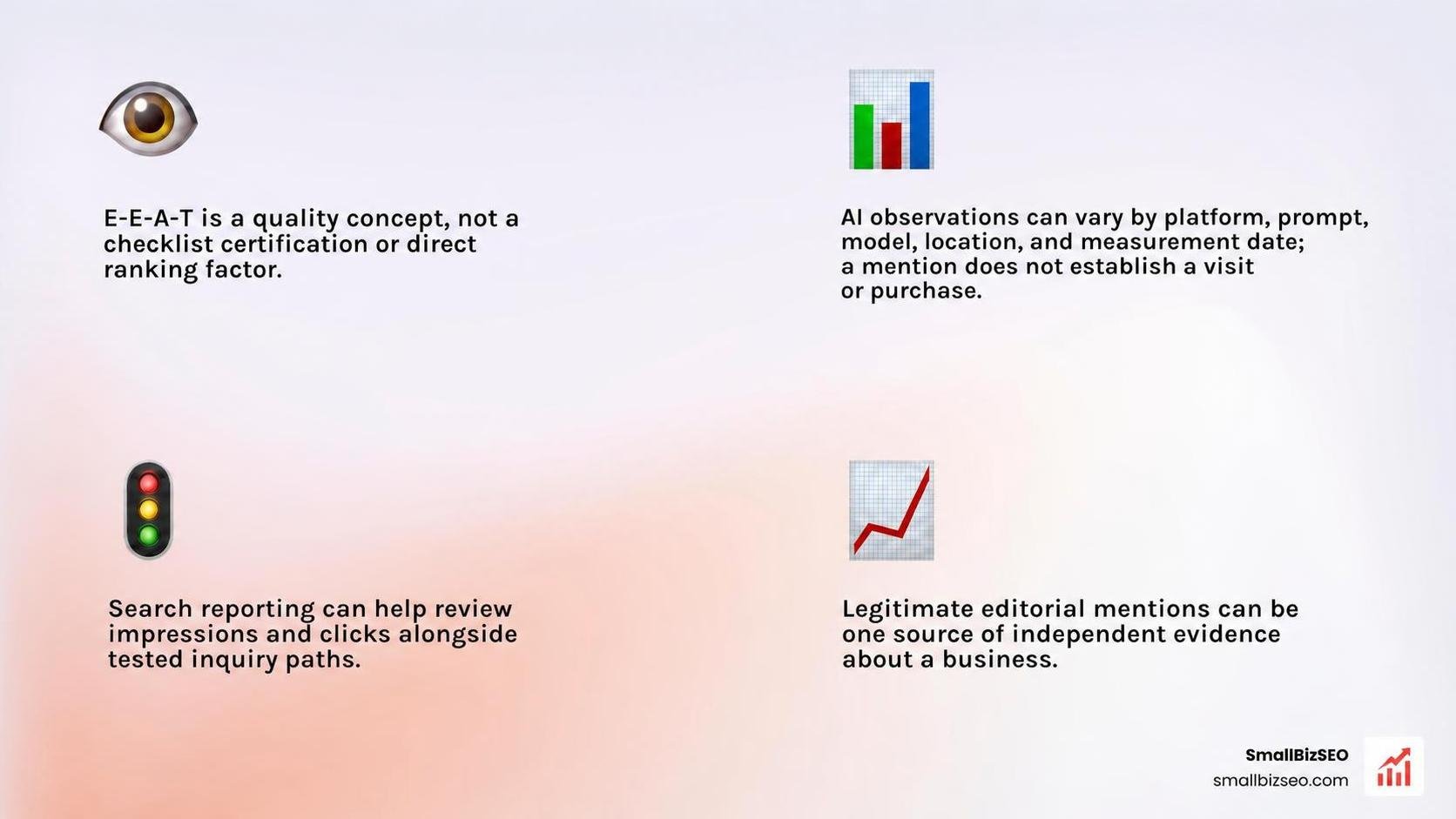
E-E-A-T is a quality concept, not a checklist certification or a direct ranking factor. When it is relevant, present only supportable information:
- Experience: Describe first-hand work only when it is real and permission allows it to be shared.
- Expertise: Identify credentials or specialized knowledge only when they can be verified.
- Authoritativeness: Cite reliable sources and seek legitimate editorial recognition rather than ranking-oriented paid links.
- Trustworthiness: Use clear sourcing, accurate business information, and accessible contact paths.
Do not invent testimonials, case studies, credentials, or outcomes to make a page sound more authoritative. Avoid deceptive practices such as hidden text, misleading claims, and paid link schemes intended to manipulate rankings.
Use normal, reader-focused page structure: a descriptive title, clear headings, useful internal links, and evidence that supports the claims being made. Revisit the page when its information, user needs, or technical behavior changes.
How Can You Improve One Important Page First?
Start with one important page and one customer need. A small, documented change is easier to validate than a broad program built on assumptions.
First-Page Improvement Worksheet
- Page and customer need: Name the page and the task a visitor should be able to complete.
- Observed gap: Record the specific problem, such as unclear service coverage, confusing copy, or an inaccessible inquiry route.
- Evidence and source owner: Note where the evidence came from and who can confirm it.
- Smallest useful change: Make the narrowest change that addresses the observed gap.
- Publishing owner: Identify who is responsible for approving and publishing the update.
- Acceptance check: Define how to test that the page, form, or link works as intended.
- Measurement window and uncertainties: Choose a reasonable observation period and note other changes, seasonality, and incomplete attribution.
For example, a service page may have unclear coverage details and an inquiry button that does not work for some visitors. Confirm the actual service information with its owner, provide an accessible contact route, test the form, and record the test result. This corrects a real page problem without inventing a result.
How Can You Measure What Changed?
A page can be usable and technically eligible for indexing without being indexed. If it is indexed, impressions, clicks, and qualified inquiries are separate observations rather than automatic steps in one funnel:
- Page checks: Confirm that the page loads, key content is available, and the intended contact or inquiry path can be completed.
- Search observations: Review impressions and clicks in validated search reporting when sufficient data is available.
- Qualified inquiries: Define the business action that matters and test whether the tracking records it accurately.
- Context: Compare observations with other site changes, marketing activity, seasonality, and known data gaps.
Analytics can support a discussion about outcomes, but revenue is not the same as profit or return on investment, and attribution is often incomplete. Use validated tracking and privacy-aware collection before drawing conclusions. AI observations are also limited by the platform, model, prompt, location, date, and sample examined; a brand mention or citation does not establish a visit or purchase. Ordinary SEO basics can still help pages remain understandable as Google introduces AI features, but they do not guarantee inclusion in any AI experience.
Choose One Useful Next Step
Choose one important page, document the visitor need and the observed gap, then make and test the smallest useful update. A SEO visibility audit can help organize that review. If you need help confirming page issues or contact paths, use the contact page. The goal is a clearer, more usable page and better evidence for the next decision, not a guaranteed ranking, citation, or growth outcome.