Step-by-Step Guide to SEO for Sunroom Contractors
Why Does SEO Matter for Sunroom Contractors?
SEO for a sunroom contractor starts with three tasks: create separate pages for each room type you build, show real projects you have completed, and keep your Google Business Profile accurate and current. Add clear pricing guidance and an easy way to request an estimate. These steps help homeowners find you while they gather ideas, compare budgets, and choose a builder.
I’m Clayton Johnson, founder of SmallBizSEO. My work in technical SEO, content strategy, and local visibility shapes this guide to SEO for sunroom contractor businesses; next, we’ll look at how buyers search and what your site needs to answer.
Glossary for SEO for sunroom contractor:
- SEO for screen houses & enclosures
- SEO for deck & patio builders
- SEO for awnings, canopies, & shade structures
Unlike emergency repairs where a pipe bursts at midnight, an outdoor addition is a planned, discretionary purchase. Homeowners often spend considerable time researching styles, planning budgets, and evaluating structural designs before contacting a builder. Because average contracts range from $15,000 for a screen enclosure to over $90,000 for an insulated space, prospective buyers take their time.
Renting leads from third-party aggregators often forces builders to fight multiple competitors for the same shared homeowner contact. In contrast, building your own search engine visibility establishes permanent digital assets. Capturing direct search traffic connects your business with serious prospects who are already sold on your craftsmanship.
What Are the Core Pillars of SEO for Sunroom Contractor Lead Generation?
Effective search marketing requires targeting the precise phrases homeowners search for, maintaining fast mobile website performance, and demonstrating verified local craftsmanship. A successful campaign aligns technical website architecture with the specific structural questions property owners ask during the planning process.
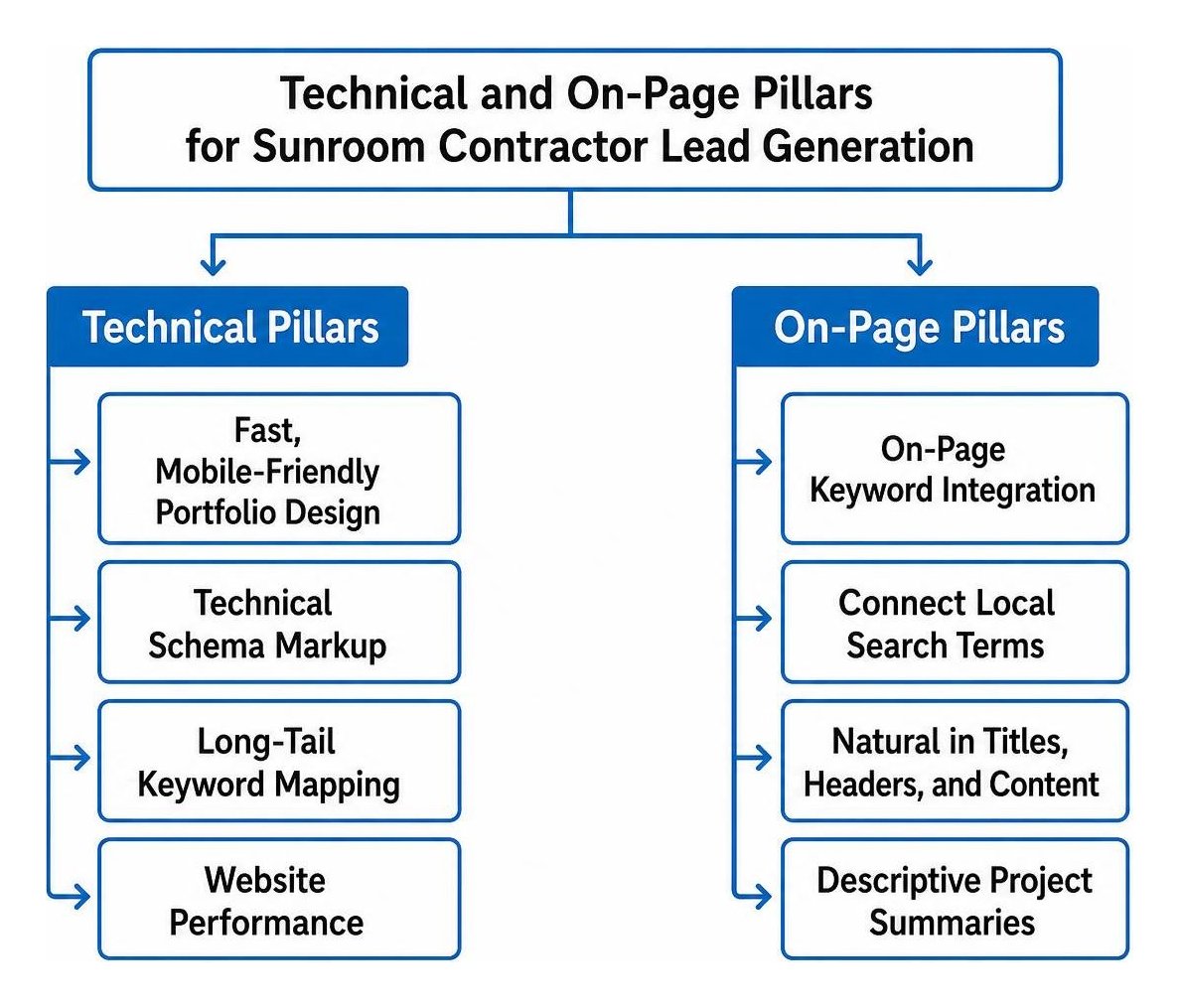
To build a strong foundation, contractors must implement:
- Long-Tail Keyword Mapping: Assign unique search intents to specific pages rather than blending every service onto a single homepage.
- Fast, Mobile-Friendly Portfolio Design: Compress high-resolution project photography so image-heavy galleries load smoothly on mobile phones without slowing performance.
- Technical Schema Markup: Add structured data such as LocalBusiness to help search engines accurately interpret your services, pricing, and business details.
- On-Page Keyword Integration: Connect local search terms naturally across titles, headers, and descriptive project summaries.
Contractors looking to strengthen their technical website foundation can explore our complete construction SEO services to establish a reliable, high-performing lead generation engine.
How Do Sunroom Buyers Search Across the Buying Journey?
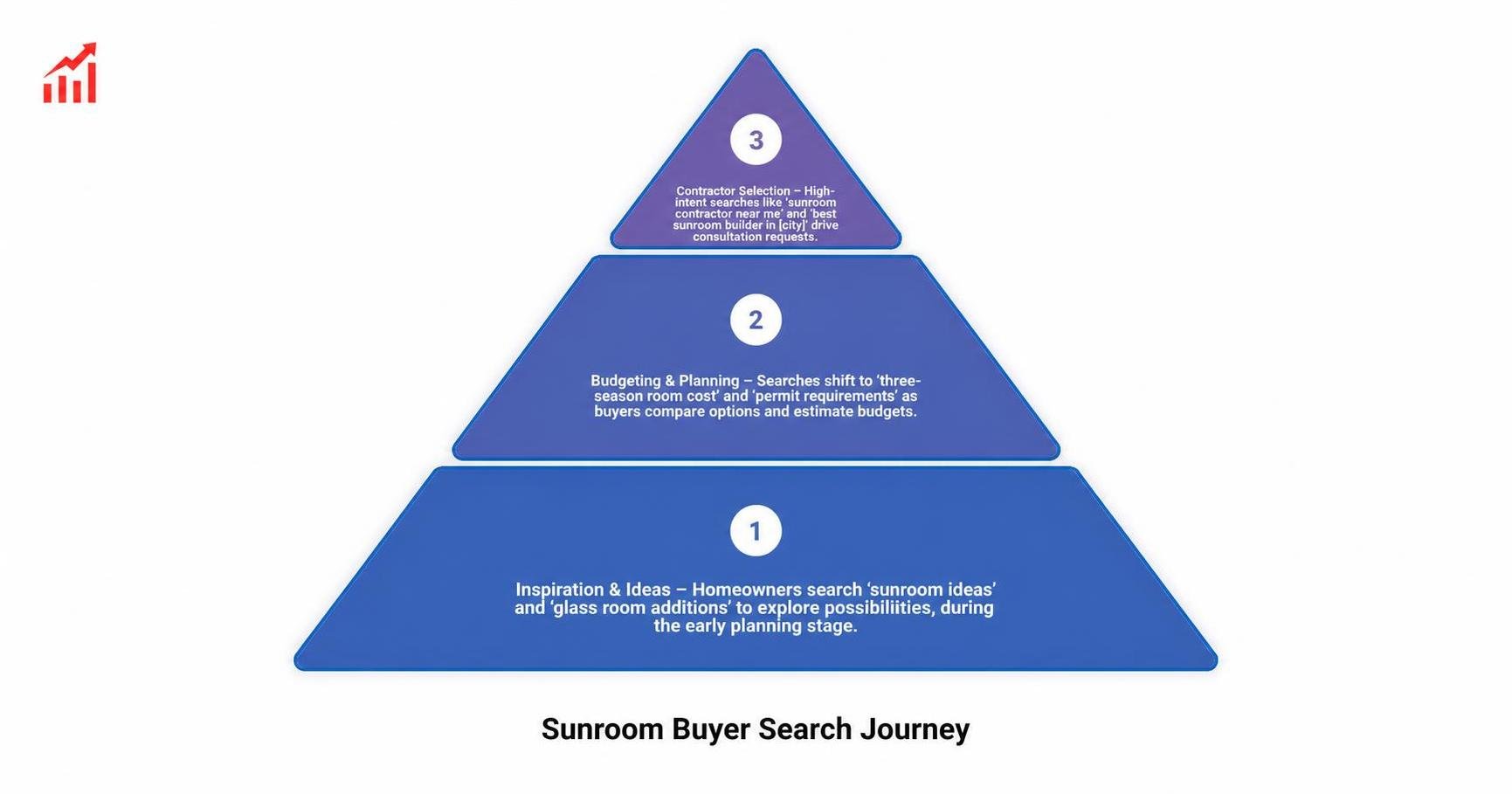
Sunroom search behavior often follows three clear planning phases: daydreaming, budgeting, and choosing. Understanding this progression helps contractors publish relevant content before interest increases.
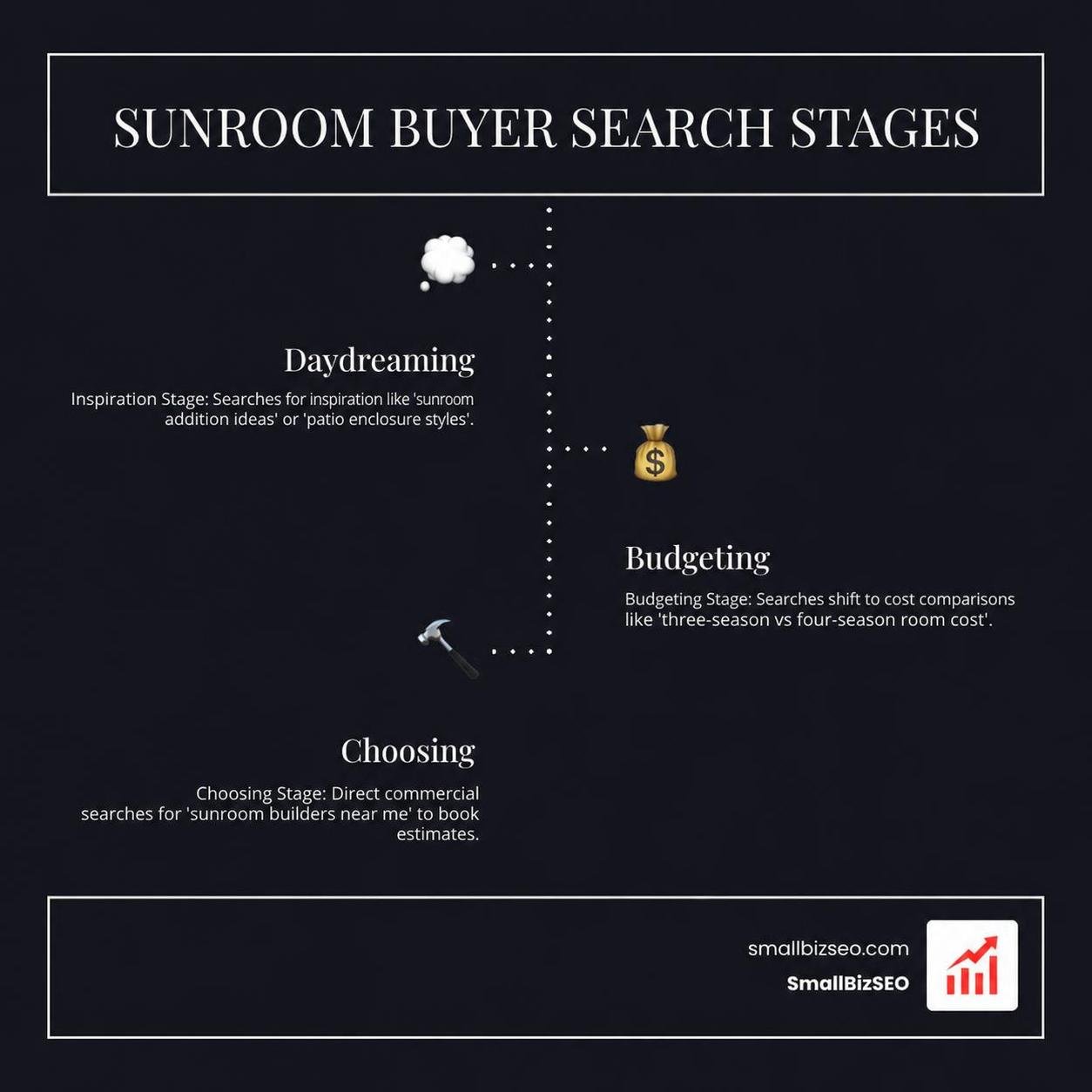
Search interest often increases as homeowners begin planning for warmer weather. Initial research commonly starts well before they contact a builder. Search queries typically progress through three distinct stages:
- The Daydreaming Phase: Homeowners search for visual inspiration and layout concepts using queries like "sunroom addition ideas" or "patio enclosure styles."
- The Budgeting Phase: As planning advances, searches shift to financial feasibility, focusing on terms like "three-season vs four-season room cost" and "sunroom financing options."
- The Choosing Phase: Buyers actively search for local installers using direct commercial terms like "sunroom builders near me" to request in-home estimates.
Because search engines need time to index, evaluate, and rank new pages, publishing pricing guides and design resources well before demand rises gives your site time to gain visibility.
How Should Sunroom Contractors Structure Room-Type Pages?
Sunroom contractors must create dedicated, standalone pages for every distinct room style they build instead of combining all services onto one generic page. Bundling three-season rooms, four-season additions, and screen porches onto a single URL creates keyword confusion and fails to answer specific buyer questions.
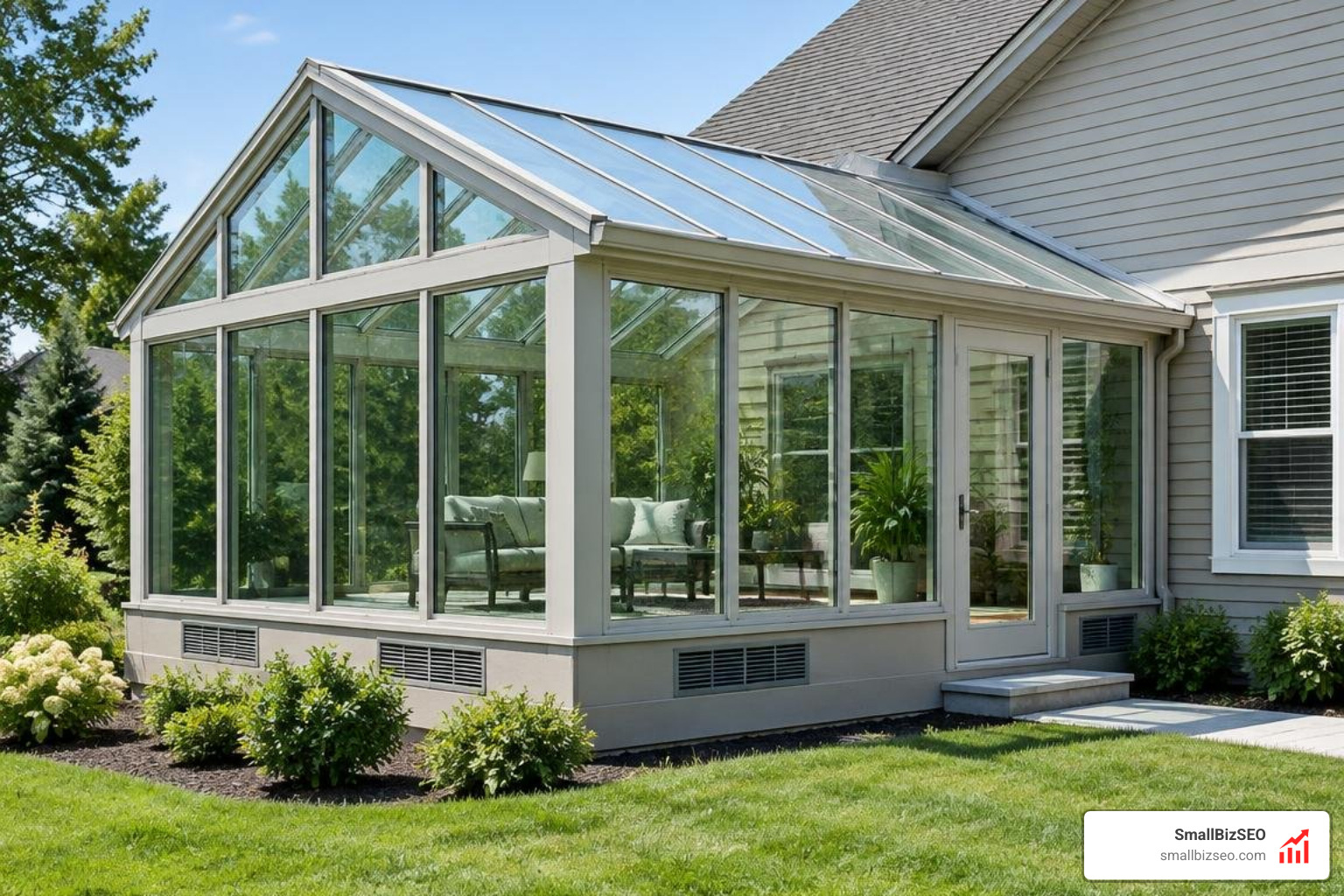
Homeowners searching for a basic screened porch have vastly different expectations, budgets, and permit requirements than those planning an insulated, permanent living space. Separating your service offerings allows you to provide direct answers regarding thermal performance, HVAC tie-ins, and return on investment.
| Room Type | Typical Installed Cost | Expected Resale ROI | Primary Search Intent | Key Content Focus |
|---|---|---|---|---|
| Screened Porch | $15,000 – $35,000 | 20% – 40% | Bug protection, fresh air, low entry cost | Framing, mesh durability, seasonal airflow |
| Three-Season Room | $25,000 – $55,000 | 30% – 50% | Extended seasonal use, rain/wind protection | Single-pane glass, weather seals, spring-to-fall use |
| Four-Season Sunroom | $45,000 – $90,000+ | 50% – 60% | Permanent conditioned living space | Thermal breaks, insulated glass, HVAC integration |
| Solarium / Glass Roof | $60,000 – $120,000+ | 50% – 60% | Maximum natural lighting, architectural feature | Curved glass, structural framing, solar heat gain |
Providing transparent price ranges and realistic resale return estimates builds immediate credibility. Property owners who understand cost variations upfront convert into booked consultations at significantly higher rates. Specialty installers can also review our guide for a general contractor SEO company to see how focused service structures outperform broad remodeling sites.
How Can Google Business Profile Help Sunroom Contractors Appear in Local Results?
An optimized Google Business Profile with precise business categories, steady customer reviews, and fresh project photos directly drives visibility in the local map pack. Because ninety percent of clicks go to the top three local organic positions, winning a map placement is critical for driving calls.
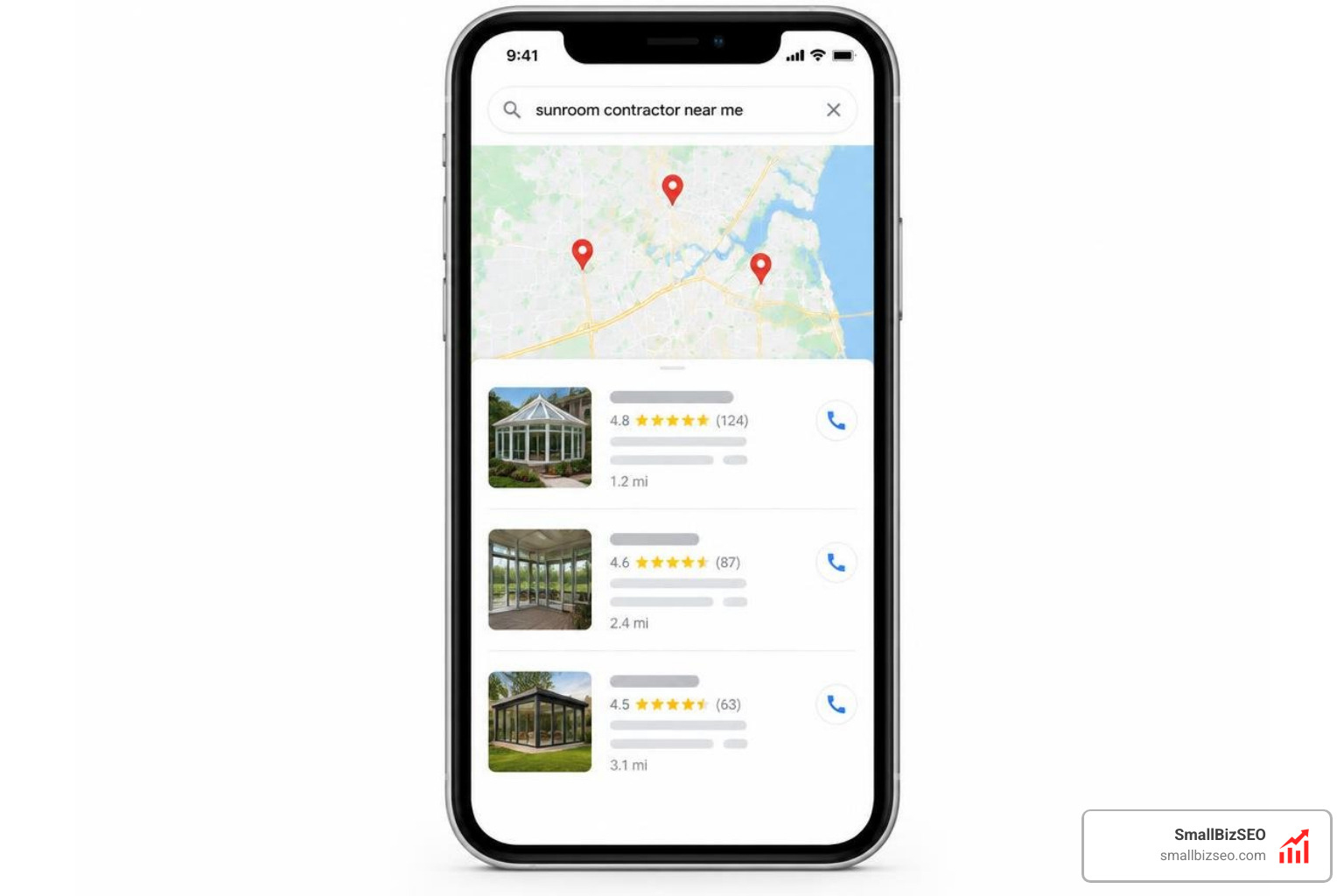
To maximize your local map ranking signals:
- Set the Primary Category Correctly: Use "Sunroom Contractor" as your primary classification, and include relevant secondary categories like "Patio Enclosure Supplier" or "Deck Builder."
- Maintain Review Velocity: A profile with sixty reviews averaging a 4.8-star rating regularly outranks a competitor with only twelve reviews at 5.0 stars. Consistent feedback signals an active, trustworthy business.
- Include Project Details in Review Responses: When replying to client reviews, naturally mention the completed project type, such as insulated four-season additions or custom patio enclosures.
- Upload Real Job-Site Photos Regularly: Add geotagged, high-quality images of completed projects regularly to demonstrate recent project activity.
For a comprehensive breakdown of map-pack optimization strategies, refer to our detailed local SEO guide to capture nearby search traffic.
How Can Hyper-Local Content Help Contractors Compete With National Directories?
Contractors can outrank national directory websites by publishing authentic, hyper-local project details, permit guidance, and regional construction considerations that aggregators cannot replicate. National directories rely on generic templates, giving local specialists an advantage when targeting specific towns.
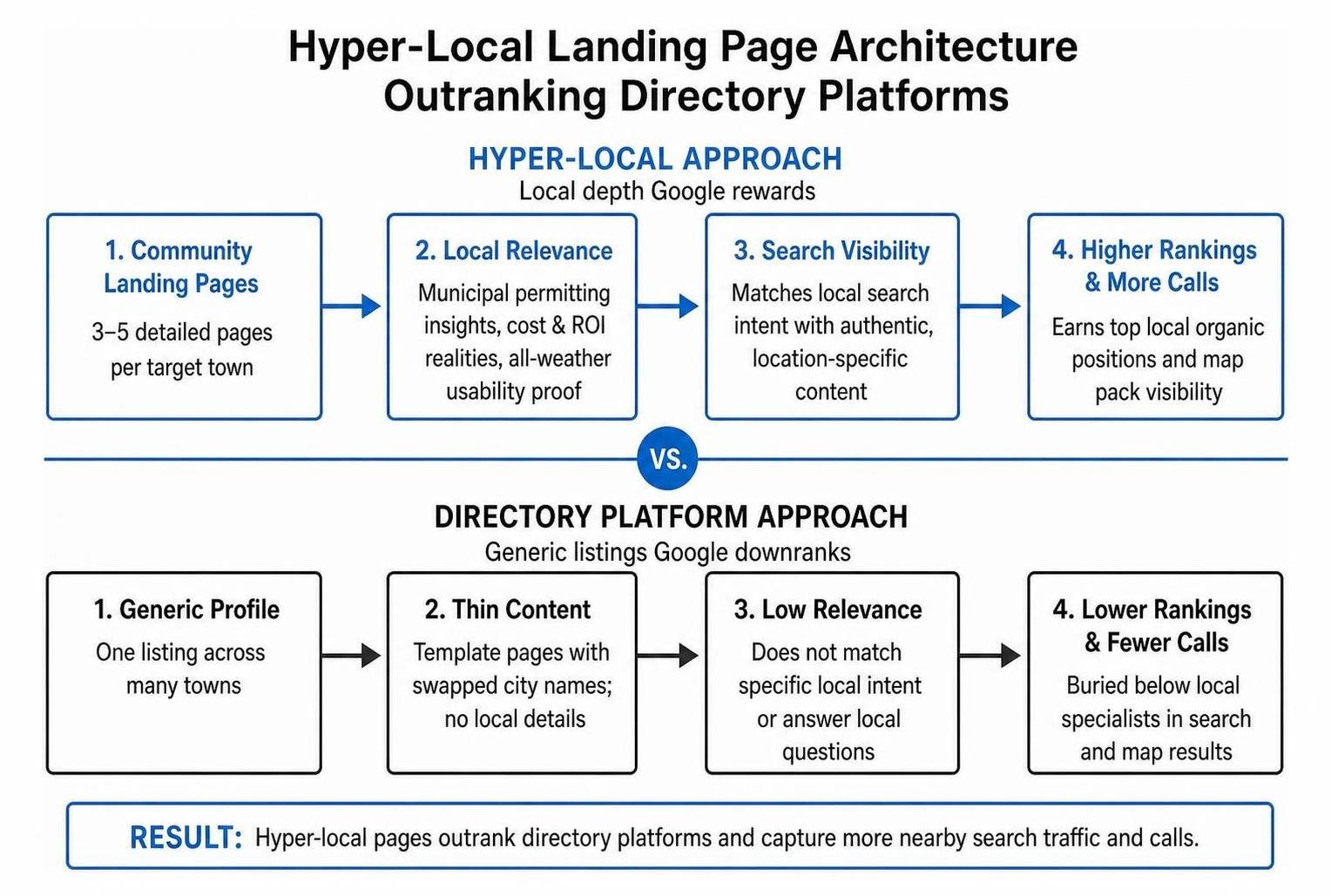
Rather than publishing thin doorway pages with swapped city names, create three to five detailed community landing pages featuring:
- Municipal Permitting Insights: Explain local building setbacks, frost-line footing depths, and zoning requirements for specific neighborhoods.
- Localized Cost and ROI Realities: Detail how climate control needs and local property values impact project budgets in specific areas.
- All-Weather Usability Proof: Publish photographs of completed sunrooms in challenging weather with interior lighting and heating running to demonstrate reliable comfort.
Implementing an authentic local home services SEO strategy ensures your business establishes domain authority while converting local homeowners into exclusive leads.
How Can Contractors Turn Local Search Traffic Into Booked Consultations?
Turning website visitors into consultation appointments requires clear estimate forms, structured photo galleries with project details, and visible trust signals. High-intent search visitors look for proof of craftsmanship before sharing their contact details.
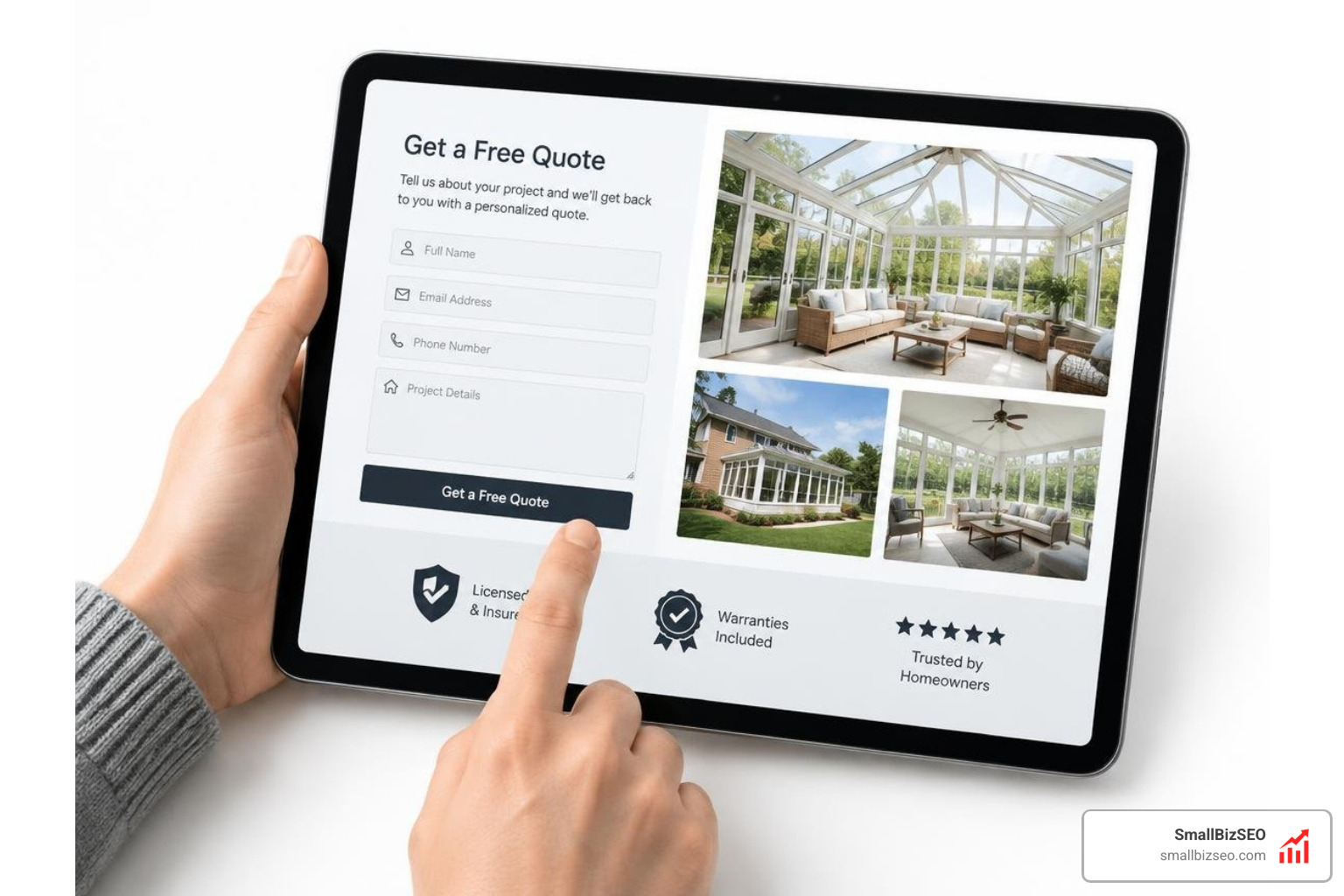
To improve conversion rates across your website:
- Structure Gallery Pages by Style: Organize image galleries into distinct categories with descriptive captions noting room dimensions, construction timeframes, and budget brackets.
- Simplify Consultation Forms: Request only vital details on your initial contact form—name, phone number, town, and room type—to reduce friction.
- Highlight E-E-A-T Signals: Prominently display active builder licensing, comprehensive liability insurance, manufacturer partnerships, and clear warranty terms across every page.
How Can Automated Follow-Up Help Recover More Leads?
Automating immediate responses for missed calls and scheduling steady follow-ups for open quotes recovers prospective clients who would otherwise contact competitors. Roughly 68% of lost contractor leads stem from unanswered calls during active construction hours.
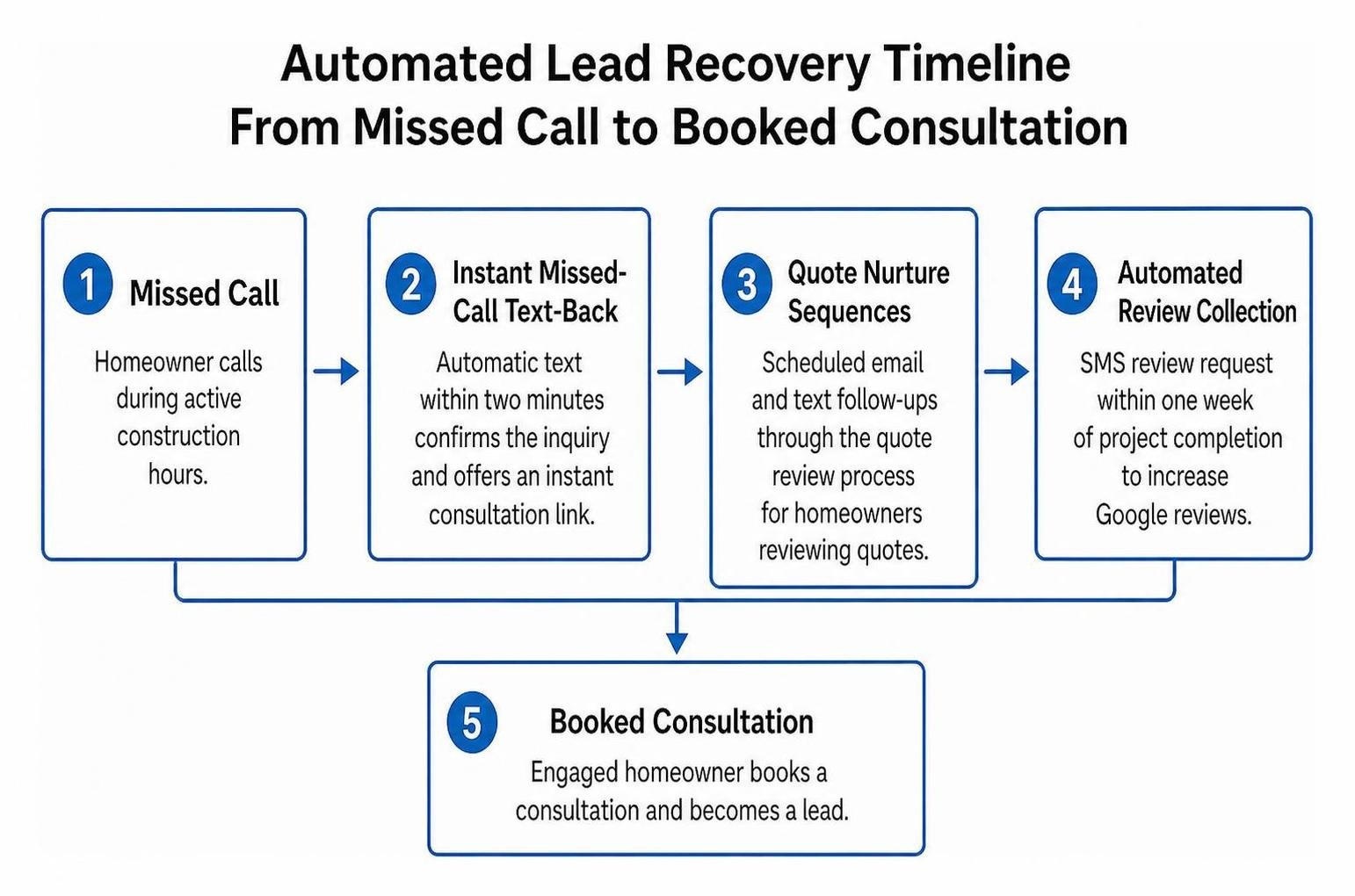
Implementing simple workflow automations safeguards your marketing investment:
- Instant Missed-Call Text-Back: Send an automated text message within two minutes of a missed call to confirm you received their inquiry and offer an instant consultation link.
- Quote Nurture Sequences: Deploy scheduled email and text follow-ups for homeowners reviewing high-ticket quotes, sharing financing details and past project case studies.
- Automated Review Collection: Trigger SMS review requests within one week of project completion, which can increase Google reviews by 4x compared to manual outreach.
Should Sunroom Contractors Do SEO Themselves or Hire a Specialist?
Contractors should decide between DIY efforts and hiring a dedicated marketing partner based on available administrative time, technical proficiency, and local market competitiveness. Building a high-ranking digital footprint requires steady technical upkeep, content development, and link acquisition.
A DIY approach or an entry-level site builder can suit a new builder operating in an area with minimal competition. However, established contractors aiming to secure large addition projects often find that managing technical SEO alongside job-site operations takes focus away from project delivery.
A specialized SEO campaign establishes steady organic lead generation. Contractors can begin receiving inquiries from local pages as those pages gain visibility, while competitive head terms and pricing queries take longer to mature. Builders who use an integrated organic marketing framework can achieve substantial traffic and inquiry growth as the campaign develops.
Transform Your Sunroom Search Rankings into Booked Building Projects
Dominating local search results requires aligning your website architecture with how homeowners research, budget for, and select high-ticket room additions. By establishing distinct room-type pages, publishing transparent cost data, optimizing your Google Business Profile, and automating lead follow-ups, your business can turn seasonal search interest into consistent, profitable construction contracts.
If you are ready to evaluate your current digital reach and outrank nearby competitors, request a comprehensive SmallBizSEO visibility audit today to start growing your inbound project pipeline.