Win Local Customers by Mastering Small Business Blog SEO

Win Local Customers by Mastering Small Business Blog SEO
How Can Your Small Business Blog Bring in Local Customers?
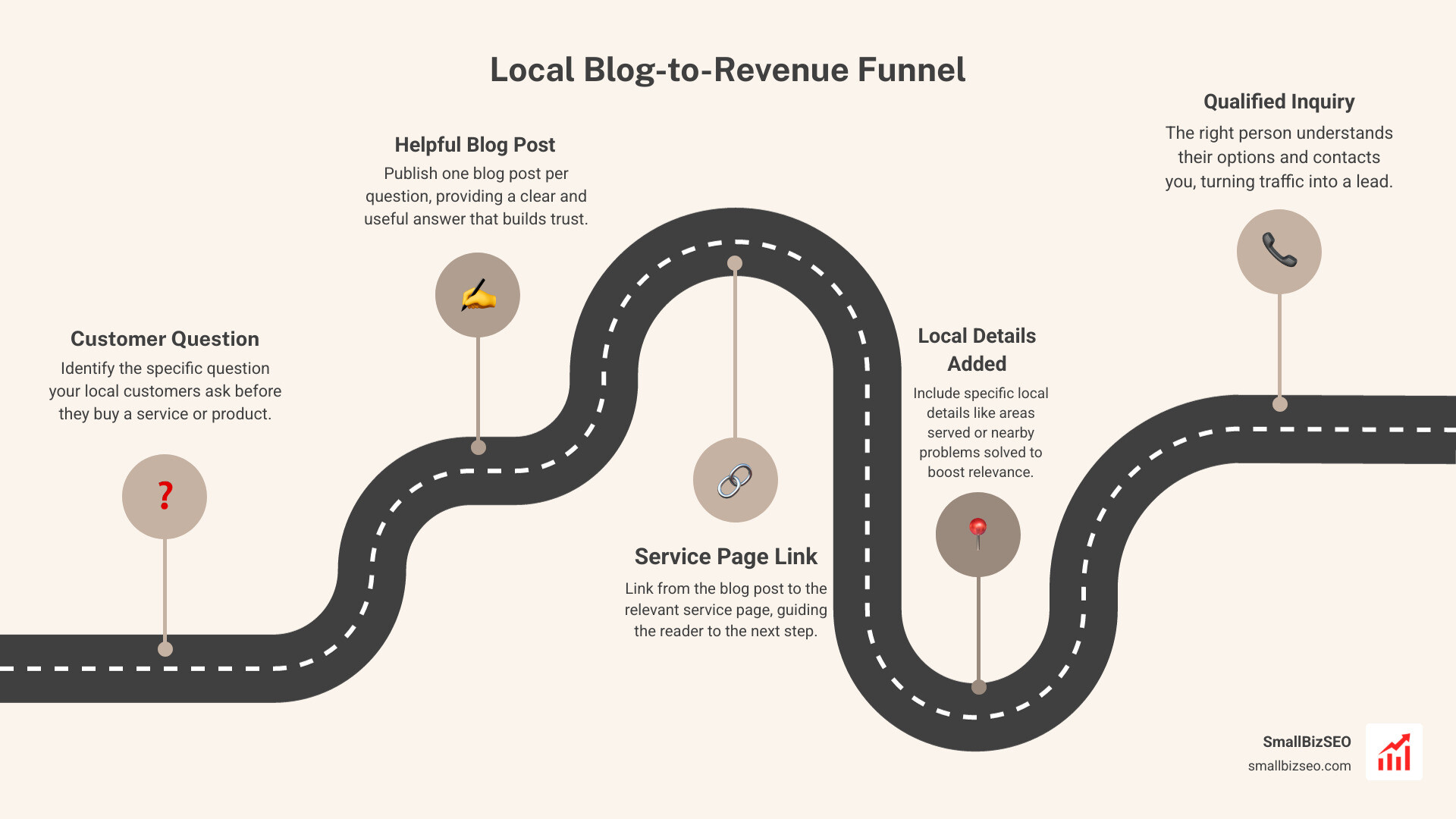
To improve SEO for a small business blog, start with questions your customers ask before they buy. Choose one question per post, give a clear answer, and link to the service page that helps the reader take the next step. Add local details when they matter, such as the areas you serve or problems you solve nearby.
A useful post should do more than attract a visit. It should help the right person understand their options and make it easy to contact you.
I'm Clayton Johnson, founder of SmallBizSEO. My work on SEO for small business blog content connects customer questions, clear answers, and useful service pages so search visibility can support qualified leads.
Glossary for SEO for small business blog:
- SEO advice for small businesses
- comparing affordable SEO for small business
- SEO service for business
Core Framework: How to Master SEO for Small Business Blog Visibility
To master blog visibility, organize your articles into topic clusters that address specific search intent and point internal links directly to your core commercial offerings. A revenue-first strategy prioritizes solving real customer problems over chasing vanity pageviews, boosting dwell time and guiding readers naturally toward making an inquiry.
A successful business blog functions as an educational bridge. Rather than publishing disconnected articles, structure your content using hub-and-spoke topic clusters. The informational blog post answers top-of-funnel questions, while internal links guide prospective buyers toward specific service landing pages. Following established best practices from resources like Google's Search Engine Optimization SEO Starter Guide, this structure helps search engines crawl your site efficiently while establishing clear topical authority.
Why Is SEO for a Small Business Blog Essential for Customer Acquisition?
SEO for a business blog creates permanent digital equity that lowers customer acquisition costs over time. While temporary campaigns stop generating leads the second funding pauses, an optimized blog article continues to attract high-intent local visitors month after month.
Organic search accounts for 53.3% of all web traffic, and businesses prioritizing organic content can reduce their average cost per lead by up to 61%. Understanding what SEO is and how it works reveals that informational searches allow you to capture potential customers earlier in their decision-making process.
| Content Element | Standard Generic Blog Post | Revenue-Optimized Small Business Blog |
|---|---|---|
| Topic Selection | Broad industry news and high-level trends | Specific customer pain points and common buying questions |
| Keyword Strategy | High-volume, hyper-competitive head terms | Low-competition, high-intent long-tail phrases |
| Internal Linking | Generic or missing links | Contextual links pointing directly to revenue-generating service pages |
| User Intent | Passive reading with high bounce rates | Active problem solving leading to qualified inquiries |
| Conversion Focus | None or vague newsletter signups | Clear, relevant calls to action tailored to the buyer's stage |
How Do You Research Revenue-Focused Keywords for Local Service Blogs?
To find revenue-focused keywords, target specific long-tail queries that contain problem-solving phrases, comparison terms, or local modifiers. These specific phrases indicate that the searcher has an urgent need and is actively seeking a professional solution.
Begin by reviewing the questions your customers ask during phone consultations and sales meetings. Pair these insights with local SEO basics to identify terms with lower keyword difficulty and clear commercial intent. Following proven methods outlined in HubSpot's guide on Blog SEO: How to Search Engine Optimize Your Blog Content, prioritize queries like "how to fix water heater pilot light" rather than broad terms like "plumbing." This approach connects your business with readers who need immediate assistance and are ready to hire a professional.
How Do You Optimize On-Page Elements and E-E-A-T for Blog Posts?
Optimize each post by placing your primary keyword in the title tag, URL, and introductory paragraph while demonstrating first-hand experience through transparent author credentials. Search engines evaluate Experience, Expertise, Authoritativeness, and Trustworthiness (E-E-A-T) to ensure content delivers genuine value to real users.
Structure your articles with a logical heading hierarchy (H1, H2, H3) and craft descriptive title tags under 60 characters with your core keyword near the front. Balance your on-page elements by integrating the 4 types of SEO across your content strategy:
- Helpful Introductions: Address the reader's main question within the first 100 words to improve user engagement.
- Contextual Internal Links: Use descriptive anchor text that links relevant concepts directly to your primary service pages.
- Original Media: Include custom images, project photos, or explanatory graphics with descriptive alternative text.
- Author Transparency: Feature dedicated author bios that highlight real-world field experience, licenses, and industry certifications.
How Can SEO Help Your Blog Get Cited in AI Overviews?
To earn citations in AI Overviews, provide concise definitional answers directly beneath your section headings and implement structured FAQ schema markup. Modern search engines and answer engines extract well-structured summaries that deliver immediate, factual answers to conversational queries.
As detailed in Shopify's breakdown on Blog SEO: How To Improve Your Blog’s Rank on Google - Shopify, organizing your content with clear semantic formatting makes it easy for automated systems to parse and reference your insights. Include standalone summary paragraphs, step-by-step ordered lists for technical processes, and JSON-LD schema markup to position your blog as a preferred, authoritative source.
Execution and Measurement: How to Scale Blog ROI and Revenue
Scale your blog's return on investment by maintaining fast page load speeds, ensuring flawless mobile usability, and tracking every phone call and form submission back to specific articles. Technical stability ensures visitors stay on your site, while closed-loop tracking demonstrates exact revenue contribution.
If a page loads slowly or shifts unexpectedly on mobile devices, potential clients quickly bounce to a competitor. Maintaining healthy Core Web Vitals guarantees that your educational content converts incoming organic traffic into phone calls, booked appointments, and paying customers.
What Is the 90-Day Implementation Plan for SEO for Small Business Blog Success?
A structured 90-day plan progresses from technical foundation fixes in month one, to publishing localized cluster content in month two, and building local authority links in month three. This phased timeline ensures your site is fully crawlable before expanding your topical footprint.
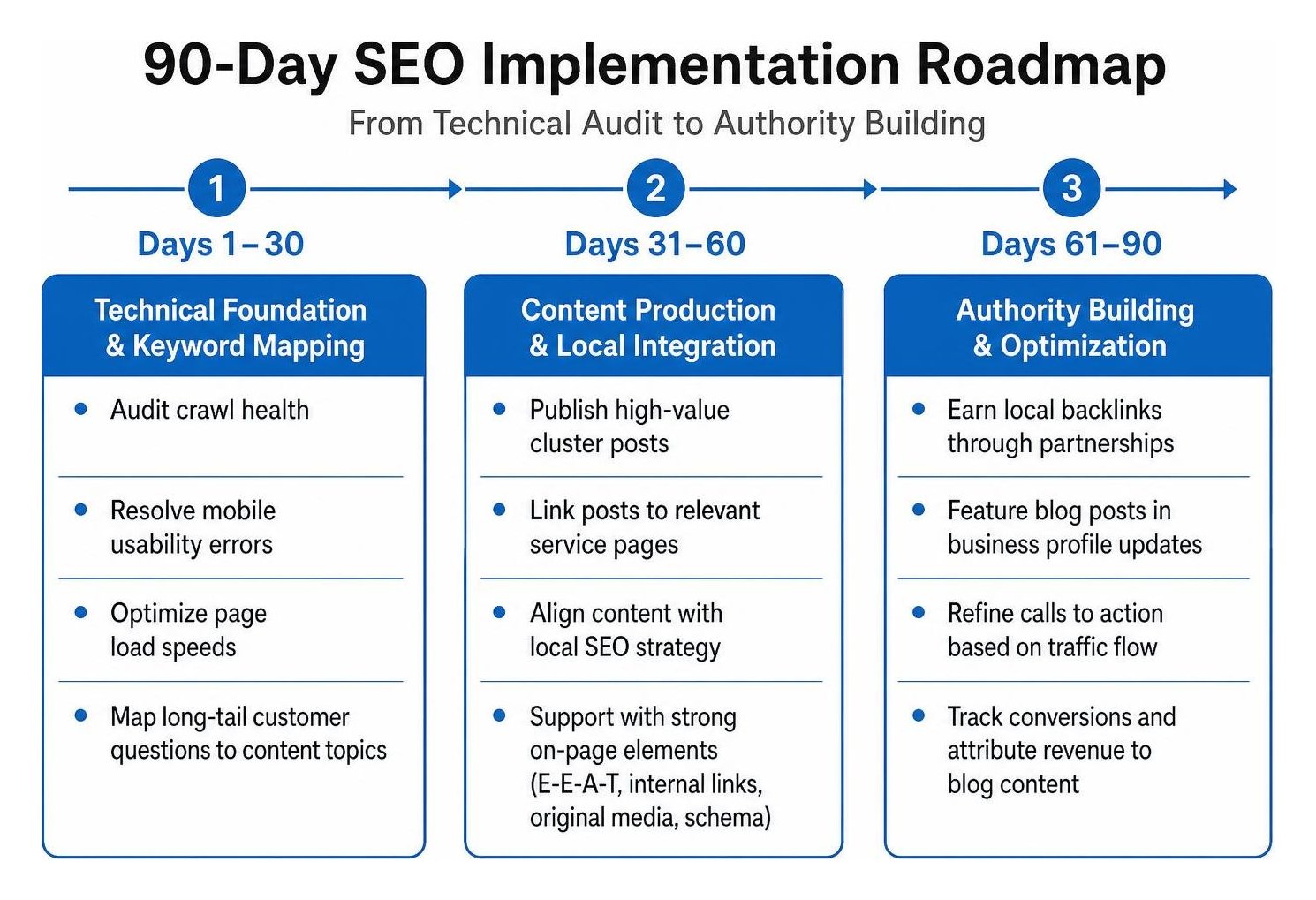
- Days 1–30 (Technical Foundation & Keyword Mapping): Audit crawl health, resolve mobile usability errors, optimize page load speeds, and map long-tail customer questions to dedicated content topics.
- Days 31–60 (Content Production & Local Integration): Publish high-value cluster posts answering primary customer questions, link them to relevant service pages, and align them with our comprehensive local SEO guide.
- Days 61–90 (Authority Building & Optimization): Earn local backlinks through community partnerships, feature your blog posts in business profile updates, and refine calls to action based on initial traffic flow.
How Do You Track Conversions and Know If Your Blog Is Driving Revenue?
Measure true SEO success by connecting website analytics, call-tracking numbers, and CRM lead sources directly to your blog URLs. Traffic numbers alone do not pay bills; your reporting must highlight how organic visitors transform into closed sales.
Use Google Search Console to monitor impression velocity and keyword rankings, while configuring GA4 conversion events for click-to-call buttons and contact forms. Our data-driven framework focuses on measurable business outcomes, tracking organic customer lifetime value and pipeline velocity. If you are ready to evaluate your website's search performance and identify untapped growth opportunities, request a comprehensive SEO visibility audit to build a clear, revenue-focused path forward.
Turn Your Business Blog Into a Reliable Customer Engine
Transforming an underperforming business blog into a consistent source of qualified leads does not require writing hundreds of generic articles. By focusing on the exact questions your customers ask, structuring your website with clear topic clusters, and connecting educational articles directly to your core services, your content becomes an active asset for sustainable business growth. Focus on quality, maintain technical health, and track real business conversions to turn your blog into your most effective customer acquisition channel.