A Focused SEO Blueprint for High-Growth Early Ventures

A Focused SEO Blueprint for High-Growth Early Ventures
How do you build an SEO strategy for startups?
An SEO strategy for startups starts with the customers you want to reach, not a long list of popular keywords. Identify the problems your product solves, choose specific searches that signal buying intent, and build pages that answer those searches. Make sure those pages can be found by search engines, then earn relevant mentions and links. Track inquiries and sales alongside rankings so you can improve what works.
The order matters when time and money are tight. A useful page for a likely buyer is a better first investment than dozens of articles that bring visitors who will never need your product.
I’m Clayton Johnson, founder of SmallBizSEO. My work connects content, technical SEO, and digital PR, and I use that experience to make an SEO strategy for startups practical and focused on qualified leads.
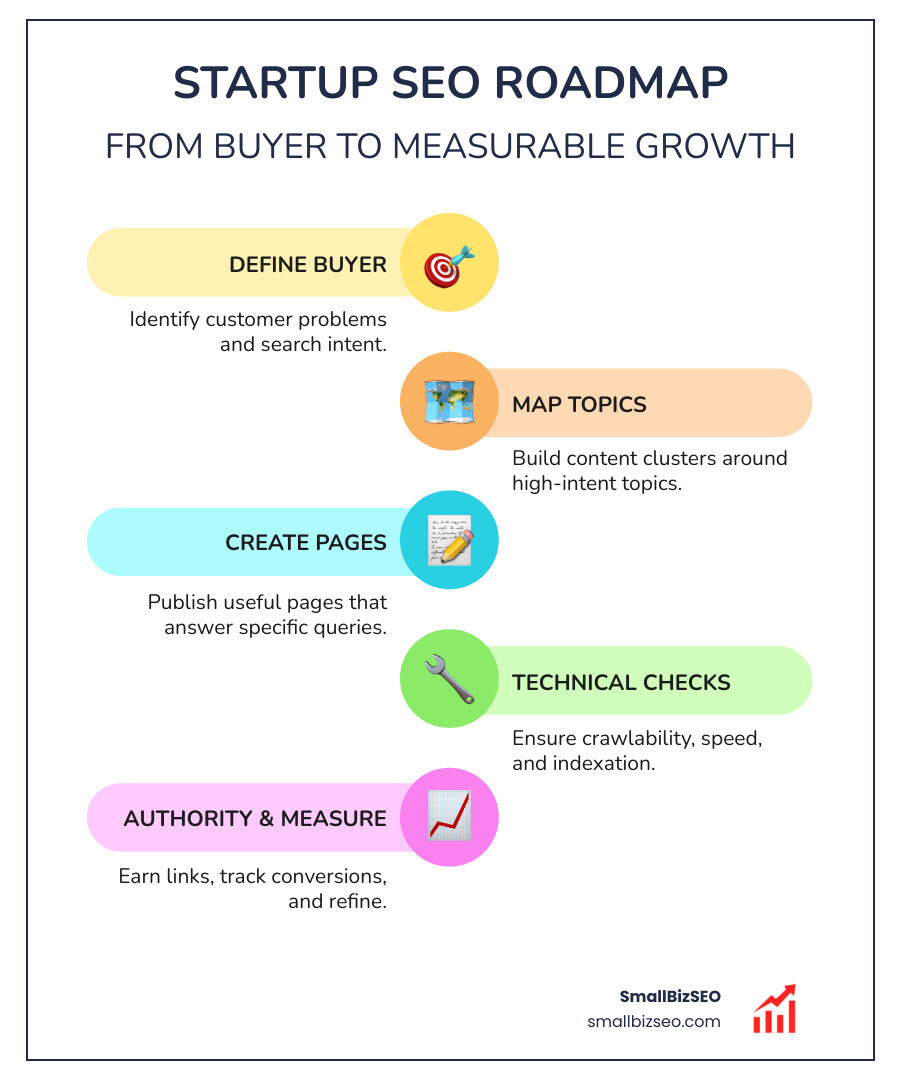
SEO strategy for startups terms you need:
Step-by-Step SEO Strategy for Startups from Zero to Scale
A successful organic acquisition engine requires a structured execution framework rather than random content creation. Capturing search traffic is high-stakes: around 75% of all clicks go to top search results, with the number one position capturing a 39.8% click-through rate, while positions two and three receive 18.7% and 10.2% respectively.
To win without burning capital, early teams must follow direct search intent rules. Search engines process billions of queries daily, and about 15% are brand-new terms. By deploying specialized growth-focused SEO services and adhering strictly to established best practices, such as the Search Engine Optimization SEO Starter Guide, startups convert incoming visitors into qualified pipeline.
What Makes an Effective SEO Strategy for Startups Different from Enterprise SEO?
Enterprise SEO focuses on protecting existing market share, managing massive crawl budgets across millions of URLs, and defending established brand terms. In contrast, startup SEO is an agile race for winnability, topical focus, and pipeline creation on lean budgets.
Startups cannot afford to target broad head keywords dominated by legacy brands. Instead, they must master the four core types of search optimization across specialized micro-niches.
| Dimension | Startup SEO Dynamics | Enterprise SEO Dynamics |
|---|---|---|
| Primary Goal | Fast customer acquisition & pipeline | Brand defense & market share retention |
| Keyword Focus | High-intent, low-volume long-tail terms | Broad, high-volume head terms |
| Domain Authority | Starting from zero (requires high relevance) | High baseline domain rating and history |
| Speed & Agility | Rapid deployment and testing | Slow approvals across multiple departments |
| Technical Priority | Fast indexing, mobile UX, clean architecture | Crawl budget optimization, faceted navigation |
How to Sequence Your SEO Strategy for Startups Across Five Core Phases
Execution order determines your return on investment. If you write articles before mapping your product or fixing indexing errors, your organic growth stalls.
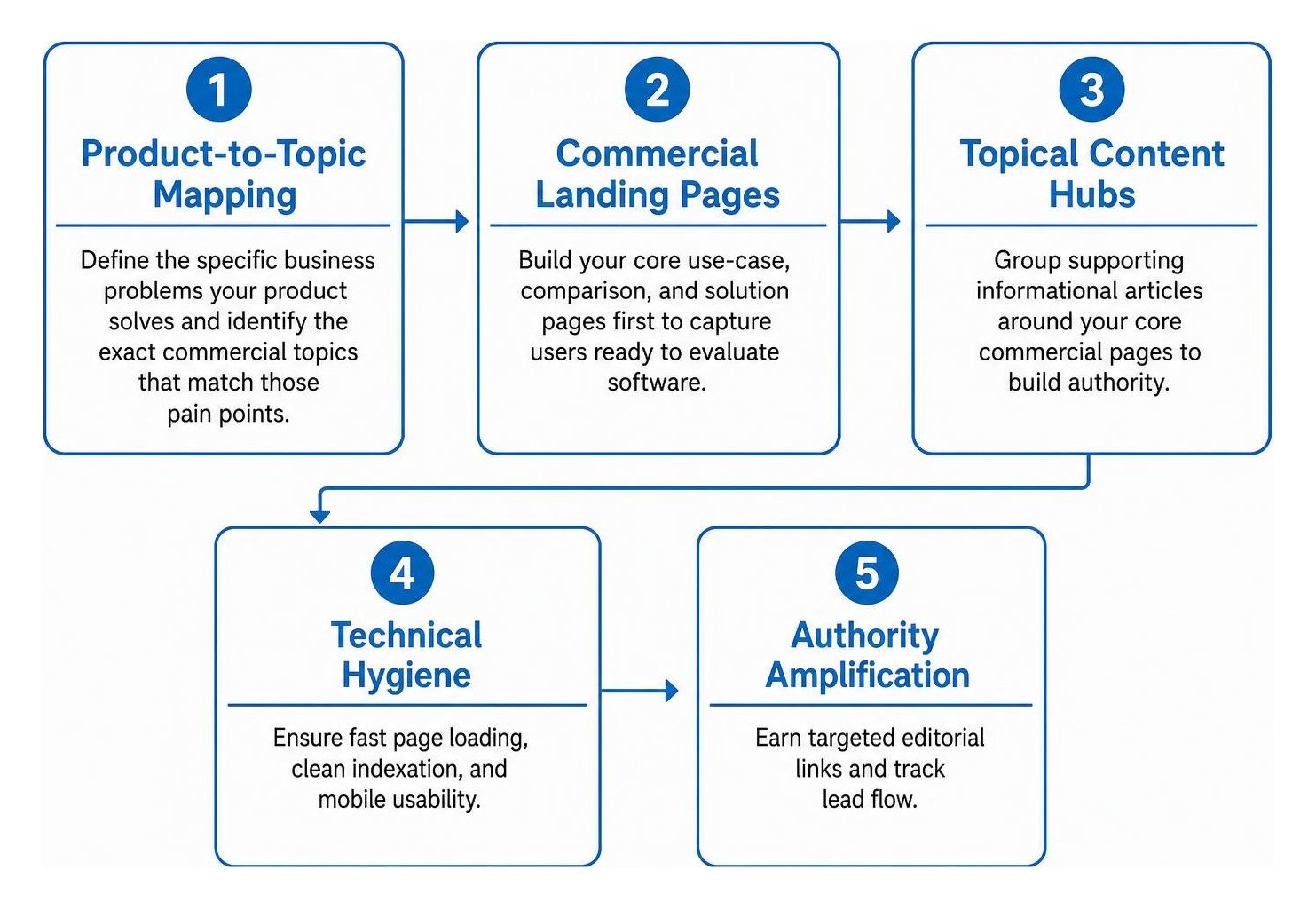
- Product-to-Topic Mapping: Define the specific business problems your product solves and identify the exact commercial topics that match those pain points.
- Commercial Landing Pages: Build your core use-case, comparison, and solution pages first to capture users ready to evaluate software.
- Topical Content Hubs: Group supporting informational articles around your core commercial pages to build authority, following proven methods for establishing niche topical authority.
- Technical Hygiene: Ensure fast page loading, clean indexation, and mobile usability, as highlighted in foundational startup essentials.
- Authority Amplification: Earn targeted editorial links and track lead flow.
How Can Bootstrapped Teams Uncover High-Intent Keywords Without Expensive Tools?
You do not need expensive software subscriptions to find high-converting keywords. Free Google tools and online community discussions provide direct insight into what buyers search for when evaluating solutions.
- Mine Positions 11–20 in Google Search Console: Filter your performance report for queries where your site ranks on page two. Updating these existing pages with clear answers and targeted subheadings often pushes them directly onto page one.
- Analyze Google Autocomplete and PAA: Use Google's autocomplete suggestions and "People Also Ask" accordions to reveal real buyer queries and decision-stage questions.
- Evaluate Community Forums: Search Reddit, Quora, and niche communities for recurring workflow complaints, software frustrations, and alternative requests.
- Run Keyword Gap Reviews: Compare your site against competitor sitemaps to uncover neglected queries, taking inspiration from systematic frameworks for identifying keyword gaps against competitors.
How Can Early Ventures Build Authority and Backlinks on a Budget?
Building backlinks without a recognized brand requires trading unique insights, proprietary data, and practitioner expertise for authoritative media coverage.
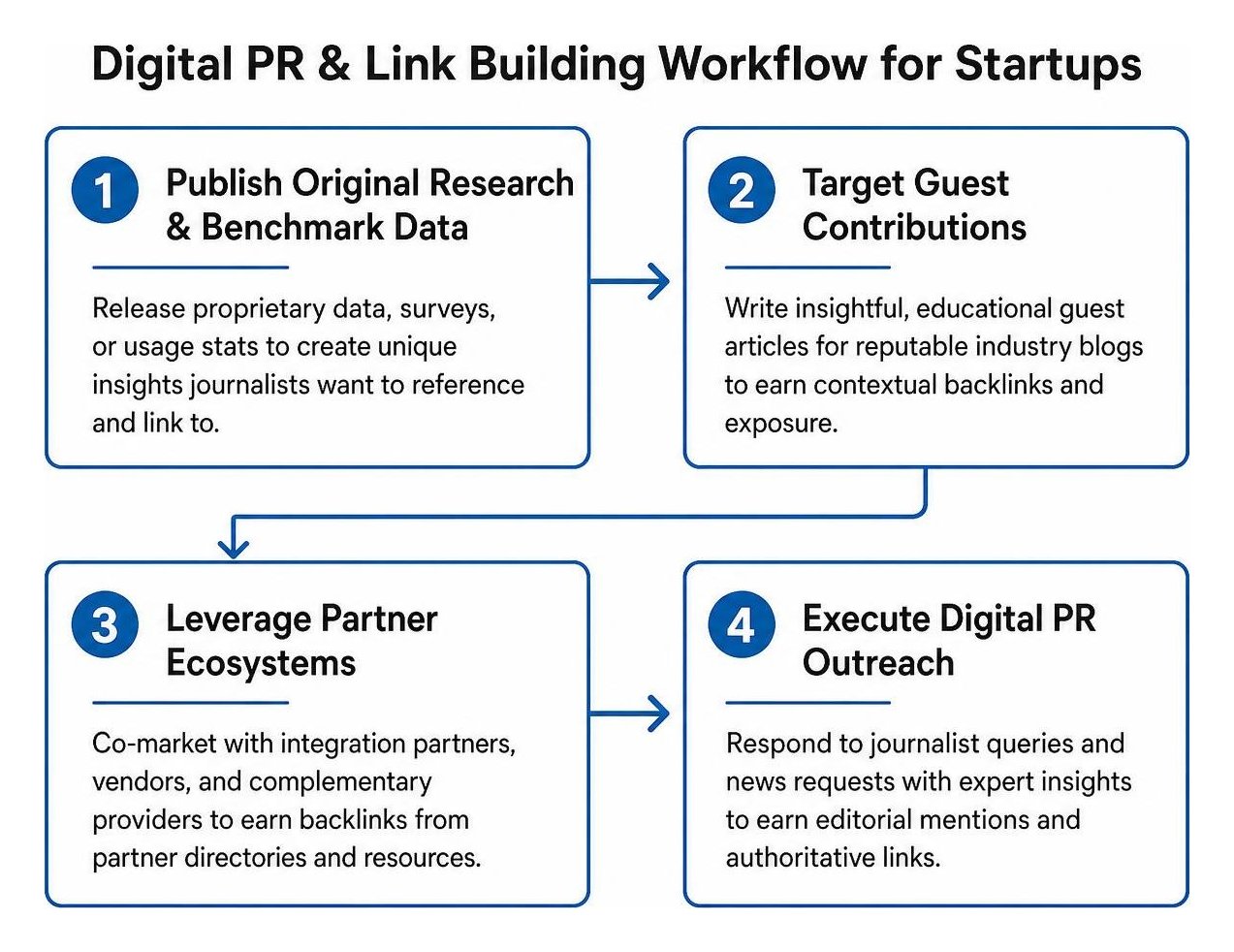
- Publish Original Research and Benchmark Data: Analyze aggregated usage stats or user surveys. Releasing a concise industry data report gives journalists and bloggers unique statistics to reference and link to.
- Target Guest Contributions: Write insightful educational guest articles for reputable industry blogs by launching strategic guest posting campaigns.
- Leverage Partner Ecosystems: Co-market with integration partners, vendors, and complementary service providers to earn authoritative backlinks on partner directories.
- Execute Digital PR Outreach: Respond to journalists seeking expert commentary on daily news queries, applying the methods outlined in this data-driven deep-dive methodology.
What Is the Role of AI Search, GEO, and Answer Engines in Organic Visibility?
Modern organic visibility requires optimizing for both standard search engines and AI-driven answer engines (such as generative search summaries and conversational chatbots). Over 51% of B2B software buyers begin vendor research in an AI chatbot, and 69% report choosing a different vendor based on chatbot recommendations.
AI Overviews trigger on 25% of search queries. Research reveals that pages ranking for specific sub-queries are 161% more likely to be cited in AI Overviews than pages targeting only broad head terms.
To maximize citations in answer engines, apply structured data, use question-based subheadings, provide direct answers in opening paragraphs, and align your site with proven E-E-A-T optimization for modern search engines.
Measuring Organic ROI, Paid Alignment, and Scaling Traps
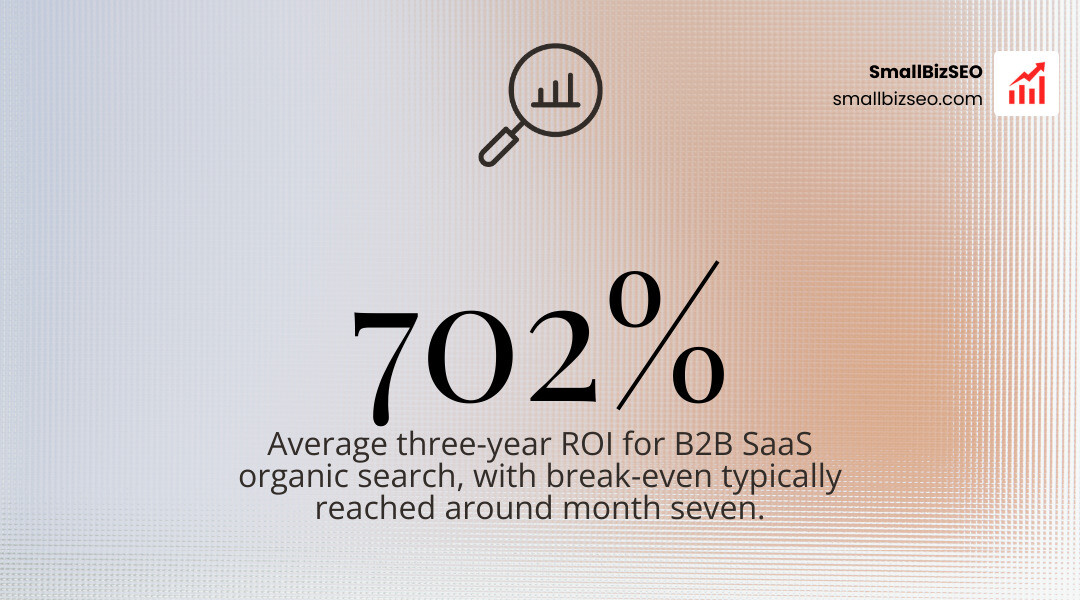
SEO is an investment with compounding returns. In B2B SaaS and technology sectors, organic search delivers an average 702% three-year ROI, reaching break-even around month seven.
To avoid burning capital, treat organic search as a compounding channel rather than a quick fix, and give new pages time to climb before judging their performance on high-intent keywords.
Monitor performance through essential monthly performance metrics like demo requests, trials, and pipeline value rather than vanity traffic. Regular technical search optimization audits prevent technical debt from hurting your rankings as you scale.
How Should Early-Stage Ventures Prioritize SEO Investment as They Grow?
Startup priorities must evolve as the company moves from early validation to market expansion.
| Growth Stage | Core SEO Priorities | Primary Metrics to Track |
|---|---|---|
| Pre-Revenue / Validation | Setup Google Search Console, build 5–10 bottom-funnel use-case pages, ensure fast mobile speed | Indexation status, impressions for commercial queries |
| Early Traction (Seed to Series A) | Build complete topic clusters around core problem areas, launch digital PR link outreach | Non-branded organic traffic, page 1 keyword count, demo signups |
| Scale Stage (Series B+) | Programmatic search assets, international optimization, advanced technical maintenance | Customer acquisition cost (CAC), pipeline generated, organic MRR |
Accelerate Your Startup Search Engine Growth
Building sustainable organic search traffic does not require massive venture funding or months of trial and error. By focusing on buyer intent, building well-structured topic clusters, and maintaining technical health, your startup can outrank established competitors and build a defensible acquisition moat.
At SmallBizSEO, we help founders and growth teams scale qualified pipeline through our data-backed Velocity framework. If you are ready to evaluate your site's current search footprint and identify immediate growth opportunities, request a free SEO visibility audit today.