A Practical Guide to SEO for Product Marketing

How Does SEO for Product Marketing Help Buyers Find You?
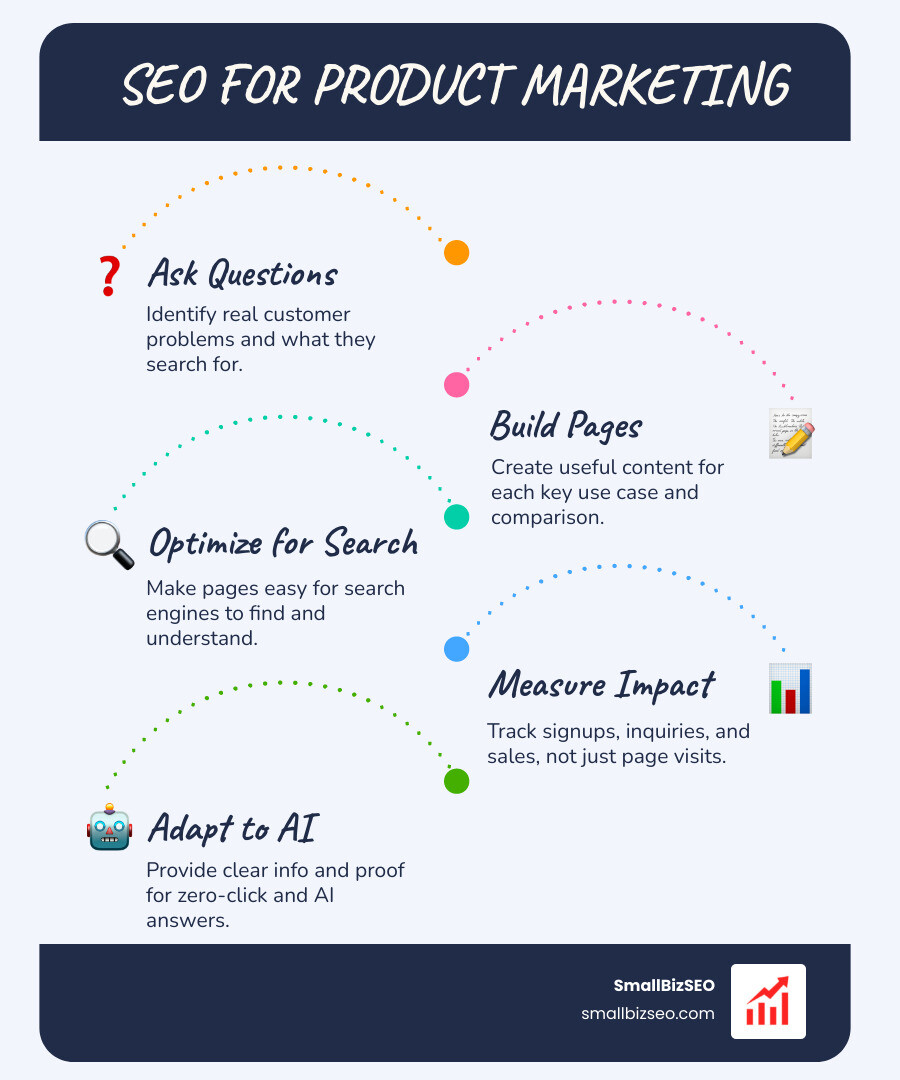
SEO for product marketing helps the right people find your product when they search for a problem, compare options, or look for a way to get started. Begin with the questions your customers ask. Build useful pages for each key use case, explain what the product does, and make those pages easy for search engines to find and understand. Then measure inquiries, signups, or sales, not just visits.
Buyers now discover products through search results, AI answers, and other online channels. Some get an answer without clicking a link. That makes clear product information and credible proof more important, even when a page earns fewer visits.
I'm Clayton Johnson, founder of SmallBizSEO, where I help businesses connect search visibility with qualified leads through technical SEO, content, and authority building. My approach to SEO for product marketing starts with real customer questions and carries those answers through to pages that help people make a decision.
Handy SEO for product marketing terms:
- SEO for graphic design studios
- SEO for software design & development
- SEO for architectural design firms
Modern Framework: Executing SEO for Product Marketing
Executing search optimization within product marketing requires treating discovery as an active part of your go-to-market strategy rather than a traffic checklist. Product marketing managers (PMMs) understand positioning, customer pain points, and messaging. Technical search specialists understand crawlability, information architecture, and algorithmic retrieval. When these two disciplines collaborate, your digital product assets become discoverable across traditional search engines and emerging conversational platforms.
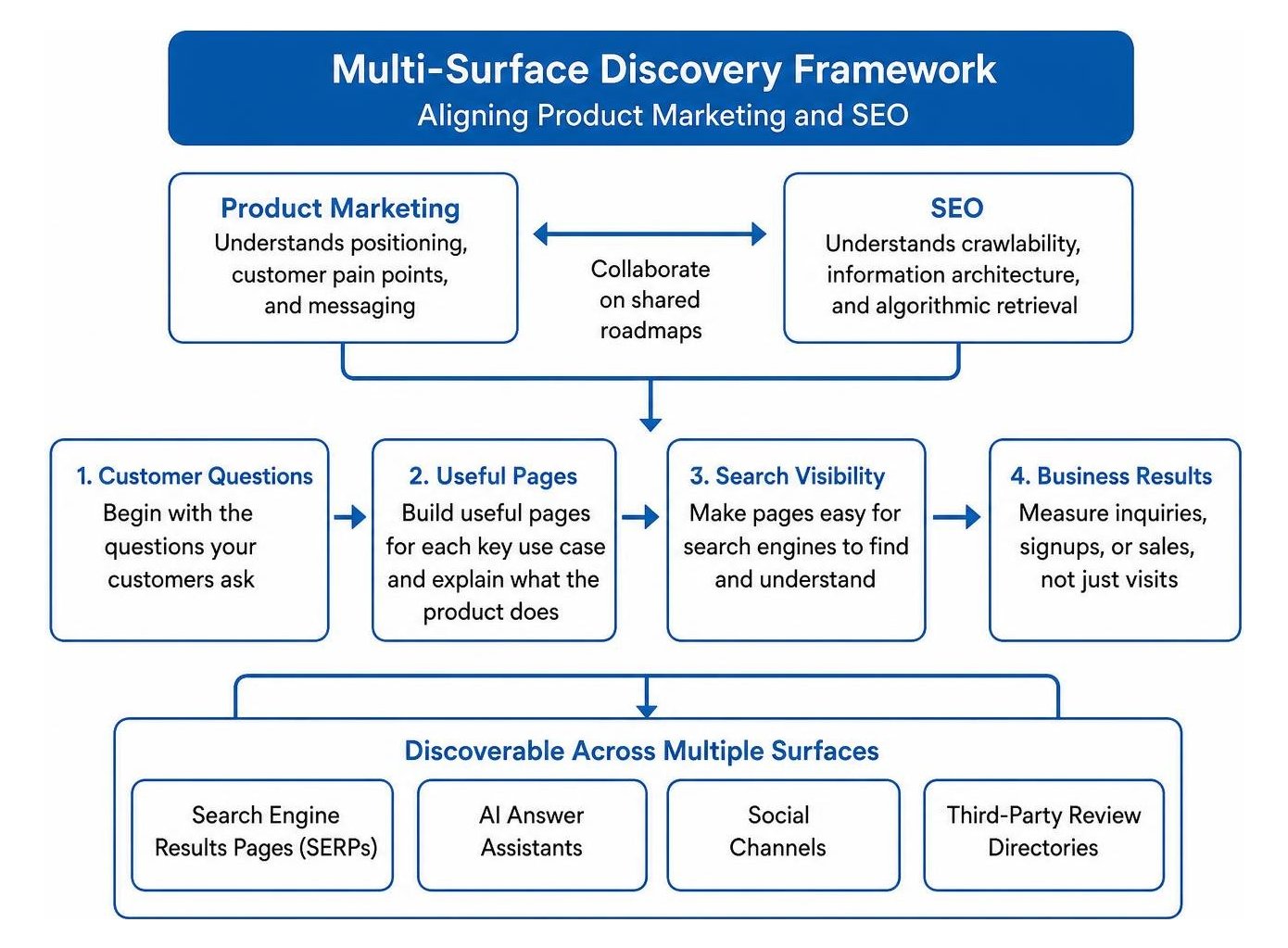
Modern discovery takes place across multiple touchpoints: search engine results pages (SERPs), AI answer assistants, social channels, and third-party review directories. Isolated blog posts can no longer sustain organic acquisition on their own. Instead, product marketers and search teams must align on shared roadmaps, connecting product release cycles directly to high-intent search assets. Insights on building this shared momentum can be explored through modern frameworks shared by the Product Marketing Alliance.
How Does AI-Driven Discovery Change SEO for Product Marketing?
AI-driven discovery transforms search by directly answering complex user questions and generating conversational summaries. This shift elevates Answer Engine Optimization (AEO) and Generative Engine Optimization (GEO). Instead of simply matching isolated keywords, large language models (LLMs) parse structured information, extract data points, and cite authoritative brands in synthesized answers.

To win citations and zero-click visibility, feature pages must be structured for immediate information retrieval. You can achieve this by implementing clear definitions within the opening sentences of your copy, embedding structured data schemas, and supporting your claims with verified customer evidence.
- Answer common user questions directly using structured subheadings.
- Implement explicit schema markup to define technical specifications and pricing.
- Maintain fresh feature documentation to reinforce brand entity authority across AI platforms.
- Partner with a dedicated product marketing SEO agency to build resilient technical architecture.
How Does Traditional SEO Differ from Product-Led Growth (PLG)?
Traditional SEO focuses on capturing top-of-funnel traffic through informational blog posts, while product-led growth (PLG) SEO connects organic discovery directly to self-serve product activation. Instead of measuring clicks, PLG search programs deliver users directly into interactive workflows, template libraries, and free utility tools.
| Strategy Dimension | Traditional SEO | Product-Led Growth (PLG) SEO |
|---|---|---|
| Primary Goal | Pageviews, rankings, and form fills | Self-serve activation, signups, and feature adoption |
| Core Content Assets | Informational articles, guides, and ebooks | Use-case pages, template galleries, and free interactive tools |
| Conversion Mechanism | Generic sidebar banners or footer forms | In-context workflows and interactive product previews |
| Time to Value | Delayed via email nurture campaigns | Instant hands-on product utility |
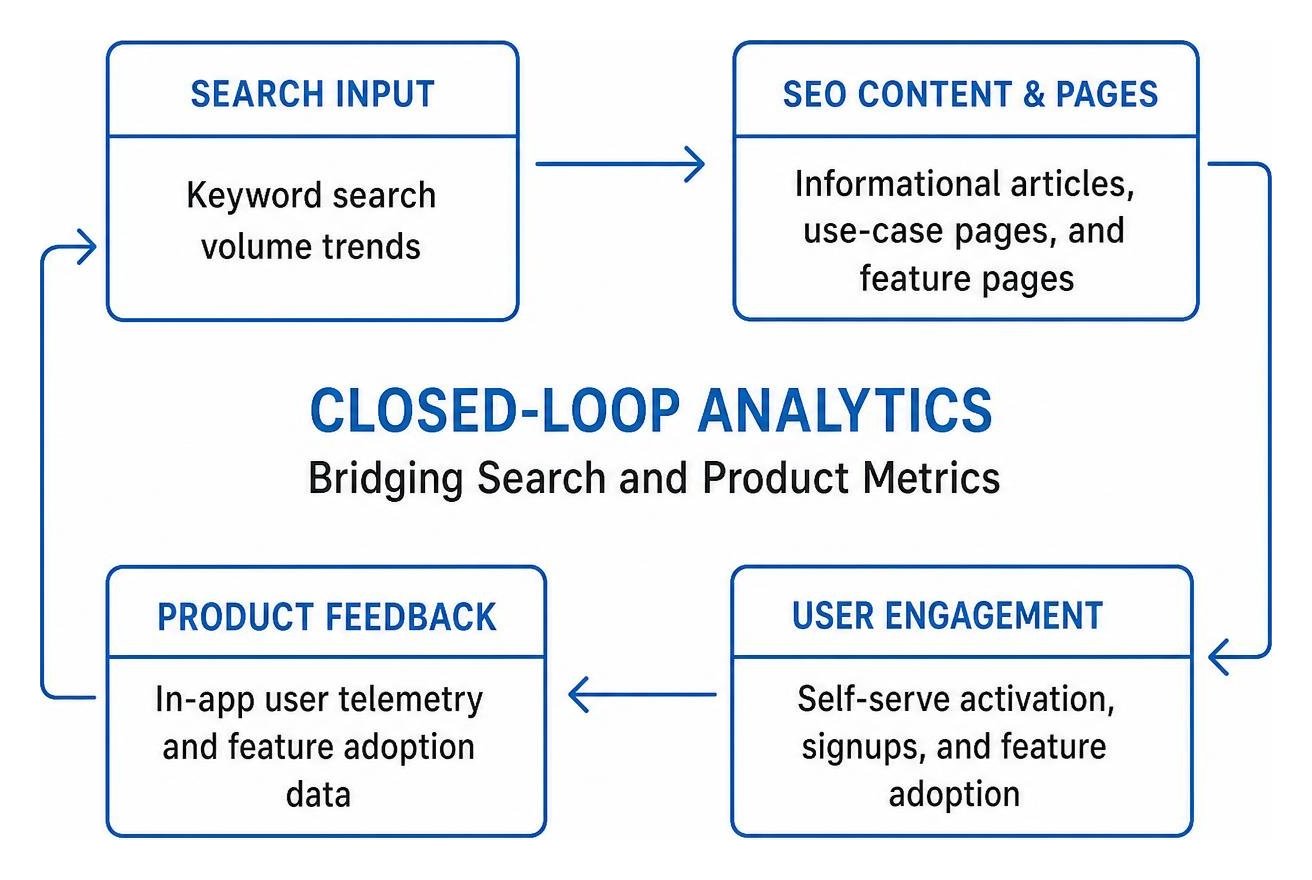
| Feedback Loop | Keyword search volume trends | In-app user telemetry and feature adoption data |
Leading brands demonstrate the power of programmatic, product-led architecture. Figma created programmatic hubs that scaled rapidly into millions of monthly visits, while Notion developed specialized use-case landing pages targeting startup founders, students, and engineers. Grammarly continuously refines feature pages and FAQs to capture direct search answers, and Airbnb leverages authentic host stories to rank for high-intent onboarding searches. Applying these product-led content models enables software teams to turn organic search traffic directly into engaged, active users.
How Do Product Marketers Align Search Intent with SEO for Product Marketing?
Product marketers align search intent by mapping real customer problems to specific product capabilities, rather than chasing generic search volume. Using the Jobs-to-be-Done (JTBD) framework, teams uncover procedural intent—the exact step-by-step tasks buyers want to accomplish when searching online.

Effective intent mapping requires analyzing qualitative feedback from sales calls and examining customer telemetry data. By pairing this qualitative insight with comprehensive SEO content marketing and a strategic brand marketing positioning audit, you can craft high-converting comparison hubs and alternative pages that capture prospects at the exact moment they evaluate market options.
How Should Teams Optimize Product Detail Pages and Digital Assets?
Product detail pages (PDPs) and software feature pages must balance intuitive user experience with clear technical signals for search engine crawlers. Clear navigation, optimized media, and verified social proof ensure pages load quickly and convert searchers into active users.
- Implement Specialized Schema: Add
SoftwareApplicationorProductstructured data to display rich snippets, ratings, and pricing directly in search listings. - Optimize Visual Assets: Use descriptive file naming conventions, contextual alt text, and lightweight formats to aid visual discovery.
- Streamline URL Architecture: Maintain short, logical directory paths that reflect core product categories without dynamic parameter clutter.
- Ensure Fast Load Times: Minimize JavaScript execution times to maintain smooth Core Web Vitals across desktop and mobile devices.
- Incorporate Authentic User Proof: Embed customer reviews, case study excerpts, and video testimonials directly on feature pages to build trust and support our conversion SEO optimization services.
Measurement, Common Pitfalls, and the Future of Product Discovery
Connecting search engine visibility to actual revenue requires moving past vanity metrics. When you tie organic traffic directly to product analytics, your marketing team can pinpoint exactly which organic entry points generate pipeline, product adoption, and customer retention.
Which Metrics Measure Real Organic Influence and Activation?
Real organic influence is measured by tracking actions taken after a user lands on your site, such as self-serve signups, product-qualified leads (PQLs), and trial-to-paid conversions.

- Organic Signup Rate: The percentage of search visitors who create an account or start a free trial.
- Product-Qualified Leads (PQLs): Users who discover the product via search and reach key product usage milestones.
- Time to Value (TTV): How quickly an organic visitor experiences the core benefit of your product.
- Assisted Pipeline Value: Revenue influenced across multi-touch buyer journeys initiated by organic discovery.
- Return on Content Investment: Evaluating campaign performance using structured models like our content ROI calculation.
What Common Mistakes Undermine Product SEO and How to Avoid Them?
The most common mistake teams make is building thin programmatic pages without unique utility. Automated page generation without proprietary data, real examples, or interactive functionality creates duplicate content that fails search quality evaluations.
Another major challenge is organizational silos, where product managers release major platform updates without consulting search specialists, resulting in broken URLs or missed demand opportunities. Teams also frequently scale content production before establishing clear product-market fit, wasting resources on terms that attract uncommitted audiences.
Our data-driven Velocity framework prevents these missteps by combining technical site health, customer search intent, and transparent reporting. We connect keyword research directly to live product analytics, ensuring every published asset serves a measurable business purpose. To identify structural gaps on your site, schedule an AI SEO visibility audit with our team.
Fueling Long-Term Product Discovery
Sustainable product discovery is built by answering real user questions, structuring pages for effortless machine parsing, and guiding visitors into interactive product experiences. When search optimization is deeply integrated into your product marketing lifecycle, your digital assets build compounding authority across traditional search engines and emerging AI platforms alike.
By focusing on deep product utility rather than vanity traffic, your team can build a predictable engine for customer acquisition. Audit your high-impact product pages, map out the core problems your software solves, and deliver immediate value the moment a prospective buyer finds your site.