A Practical Lawyer’s Guide to Ranking for Workers Compensation Keywords

Why SEO for Workers' Compensation Attorneys Matters
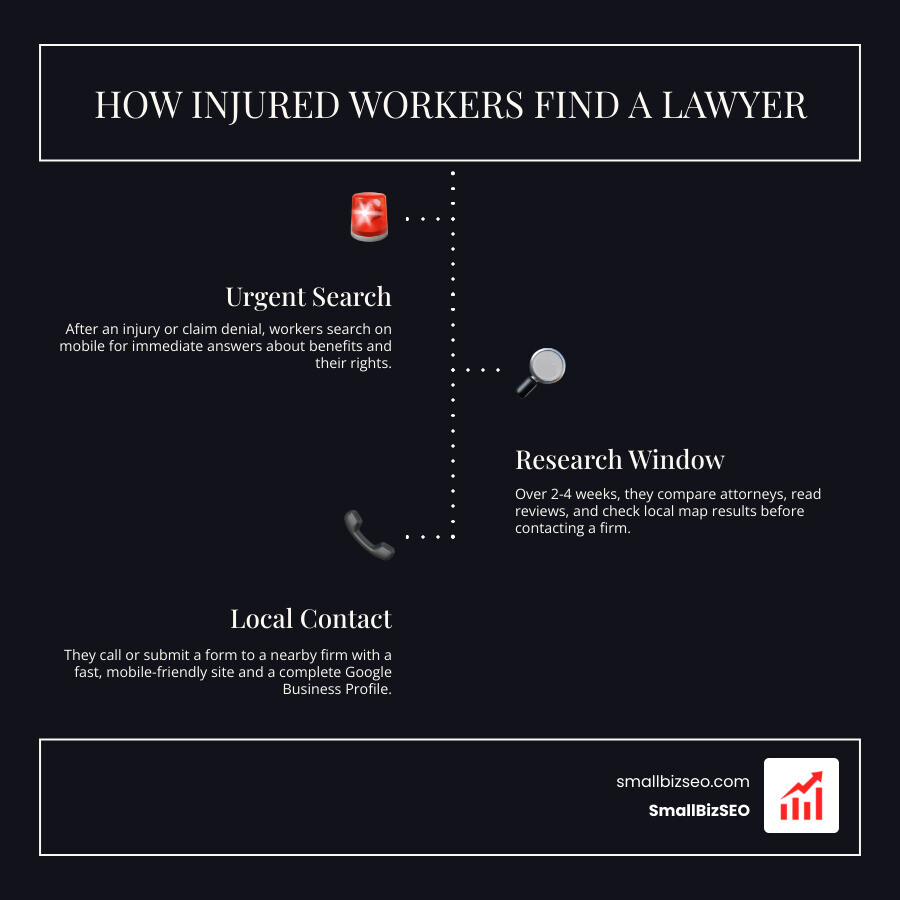
SEO for workers' compensation attorneys starts with the questions injured workers ask. Create pages that explain claims, benefits, denials, and when to call a lawyer. Then make your firm easy to find in local search: complete your Google Business Profile, keep your contact details consistent, and make your website fast and simple to use on a phone.
That approach helps you reach people who need an attorney now and those still deciding what to do after an injury. The goal is not just more visits. It is more qualified inquiries that your firm can turn into signed cases.
I’m Clayton Johnson, founder of SmallBizSEO. My work in technical SEO, content strategy, and search visibility informs this guide to SEO for workers compensation attorneys; I’ll start with how injured workers search, then show you what to improve.
Quick look at SEO for workers compensation attorneys:
Why SEO for Workers' Compensation Matters for Capturing Injured Workers
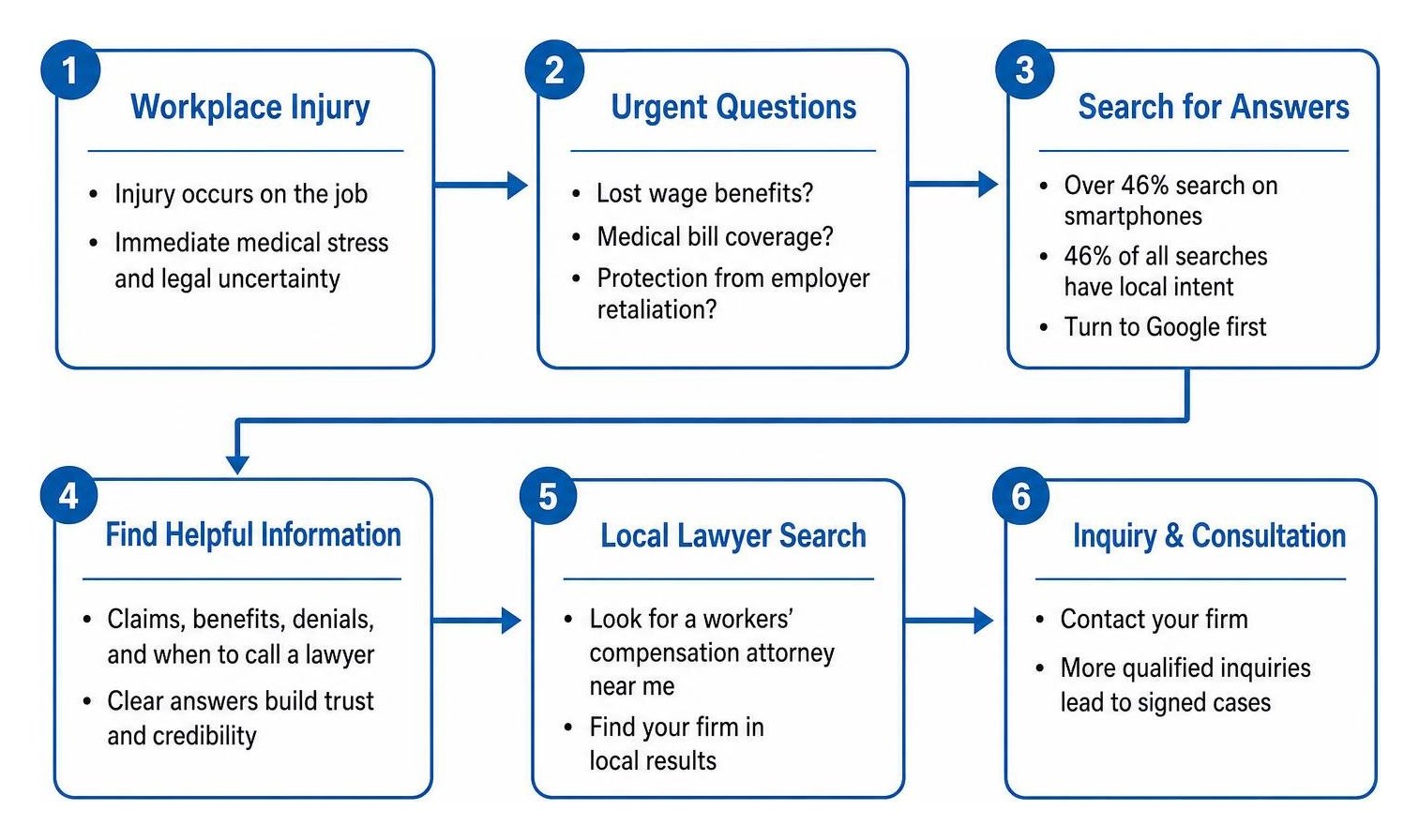
More than 4.9 million workers' compensation claims are filed across the United States each year. When an on-the-job injury occurs, individuals rarely reach for a phone book or wait around for a late-night television commercial. Instead, over 46% of prospective legal clients turn straight to Google on their smartphones while sitting in an urgent care waiting room or resting at home.
Google reports that 46% of all searches carry local intent. For injured workers, this search behavior combines immediate medical stress with legal uncertainty. They want clear answers about lost wage benefits, medical bill coverage, and protection from employer retaliation. Ranking organically ensures your law firm serves as their first trusted resource, building vital credibility before an insurance adjuster attempts to settle their claim for pennies on the dollar.
The Core Strategy for SEO for Workers Compensation Attorneys
Effective legal search marketing requires a balanced approach combining technical precision, verified legal authority, and location relevance. Rather than relying on generic keywords, high-performing firms build their digital footprint around authoritative attorney website SEO strategies that demonstrate Experience, Expertise, Authoritativeness, and Trustworthiness (E-E-A-T).

We build sustainable organic visibility through our proprietary "Velocity" framework. This data-driven approach focuses on fast indexation, clear site architecture, and rigorous content quality to establish your attorneys as leading subject-matter authorities in workplace injury law.
How to Optimize Your Google Business Profile and Dominate Local Map Packs
Local Map Pack results capture 44% of all clicks for local search queries. If your practice does not appear in the top three map listings, you surrender nearly half of all prospective injury cases to competing firms down the street.
To dominate map listings, implement these foundational practices:
- Complete Every Profile Field: Moving your Google Business Profile from a standard 60% completion rate to a full 100% produces a 3x average increase in profile views within 30 to 45 days.
- Maintain Strict NAP Consistency: Your firm's Name, Address, and Phone number must match across all online directories. Having 30 accurate legal citations outperforms having 200 inconsistent listings that confuse search crawlers.
- Systematize Review Collection: Prompt satisfied clients to leave detailed feedback highlighting your responsiveness and case support. Active responses to client reviews directly signal engagement to Google's ranking algorithm.
- Acquire Authoritative Legal Citations: Establish listings on reputable platforms like the New York City Bar legal directory standards and bar associations to validate your practice credentials.
For firms wanting a structured framework to capture nearby leads, implementing targeted local SEO for law firms ensures consistent local visibility across every map search.
Which Keywords Drive High-Intent Traffic in SEO for Workers Compensation Attorneys?
Capturing qualified claimants requires targeting high-intent commercial keywords rather than broad, low-value phrases. While broad terms like "work injury" bring high volume, long-tail search queries yield higher conversion rates because the user is actively seeking legal representation.
Directories like Justia workers' compensation directory listings often compete for broad head terms, but independent firms can easily outrank them for specific, long-tail queries by leveraging how top law firms attract high value clients with specialized SEO.
| Keyword Phrase | Search Intent | Target Page Type | Conversion Potential |
|---|---|---|---|
| "workers comp lawyer near me" | High Commercial | Homepage / Location Hub | Very High |
| "denied workers comp claim lawyer" | Urgent Commercial | Specialized Practice Page | High |
| "construction accident injury attorney" | Specific Commercial | Industry Service Page | High |
| "how long to report work injury" | Informational / Pre-Retainer | Educational Guide / FAQ | Medium |
| "repetitive stress injury settlement value" | Commercial Investigation | Detailed Resource Guide | High |
How to Structure Injury-Specific Content to Capture the 2-4 Week Research Window
Injured workers rarely hire a lawyer within the first hour of an incident. Most navigate a 2-to-4 week research window where they attempt to work with their employer, file preliminary paperwork, and wait for initial claim responses. When disputes, delays, or denials occur, they seek legal intervention.
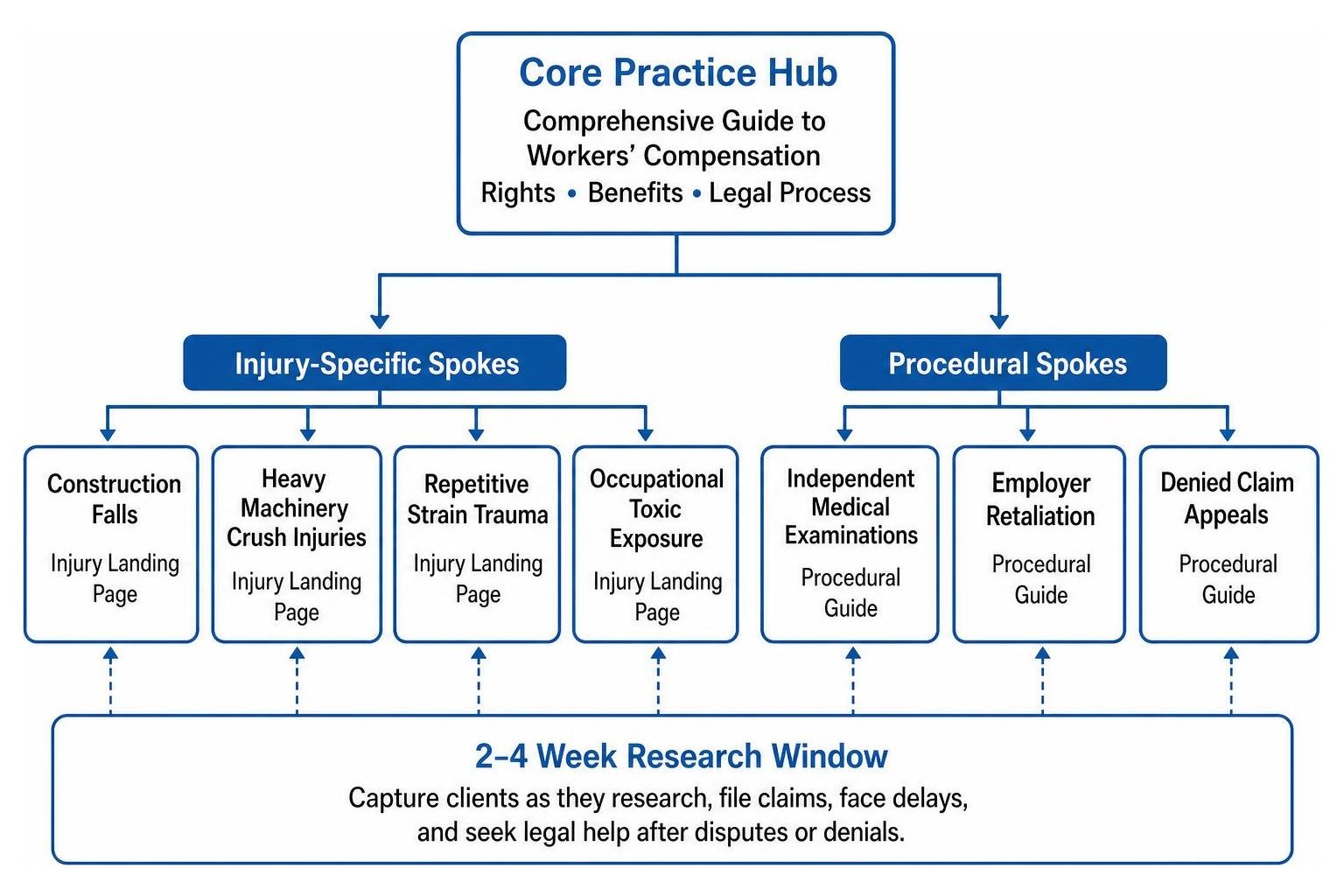
To capture clients throughout this multi-week consideration cycle, implement a hub-and-spoke content architecture supported by a straightforward blueprint to law firm SEO services and sustainable growth:
- Core Practice Hub: A comprehensive guide outlining state workers' compensation rights, benefit calculations, and the legal dispute process.
- Injury-Specific Spokes: Dedicated landing pages addressing specific workplace hazards, including construction falls, heavy machinery crush injuries, repetitive strain trauma, and occupational toxic exposure.
- Procedural Spokes: Action-oriented articles answering pressing questions regarding independent medical examinations, employer retaliation, and denied claim appeals.
- Conversion Touchpoints: Prominent mobile click-to-call buttons, straightforward evaluation forms, and clear next steps on every page.
What Technical SEO and Schema Markup Factors Matter Most for Law Firms?
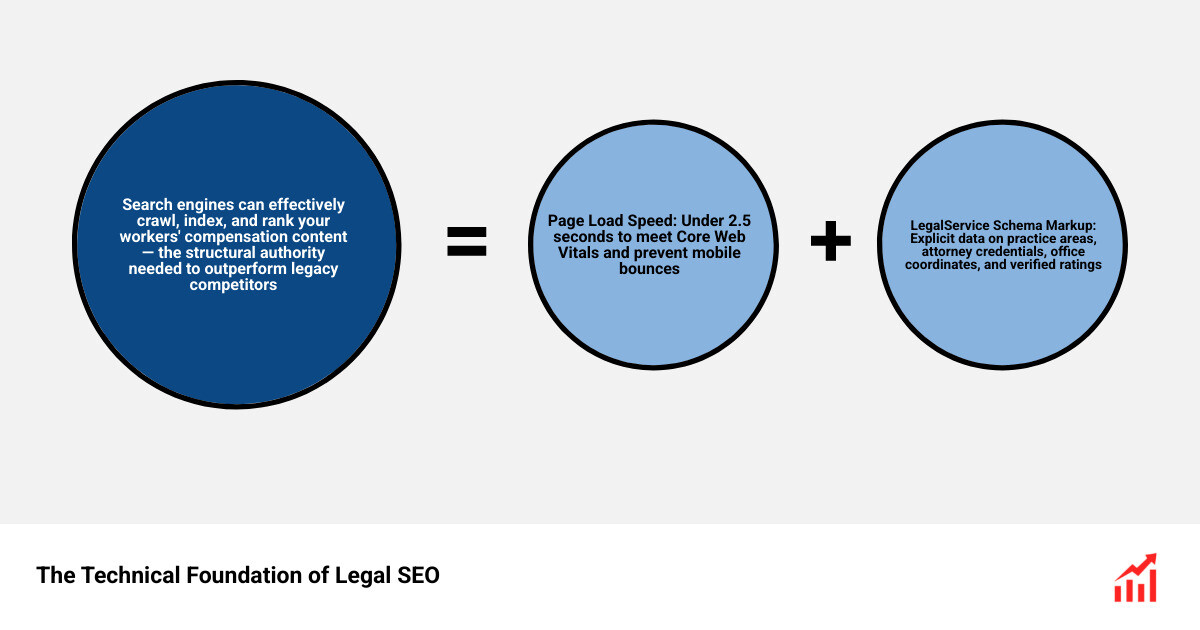
Technical health serves as the structural foundation of your website. Without fast load speeds and structured data, search engine bots cannot effectively index your legal content.
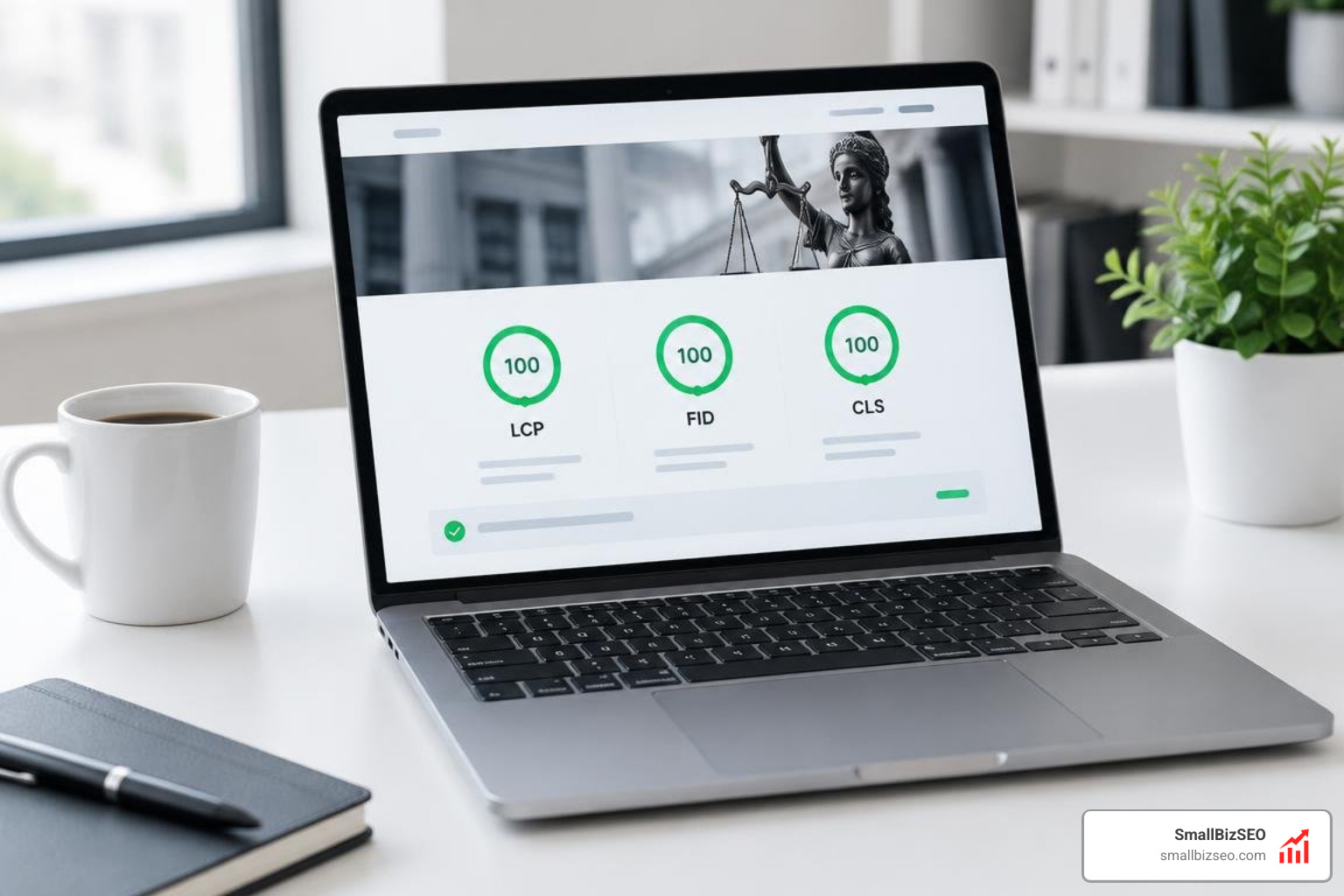
Your website must maintain a page load time under 2.5 seconds to meet Core Web Vitals standards and prevent frustrated mobile users from bouncing back to the search results. Furthermore, incorporating LegalService structured data markup provides search engines with explicit details regarding your practice areas, attorney credentials, physical office coordinates, and verified client ratings.
Firms that upgrade their infrastructure with legal professional services SEO packages establish the technical authority required to outperform legacy competitors.
How to Adapt SEO for Workers Compensation Attorneys to AI Overviews and Search Engines
Search behavior continues to evolve with the introduction of AI Overviews and conversational answer engines. To remain visible when prospective clients ask conversational questions, your content must satisfy both traditional ranking algorithms and generative models.
- Provide Direct Answers: Structure the opening paragraph of every practice guide with a concise, direct answer to the primary legal question.
- Implement Structured Q&A: Use natural question headers paired with bulleted facts, statutory deadlines, and procedural steps.
- Reinforce Entity Signals: Clearly connect your attorneys' published articles, state bar licenses, and speaking engagements to establish unassailable legal authority.
Scaling Search Performance into Measurable Case Acquisitions
Winning at search marketing is not about celebrating vanity traffic spikes—it is about securing signed retainers that grow your firm's revenue. A focused organic search strategy compounds over time, steadily increasing high-intent inquiries and lowering your client acquisition costs.
| Organic SEO Phase | Strategic Focus | Primary Metrics | Case Acquisition Impact |
|---|---|---|---|
| Phase 1: Foundation | Technical Cleanup & Local Listings | Core Web Vitals, Profile Views | Initial discovery and local calls |
| Phase 2: Content Scaling | High-Intent Injury Guides | Organic Impressions, Qualified Clicks | Consistent claimant inquiries |
| Phase 3: Authority & Growth | Link Authority & Conversion Optimization | Top 3 Rankings, Retainer Conversion Rate | Predictable stream of signed cases |
By integrating Google Analytics 4 (GA4) with your firm's client intake CRM, you can track the entire client journey from the initial organic search query to the signed retainer agreement. We provide law firms with transparent, automated reporting so you always know exactly which search terms drive your most profitable cases.
If you are ready to evaluate your firm's current market position and capture more high-value workplace injury retainers, request a comprehensive SEO visibility audit to reveal your greatest organic growth opportunities.