Detailed Guide to Claude Brand Monitoring Capabilities
How do you monitor your brand in Claude?
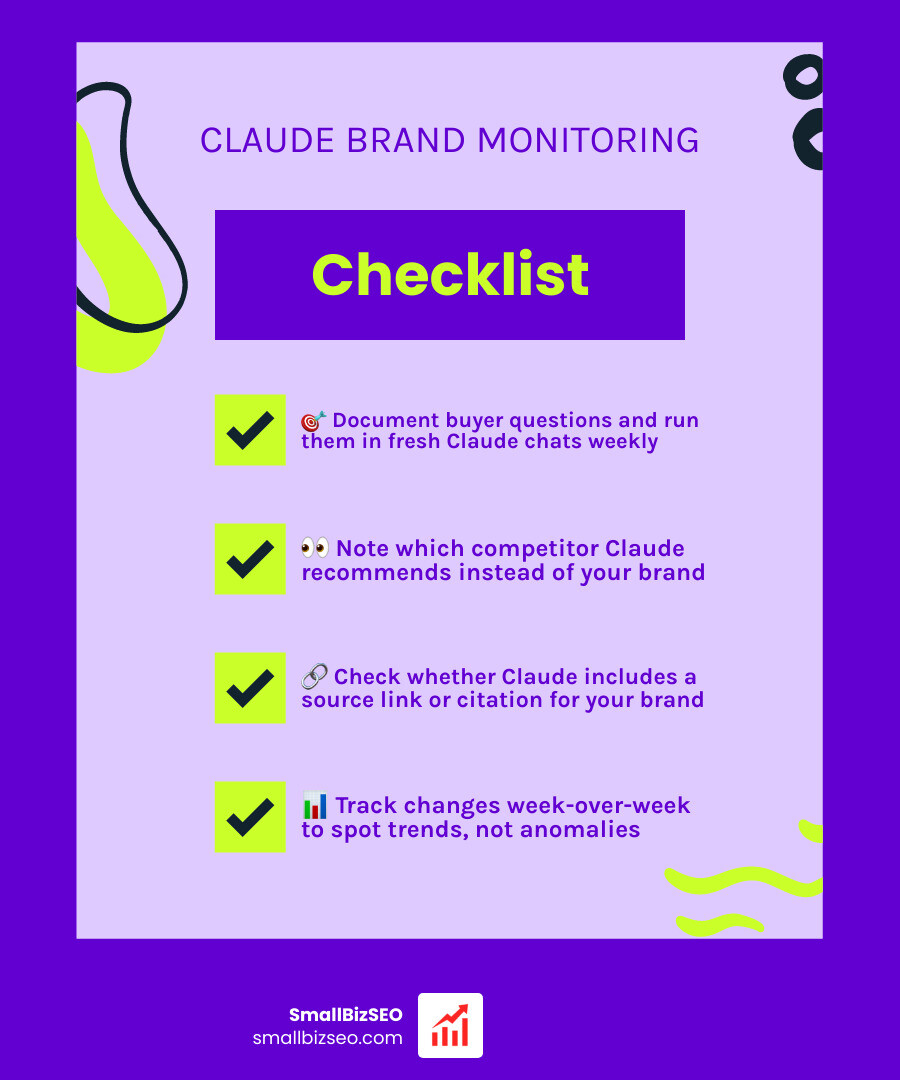
Claude Brand Monitoring means checking whether Claude names, recommends, cites, or misrepresents your business when people ask questions related to what you sell. To start, write down the questions a buyer might ask, run them in fresh Claude chats, and record the answers. Repeat the same questions each week so you can spot changes rather than mistake one unusual answer for a trend.
Pay attention to who Claude recommends instead, how it describes your business, and whether it links to a source. That gives you a practical list of content to clarify, facts to correct, and claims that need stronger evidence.
I'm Clayton Johnson, founder of SmallBizSEO. My work in SEO, content strategy, and digital PR shapes this approach to Claude Brand Monitoring: measure what buyers see, then make your business easier to understand and verify.
Claude Brand Monitoring terms simplified:
Why Claude Brand Monitoring Matters for Modern Businesses
Claude brand monitoring is essential because generative AI assistants increasingly act as zero-click answer engines where potential customers conduct research and choose vendors directly. Unlike traditional search results that present a list of blue links, Claude generates definitive conversational answers that synthesize information from across the web. If Claude omits your business or provides outdated information, you lose potential buyers before they ever visit your website.

When prospective clients evaluate high-consideration purchases, technical tools, or B2B services, they ask AI assistants for vendor comparisons and market overviews. To understand how conversational engines represent your business, it is critical to audit your AI presence across search models. Tracking these AI touchpoints allows you to detect factual inaccuracies, measure competitive displacement, and ensure your messaging is represented accurately.
What makes Claude brand monitoring distinct from other models?
Claude brand monitoring requires a separate strategy from ChatGPT, Gemini, or Perplexity because Anthropic builds its models with Constitutional AI and strict epistemic caution. This design makes Claude far less likely to guess or hallucinate details. When faced with ambiguous queries or unverified claims, Claude tends to hedge or decline to recommend a business entirely.
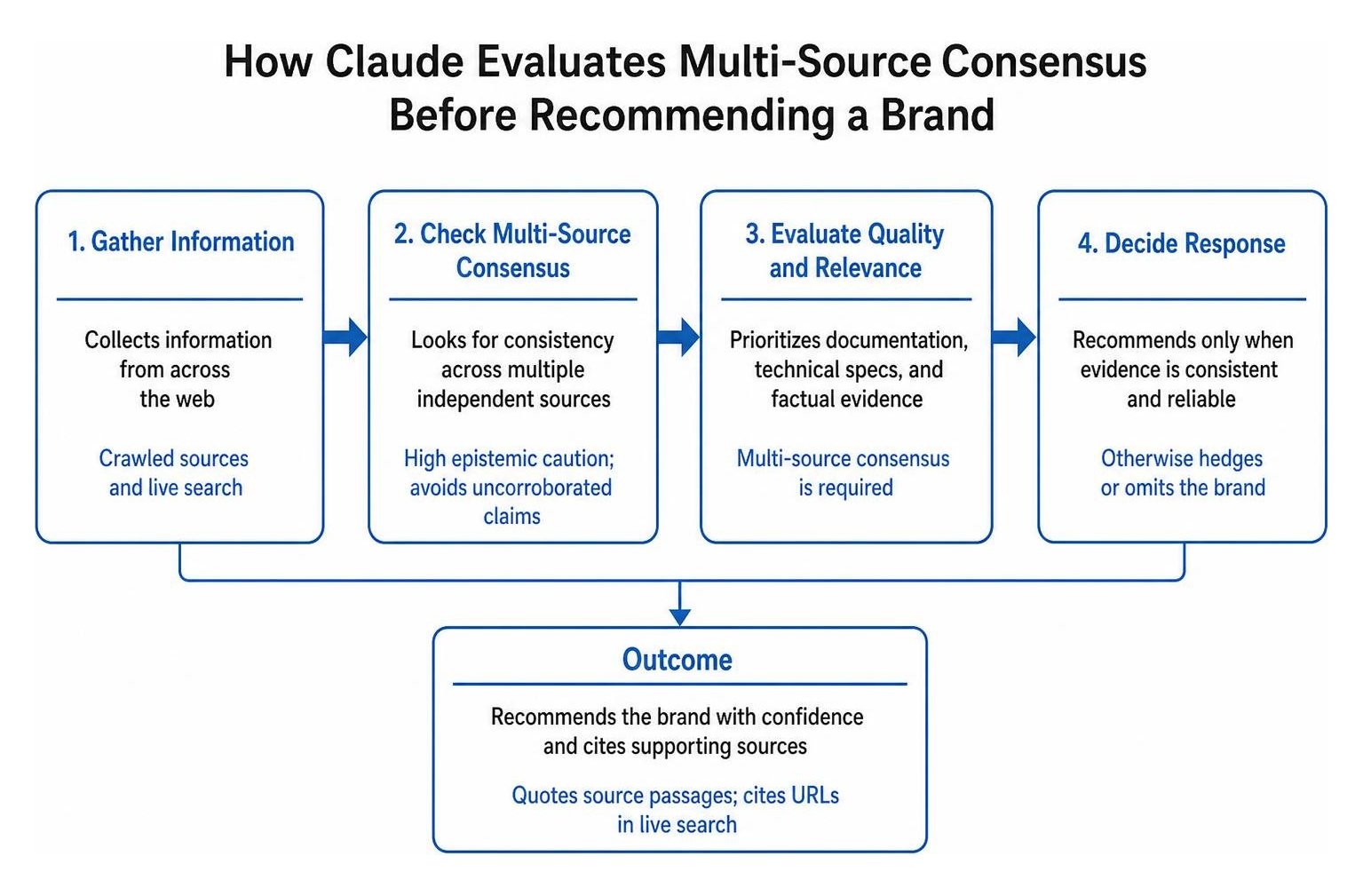
This behavior means you must stop chasing blue links and embrace answer engine optimization that prioritizes factual consistency and multi-source corroboration. The table below outlines how Claude evaluates brand recommendations compared to other major AI platforms:
| AI Platform | Evaluation Characteristic | Citation Behavior | Primary Data Bias |
|---|---|---|---|
| Claude | High epistemic caution; hedges or omits uncorroborated brands | Quotes crawled source passages; cites URLs in live search | Multi-source consensus, documentation, technical specs |
| ChatGPT | Generative recall; answers from broad parametric weights | Direct links via web search mode | Broad web volume, high-authority media, Wikipedia |
| Gemini | Google Knowledge Graph integration; entity validation | Inline web search grounding cards | Google index data, official business profiles |
| Perplexity | Fast real-time indexing; search-engine synthesis | Multi-footnote source citations | Fresh index results, news sites, community forums |
Because engines evaluate entities differently, high visibility in ChatGPT does not guarantee presence in Claude. In fact, gaps of 30 or more points on visibility indexes are common when evaluating the same company across different LLMs.
What are the core metrics tracked in Claude brand monitoring?
The primary metrics to track in Claude brand monitoring are mention rate, recommendation position, citation presence, sentiment tone, and competitor win rate. Evaluating these data points systematically reveals how Claude positions your solutions against competitors.
- Mention Frequency: The percentage of tracked prompts where Claude includes your brand name.
- Recommendation Position: Where your brand appears in numbered lists or comparative responses.
- Citation Share: The frequency with which Claude includes clickable hyperlinks back to your official domain.
- Sentiment and Framing: The presence of positive endorsements, neutral descriptions, or cautionary caveats regarding pricing and limits.
- Competitor Displacement: Which competing tools Claude suggests instead of your brand for commercial queries.
Using specialized tools like the Claude AI Brand Tracker helps automate this data collection across diverse buyer journeys. Tracking these KPIs over time is essential, especially since AI brand recommendation data reveals surprising gaps for challengers who lack clear entity signals.
How does the verification gap cause brand invisibility in Claude?
The verification gap is a phenomenon where Claude completely ignores an established company because it cannot find sufficient third-party consensus across the web to confirm its claims. While other engines might mention a brand based on broad keyword associations, Claude prioritizes safety and accuracy by omitting unverified solutions.
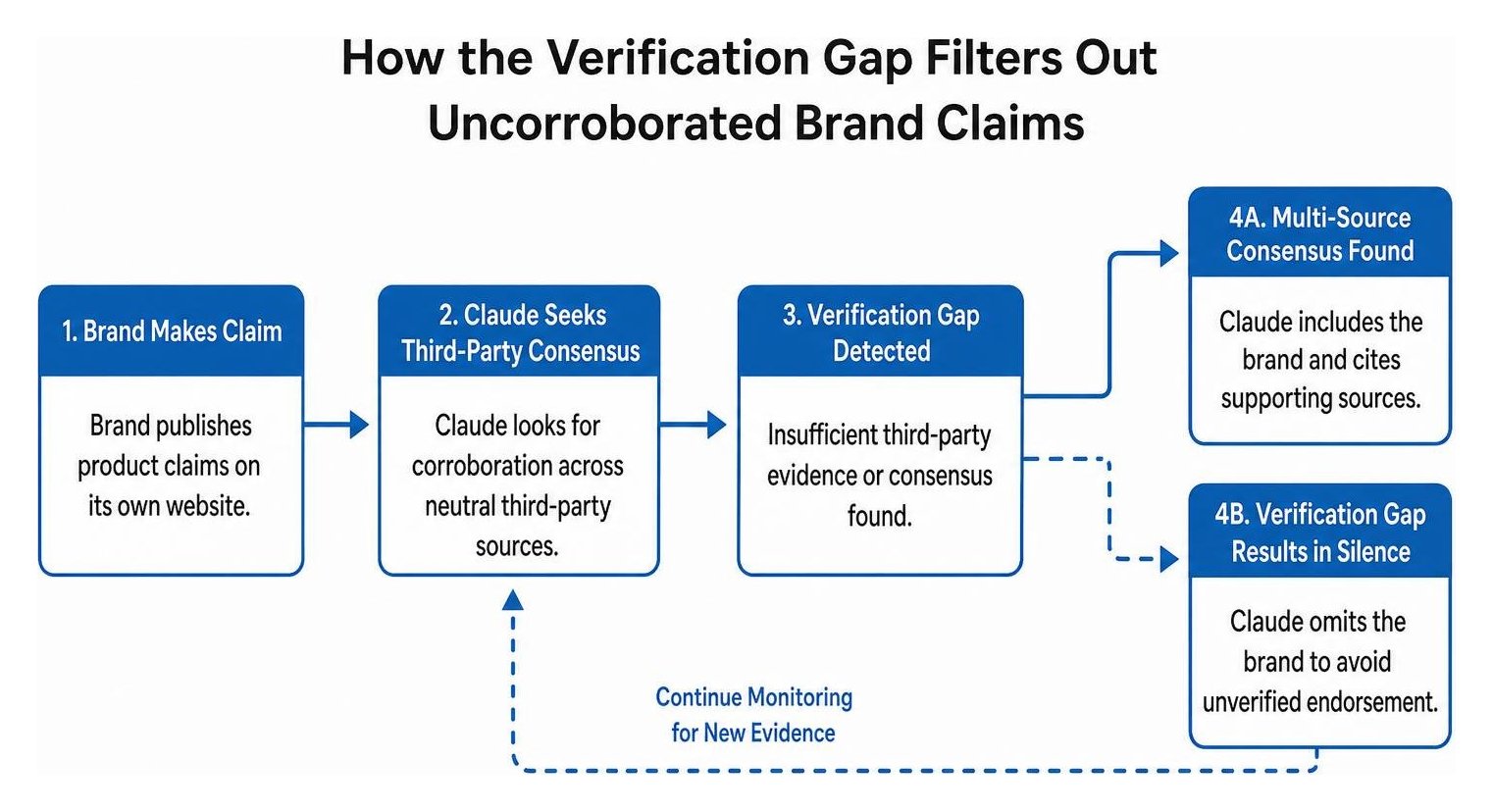
Understanding why certain industries get cited by AI models twice as often comes down to published, checkable evidence. If your website makes product claims that are not corroborated by neutral third-party review platforms, industry directories, and authoritative publications, Claude defaults to silence rather than risking an unverified endorsement.
Strategic Execution and Setup for Claude Visibility Tracking
Setting up a repeatable monitoring framework requires building a structured prompt map, establishing a consistent capture cadence, and configuring server-level crawler access. A well-organized prompt map should cover the entire buyer journey, including category discovery, head-to-head comparisons, feature specifications, and troubleshooting use cases.
To ensure Claude can access and cite your content, verify your technical crawler permissions. Anthropic uses distinct user-agents for different tasks:
ClaudeBot: Operates as the web crawler collecting general training data.Claude-SearchBot: Indexes web pages specifically for real-time search integration.Claude-User: Fetches live web pages in real time when requested during a chat session.
Ensure your robots.txt configuration does not block Claude-SearchBot or Claude-User. Tools like the Claude Brand Visibility Tracker help teams monitor whether these bots are successfully reading and quoting their web assets.
How to build a custom automated monitoring pipeline with Make.com and APIs?
You can construct an automated, low-cost brand monitoring agent by connecting visual automation platforms with the Claude API. This workflow continuously gathers external brand mentions from RSS feeds, Google News, and community discussions, passes the text to Claude for sentiment analysis, and routes prioritized alerts to your team.
Following the architecture outlined in How to Automate Brand Monitoring with Make.com and Claude, you can deploy this pipeline in four steps:
- Configure Ingestion Triggers: Add RSS modules in Make.com scheduled to poll brand keywords and common misspellings every 15 minutes.
- Pre-Filter Mention Text: Apply a basic text filter to confirm the mention contains your brand name, eliminating false positives before making API calls.
- Connect Anthropic API: Send the aggregated text to Claude Haiku with instructions to return only valid JSON containing sentiment, an urgency score from 1 to 5, and a categorized summary.
- Route Alerts: Connect a router module that delivers high-urgency issues directly to a customer support Slack channel while logging positive brand mentions into a spreadsheet.
This automated pipeline provides real-time reputation alerts at a fraction of the cost of legacy enterprise PR monitoring suites.
How to optimize website content to win Claude citations and close visibility gaps?
To earn regular citations in Claude, you must optimize website content for clarity, machine readability, and third-party corroboration. Implementing strategies from our practical guide to showing up in LLM answers helps ensure your pages provide the exact structural data Claude requires.
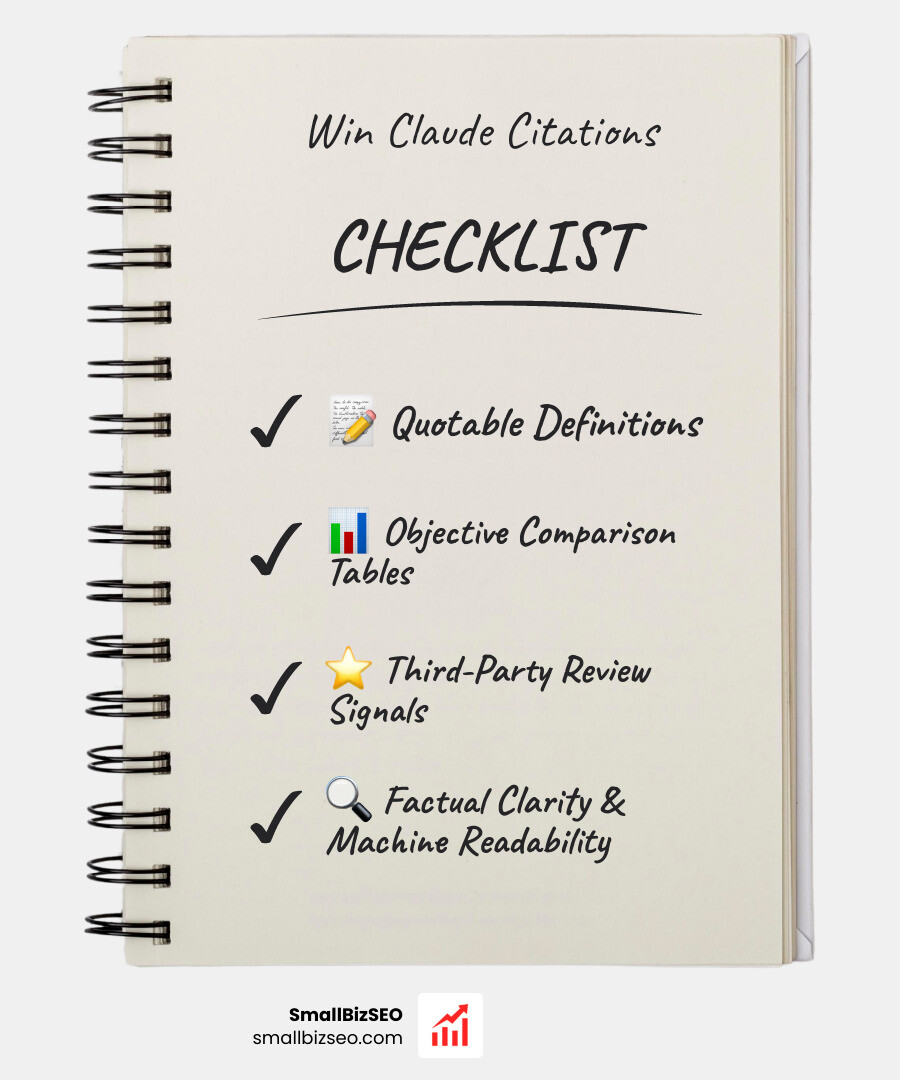
Focus on publishing content structured in formats that AI models can extract:
- Quotable Definitions: Place concise, standalone factual statements in the opening sentences of category and service pages.
- Objective Comparison Tables: Publish side-by-side matrices detailing features, pricing tiers, and ideal use cases without misleading marketing language.
- Third-Party Review Signals: Maintain updated profiles on reputable review directories, industry publications, and software portals.
- Structured Schema Markup: Implement complete Organization and Product schema markup across your core templates.
- Direct FAQ Answers: Answer real user questions directly below subheadings before elaborating on technical details.
How to track Claude referrals and avoid common attribution mistakes?
Tracking traffic originating from Claude requires custom configuration within Google Analytics 4 (GA4). Because many AI platforms do not pass standard referrer headers, roughly 60% to 70% of AI-driven visits are incorrectly grouped into the Direct traffic channel.
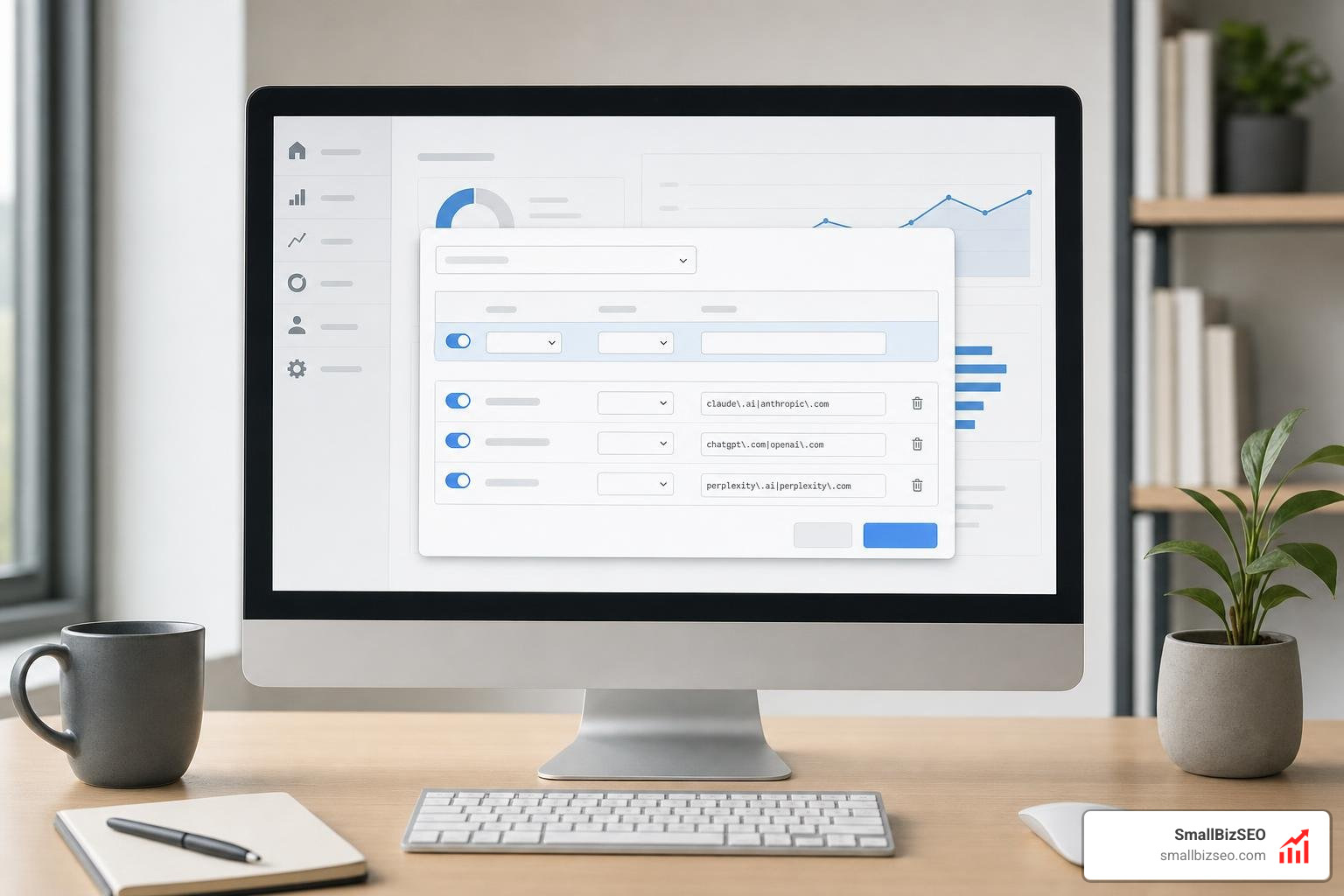
To capture and attribute Claude traffic accurately, establish a custom channel group in GA4:
- Navigate to Admin > Data display > Channel groups and create a new channel labeled
AI Referrals. - Define the channel rule using regex matching for traffic where the Source matches
claude\.ai|anthropic\.comor the Referral URL contains Anthropic domains. - Apply consistent UTM tagging across all shareable links, downloadable resources, and brand assets distributed across digital channels.
While AI referral traffic often accounts for a smaller volume of total website visits compared to traditional search, these visitors frequently convert at three to five times the rate of standard organic visits due to high commercial intent.
Practical Next Steps for AI Visibility Growth
Tracking your brand presence in Claude is an ongoing operational strategy, not a one-time check. Because generative models update their underlying weights and retrieval indexes regularly, consistent monitoring is essential to protect your reputation and maintain category authority.
To establish a defensible brand presence across Claude and answer engines, focus on these ongoing actions:
- Maintain a locked prompt map of commercial search questions and audit answers on a consistent weekly cadence.
- Close the verification gap by building independent third-party reviews and authoritative digital PR placements.
- Format website content with clear, quotable definitions and objective comparison data.
- Ensure technical crawler access is granted to search-specific user-agents in your
robots.txtfile.
If you are ready to measure, protect, and grow your presence across AI assistants, partner with SmallBizSEO for brand mention tracking to turn generative search engines into reliable growth channels.