From Ring to Revenue: Connecting Organic Search Calls to Qualified Deals

How Do You Turn Organic Search Calls Into Qualified Deals?
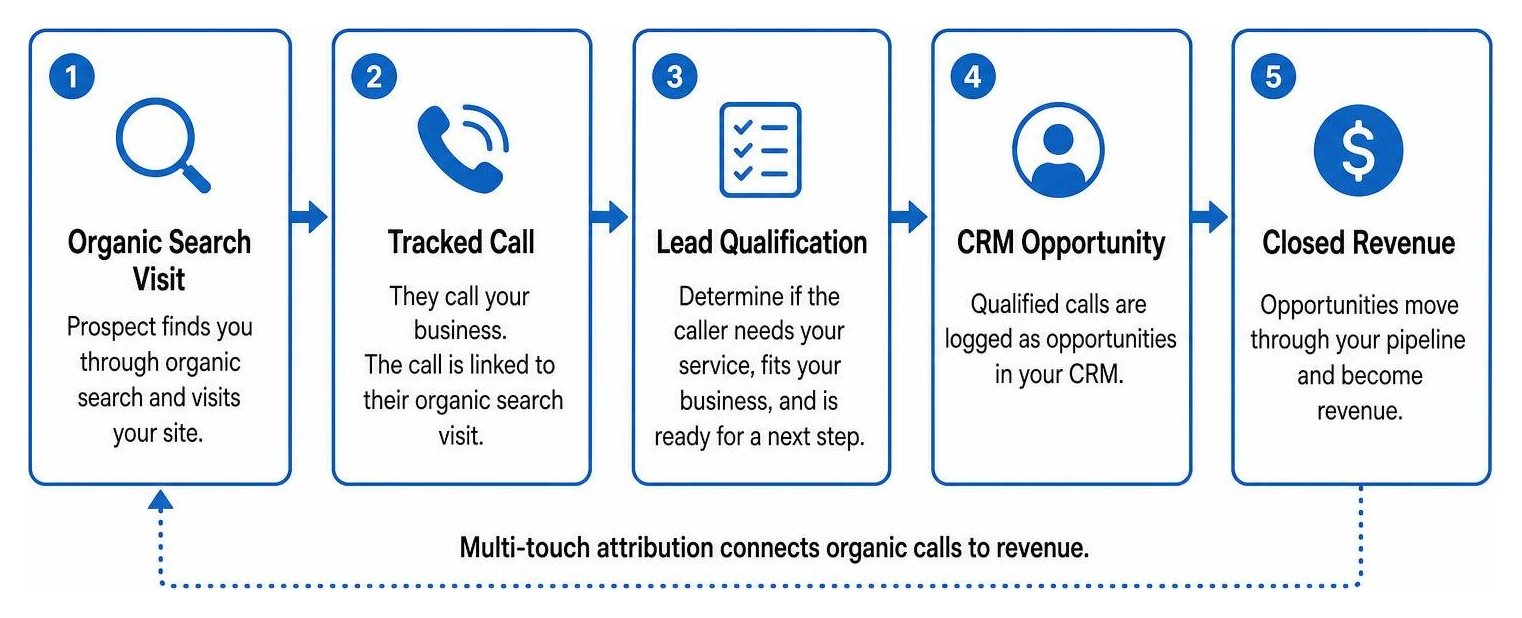
Start connecting organic phone calls to qualified sales opportunities by tracking which organic search visit led to each call. Then check whether the caller needs your service, fits your business, and is ready for a next step. Link qualified calls to opportunities in your CRM so you can see which ones become revenue.
Without that link, an organic call may appear in reports as an isolated phone event, while forms receive clear credit. And a ringing phone is not yet a deal: a support request, spam call, or repeat inquiry should not count as a new sales opportunity.
I’m Clayton Johnson, founder of SmallBizSEO. My work in SEO and digital growth strategy focuses on turning search visibility into qualified leads; connecting organic phone calls to qualified sales opportunities is part of making that path clear.

How Can You Connect Organic Phone Calls to Qualified Sales Opportunities?
You connect organic phone calls to qualified sales opportunities by bridging the digital session data from an organic visitor to their telephone conversation, then scoring and logging that interaction directly inside your CRM.

When prospects search for a solution, land on your content, and dial your business, a tracking gap often opens. Unlike web form submissions that naturally carry session cookies, URLs, and source tags into a database, an untracked phone dial abruptly severs the digital breadcrumb trail. The caller enters your sales pipeline as an unassigned lead, while your marketing reports show traffic with zero recorded conversions.
This reporting blind spot creates substantial misattribution risks. Marketing teams often pour budget exclusively into form-heavy channels simply because forms are easy to measure. However, why your top-performing channel might not actually cause conversions often comes down to attribution bias: high-intent prospects frequently prefer dialing directly over filling out forms. Research on consumer phone behavior, such as studies exploring what calls to businesses signify, demonstrates that inbound telephone calls carry significantly higher immediate purchase intent than casual website browsing.
Why Does Basic Call Tracking Miss Organic Search Attribution?
Basic call tracking falls short because it only records that a phone rang, capturing basic caller ID and timestamp data without linking the dial to a specific website session, organic keyword, or landing page.
When an organization relies on a single static phone number displayed across its website, every inbound call looks identical in analytics. You cannot tell whether the caller arrived via a non-branded organic search query, a shared blog post, or a direct bookmark. Furthermore, relying on simple mobile "click-to-call" button clicks in Google Analytics 4 produces false positives; many visitors click a phone link to copy the number or trigger their mobile dialer without ever completing the call.
To understand the difference, consider how basic tracking compares against full multi-channel attribution:
| Capability | Basic Call Tracking | Multi-Channel Call Attribution |
|---|---|---|
| Primary Data Captured | Call duration, caller ID, time of day | Full visitor session, source, landing page |
| Organic Session Context | Disconnected from website journey | Attached to referrer and search intent |
| Conversion Validation | Counts every dial (including spam and misdials) | Filters by duration, intent, and lead criteria |
| CRM Integration | Isolated in call log dashboard | Synced to contacts, pipeline deals, and revenue |
By moving beyond simple call logs and learning how to accurately track inbound calls, we ensure every real conversation receives proper channel attribution.
How Does Dynamic Number Insertion Capture Organic Search Session Data?
Dynamic Number Insertion (DNI) captures organic session data by using a small JavaScript snippet on your website to automatically replace static phone numbers with a unique tracking number assigned to an individual visitor's active browsing session.
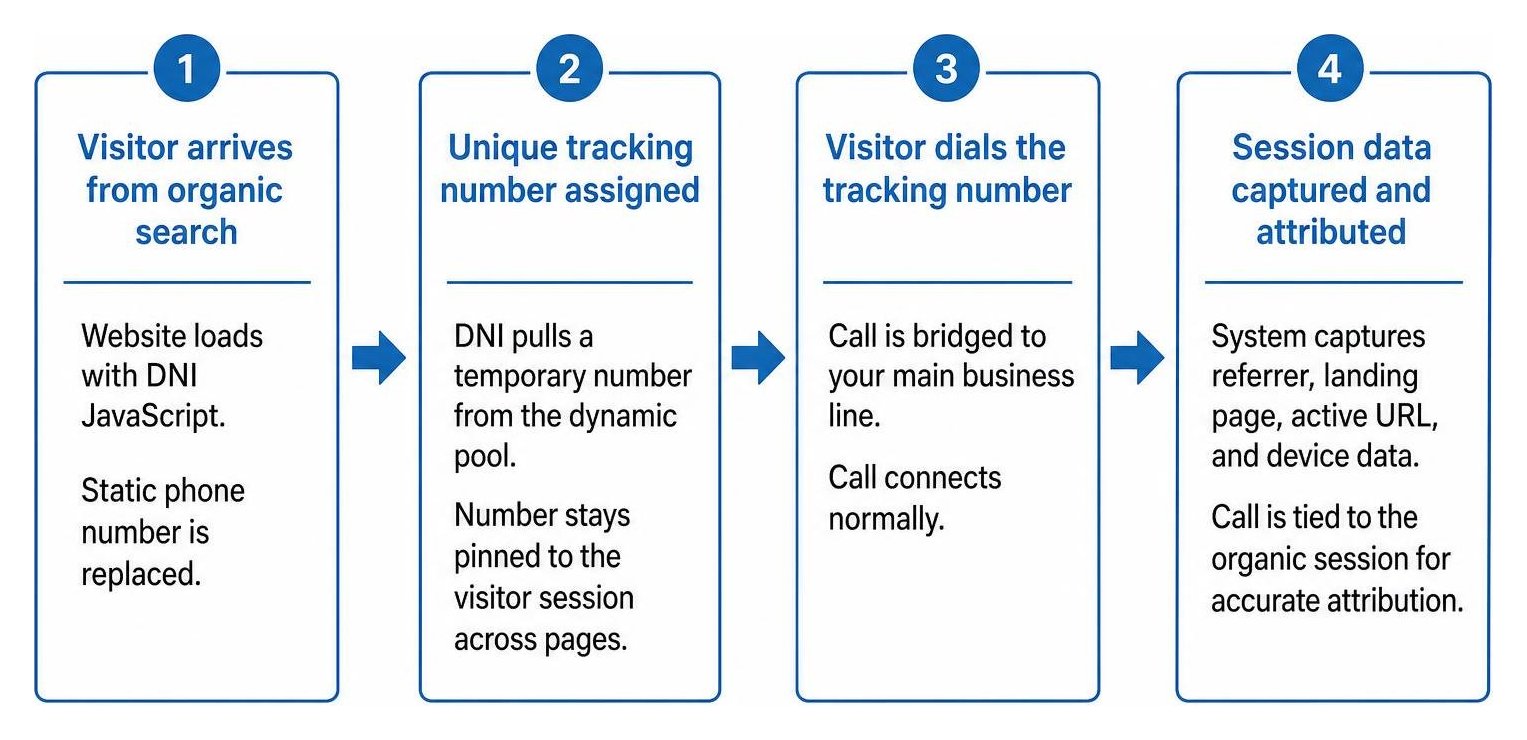
When an organic search visitor arrives, DNI pulls a temporary number from a dynamic pool. As the visitor browses across pages, that number stays pinned to their session. When they dial:
- The system bridges the telephone call to your main business line.
- The tracking software captures the visitor's organic referrer, initial landing page, active URL, and device data.
- The platform maps how conversion rate shifts between page types across your site, showing which informational articles or commercial service pages actually trigger high-intent calls.
- The system preserves multi-touch journey data, recording whether the prospect previously visited through another campaign before returning via organic search.
This closed data loop allows revenue teams to implement tools like SpokeDo or Harmony.ai to extract real-time conversational data and maintain rapid speed-to-lead follow-up workflows.
How Do You Build a Complete Attribution and Lead Qualification System?
You build a complete attribution and lead qualification system by defining clear qualification rules, passing structured call data into your CRM via webhooks or native integrations, and tying every closed deal back to its organic search origin.

At SmallBizSEO, we emphasize that SEO success must be measured in pipeline growth rather than vanity traffic spikes. Through our dedicated call tracking solutions, we help businesses bridge the gap between high-ranking organic content and verified organic revenue.
What Makes an Inquiry a Qualified Sales Opportunity?
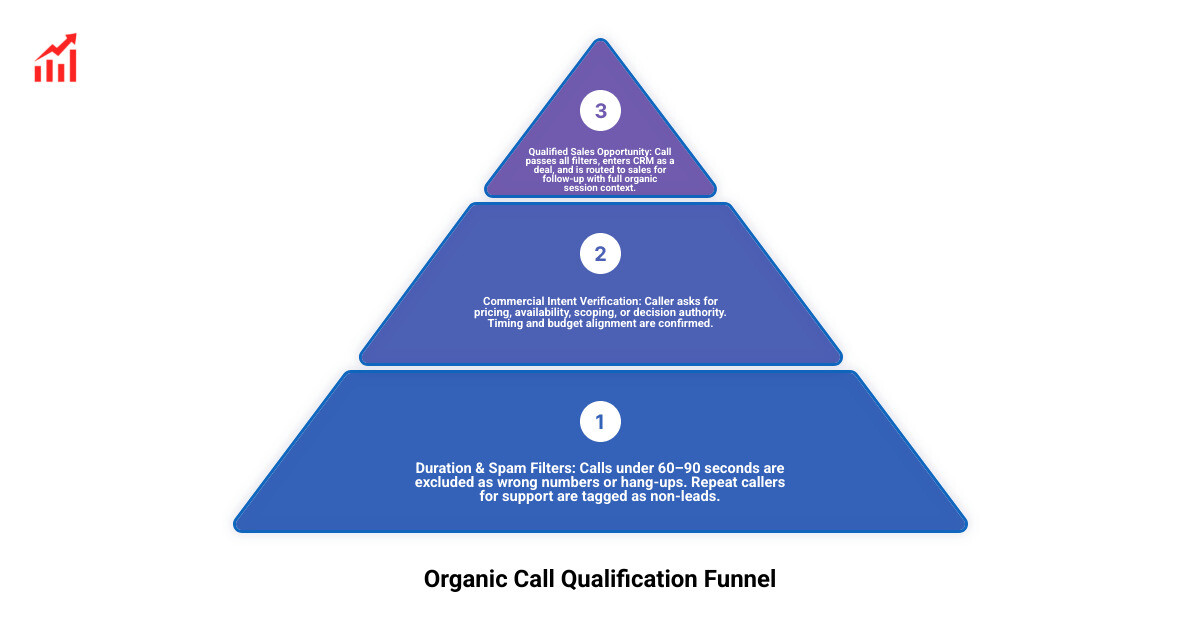
An inbound organic call becomes a qualified sales opportunity when the conversation moves beyond general customer service or spam and meets specific commercial intent filters, budget alignment, and decision-making criteria.
Counting every answered ring as a conversion inflates marketing figures and skews optimization data. To maintain accurate lead quality scoring, businesses should apply structured qualification filters:
- Duration Thresholds: Calls lasting under 60 to 90 seconds are filtered out, as they typically represent wrong numbers, quick administrative questions, or immediate hang-ups.
- Commercial Intent Verification: The caller explicitly requests pricing, availability, service capabilities, or project scoping.
- First-Time Caller Separation: Repeat callers checking existing order statuses or billing records are tagged as support activity, not new sales leads.
- Decision Authority and Timing: The prospect confirms a defined timeframe and project need that matches your core offerings.
Many teams now deploy automated front-line tools like Dialora or PhoneIQ to handle after-hours qualification, ensuring every incoming ring is triaged accurately before being passed to sales reps.
How Do You Send Organic Phone Call Data to Your CRM?
You send organic phone call data to your CRM by mapping custom call properties (such as source, campaign, landing page, call recording, and AI summary) to contact and deal records through automated API webhooks.
When an organic call finishes, your call tracking platform should execute an automated flow:
- Contact Creation and Deduplication: The system looks up the incoming phone number. If it exists, the record updates; if not, a new contact is created.
- Field Mapping: Digital attribution tags (Organic Search, Google, specific landing page) populate the contact's acquisition properties.
- Automatic Deal Creation: If the call meets your qualification criteria, an automated workflow creates a deal in your sales pipeline at the "Discovery" stage.
- Context Logging: Platforms such as HubSpot or Salesforce receive the call recording link and structured transcript notes, as outlined in detailed AI voice agent CRM integration guides and HubSpot voice automation frameworks.
Connecting calls directly to pipeline stages prevents lead decay, empowers sales reps with full search context, and directly lowers your blended customer acquisition cost.
How Can You Audit Inbound Tracking to Prevent Attribution Loss?
You audit your inbound tracking by systematically placing test calls across all organic search entry paths, verifying data flow across analytics platforms, and reconciling CRM pipeline records against raw call logs.
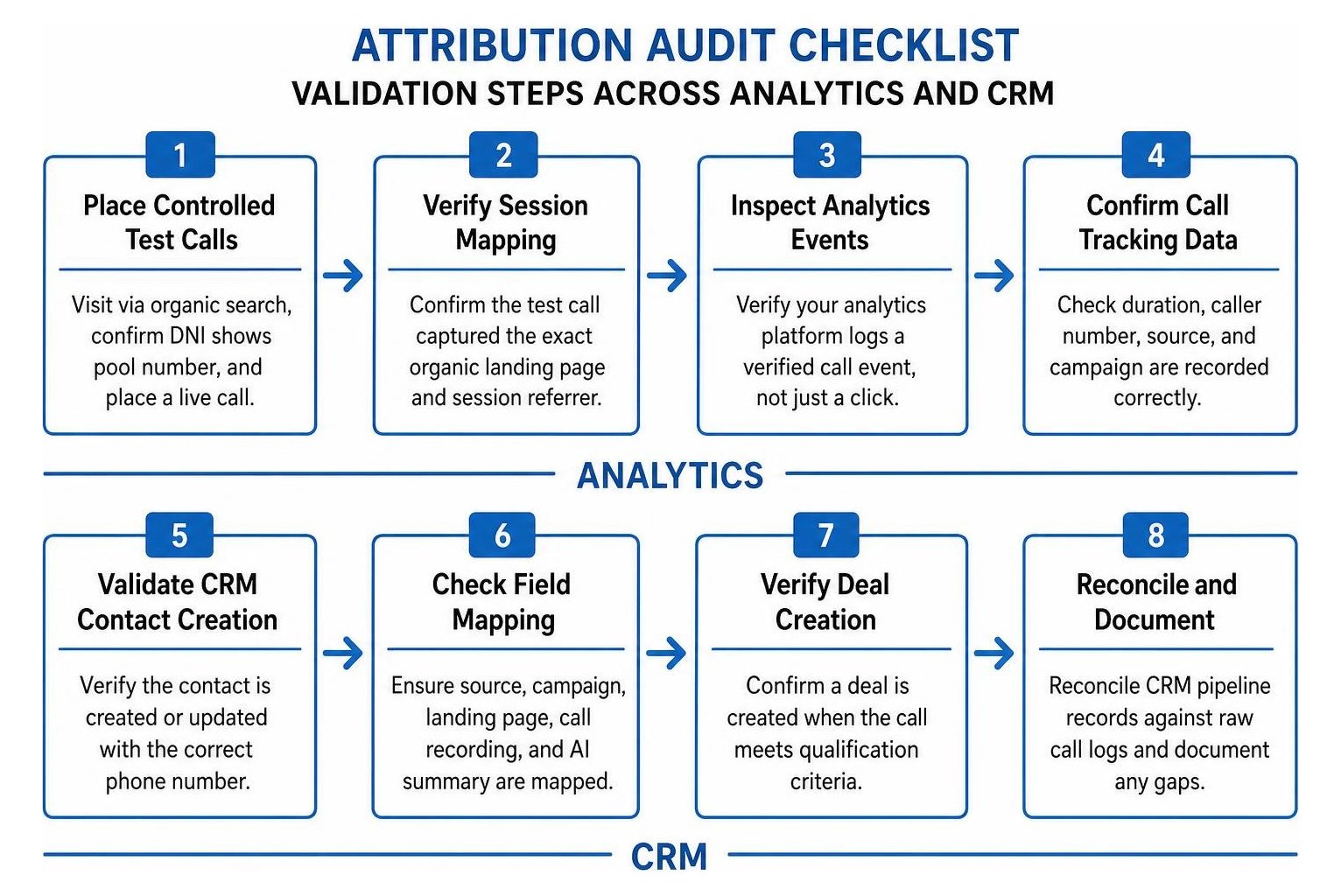
To conduct a thorough attribution audit, follow these operational steps:
- Place Controlled Test Calls: Open a private browser window, navigate to your site through an organic search result, confirm that DNI displays a pool number, and place a live call.
- Verify Session Mapping: Check your call tracking dashboard to confirm the test call captured the exact organic landing page and session referrer.
- Inspect Web Analytics Events: Verify that your analytics platform logs a verified call event rather than just a click-to-call button tap.
- Reconcile CRM Opportunities: Open your CRM and verify that a new deal was created with the correct attribution source and assigned to the right pipeline stage.
- Calculate Channel Performance: Use our SEO ROI Calculator to compare qualified organic phone opportunities against closed revenue, ensuring marketing budgets align with actual returns.
Maximizing Pipeline Growth from Every Organic Search Call
Converting organic search traffic into measurable revenue requires treating the telephone as an integrated digital conversion channel rather than an isolated offline event. By combining dynamic number insertion, strict qualification standards, and automated CRM field mapping, you eliminate attribution blind spots and give your sales team the exact context needed to close high-intent prospects. When every ring is accounted for and tied to pipeline value, your marketing strategy shifts from guessing channel effectiveness to scaling predictable business revenue.