How to Scale Startup Growth Using Lean SEO Strategies

How Can a Startup Grow Through SEO Without Wasting Money?
Start with the searches most likely to bring customers, not the ones with the most traffic. Talk to your first customers about the problems they searched for. Build a useful page for one specific problem, make sure Google can find it, and link to it from related pages. Then use the free Google Search Console to see which pages earn impressions and improve those first.
This approach keeps SEO for a startup tied to leads rather than pageviews. Clear answers can also help people understand your business when they find it through AI-generated search results. You do not need a large content library to begin; you need a few pages that solve real buyer problems.
I’m Clayton Johnson, founder of SmallBizSEO. My work on SEO for startup teams connects content, technical SEO, and digital PR to help businesses earn visibility and qualified leads.
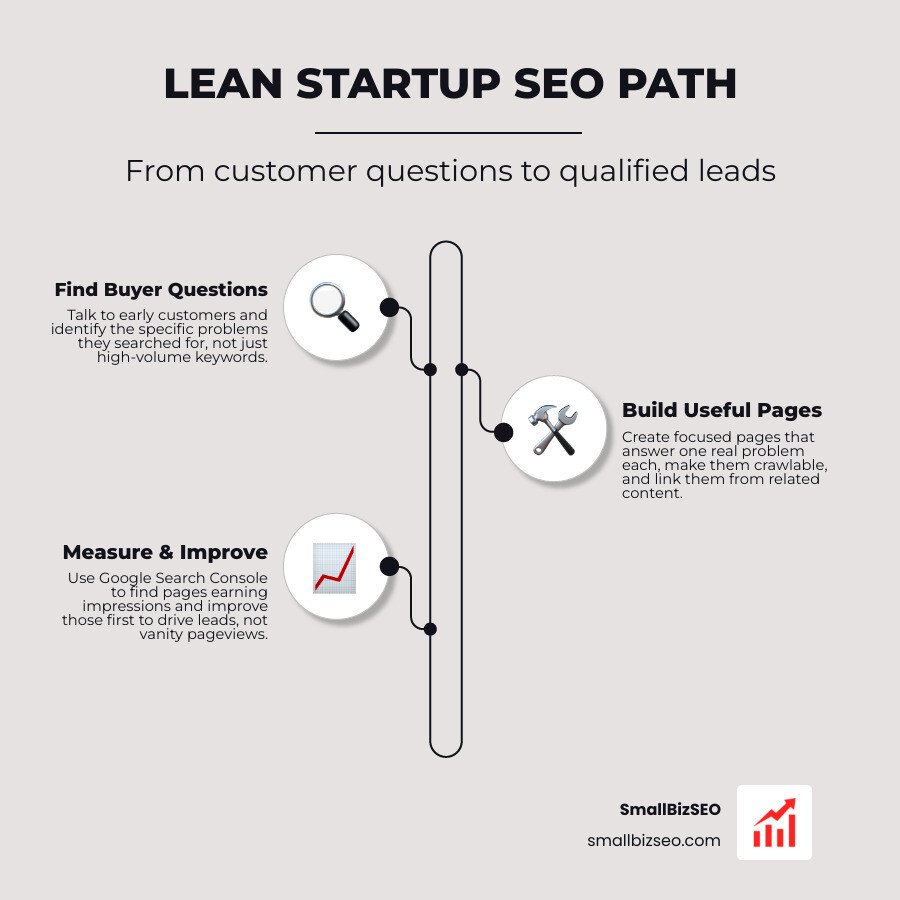
Terms related to SEO for startup:
Why Traditional Playbooks Fail and How SEO for Startup Growth Actually Works
Startup search marketing succeeds when it targets bottom-of-funnel buyer intent rather than vanity search volume. Traditional enterprise playbooks tell you to publish dozens of generic top-of-funnel glossary posts. For an early-stage company trying to protect cash reserves, that approach burns budget without driving pipeline.
Roughly 75% of all organic clicks go to the first page of search results, with the top spot capturing a 39.8% click-through rate, the second position getting 18.7%, and the third earning 10.2%. Overall, the top three positions capture 68.7% of all page-one clicks. Chasing ultra-competitive head keywords against established legacy brands ensures you stay stuck on page three where nobody clicks.
Applying smart SEO tactics to boost organic growth means matching exact commercial queries where prospective customers are looking for immediate solutions. Google rewards websites that publish helpful, reliable, people-first content that provides practical answers directly. When you prioritize revenue proximity over raw volume, search engines send qualified leads straight to your product.
What Are the Most Dangerous Myths About SEO for Startup Founders?
The most dangerous search myth is that your website must target massive search volume terms right away to generate revenue.
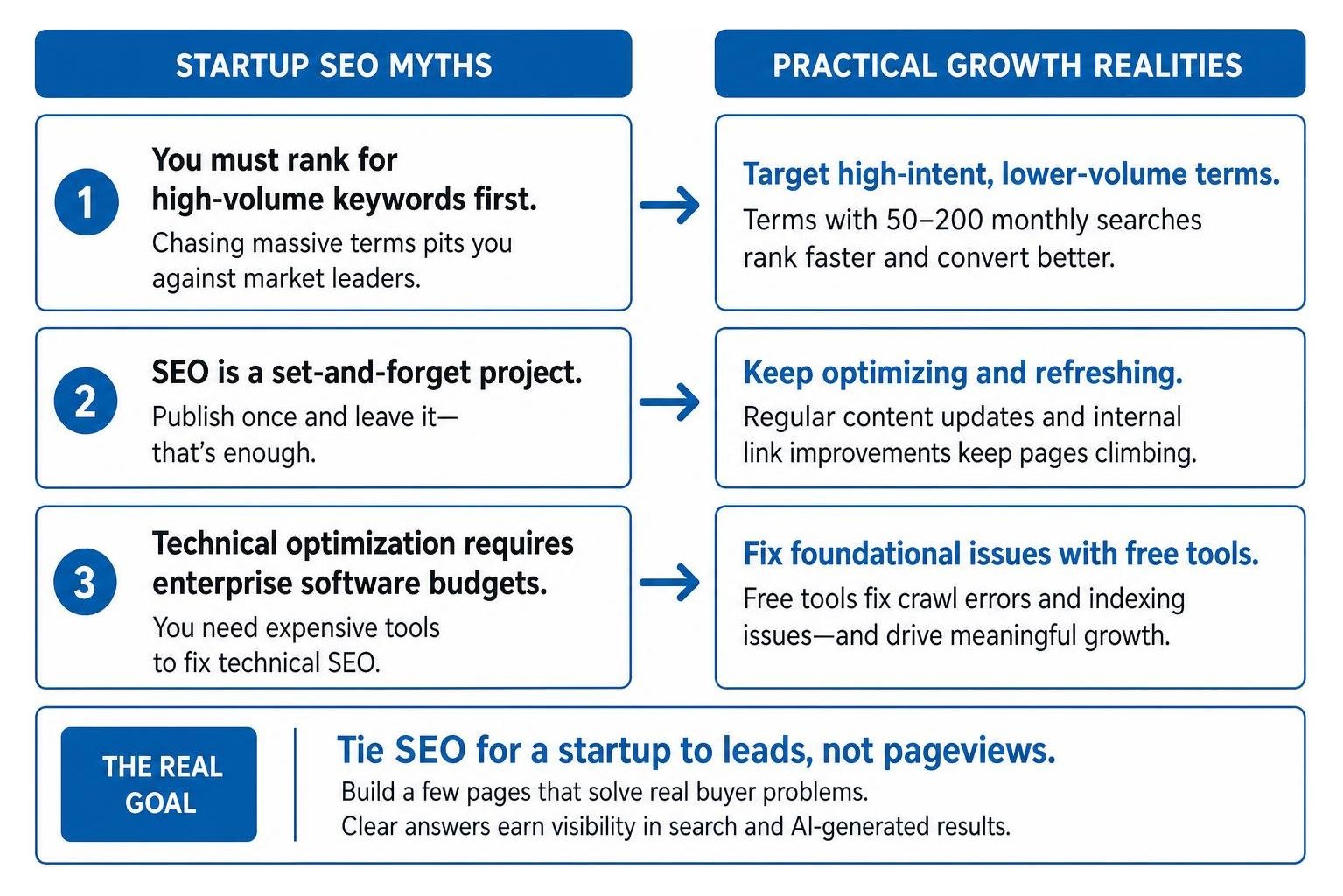
Here is the reality behind the three biggest misconceptions:
- Myth 1: You must rank for high-volume keywords first. Chasing terms with tens of thousands of monthly searches pits you against market leaders with massive backlink profiles. Targeting high-intent terms with 50 to 200 monthly searches yields faster rankings and significantly higher conversion rates.
- Myth 2: SEO is a set-and-forget project. Publishing an article once and never touching it again leaves organic traffic on the table. Regular content refreshes and internal link updates keep pages climbing upward.
- Myth 3: Technical optimization requires enterprise software budgets. Free tools are more than enough to fix crawl errors and indexing roadblocks. In fact, addressing foundational website health can drive substantial organic gains, as fixing early-stage technical SEO debt prevents lost growth down the road.
More than 60% of global web traffic comes from mobile devices, meaning responsive design and smooth mobile usability matter far more than obsessing over fractional Core Web Vitals scores.
Why Is AEO and Generative Search Part of SEO for Startup Pipeline?
Answer Engine Optimization (AEO) and traditional search optimization are now a single unified discipline. Buyers no longer discover software exclusively through blue links on a results page. In fact, 51% of B2B software buyers begin their product research inside an AI chatbot, and 69% of buyers choose a different vendor than planned based on what an AI chatbot recommends.
AI Overviews now trigger on 25% of search queries. To win citations across AI engines like ChatGPT, Claude, and Perplexity, your content must use clear answer-first formatting:
- Direct Answers: Place direct, 40-to-60-word answers immediately beneath clear question headings before adding supporting nuances.
- Target Sub-Queries: Optimize for fan-out sub-queries. Pages ranking for multi-intent sub-queries are 161% more likely to be cited in AI Overviews than pages targeting only a single head term.
- Structured Markup: Implement clean FAQ, Product, and Article schema markup to make data extraction effortless for web crawlers.
- Crawl Accessibility: Maintain clean server-side rendering so AI agents can parse text without choking on client-side JavaScript, and host a clear llms.txt file to guide crawlers directly to your core solution pages.
How Should Early-Stage Teams Prioritize Keywords by Winnability and Intent?
Prioritize search terms based on revenue intent and competitive winnability rather than raw monthly search volume. When evaluating keyword candidates, score them by customer pain points, buying urgency, and how easily a newer domain can achieve a top-three ranking.
| Keyword Type | Typical Monthly Search Volume | Ranking Winnability | Conversion Intent | Priority Level for Startups |
|---|---|---|---|---|
| Broad Category Terms (e.g., "project management") | 50,000+ | Very Low | Low (Browsing) | Deprioritize |
| Problem-Aware Long-Tail (e.g., "sprint tracking for remote dev teams") | 100 - 500 | High | Moderate-High | High |
| Competitor Alternative (e.g., "[Competitor] alternatives for small teams") | 50 - 300 | Very High | Very High (Active Buying) | Immediate Priority |
| Product Integration (e.g., "connect GitHub issues to Notion database") | 30 - 150 | High | High (Solution Seeking) | Immediate Priority |
Targeting hyper-specific queries lets you win rankings quickly, capturing high-intent prospects who are ready to make purchase decisions immediately.
How to Execute a Lean Organic Growth Strategy and Measure Real Results
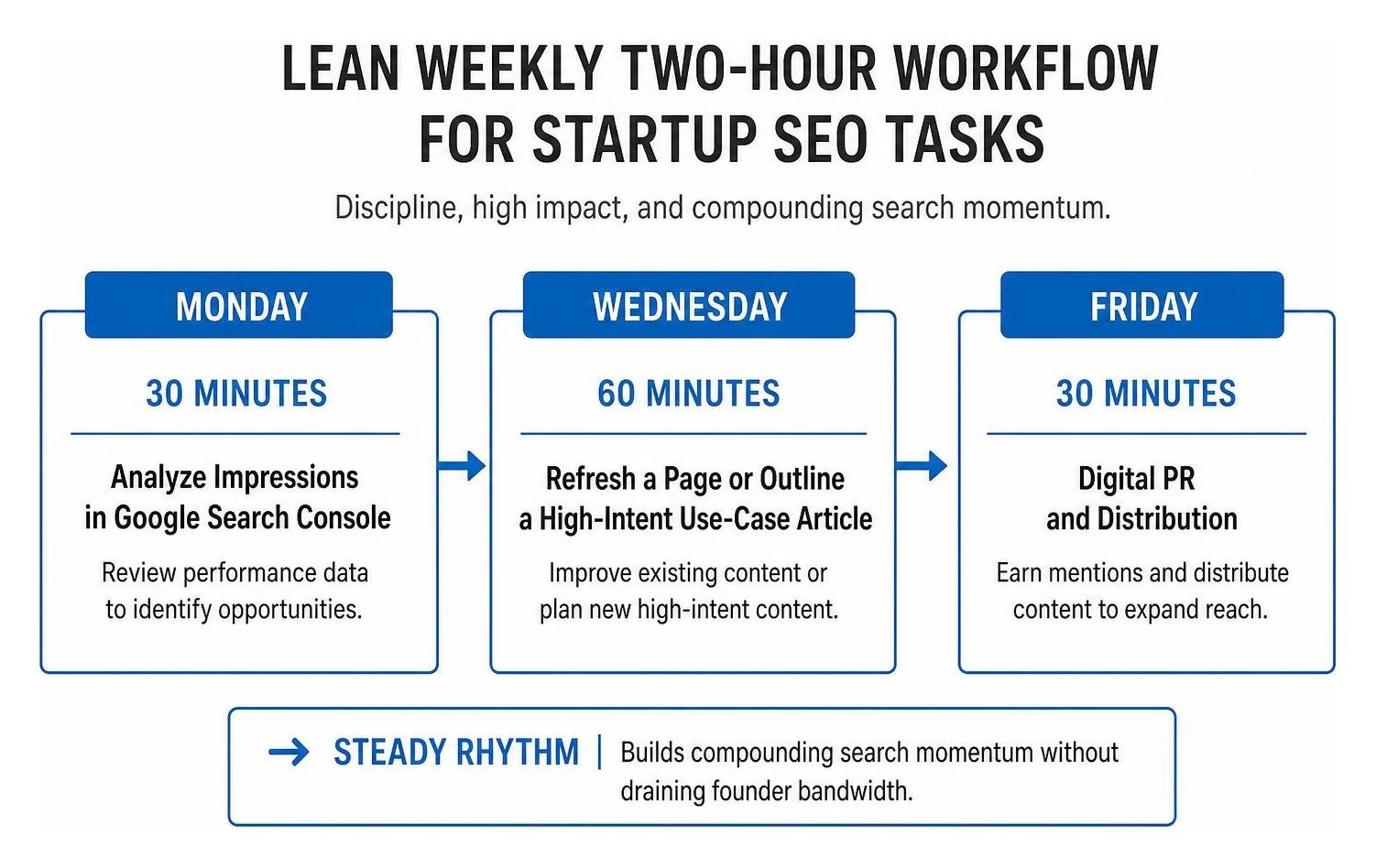
Run a disciplined two-hour weekly routine focusing on high-impact optimizations rather than overwhelming task lists. A zero-budget approach works when you maintain strict weekly habits that compound over time, as highlighted in this practical startup SEO guide.
Spend 30 minutes every Monday analyzing impressions inside Google Search Console. Dedicate 60 minutes on Wednesday to refreshing an existing page or outlining a high-intent use-case article. Reserve 30 minutes on Friday for digital PR and distribution. This steady rhythm builds compounding search momentum without draining founder bandwidth.
What Is the Position 11-20 Strategy and How Does It Drive Fast Traffic?
The position 11-20 strategy identifies keywords where your site already ranks on page two of Google and optimizes those pages to push them onto page one. This is the highest-ROI optimization tactic for early-stage teams because Google has already indexed and validated your content's relevance.
Open Google Search Console, filter your performance report by queries with an average position between 10.1 and 20.0, and sort by impressions. These URLs are low-hanging fruit waiting for an upgrade.

To push these pages into the top positions:
- Add a side-by-side comparison table or structured summary at the top of the post.
- Answer unanswered user sub-questions identified in Google's "People Also Ask" boxes.
- Add three to five internal links from your highest-authority blog posts using exact descriptive anchor text.
In real-world tests, updating a page stuck at position 14 with comparison data and strategic internal links moved it to position 6 within two weeks, unlocking a 340% traffic increase.
How Do You Build Complete Topic Clusters and Earn Free Backlinks?
Build topical authority by creating one central pillar page surrounded by tightly connected cluster articles before tackling another topic. A comprehensive cluster signals to search engines that your website possesses deep, authoritative expertise in your domain.
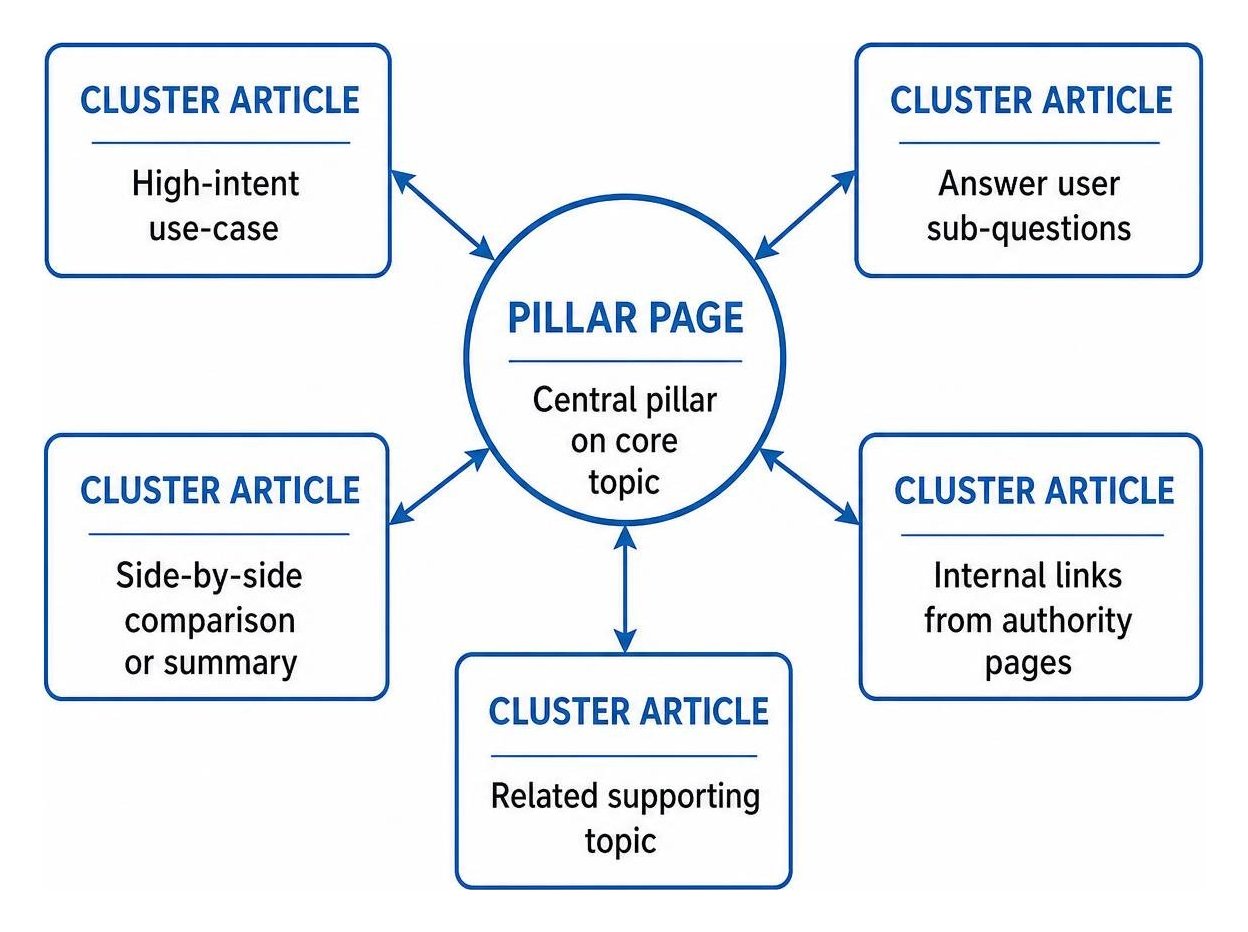
One startup grew product signups 14x in a single year simply by owning a tight set of buyer-centric topics, while another grew signups 43x over 15 months with focused cluster architecture.
To build authority without paying expensive agency fees:
- Earn Unpaid Backlinks: Study proven methods for earning high-quality backlinks with zero initial authority to boost domain trust quickly.
- Publish Data Assets: Create free templates, calculators, or proprietary industry data that bloggers naturally cite as reference material.
- Leverage Ecosystem Profiles: Claim company listings on credible platforms and industry software directories.
- Partner Collaborations: Exchange co-marketing case studies and guest analyses with non-competing software platforms serving the same audience.
What Is the Realistic Timeline and Tool Stack for Organic Growth?
SEO delivers sustainable compounding returns over a 6 to 12-month timeframe, with B2B SaaS programs averaging a seven-month break-even and a 702% three-year ROI.
Startups can reach thousands of monthly organic visitors and meaningful monthly recurring revenue on a zero-dollar software budget using this essential free stack:
- Google Search Console: Essential for keyword impression tracking, crawl analysis, and performance diagnostics.
- Google PageSpeed Insights: Identifies rendering bottlenecks, unoptimized assets, and mobile usability issues for free.
- Screaming Frog SEO Spider: Crawls up to 500 URLs for free to uncover broken links, missing metadata, and duplicate tags.
- Community Research Channels: Use Reddit, Quora, and customer discovery calls to extract real buyer problem queries.
When you master these core tools, scaling organic traffic growth becomes a repeatable playbook. As your revenue scales, upgrading to dedicated B2B SEO services accelerates your trajectory. Our SmallBizSEO Velocity framework utilizes automated reporting and deep technical precision to scale rankings efficiently.
How to Turn Search Rankings into Predictable Pipeline
Building sustainable organic search momentum does not require millions in venture funding or enterprise software subscriptions. By avoiding search volume traps, structuring pages for both AI answer engines and traditional search, and consistently optimizing positions 11 through 20, your startup can capture high-intent buyers ahead of legacy competitors.
Focus on solving real customer problems page by page, keep your technical foundation clean, and let compounding organic discovery drive your customer acquisition engine.