A Realistic Blueprint to Accelerating Organic Search Rankings for Small Brands

A Realistic Blueprint to Accelerating Organic Search Rankings for Small Brands
How Can a Small Business Rank Faster in Search?
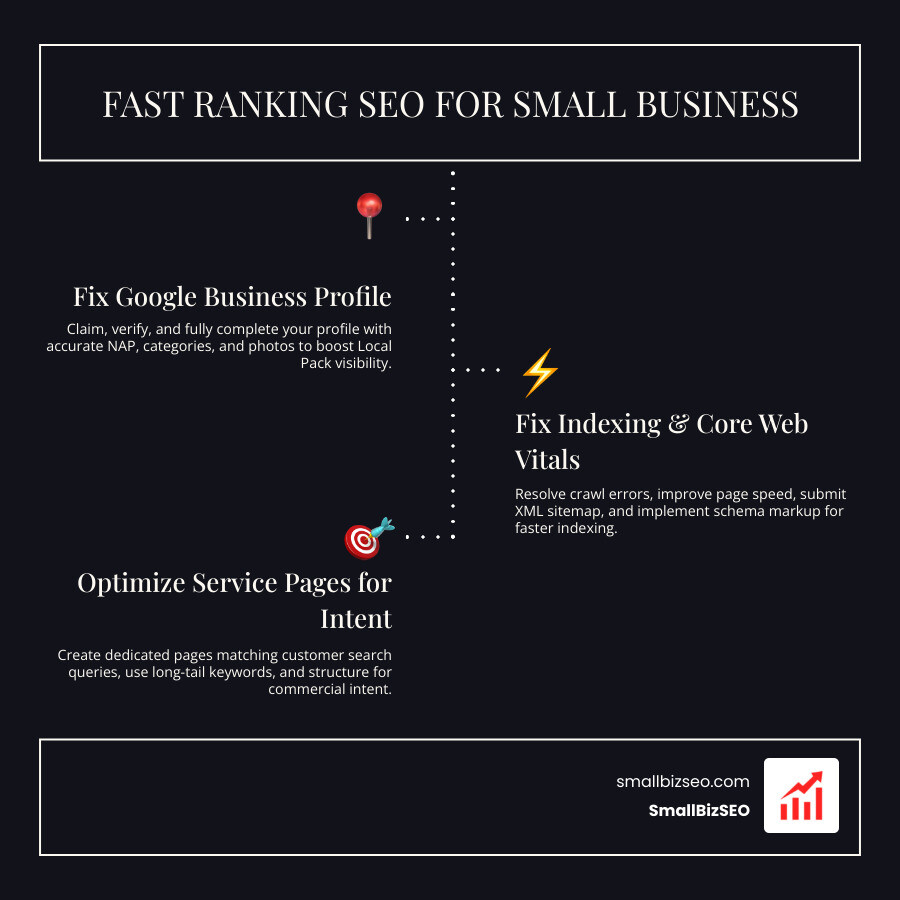
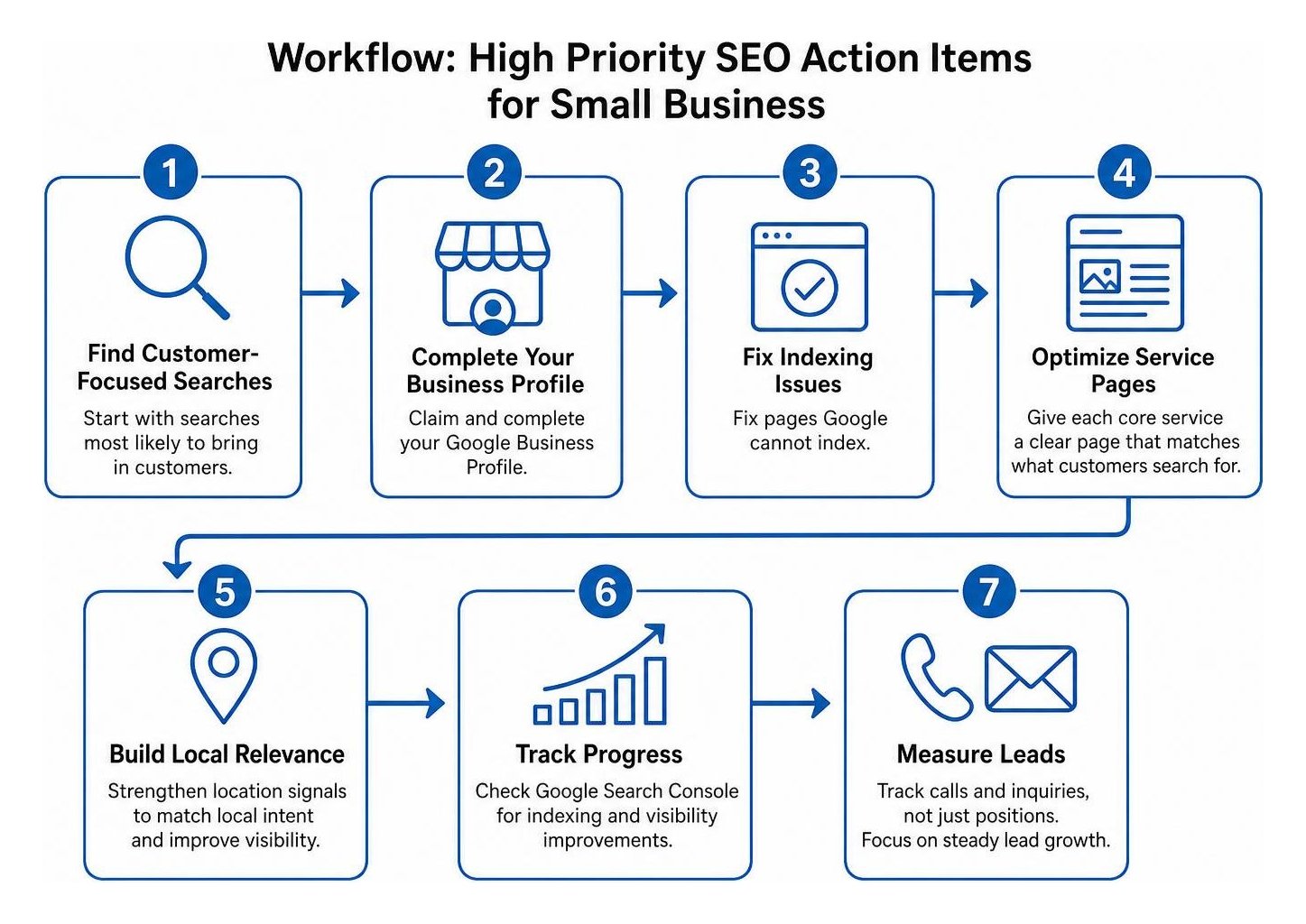
Start with the searches most likely to bring in customers. Claim and complete your Google Business Profile, fix pages Google cannot index, and give each core service a clear page that matches what customers search for. These focused fixes can improve visibility sooner than chasing broad, competitive keywords, but no one can guarantee a ranking date.
Check progress in Google Search Console and track calls and inquiries, not just positions. Early movement may take weeks; steady lead growth often takes months. Fast ranking SEO for small business growth depends on combining technical fixes with targeted content and digital PR to attract qualified leads.
Essential search optimization resources:
Introduction to Rapid Search Visibility
Organic search drives 53% of all online trackable traffic and accounts for 44% of overall revenue share across modern businesses. For small websites competing against entrenched industry giants, prioritizing fast ranking SEO for small business growth offers a massive economic advantage: it can slash customer acquisition costs by up to 61% compared to paid ad campaigns. Yet, data shows that 96.55% of web pages receive zero organic traffic from Google, usually because they attempt to rank for impossible broad terms or suffer from fundamental technical errors.
Achieving rapid search visibility requires shifting focus from vanity metrics to high-intent actions. Instead of publishing endless generic blog posts, small businesses succeed faster by addressing technical crawl blockers, claiming local real estate, and targeting low-competition search phrases that map directly to revenue.
Fast Ranking SEO Small Business Framework: High-Impact Strategies for Quick Wins
To generate swift ranking momentum, a website must establish a clear path for search engines to crawl, index, and evaluate content. Our approach focuses on high-leverage fixes: eliminating technical drag, building geographic relevance, and creating structured service pages.
How Does Fast Ranking SEO Small Business Execution Differ from Traditional SEO?
When executing fast ranking SEO, small business teams focus on immediate, bottom-of-the-funnel opportunities—such as location-specific terms and hyper-targeted service queries—rather than multi-year national keyword dominance.
Approximately 46% of all Google searches carry local intent. While traditional SEO often targets broad keywords with massive search volume and fierce competition, agile small business search strategies zero in on specific commercial queries (100 to 1,000 monthly searches) where search engines reward hyper-relevant local authority. Reviewing our SEO basics survival guide for small business provides a clear foundation for these critical distinctions.
| SEO Element | Traditional National SEO | Fast-Acting Small Business SEO |
|---|---|---|
| Primary Target | High-volume head keywords | High-intent, low-competition local phrases |
| Initial Timeframe | 6 to 12 months for traction | 2 to 8 weeks for early movement |
| Core Asset | Large backlink authority profiles | Optimized Google Business Profile & local relevance |
| Content Strategy | Broad informational blog hubs | Dedicated commercial service and location pages |
| Conversion Focus | Brand awareness & lead nurturing | Direct phone calls, bookings, and form leads |
How Can You Optimize Google Business Profile for Rapid Local Visibility?
Optimizing your Google Business Profile (GBP) is the single fastest way to win search engine visibility, as it places your brand in the coveted Local 3-Pack. Listings in the Local Pack earn a 40% higher click-through rate than regular organic positions.
About 76% of people who run a "near me" search on their smartphone visit a store within 24 hours, and 88% call or visit within a single day. Complete the following tasks to accelerate map rankings:
- Category Specificity: Choose the exact primary category matching your service (e.g., "Emergency Plumber" instead of just "Plumber"). Category changes can show ranking movement in as little as 2 to 4 weeks.
- Name, Address, Phone (NAP) Consistency: Align your business details across all online directories. Even slight variations confuse search engine crawlers and slow your momentum.
- Review Velocity: Encourage consistent feedback. Gaining 4 or more verified reviews per month helps businesses climb map positions twice as fast as inactive profiles.
- Visual Engagement: Upload high-resolution interior, exterior, and service photos regularly. Profiles with fresh images capture more views and conversion actions.
For a deeper dive into directory optimization, explore our walkthrough on how to learn local SEO basics.
Which Technical SEO and Core Web Vitals Fixes Accelerate Indexing?
Technical fixes remove the friction preventing search engines from crawling, rendering, and indexing your pages. If search engines encounter errors, your content remains invisible regardless of its quality.
- Mobile-First Experience and Speed: Over 58% of global web traffic comes from mobile devices. When page load time goes from 1 second to 3 seconds, the probability of a bounce jumps by 32%. Ensure Largest Contentful Paint (LCP) loads swiftly.
- Search Console Inspection: Submit an XML sitemap inside Google Search Console and use the URL Inspection tool to manually request indexing for updated service pages.
- Resolve Crawl Errors: Clean up 404 broken links and eliminate unnecessary redirect chains that deplete crawl budget.
- Schema Markup: Add
LocalBusinessandServicestructured data to feed search engines precise details about your offerings, opening hours, and pricing.
If your website is indexed but fails to gain traction, diagnosing why your rankings are still stuck will uncover hidden crawl errors or accidental noindex tags.
What Content and Keyword Tactics Drive Fast Ranking Results?
Creating one dedicated, comprehensive page for each individual service outperforms grouping everything onto a generic "Services" page.
Search engines want to serve pages that answer queries directly. Use an answer-first structure: state the core solution at the top, explain pricing and service mechanics in detail, answer frequent customer questions, and present a clear call-to-action.
Ensure each page targets one primary search intent to avoid keyword cannibalization. Build trust by displaying certifications, clear author backgrounds, and verifiable reviews. To refine this approach, review how to stop posting and start ranking with this small business content strategy.
How to Measure ROI and Accelerate Organic Search Performance
Tracking search engine growth requires looking beyond vanity rankings to see real business impact. Monitor conversions by integrating Google Analytics 4 with call-tracking software and form submission systems.
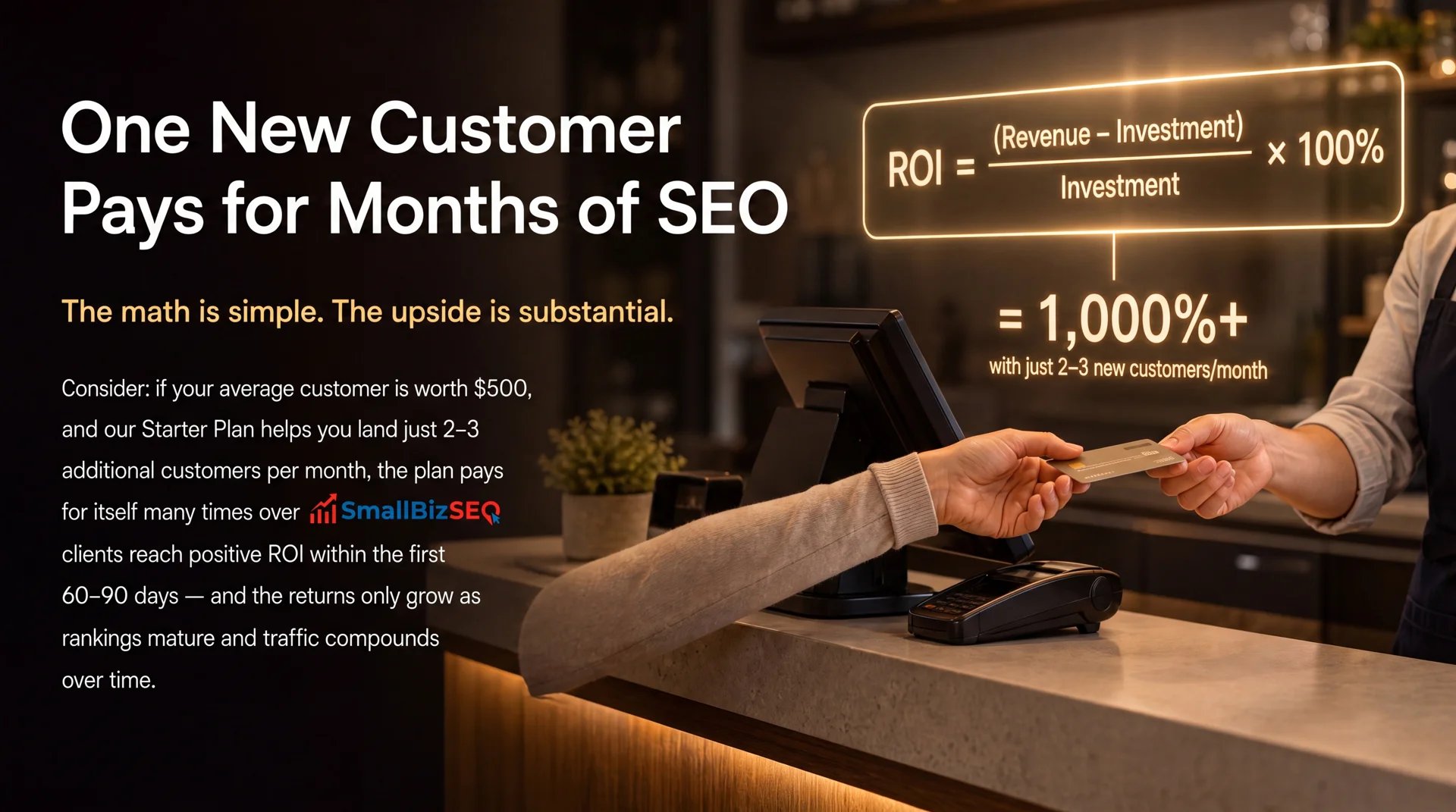
Calculate your returns by comparing organic revenue generated against your total SEO investment:
SEO Return on Investment = (Organic Revenue Generated - SEO Costs) / SEO Costs
By tracking every phone inquiry, scheduling request, and converted customer, you can isolate which landing pages drive revenue and double down on those topics.
How Long Does It Realistically Take to See Sustainable Results?
Real-world search engine progress happens in clear stages rather than overnight:
- Weeks 1 to 4 (Foundations): Technical errors are fixed, site speed is optimized, schema is added, and Google Business Profile data is standardized.
- Weeks 5 to 11 (Initial Signals): Google recrawls pages, moving low-competition search phrases into the top 20 to 30 results.
- Weeks 8 to 14 (The Silent Phase): Keyword positions often plateau while search engines collect engagement and behavioral signals. Continuing to gather reviews and publish local content here is essential.
- Weeks 15 to 26 (Traction): Map-pack placements emerge, organic clicks increase, and lead flow begins to climb consistently.
For empirical data on these timeframes, examine the Local SEO Timeline Data and our guide to achieving the best SEO results.
When Should You Hire Professional Help to Scale Revenue?
Handling basic optimizations in-house is practical when launching, but professional support becomes essential when entering highly competitive markets, resolving complex technical infrastructure issues, or expanding across multiple territories.
Avoid low-cost providers promising top rankings overnight; their automated link networks often trigger severe search engine penalties. Instead, choose a partner that provides transparent reporting, white-hat link acquisition, and measurable revenue attribution.
At SmallBizSEO, our data-driven Velocity framework eliminates technical bottlenecks, builds genuine topical authority, and accelerates organic conversions. Request your comprehensive SEO visibility audit and growth strategy today to unlock faster search rankings.
Turn Search Visibility into Predictable Business Growth
Achieving rapid search visibility does not require chasing algorithmic shortcuts or spending thousands on unproven ads. By fixing technical crawl blockers, refining your Google Business Profile, and publishing dedicated service pages matched to customer intent, you build a compounding digital asset that consistently drives inbound calls and qualified sales leads. Begin with the foundational fixes outlined in this guide and watch your organic visibility grow.