What an SEO Content Marketer Does: Scope, Deliverables, and Evaluation

What Does an SEO Content Marketer Do?
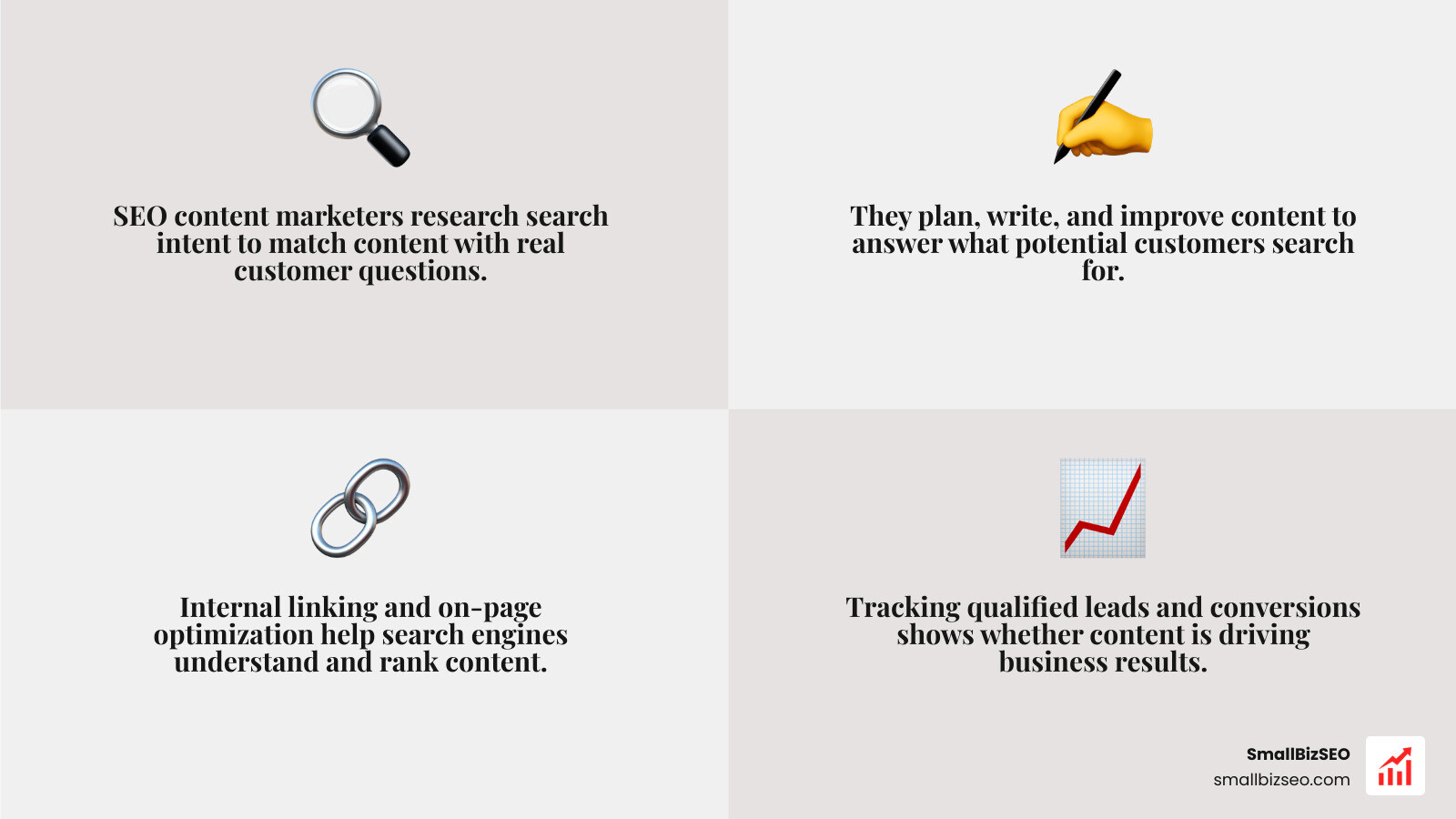
An SEO content marketer helps turn customer questions and business priorities into useful, findable pages. Their deliverables may include research notes, content briefs, drafts, revisions, internal-link recommendations, publication checklists, and reports on what was observed after publishing.
The role is not identical at every business. Research, writing, editing, technical implementation, subject-matter review, and measurement may be handled by separate people or combined in one role. The important question is whether each responsibility has a clear owner and an appropriate review step.
A useful evaluation focuses on the work produced and the reasoning behind it: what customer need the page addresses, what evidence supports its claims, what decisions were made, and what remains unresolved. That approach is more reliable than judging the role by publishing volume or broad promises about traffic.
How Do You Evaluate an SEO Content Marketer?
An SEO content marketer can be evaluated by the quality of their decisions, deliverables, and collaboration. The role should connect a customer question to a business offer without overstating what search performance will do.
| Responsibility | Expected handoff or output |
|---|---|
| Research | Document the customer question, search context, and business fit. |
| Subject-matter expert | Verify facts, scope, examples, and unsupported claims. |
| Writer | Draft a clear, useful page from the approved brief. |
| Editor | Check clarity, evidence, consistency, and reader usefulness. |
| Developer | Complete technical work such as templates, forms, structured data, or rendering fixes. |
| Business owner | Approve the offer, claims, priorities, and final scope. |
| Analyst | Validate measurement setup and report observations with context. |
One person may cover several of these responsibilities, especially on a small team. The table is a handoff model, not a staffing requirement.
When Does an Internal Owner, Freelancer, or Agency Fit?
The best arrangement depends on workload, access to subject-matter knowledge, and review capacity. An internal owner can be effective when they can supply timely facts and approve offers. A freelancer can fit a defined brief with reliable access to reviewers. An agency, such as a provider of SEO content services, can help coordinate recurring work when the business still provides approvals, source access, and ownership of files. No option is automatically the right hire.
What Should a Practical Evaluation Worksheet Include?
Ask for a sanitized brief, a finished page, and a short explanation of the decisions between them. Confirm the person's claimed role in the work and the metrics, tracking configuration, and time period behind any reported observation. A guide to finding quality SEO content writers can support that review. Then ask how they handle:
- unsupported claims and missing evidence
- factual corrections and stakeholder feedback
- internal-link recommendations and their business purpose
- publication quality assurance, including forms and rendering
- approval steps, system access, and ownership of source files
A genuine evaluation does not require a fabricated portfolio. It should show how the person documents uncertainty, receives corrections, and reports completed work separately from outcomes that cannot yet be attributed.
Which Skills Matter Most?
Useful skills include customer research, evidence handling, clear writing, collaboration, measurement literacy, and honest scope setting. Tools are optional. Google Search Console shows queries and performance from the actual site, while third-party platforms provide estimates such as search volume or ranking difficulty. Those inputs can inform a decision, but neither replaces customer knowledge, source review, or approval.

Are Funnel Labels Required?
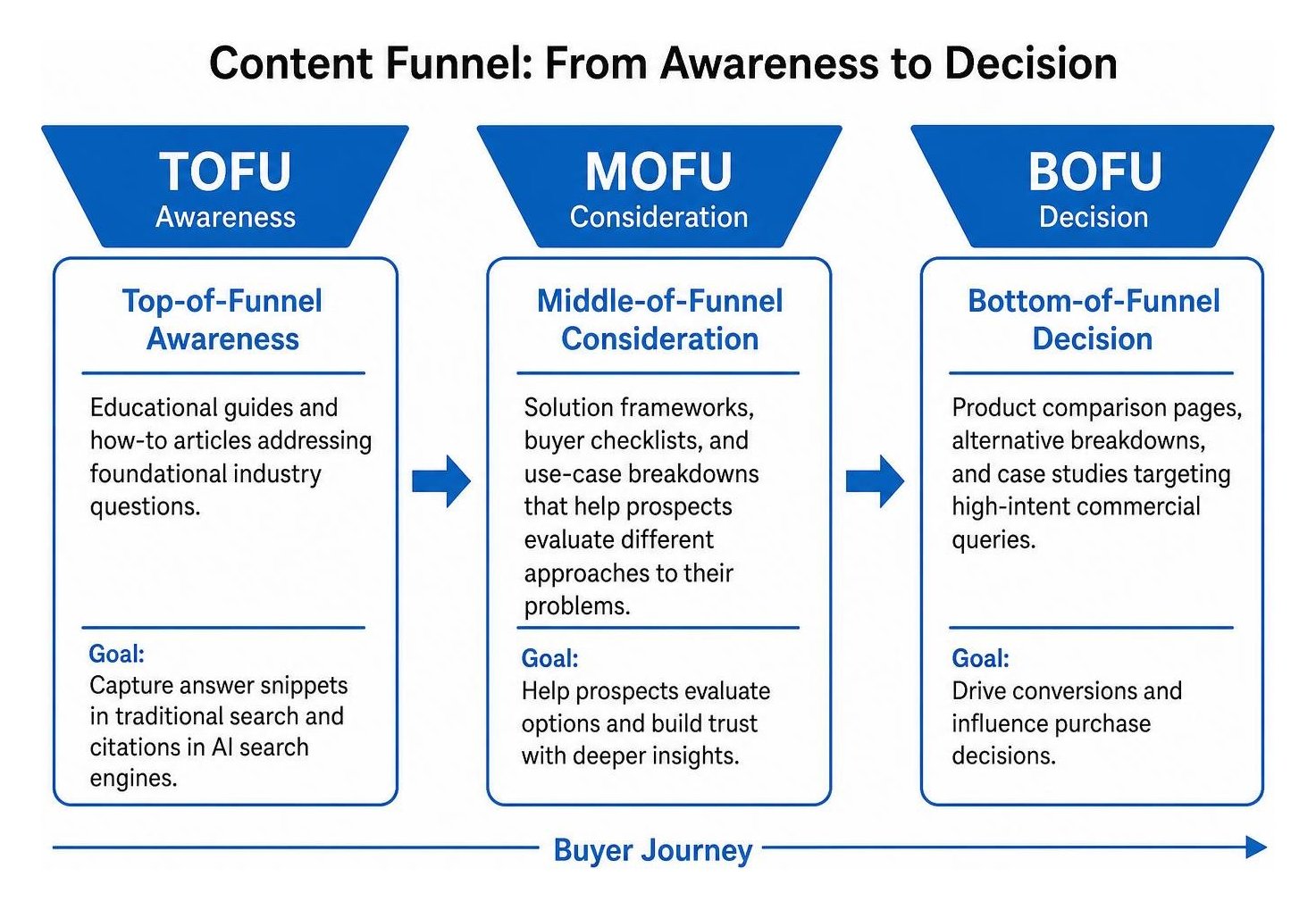
Funnel labels can be useful planning shorthand, but readers do not move through a single linear journey. A page should answer the question in front of the reader and make the next relevant option clear. Direct answers can improve usability, but they do not guarantee citations or visibility in AI-generated results.
How Do You Plan, Publish, and Review SEO Content Work?
A practical workflow begins with a business priority and an inventory of existing pages before anyone proposes a new one. The goal is to decide whether an existing page should be improved, consolidated, redirected, or supported with a new page.

What Is a Defensible Content Workflow?
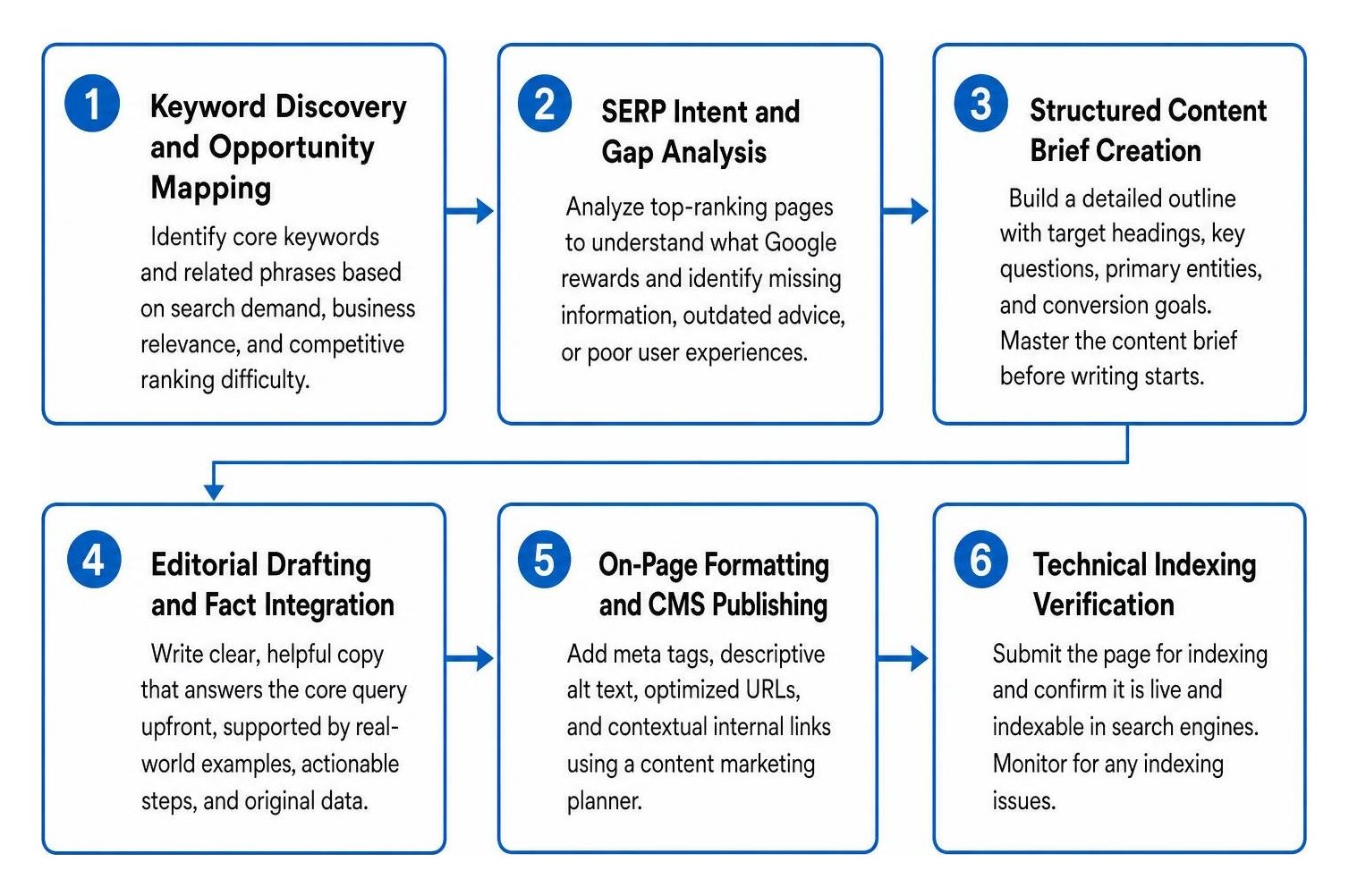
- Set the business priority and inspect the existing page inventory. Identify the customer question, offer, and pages that already address the topic.
- Create a brief with sources and exclusions. Define what the page needs to explain, which claims require verification, what it must not claim, and which questions remain open. The guide mastering the SEO content brief is useful when it records those decisions rather than merely listing keywords.
- Prepare and approve the draft. The writer drafts from the brief, while the owner and relevant experts review scope, claims, examples, and the call to action.
- Complete technical quality assurance. Confirm the page renders correctly, links work, forms function, metadata is appropriate, and analytics or conversion tracking is configured where needed. A content marketing planner can keep the required publishing details in one place.
- Publish once, then check indexing later. Publication and indexation are separate events. A later review can identify whether the page is accessible to search engines and whether technical issues need attention; it cannot guarantee an indexing outcome.
Google's helpful-content guidance emphasizes a people-first purpose and reliable, well-supported information. It does not prescribe a preferred word count.
How Should Results Be Reviewed?
Impressions and rankings are observations, not ROI. A better review connects qualified inquiries and other business outcomes to configured tracking, while documenting costs, attribution limits, and other factors that may affect the result. Choose a review window that fits the available data and the business's sales cycle rather than applying a universal deadline.
What Does This Look Like for a Small Service Business?
Suppose customer questions show uncertainty about a request-a-quote page. The owner verifies which services and boundaries the page can describe. The marketer prepares and edits a brief based on those questions. A developer tests the form and page behavior. The final report records the completed work, actual observations from the configured tracking, deliverable acceptance checks, and unresolved questions, rather than claiming an uplift that has not been established.
Acceptance checks can include an approved brief, verified claims, functional forms, working links, clear ownership, and a documented follow-up review for identifying content decay. Unresolved questions might include missing evidence, unclear service scope, unavailable tracking, or approval decisions that still need an owner.
Review Content Decisions Before Expanding the Program
Content work is stronger when each page has a clear customer question, an approved business purpose, evidence for its claims, and a defined owner for review. A visibility audit can help identify technical or content issues that warrant closer investigation without assuming a particular outcome.
To review current search visibility and page-level opportunities, request a comprehensive SEO visibility audit. If a conversation about scope, evidence, and next steps would be more useful, book a consultation.