A – Z Guide to SEO Basics for Copywriters

How Can SEO Help Copywriters Get Found?
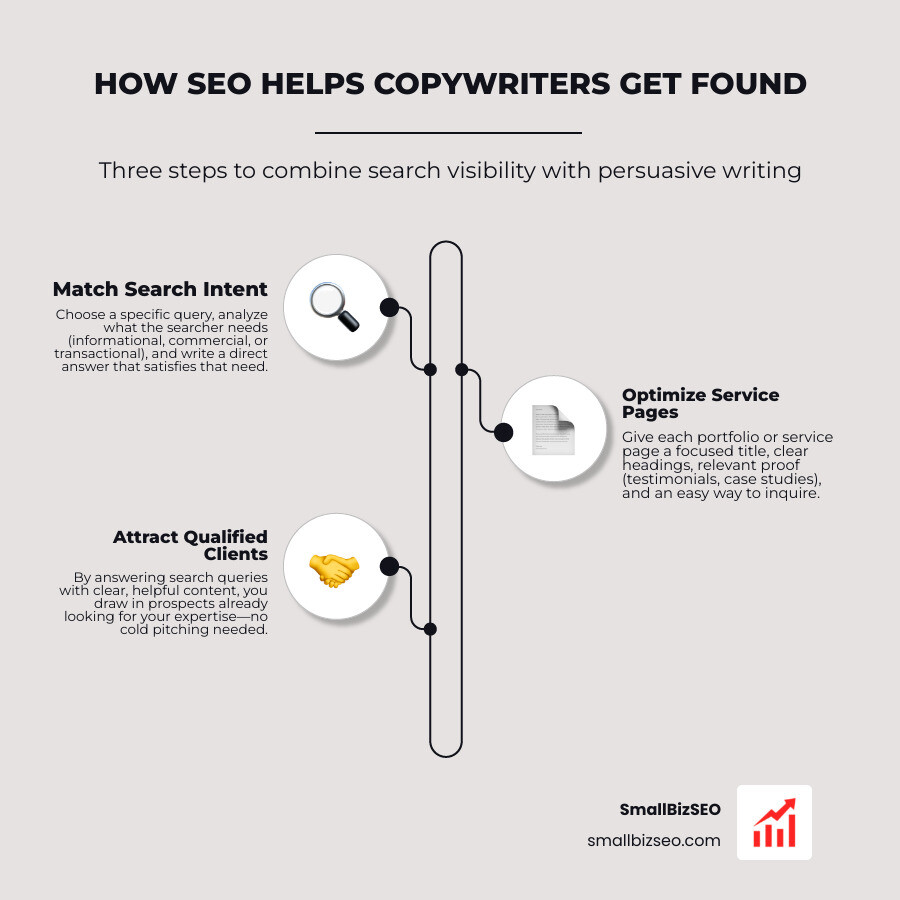
SEO for copywriters has two jobs: help you write pages people can find, and help potential clients discover your own services. Start by choosing a specific search query, checking what the searcher wants, and writing a clear answer. Then give each service or portfolio page a focused title, useful headings, relevant proof you have permission to share, and an easy way to inquire.
You do not have to choose between search visibility and persuasive writing. A page can answer the question that brought someone there and show why you are the right writer for their project.
Understanding the Foundations of SEO for Copywriters
Modern search engine optimization centers on answering real audience questions clearly and directly. Search engine algorithms match user queries to web pages that demonstrate genuine subject matter expertise, structured clarity, and helpfulness.
For writers, search optimization begins with thorough audience research rather than mechanical keyword placement. When we evaluate search intent, we determine whether a searcher wants to learn a concept, compare service providers, or purchase a solution. E-E-A-T is guidance used in Google’s Search Quality Rater Guidelines, not a numeric ranking factor. Show hands-on insight, clear sourcing, and verifiable knowledge so readers can assess the usefulness and credibility of the page.
What Distinguishes SEO Writing from Traditional Conversion Copy?
SEO copywriting focuses on earning discoverability in organic search results, while conversion copywriting applies persuasion psychology to guide readers toward taking a specific, measurable action.
Understanding what is SEO copywriting helps writers blend discovery with high-converting direct response principles. Click-through rates vary by query, result type, and position. Once a visitor arrives, conversion copywriting helps make the next step clear, whether that is subscribing, reviewing a portfolio, or starting a project conversation.
| Strategy Attribute | SEO Copywriting | Conversion Copywriting |
|---|---|---|
| Primary Goal | Search engine visibility and indexation | Direct user action and lead generation |
| Audience Mindset | Actively seeking information or solutions | Evaluating choices and addressing pain points |
| Core Mechanism | Search intent alignment and heading hierarchy | Behavioral psychology and value propositions |
| Key Metric | Organic impressions, clicks, and rankings | Conversion rates and qualified form submissions |
Core On-Page and Content Optimization Frameworks
On-page SEO organizes text so both search engine bots and readers can immediately parse the core message. Clear content architecture uses a logical hierarchy of title tags, header tags, and descriptive meta elements to eliminate confusion.
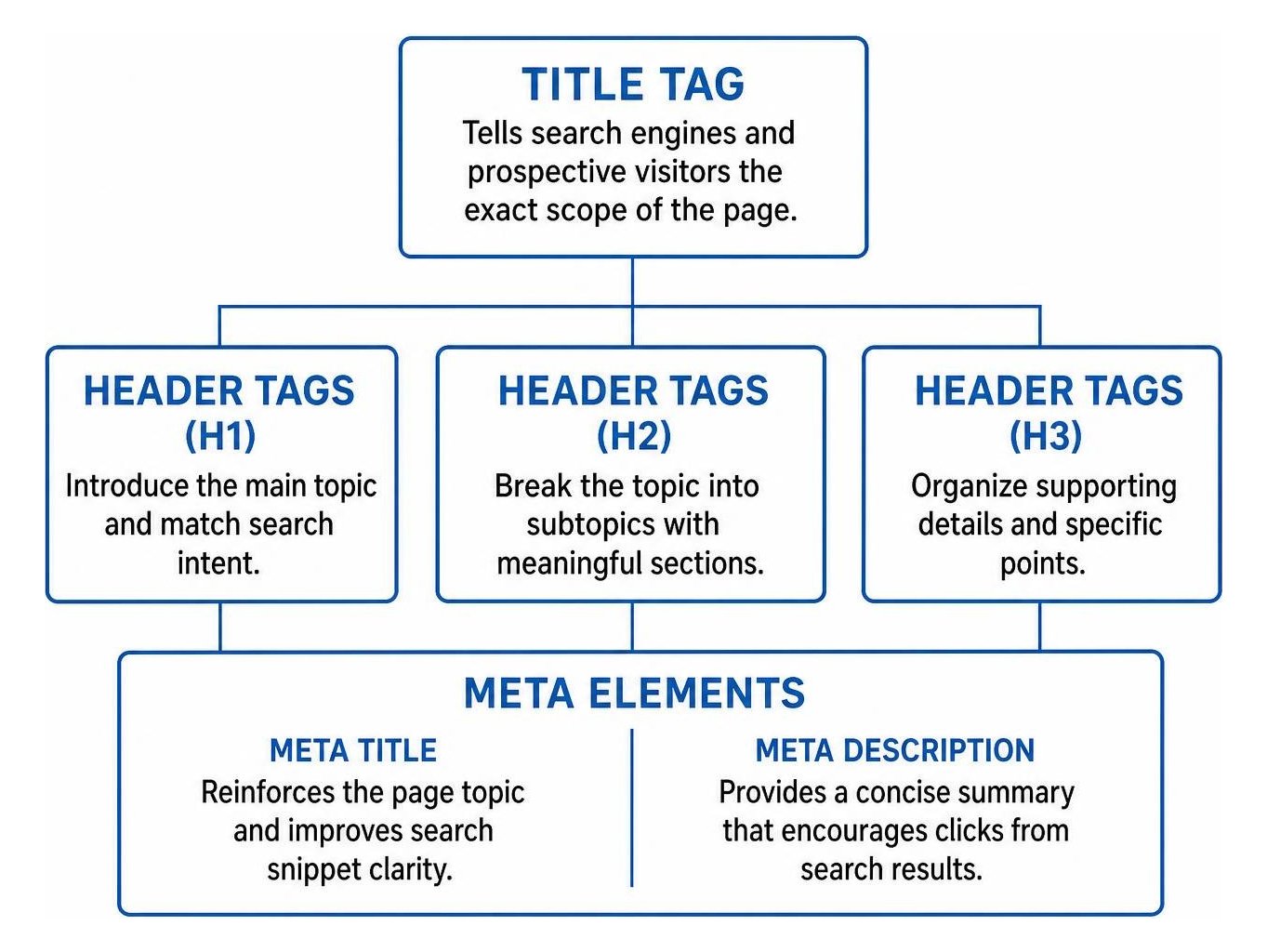
A strong title tag tells search engines and prospective visitors the exact scope of the page. Complementing the title with an informative meta description improves search snippet clarity. Breaking complex subjects into short, digestible paragraphs with meaningful subheadings keeps readability scores high and ensures users can scan the page effortlessly on any device.
How to Master Keyword Research and On-Page SEO for Copywriters
Effective keyword research identifies the specific terminology your target audience uses to solve their business problems. Start by researching parent keyphrases that define your core topic, then identify related subtopics and high-intent queries that support that central idea.
Brief checklist
- Define the audience, primary query, and the intent visible in the search results page.
- Give the reader a useful answer that adds something distinct from competing pages.
- Verify factual claims with reliable sources before publishing.
- Write a clear title, logical headings, contextual internal links, and one relevant call to action.
Use the depth the question needs rather than forcing a rigid word count.
Following a clear guide to keyword content optimization allows copywriters to integrate primary and secondary terms naturally throughout body text, headings, and introductory paragraphs. Grounding your workflow in the core pillars of modern SEO copywriting means treating keywords as signals of user intent rather than rigid density metrics. Write naturally, structure headings logically from H1 to H3, and maintain clear topical relevance without awkward sentence stuffing.
How Should Writers Structure Content Briefs and Layouts for Search?
Structuring an article with an inverted pyramid puts the direct answer at the very beginning of the section, followed by practical supporting evidence, examples, and detailed explanations.
Before drafting, mastering the art of the SEO content brief keeps every section focused on answering key customer questions. When you act as the content marketing copywriter, you organize information around concise definitions, supporting details, and examples that help readers understand the topic. Add descriptive internal links only where they provide useful next steps and reflect the page’s context.
Building Authority and Inbound Lead Channels for Your Business
Treating your own website as an inbound lead channel gives prospective clients a clear way to assess your services without relying solely on third-party freelance marketplaces.
Optimizing your website involves structuring your service offerings, case studies, and rights-cleared portfolio assets around specific commercial search terms. When you publish in-depth breakdowns of real client outcomes—using verified project data you have explicit permission to share—you provide tangible proof of your strategic capabilities. This gives prospective clients evidence they can use when deciding whether your experience fits their project.
| Service-page focus | Decision-supporting proof | Appropriate next step |
|---|---|---|
| SaaS landing copywriter | Scope, process, and a permissioned sample | Qualified inquiry |
| B2B case-study writer | Relevant industry experience and permissioned examples | Project inquiry |
| SEO content writer | Topic brief and work sample | Content-fit call |
Why Is Inbound SEO for Copywriters Essential for Client Acquisition?
Inbound SEO creates an opportunity to reach relevant prospects when they are looking to hire. It does not automatically filter for high-value clients, but it can help a service page communicate the value of strategic search visibility.
Working with a dedicated copywriters SEO company or executing targeted search campaigns on your own site helps target specialized commercial terms like SaaS conversion copy or B2B case study writing. Instead of competing on price in freelance directories, dedicated service landing pages position your expertise clearly. Documented results, clear pricing context where appropriate, and direct consultation forms help visitors decide whether to start a conversation.
Which Tools and Maintenance Routines Drive Long-Term Search Visibility?
Maintaining search performance requires regular content refreshes, Search Console monitoring, and consistent technical hygiene. Track qualified inquiries separately from impressions and clicks so traffic changes are not mistaken for business results.
Applying proven SEO content marketing practices supports keeping published pages accurate and useful over time. Use Google Search Console to monitor impression trends, resolve crawling issues, and identify secondary keywords where content already gains traction. Refresh pages and contextual internal links when performance evidence or changing information supports the update. Pair that work with legitimate outreach for earned editorial backlinks from reputable industry publications.
At SmallBizSEO, we provide small businesses with data-driven frameworks and professional SEO content services that support ongoing organic visibility.
Elevate Your Search Visibility and Client Pipeline
Building sustainable search visibility requires a deliberate balance of clear writing, audience-first keyword targeting, and routine site optimization. By answering search intent directly and structuring portfolio pages around commercial queries, your website gives prospective clients the information they need to evaluate a potential fit.
To discuss search performance and content opportunities for your business, book a consultation with SmallBizSEO.