SEO for Software Companies: Product Pages, Content, and Qualified Leads

How Does SEO Help Computer Software Providers Reach Buyers?
SEO for computer software helps providers reach people searching for a solution, comparing products, or checking whether a tool fits their needs. Start with public product pages and documentation that search engines can access. Then create clear feature, integration, comparison, pricing, and trust pages that answer buyer questions. Measure demo requests and trial signups alongside search traffic.
This is a guide for software providers seeking qualified leads, not for buyers choosing a product. It covers how to make useful pages discoverable and connect them to the questions buyers ask before they contact you.

Must-know SEO for computer software terms:
- SEO for software design & development
- SEO for product marketing
- SEO for IT support & managed services
Core Pillars of SEO for Computer Software Providers
SEO for software companies is the practice of building, structuring, and promoting public web pages so technical decision-makers find your product during organic search evaluations. Unlike standard business websites, software sites must balance crawlability across dynamic web applications while maintaining strict boundaries between indexable marketing pages and private, authenticated application environments.
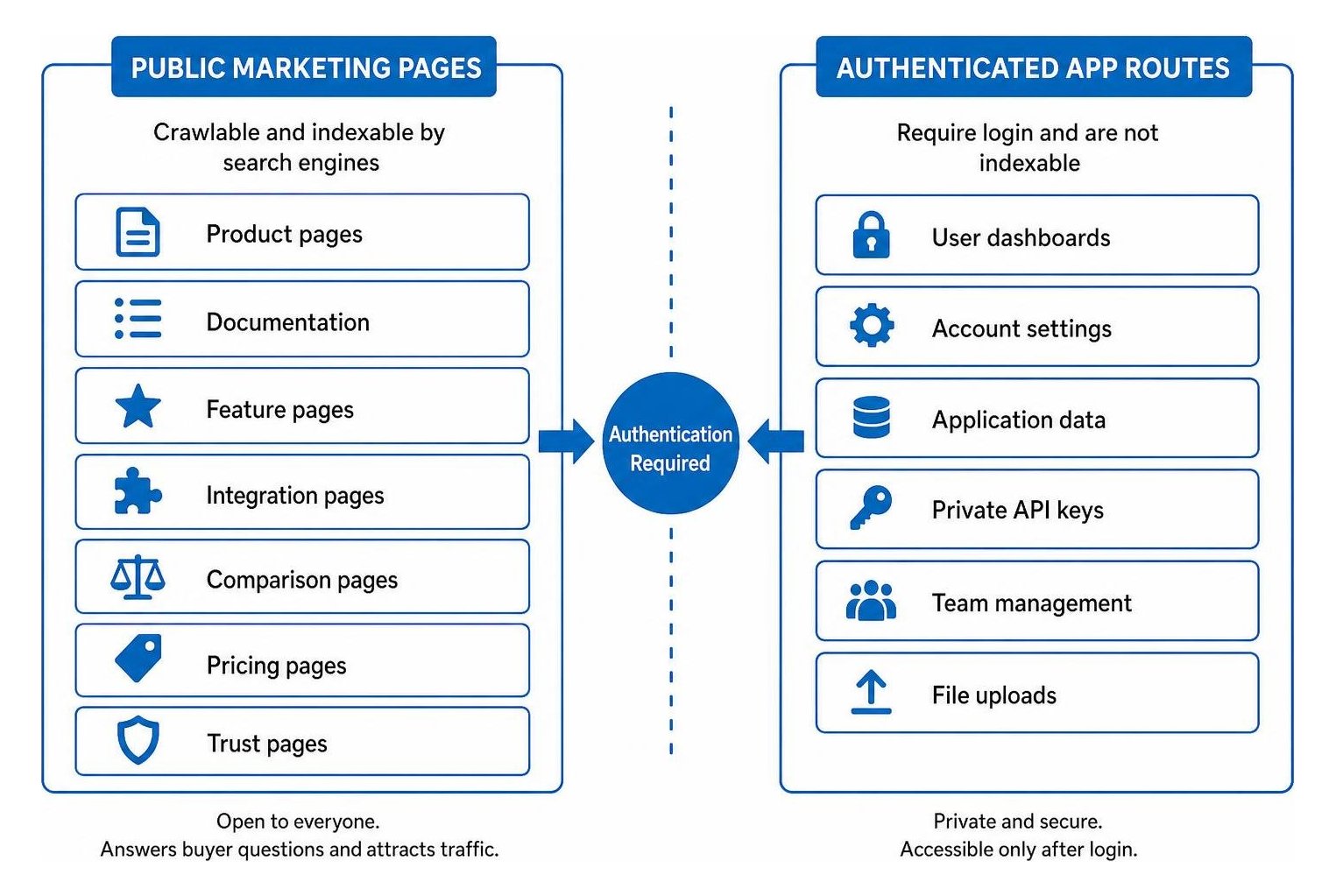
When partnering with a specialized computer software SEO company, teams can improve crawl accessibility and technical credibility while serving a range of decision-makers, from technical evaluators to business stakeholders. Useful product pages should explain architecture, API compatibility, security controls, outcomes, and implementation requirements in language each audience can use. A focused SEO content services program can help match those pages to real search needs. Follow the Google Search Central SEO Starter Guide so the site aligns with established search guidance rather than generic consumer patterns.
What Technical Fundamentals Power SEO for Computer Software?
The core technical fundamentals of software SEO require search crawlers to access, render, and index your page code without running into client-side JavaScript execution hurdles or broken routing directives. Search engines discover web content by fetching HTML responses, following links, and parsing on-page markup to build index records.
To ensure consistent discovery, your site architecture should implement:
- Successful, Indexable URLs: Public pages intended to appear in search should return 200 OK when they load successfully. Use a 301 redirect when a page has moved to a relevant replacement, and return 404 or 410 when content is removed without a suitable replacement. Do not return a 200 response for a page that behaves like a missing-page result.
- Robots.txt and Access Controls: Treat robots.txt as crawl guidance, not access control or a guaranteed deindexing method. Protect private applications, staging environments, user dashboards, and API endpoints with authentication and authorization, and do not expose customer data or secrets to bots.
- Accurate Canonicalization: Use self-referencing canonicals on primary pages and consolidate only equivalent duplicate URLs, such as tracking parameters. Substantively distinct, useful filtered or category pages should have their own canonical URL and unique value.
- Eligible Structured Data: Use
SoftwareApplicationorProductmarkup only when the page meets Google's applicable requirements and the marked-up facts are visible and accurate. Structured data can help search engines understand content, but it does not promise a rich result.
Following a modern SEO guide for software design and development agencies helps your engineering team treat search infrastructure as core production code rather than an afterthought.
How Do Server-Side Rendering and Crawl Management Improve Indexing?
Server-Side Rendering (SSR) and Static Site Generation (SSG) can help crawlers receive complete, pre-rendered HTML without depending on deferred client-side JavaScript. They can improve rendering and discovery reliability, but they do not guarantee indexing: quality, originality, crawl access, and Google's indexing decisions still matter.
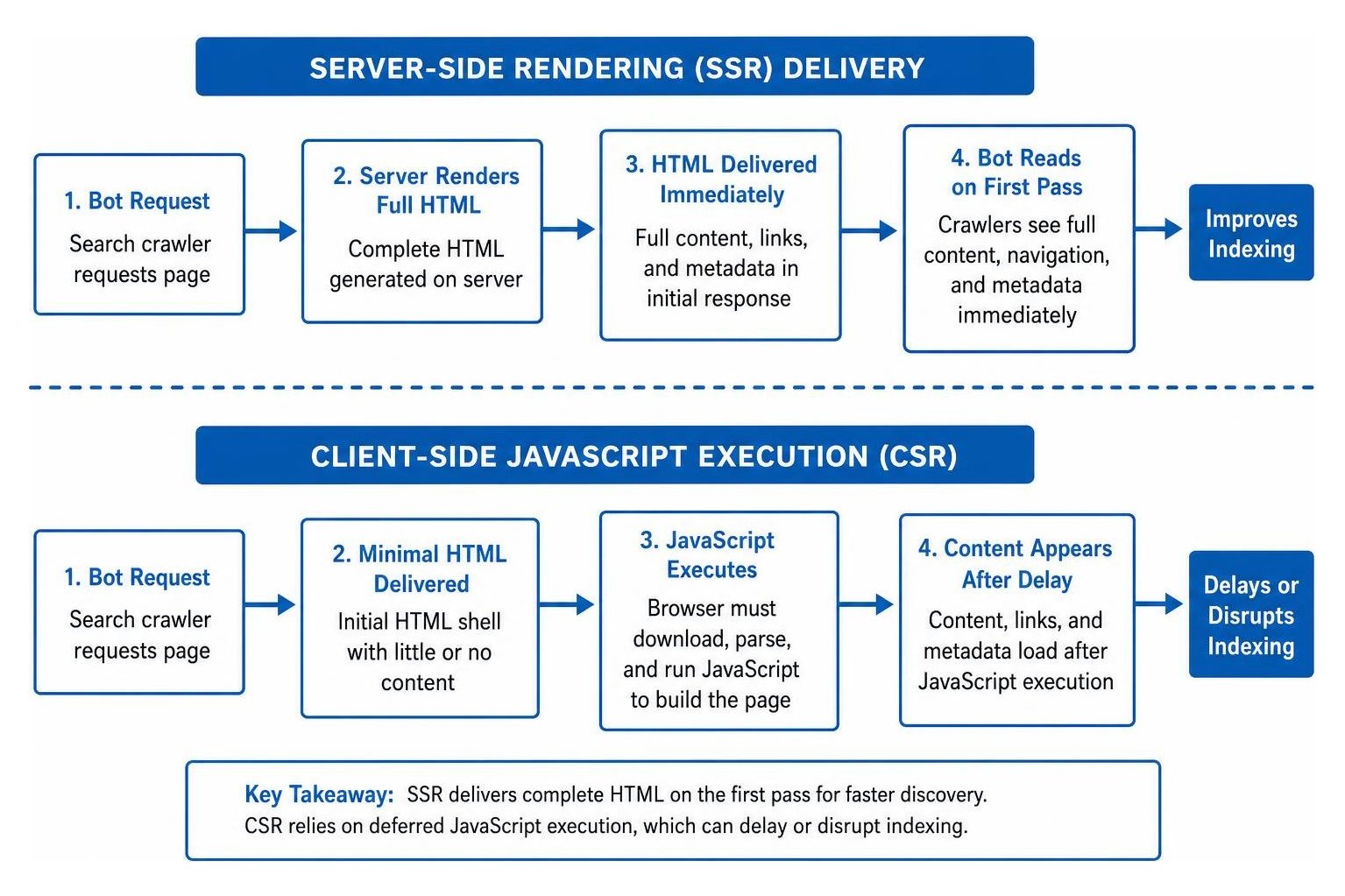
Server rendering ensures that bot crawlers and automated discovery systems read full body text, internal navigation links, and metadata on the first pass. However, rendering alone does not guarantee indexing; content quality, originality, and authority remain essential.
For ongoing crawl management:
- Audit Public Pages: Use diagnostic tools such as Screaming Frog SEO Spider to inspect server responses, redirect paths, canonical tags, and rendered Document Object Models (DOM) with headless Chromium.
- Protect Private Systems: Require authentication and authorization for customer portals, staging environments, and internal APIs. Robots.txt alone does not secure private content or ensure it stays out of search results.
- Manage Parameters Deliberately: Consolidate equivalent parameter URLs with canonical tags. Keep materially different, useful pages crawlable and self-canonical rather than sending every filter variation to one directory URL.
How Can Providers Optimize Comparison, Feature, and Documentation Pages in SEO for Computer Software?
Software providers optimize high-intent pages by structuring public features, integrations, comparisons, and technical documentation around real user workflows with clear, factual answers.
Collaborating with a dedicated product marketing SEO company allows teams to build targeted page types tailored to decision-stage evaluators:
- Feature and Solution Pages: Dedicate individual URLs to specific capabilities, such as automated role provisioning or pipeline forecasting. Describe the operational problem, provide setup details, and use rights-cleared, approved screenshots that reveal no customer data, credentials, or confidential information.
- Objective Comparison and Alternative Pages: Build balanced comparison tables that explain feature differences and implementation requirements fairly. Decision-makers benefit from factual evaluations rather than aggressive sales copy.
- Integration Hubs: Create dedicated directory pages for each platform integration. Detail data-sync triggers, API requirements, and workflow automations.
- Documentation and Version Management: Keep current product documentation indexable at clean, canonical URLs. When versions change, preserve useful legacy documentation for existing users when appropriate, or use a 301 redirect only when an older feature is permanently replaced by a direct equivalent.
- Changelog and Release Notes: Keep useful version details available for users and searchers. Consolidate only repetitive, low-value updates when a maintained release hub provides a clearer experience.
Building a Scalable Content, Authority, and Pipeline Framework
How Should Software Teams Structure Intent-Driven Keyword Clusters?
Software teams structure keyword clusters by mapping search queries to specific stages of the software buyer journey: problem discovery, solution evaluation, and vendor selection. Instead of targeting disconnected, high-volume terms, organize keywords around core operational pain points.
Working with an experienced SaaS SEO company and SEO content services team can help organize content clusters into a sustainable structure:
- Top-of-Funnel (Awareness): Target informational queries that diagnose operational bottlenecks (e.g., "how to reduce database latency"). Answer the question directly and illustrate the solution with educational workflows.
- Middle-of-Funnel (Evaluation): Target category and workflow searches (e.g., "automated compliance monitoring tools"). Present technical architectures, criteria checklists, and integration possibilities.
- Bottom-of-Funnel (Decision): Target commercial terms including "[Software Category] pricing," "[Competitor] alternatives," and direct integration queries. Provide transparent pricing tiers or clear onboarding expectations to capture qualified leads.
Link supporting informational articles back to primary product and solution pillar pages using descriptive, contextual anchor text.
How Do Authority Building and Generative Search Visibility Drive Qualified Pipeline?
Software providers build authority by publishing original research, sharing aggregated product data, and earning editorial citations from respected industry publications and technology communities. High-quality external references validate your domain's credibility to search engines.
A strategic B2B SEO company can pair a link-building services program with sustainable authority channels:
- Original Data Studies: Before publishing aggregate product or platform data, complete a privacy review and obtain the required authorization. Use anonymization where appropriate, avoid customer secrets, and publish only claims the organization can support.
- Digital PR and Industry Publications: Contribute technical expertise, engineering solutions, and architectural breakdowns to established industry media through ongoing, earned outreach.
- Generative Search Optimization: Provide structured, factual information that AI search systems and traditional engines can interpret. Clear headings, clean HTML tables, and explicit definitions improve clarity for readers and retrieval systems.
- llms.txt: Google Search does not use llms.txt as an SEO requirement. It may be optional for other consumers, but it should not replace sound SEO fundamentals, crawlability, or useful content. Google's guidance on generative AI features remains the relevant reference for Google Search.
What Metrics and Workflows Maintain Long-Term SEO Performance?
Long-term software SEO requires aligning pipeline metrics with recurring maintenance workflows across product releases, documentation updates, and technical health checks.
| Buyer Stage | Target Page Types | Core SEO KPIs | Primary Evaluation Method |
|---|---|---|---|
| Awareness | Educational guides, problem-solving blog posts | Organic impressions, informational rankings | Search Console query performance |
| Evaluation | Solution pages, integration directories, use cases | Qualified visits, time on page, documentation views | Analytics engagement and multi-touch tracking |
| Decision | Comparison tables, pricing pages, demo landing pages | Trial signups, demo requests, organic pipeline value | CRM lead source attribution and pipeline tracking |
To maintain organic growth as your software evolves:
- Refresh Documentation After Releases: Update user guides, API references, code snippets, approved screenshots, and internal links when product changes affect them.
- Review Search and Conversion Signals Monthly: Check query performance, conversion paths, and content gaps to prioritize the next improvements.
- Maintain Earned Authority: Continue outreach for credible editorial coverage and refresh supporting evidence as the product evolves.
- Track Qualified Pipeline: Monitor organic sales-qualified leads (SQLs) and demo requests alongside standard search rankings to measure business impact.
Accelerate Your Software Organic Pipeline
Building a dependable organic search engine for computer software demands technical precision, deep product documentation, and an unwavering focus on buyer intent. If you want to identify crawl bottlenecks, fix indexing gaps, and align your product pages with high-value search queries, our team at SmallBizSEO is here to help.
You can request a comprehensive SEO visibility audit or book a consultation to review site architecture, evaluate keyword opportunities, and build an actionable roadmap designed to grow your software pipeline.