Spotting SERP Intent Shifts and Updating Formats Accurately

Why Should You Diagnose Search Intent Before Rewriting Content?
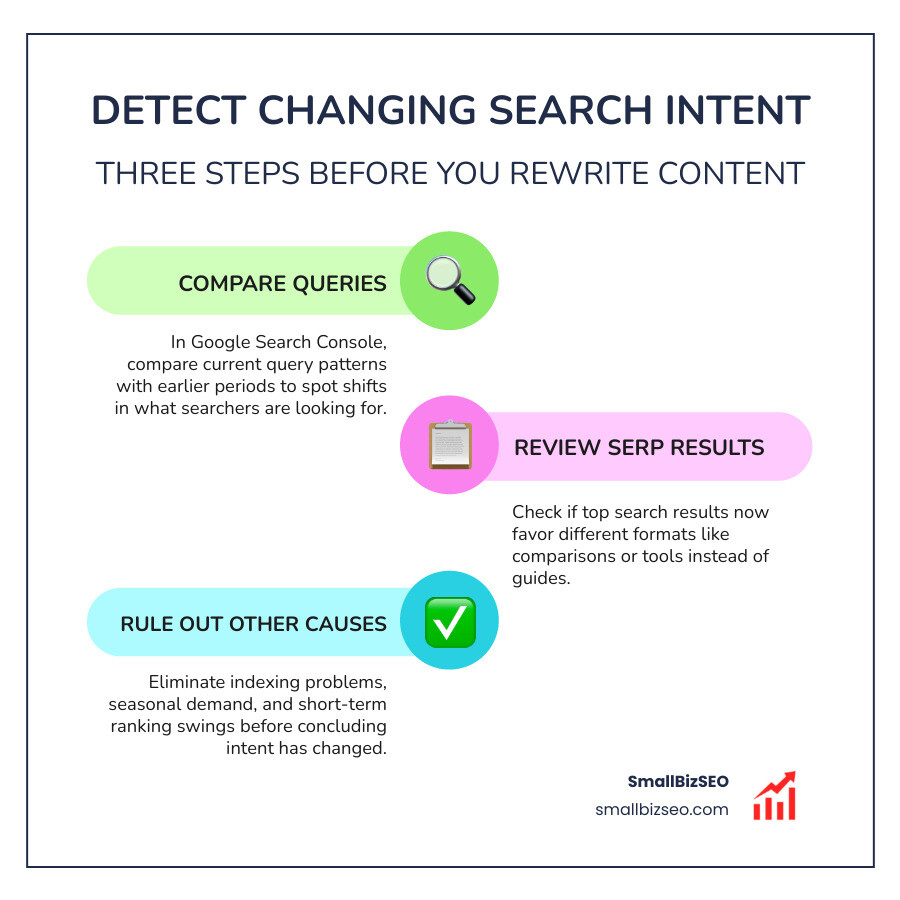
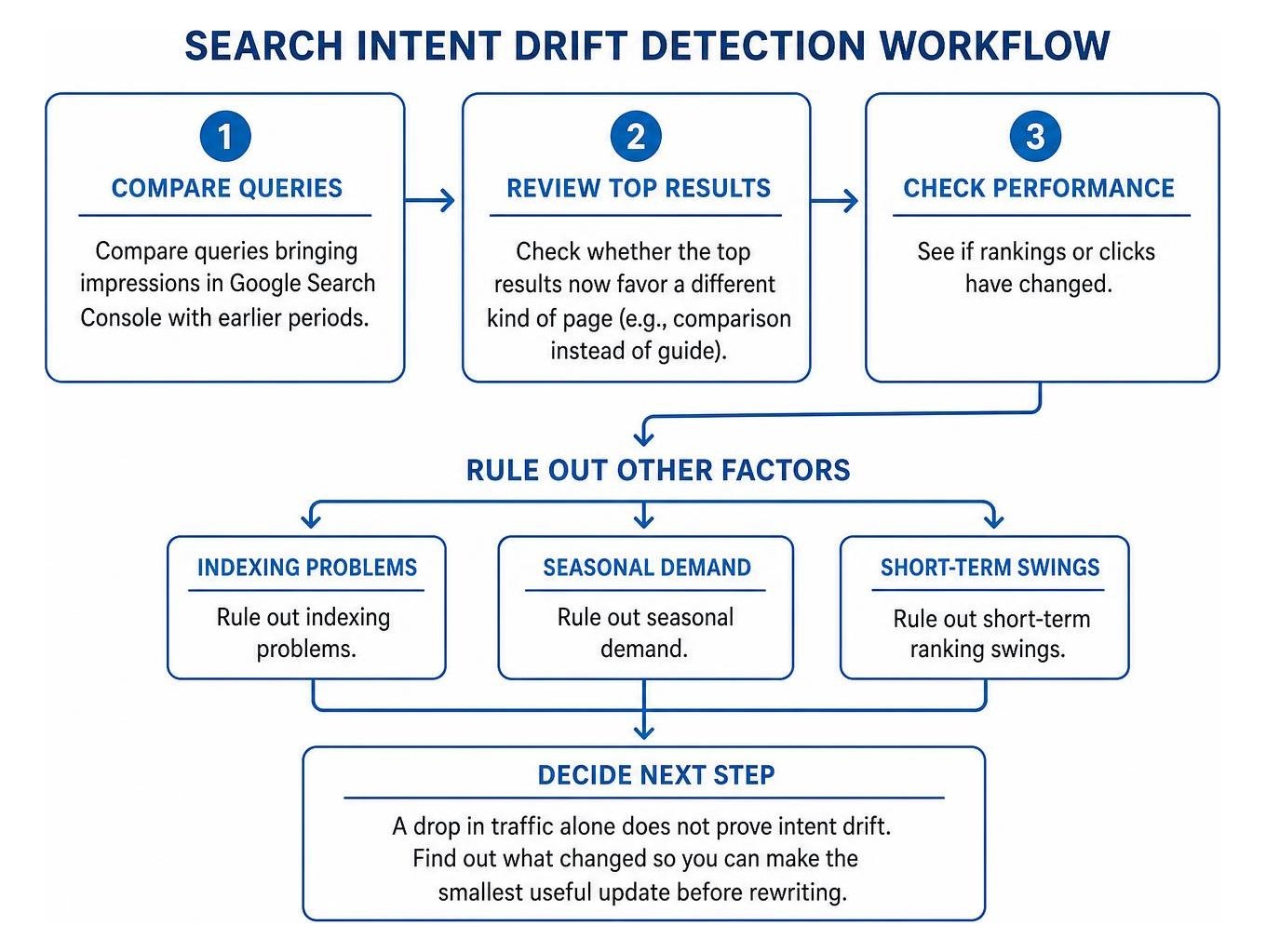
Here’s how to detect changing search intent before rewriting content: compare the queries bringing your page impressions in Google Search Console with earlier periods. Then check whether the top search results now favor a different kind of page, such as a comparison instead of a guide. If rankings or clicks have changed, rule out indexing problems, seasonal demand, and short-term ranking swings before you rewrite.
A drop in traffic alone does not prove that searchers want something new. The goal is to find out what changed so you can make the smallest useful update.
I’m Clayton Johnson, founder of SmallBizSEO. My work connects SEO, content strategy, and qualified leads; in this guide, I’ll show you how to detect changing search intent before rewriting content.
Rewriting a whole page takes time and editorial budget. When a page loses traffic or stops converting, many teams assume adding more words will fix it. But if search engines now favor an interactive tool, a comparison table, or a quick summary, expanding a long article will not restore your positions.
Modern search pages change rapidly. Today, 60% of searches result in zero clicks as direct answers satisfy basic queries instantly. Generative AI summaries appear on 39.4% of informational queries, and top-ranking pages often experience a 58% lower average CTR when an automated answer box occupies the top of the screen.
To protect your organic pipeline, we use a three-part SERP review:
- Analyze query semantics: Identify whether user phrasing has moved from high-level definitions to specialized problem-solving.
- Review search layout changes: Track which rich features, shopping boxes, or interactive widgets Google now inserts.
- Assess live search competitors: Check whether top-ranking URLs are calculators, transactional product pages, or editorial listicles.
How Can You Detect Changing Search Intent Before Rewriting Content?
To uncover real shifts in user behavior, compare your query impressions in Google Search Console over a multi-month period against live search results. If the queries sending impressions to your page have evolved, or if the pages holding the top three positions use a completely different format than yours, the intent has changed.
Before editing your copy, you must distinguish between search intent drift, term drift, and basic content decay. Each requires a distinct response.
| Issue | Definition | Primary Symptoms | Best Solution |
|---|---|---|---|
| Search Intent Drift | The underlying goal of the searcher changes (e.g., from reading a guide to comparing tools). | Stable impressions with falling CTR; top results shift from informational articles to commercial tools. | Reorganize page layout, update content format, or add direct utilities. |
| Term Drift | The vocabulary people use evolves (e.g., new terminology or acronyms replace older phrases). | Impressions drop on legacy head terms while new conversational queries rise. | Update headings, synonyms, and entities to reflect modern search language. |
| Content Decay | The page becomes outdated over time while the user intent remains unchanged. | Gradual ranking declines across all queries; competitor pages with fresher data rank higher. | Update statistics, refresh examples, fix broken links, and update schema dates. |
How Can GSC Metrics and Query Patterns Reveal Shifting Intent?
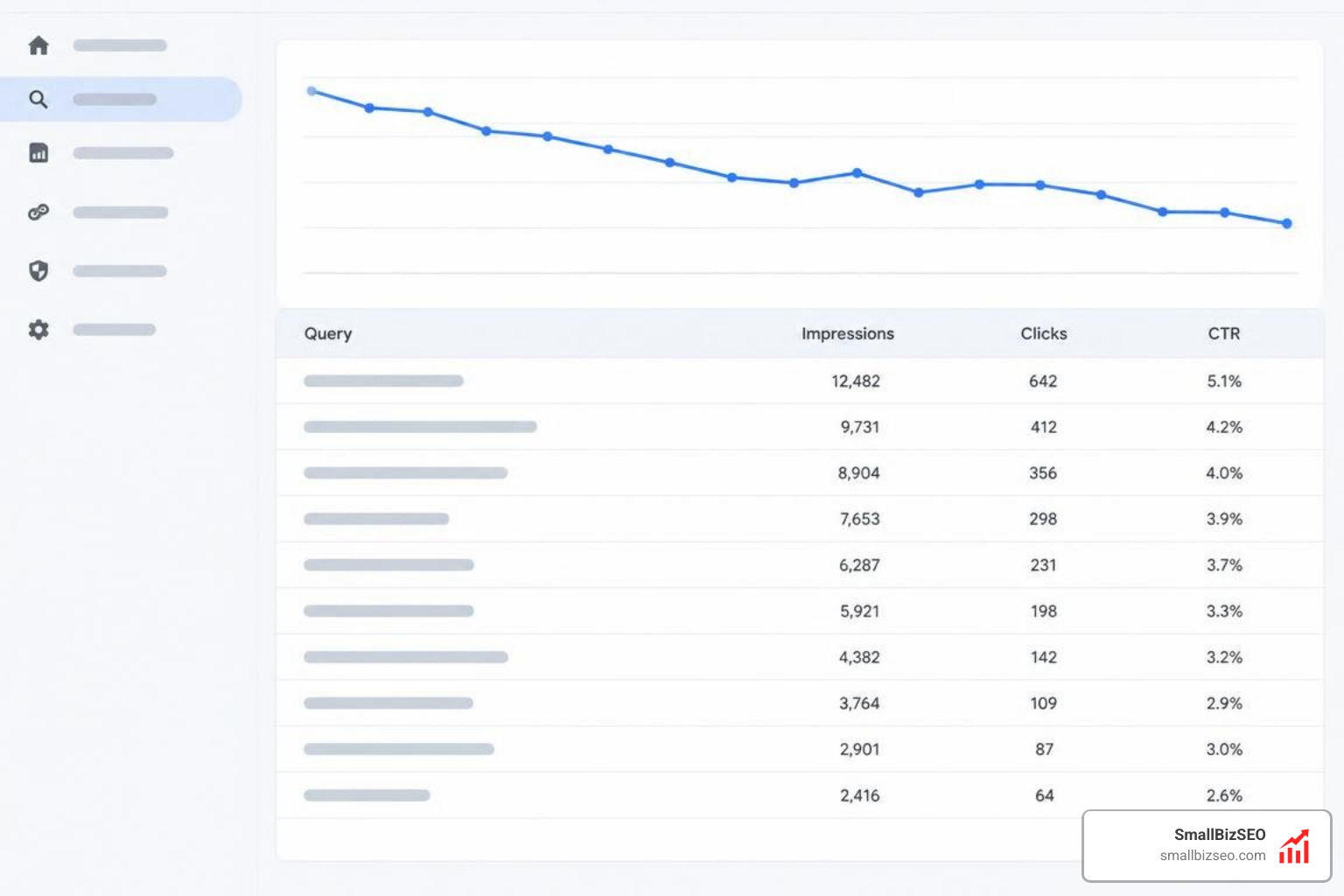
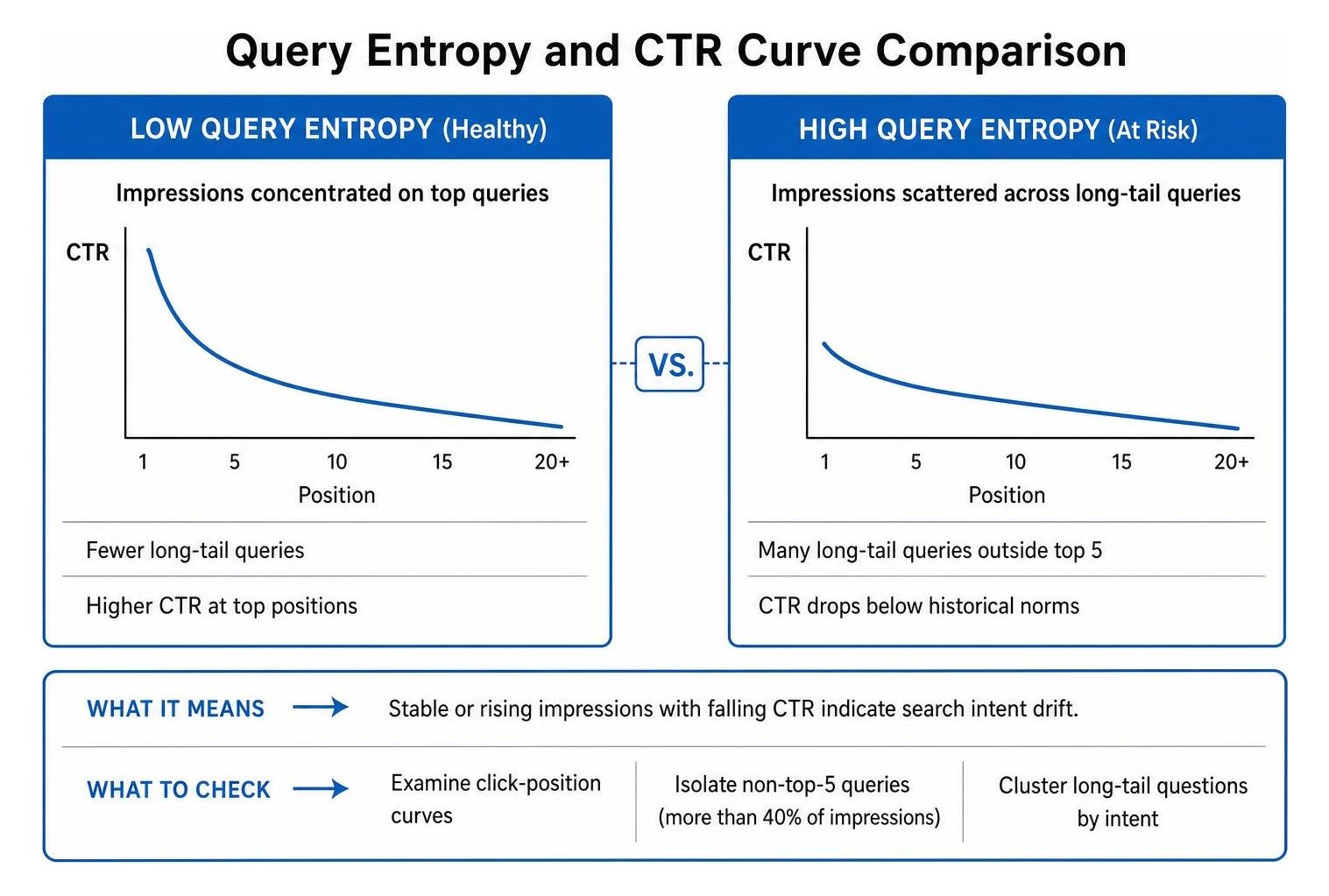
Google Search Console provides the clearest record of how search engines view your page. When diagnosing search intent drift, look for a divergence where impressions stay steady or spike while clicks and click-through rates decline.
This often points to high query entropy—a pattern where impressions scatter across dozens of long-tail queries outside your top five phrases. Search engines test your URL against adjacent queries when they no longer see your page as the single best answer for the primary keyword.
To uncover these changes:
- Examine click-position curves: If your average position remains at position two or three, but your CTR drops significantly below historical norms, the search layout or user expectation has shifted.
- Isolate non-top-5 queries: Export six months of query data. If more than 40% of impressions come from queries that your current page does not directly address, your visitors want different information.
- Cluster long-tail questions: Group your emerging impressions by intent. If an informational article begins attracting transactional queries, it is time to adjust your format.
How Can You Detect Changing Search Intent Before Rewriting Content by Analyzing the SERP?
Reviewing the live search results is the most direct way to understand what users expect. Search engines continuously update results to favor whatever format delivers the highest satisfaction.
When evaluating live results:
- Measure URL overlap stability: Compare the top 10 URLs today with cached versions from several months ago. If specialized vendors, review hubs, or calculators have replaced traditional guides, the SERP format has transformed.
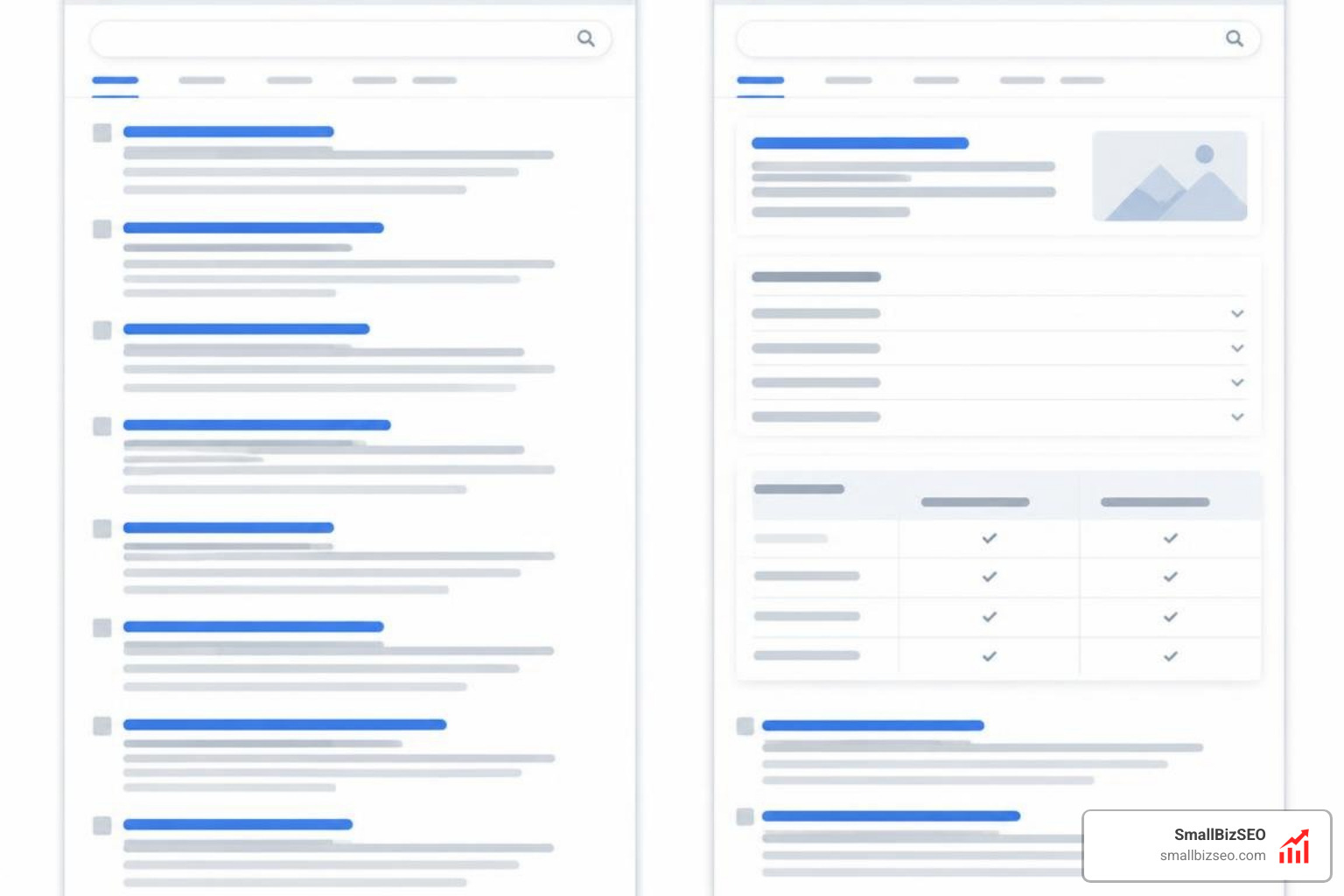
- Check rich snippet placement: Look at whether Google has introduced featured snippets, People Also Ask blocks, or comparison tables. If top results use structured data to win rich snippets, apply proper methods when you analyze keywords to match those formats.
- Inspect competitor structures: Determine whether leading pages use short summaries, interactive modules, or step-by-step videos. Integrating structured enterprise search intent frameworks helps you classify whether page formats should be editorial or utility-focused.
How Can You Measure Meaning Changes and AI Overview Features?
Search engines rely on natural language processing to evaluate semantic similarity between queries and content passages. As conversational queries grow, simple exact-match keywords no longer guarantee visibility.
Keeping pace with changing search requires answering nuanced customer questions directly within your content. Search engines analyze your entire page structure to decide which sections are clear enough to cite in direct answers.
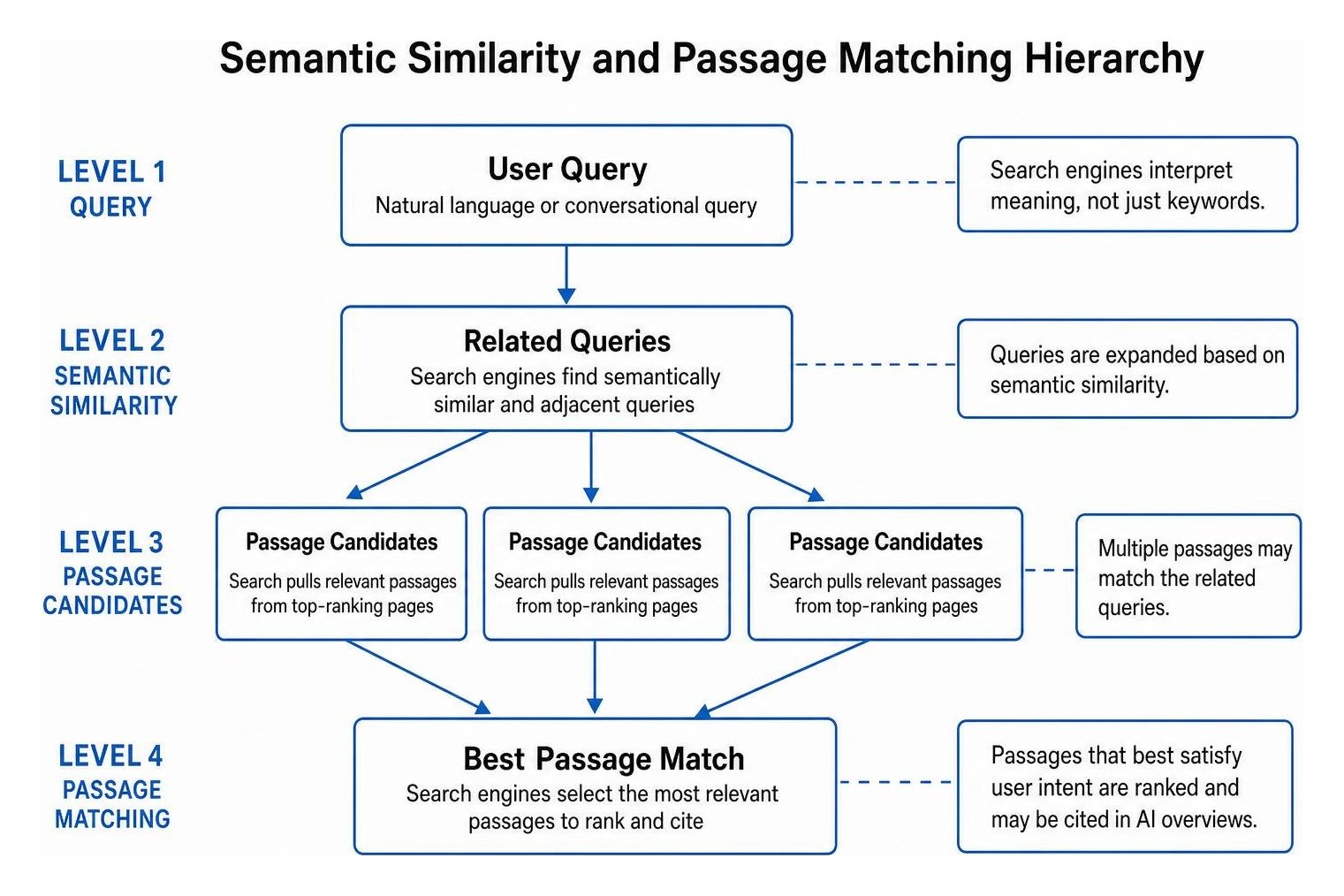
To evaluate semantic alignment:
- Track AI overview citations: Identify whether automated search summaries cite your definitions, data points, or step-by-step workflows. As reported in recent AI search dynamics coverage, search models prioritize clear, verifiable facts over generic filler.
- Evaluate entity coverage: Check whether your content mentions the key concepts, related tools, and standard terms that leading pages include.
- Measure semantic distance: Compare your page's subheadings against the core sub-topics appearing in AI summaries and top-ranking passage results.
How Should You Evaluate Page Performance and Correct Intent Mismatches?
When an intent mismatch occurs, you do not always need a complete rewrite. Instead, match your page structure and layout to current user expectations, make targeted updates, and track performance over a defined evaluation window.
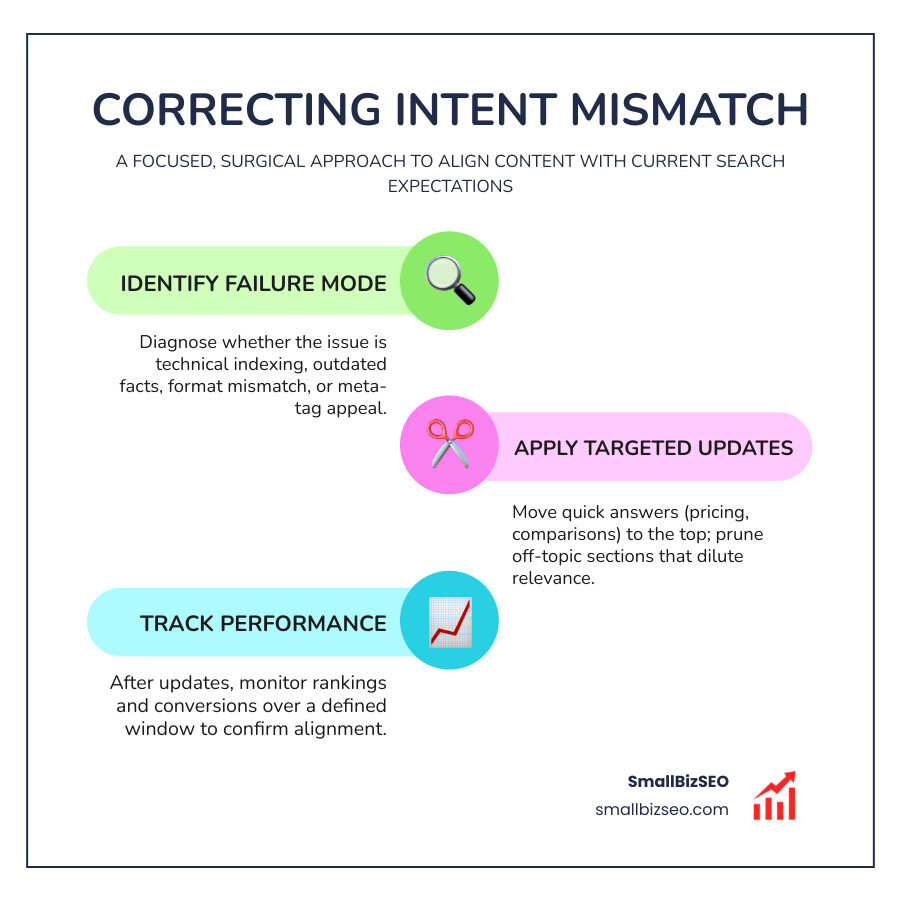
Follow this process to fix intent mismatches:
- Identify the exact failure mode: Confirm whether the issue is technical indexing, meta-tag appeal, outdated facts, or structural mismatch.
- Apply targeted updates: If searchers want quick pricing or comparison points, move those elements to the top of your page rather than burying them below introductory copy.
- Use surgical pruning: Remove bloated, off-topic sections that dilute your core relevance.
- Build updated content briefs: When a full rewrite is required, build an outline focused on current user questions, clean formatting, and clear next steps.
- Track conversion metrics: In many cases, updating content for intent raises high-intent form submissions and qualified inquiries even if raw impressions decrease.
How Can You Tell Intent Drift from Content Decay?
Before rewriting content, determine whether the decline stems from outdated facts or a true change in user goals. Diagnosing the difference prevents wasted resources on unnecessary content teardowns.
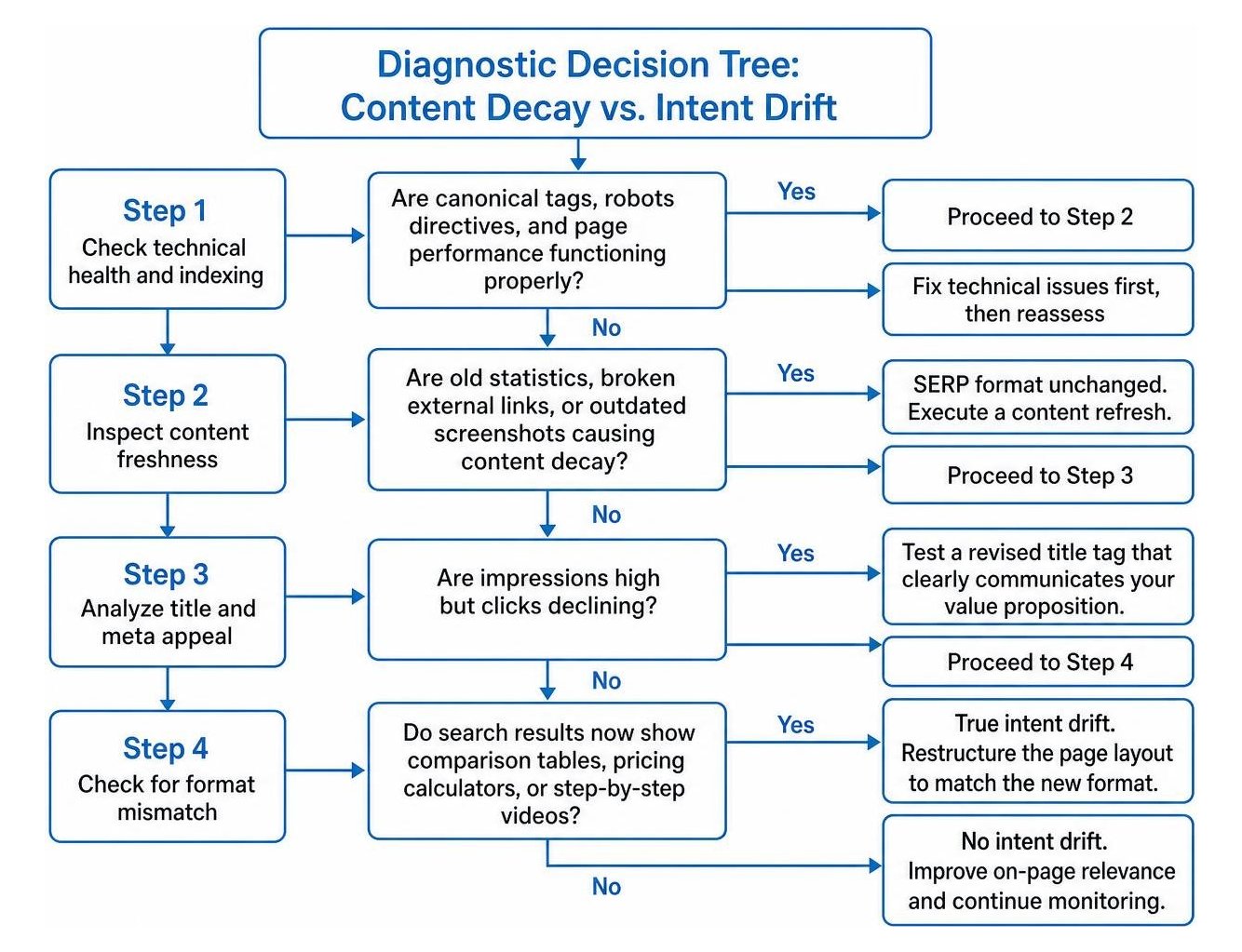
- Step 1: Check technical health and indexing: Ensure your canonical tags, robots directives, and page performance are functioning properly.
- Step 2: Inspect content freshness: Check for content decay caused by old statistics, broken external links, or outdated screenshots. If the SERP format is unchanged but your facts are stale, execute a content refresh by updating facts, dates, and examples.
- Step 3: Analyze title and meta appeal: If impressions remain high but clicks decline, test a revised title tag that clearly communicates your value proposition before touching the body text.
- Step 4: Check for format mismatch: If the search results now display comparison tables, pricing calculators, or step-by-step videos, simple text refreshes will not work. You must restructure the page layout to provide that format.
How Can You Build a Repeatable Intent-Alignment System for Sustainable Growth?
To maintain search performance across your website, treat intent monitoring as an ongoing maintenance cycle rather than a one-time project. Establishing regular checkpoints ensures your pages adapt as search engines and user behaviors change.
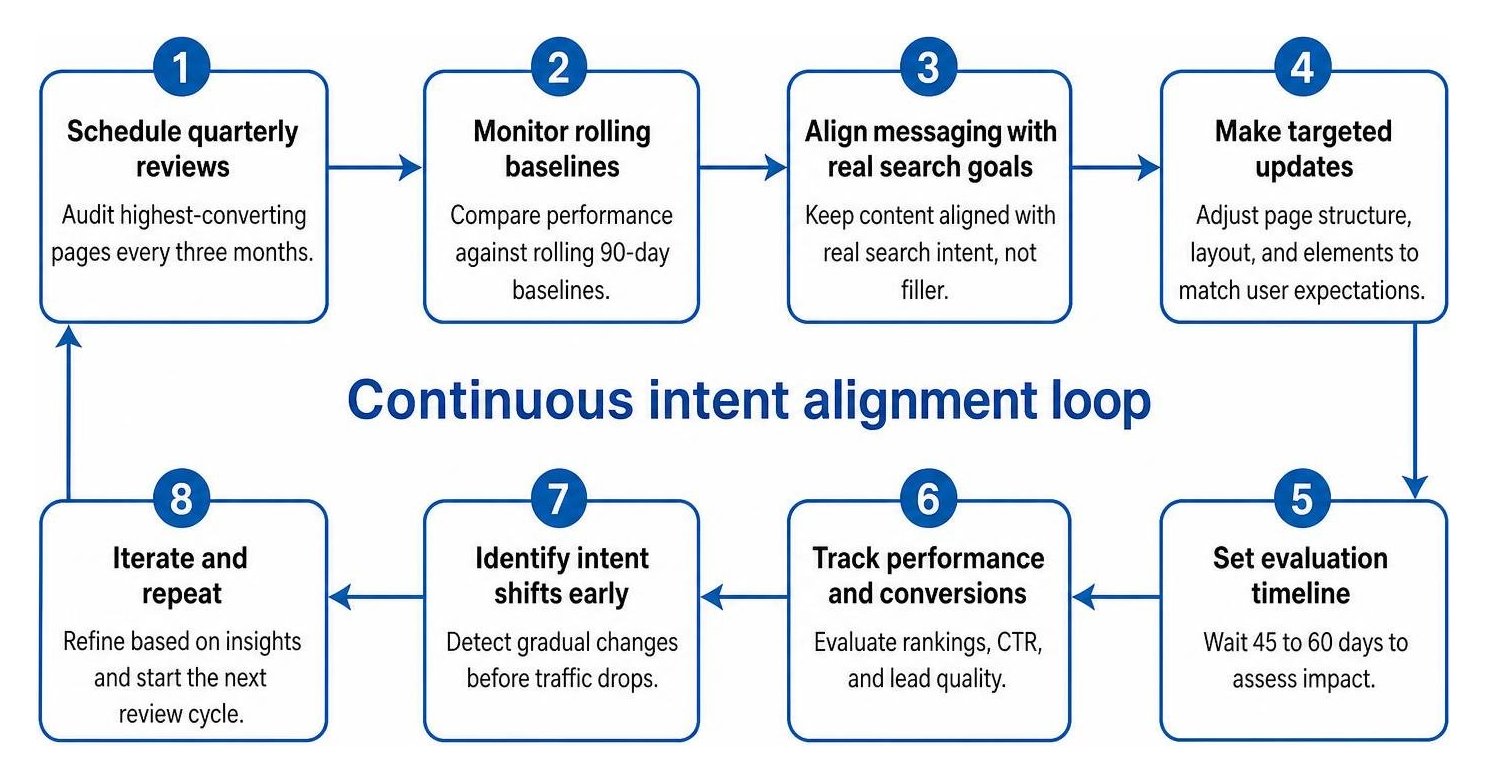
We recommend building an intent-alignment process around these practices:
- Schedule quarterly reviews: Audit your highest-converting pages every three months to verify that ranking queries match your page archetype and calls to action.
- Monitor rolling baselines: Compare page performance against rolling 90-day baselines to identify gradual shifts before traffic drops significantly.
- Align messaging with real search goals: Keep your editorial team focused on aligning content with real search intent instead of writing general filler.
- Set realistic evaluation timelines: After updating a page's layout or structure, wait 45 to 60 days to evaluate ranking stability, click-through rates, and lead quality.
Protect Your Content Performance with Focused Intent Audits
Search engine results and searcher expectations will continue to change. By using Google Search Console query patterns, monitoring live SERP features, and applying targeted structural updates, you can keep your pages relevant, competitive, and conversion-ready.
If your high-value pages are losing visibility or you want to identify where your content no longer matches search expectations, explore our regular search intent drift audits. Our team applies a data-driven framework to help your business detect intent changes early, update page formats accurately, and maintain consistent organic growth.