Step-by-Step Guide to Boosting SEO Search Visibility

Step-by-Step Guide to Boosting SEO Search Visibility
How Can You Improve SEO Search Visibility?
SEO search visibility is how likely people are to see your website in organic search results for the searches that matter to your business. To improve it, start with pages that already rank near the top, make sure they answer the searcher's question, and fix any issues that keep Google from finding or showing them. Track impressions, clicks, and rankings together: a higher ranking alone does not always mean more visitors.
This guide walks through how visibility scores work, which changes to make first, and how to watch your presence in both search results and AI-generated answers.
I'm Clayton Johnson, founder of SmallBizSEO. My work in SEO, content, and digital PR focuses on helping small businesses turn stronger SEO search visibility into opportunities for qualified leads.
Related content about SEO search visibility:
What Is SEO Search Visibility and How Is It Measured?
SEO search visibility is a percentage-based score that reflects the total share of search traffic your website is estimated to capture across all tracked keywords. Instead of looking at an isolated keyword ranking, visibility shows your overall presence in front of target audiences.
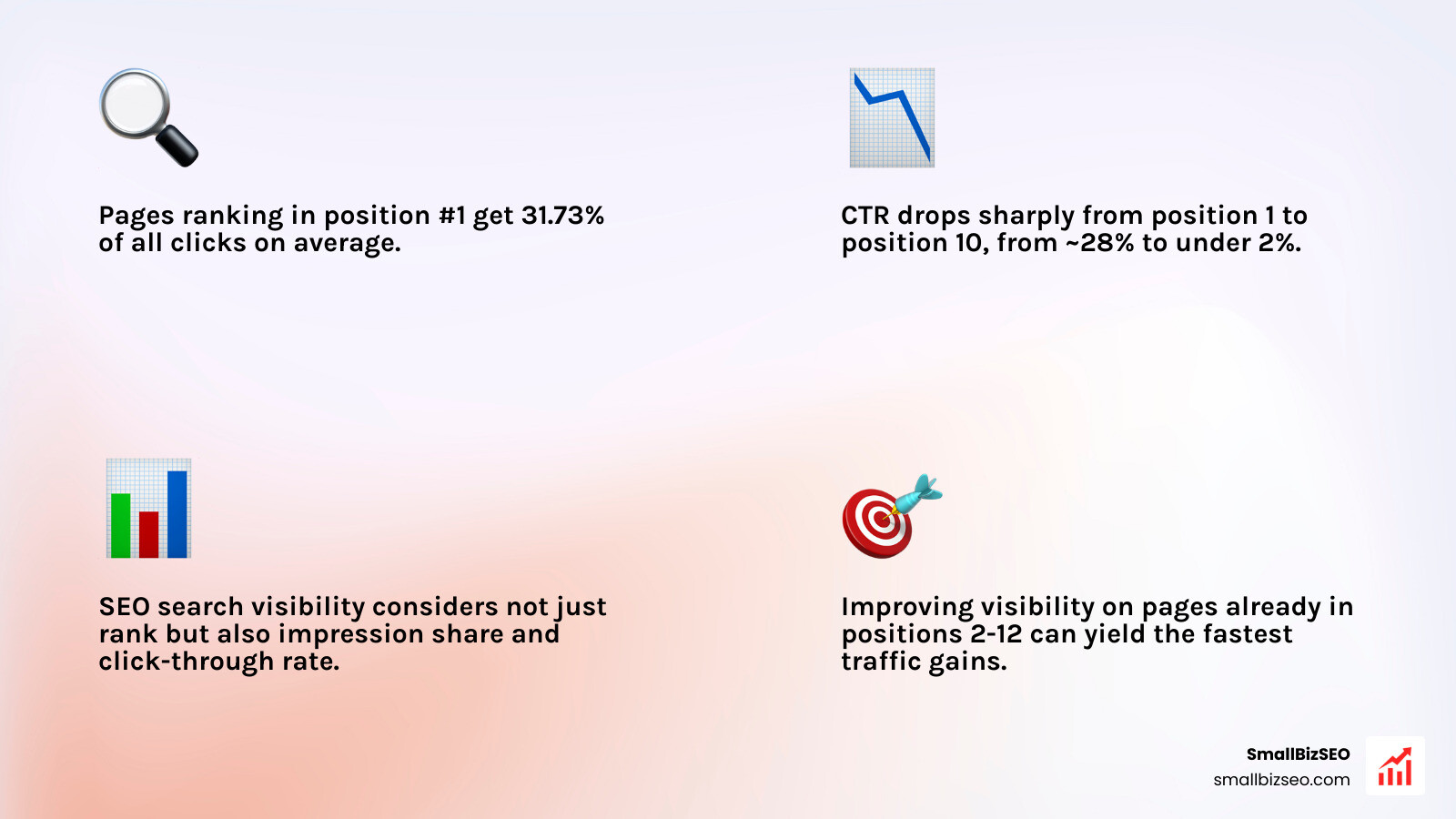
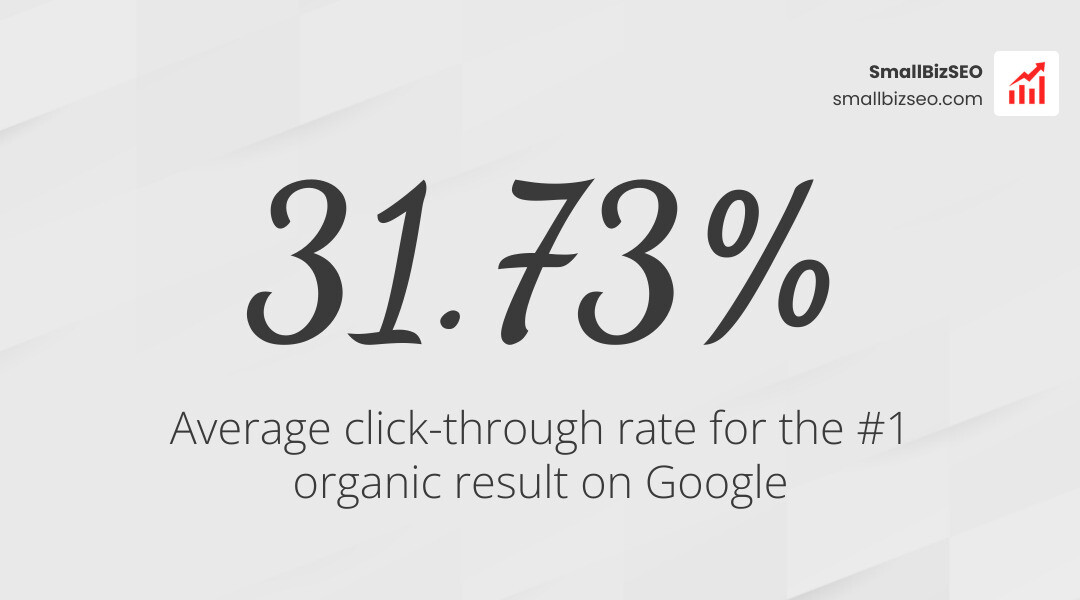
When your site ranks prominently, your click-through rate (CTR) rises dramatically. For instance, the #1 organic result on Google receives an average click-through rate of 31.73%, the #2 position earns 24.71%, and the #3 spot garners 18.6%. Only about 1% of searchers ever click through to the second page of search results. Because organic impressions dry up quickly past position 3, aggregate visibility metrics account for the exponential drop in clicks down the page.
What Is the Difference Between Traditional Rankings and SEO Search Visibility?
Traditional rank tracking monitors the exact numerical position of a specific page for a single query. In contrast, aggregate search visibility combines your rankings across hundreds of queries, weights them by search demand, and calculates your total market share.
While ranking #1 for a term searched five times a month produces minimal business impact, holding top-three positions for a cluster of high-intent commercial keywords delivers immense traffic. Modern search layouts also include interactive SERP features that push standard organic listings down the screen, meaning rank numbers alone no longer tell the whole story.
| Metric Feature | Traditional Rank Tracking | Aggregate SEO Visibility |
|---|---|---|
| Data Scope | Single keyword position | Entire tracked keyword portfolio |
| Traffic Weighting | Treats all positions equally | Weights positions by search volume and expected CTR |
| SERP Feature Context | Often ignores on-screen pixel layout | Accounts for rich snippets, image packs, and panels |
| Strategic Goal | Individual term spot checks | Overall organic market share and brand dominance |
How Is an SEO Visibility Score Calculated Across Search Engines?
An SEO visibility score is calculated by multiplying each keyword's monthly search volume by the expected click-through rate of its current position, adding those values together, and dividing by the maximum possible traffic if every term ranked #1.
When evaluating your Google visibility score, platforms also evaluate pixel position—measuring how high up on the actual viewport your listing appears. Learning the fundamentals of measuring SEO visibility metrics allows you to set realistic targets. In most competitive industries, maintaining a visibility score between 35% and 45% reflects exceptionally strong organic health and market leadership.
Proven Strategies to Improve Organic Presence and SERP Real Estate
To capture more organic clicks, businesses must expand beyond basic text listings and claim prominent SERP real estate. Applying core digital marketing principles alongside Google's Search Engine Optimization SEO Starter Guide ensures your site meets user intent while providing search engines with clear structural signals.

Our team at SmallBizSEO implements proven strategies to boost your search engine visibility score by focusing on commercial keyword clusters, technical integrity, and rich media assets.
What Steps Quickly Increase SEO Search Visibility for Underperforming Keywords?
The fastest way to increase visibility is to optimize striking-distance keywords—queries currently ranking in positions 2 through 12. Moving a keyword from position 3 to position 1 creates a far larger organic lift than moving a term from position 80 to 40.
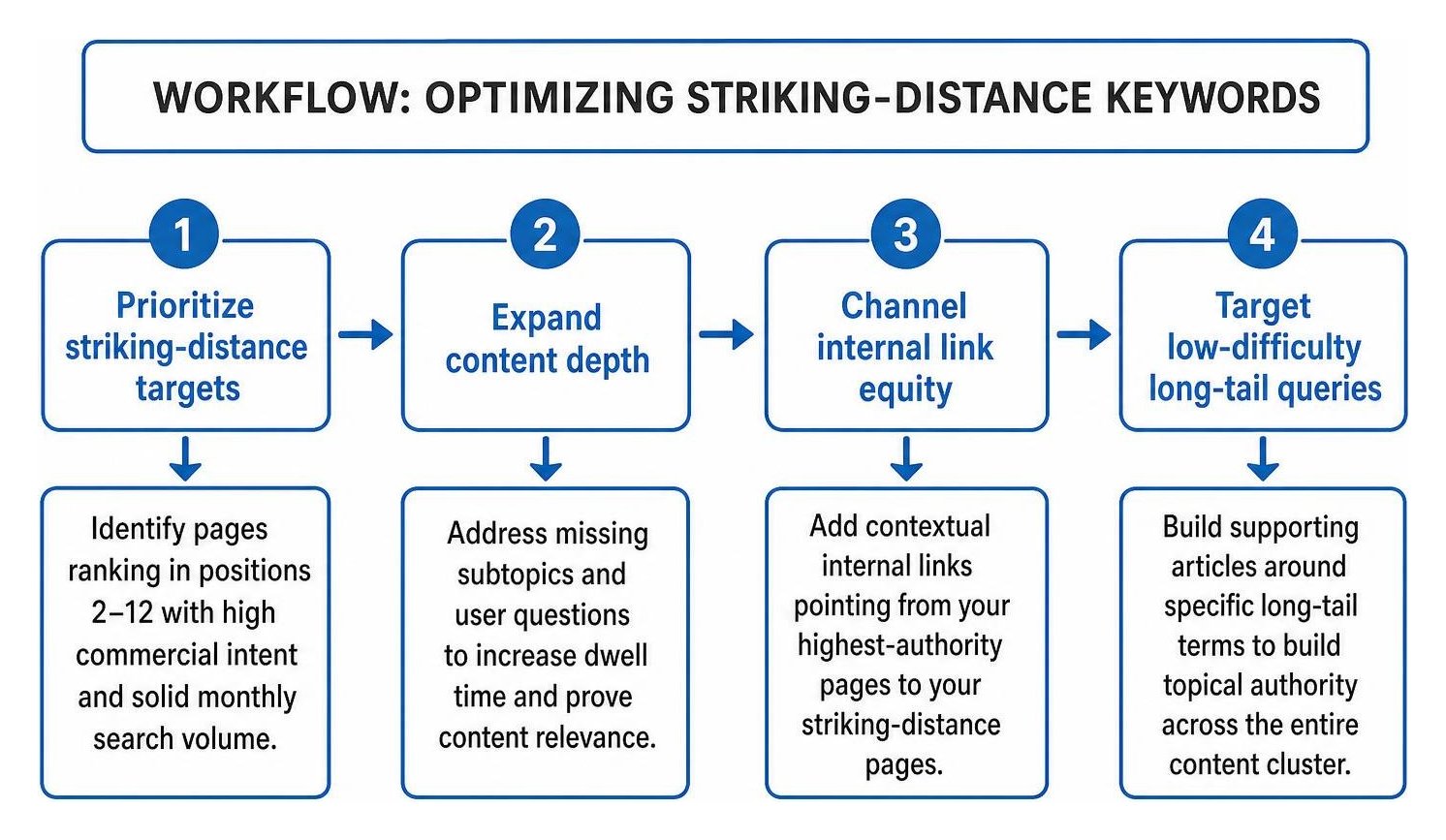
- Prioritize striking-distance targets: Identify pages ranking in positions 2–12 with high commercial intent and solid monthly search volume.
- Expand content depth: Address missing subtopics and user questions to increase dwell time and prove content relevance.
- Channel internal link equity: Add contextual internal links pointing from your highest-authority pages to your striking-distance pages.
- Target low-difficulty long-tail queries: Build supporting articles around specific long-tail terms to build topical authority across the entire content cluster.
How Do Technical Health and Structured Data Influence SERP Features?
Technical performance ensures search bots can crawl, render, and index your content without errors. Every critical page must return an HTTP 200 OK status, load swiftly, and display cleanly across mobile devices. Because approximately 60% of all searches occur on mobile devices, mobile-first optimization is fundamental to protecting your rankings.

Adhering to Google Search Essentials documentation and adding structured data markup allows your site to qualify for dynamic SERP elements:
- Image packs: Appear on 65.53% of search result pages; descriptive alt text and clean image file names boost image visibility.
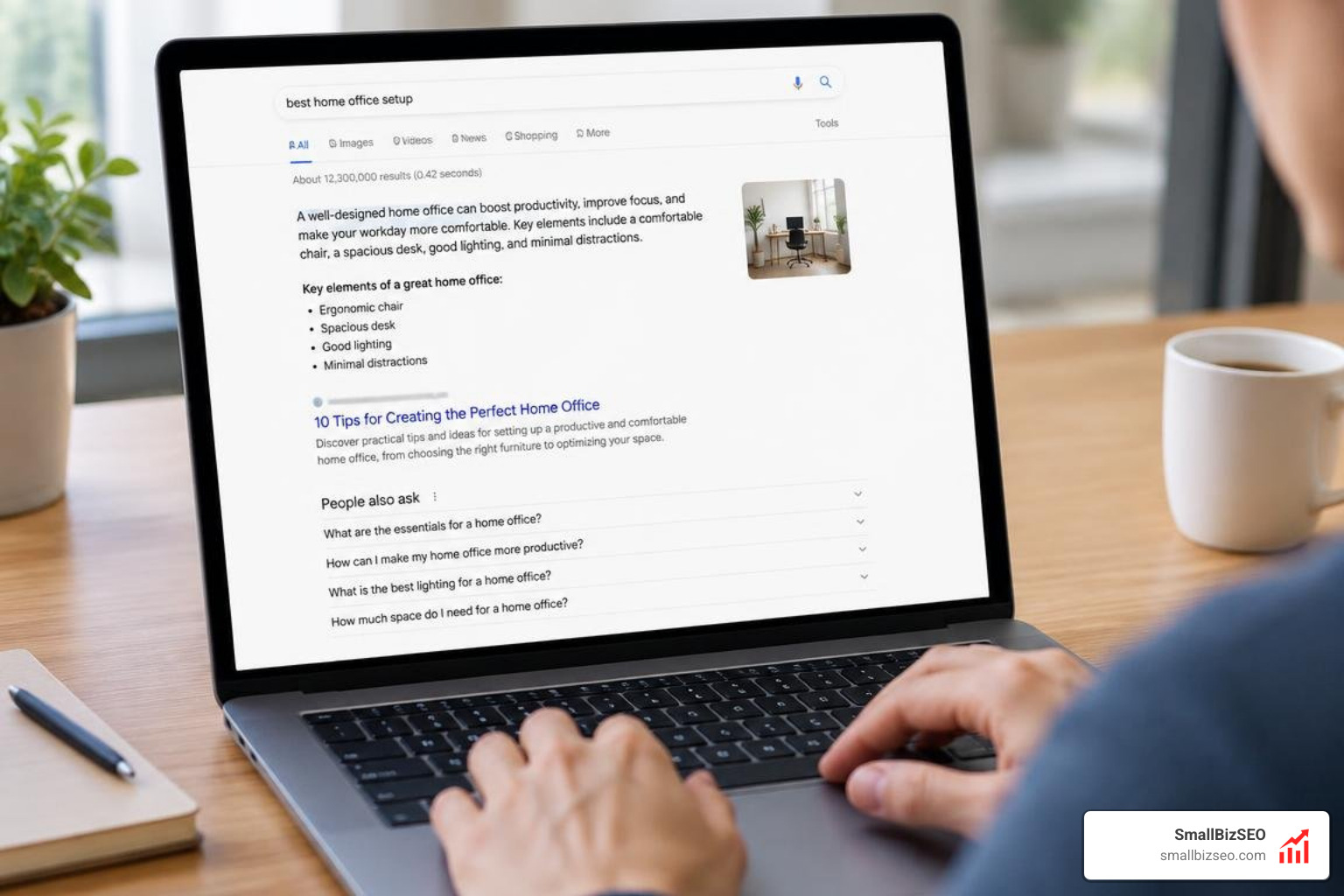
- People Also Ask: Featured on 34.53% of search results; direct answers beneath clear H2 and H3 tags help secure these spots.
- Knowledge panels: Present on 23.56% of pages, driven by organization schema and verified brand profiles.
- Local packs: Displayed on 17.42% of queries, requiring accurate local schema and active review management.
- Popular products: Occur on 13.25% of product-related searches when Merchant Center feeds and product schemas are active.
- Top stories: Feature on 4.96% of searches for timely news and fresh industry updates.
- Recipes: Display on 1.71% of culinary queries utilizing recipe schema markup.
How Does AI Visibility Relate to Traditional Search Presence?
Traditional SEO visibility and AI search presence are closely connected. Google now displays AI Overviews on 14.49% of search results pages, summarizing content above standard organic rankings. Modern engines like ChatGPT Search and Perplexity also synthesize search results by citing authoritative web resources.
A research study tracking 481 websites across major AI search surfaces revealed that only 49% of brands remained consistently visible across all platforms over a three-week period. To maintain presence across traditional and AI platforms, focus on building clear brand mentions, acquiring authoritative niche citations, and formatting answers so language models can easily parse and reference your insights.
Tracking Progress and Scaling Organic Growth with Expert Packages
Sustaining high visibility requires continuous measurement and technical refinement. At SmallBizSEO, our team uses our proprietary "Velocity" framework to drive fast rankings and E-E-A-T-compliant growth through transparent, automated reporting.
Conducting a comprehensive SEO visibility audit highlights crawl errors, content gaps, and untapped SERP opportunities. To implement these strategic improvements across technical foundations, content development, and authority building, businesses rely on our tailored SEO packages.
What Tools and Metrics Should You Track Over Time?
Monitoring your organic expansion requires tracking a balanced mix of rank positions, impression volumes, and feature captures across search surfaces.
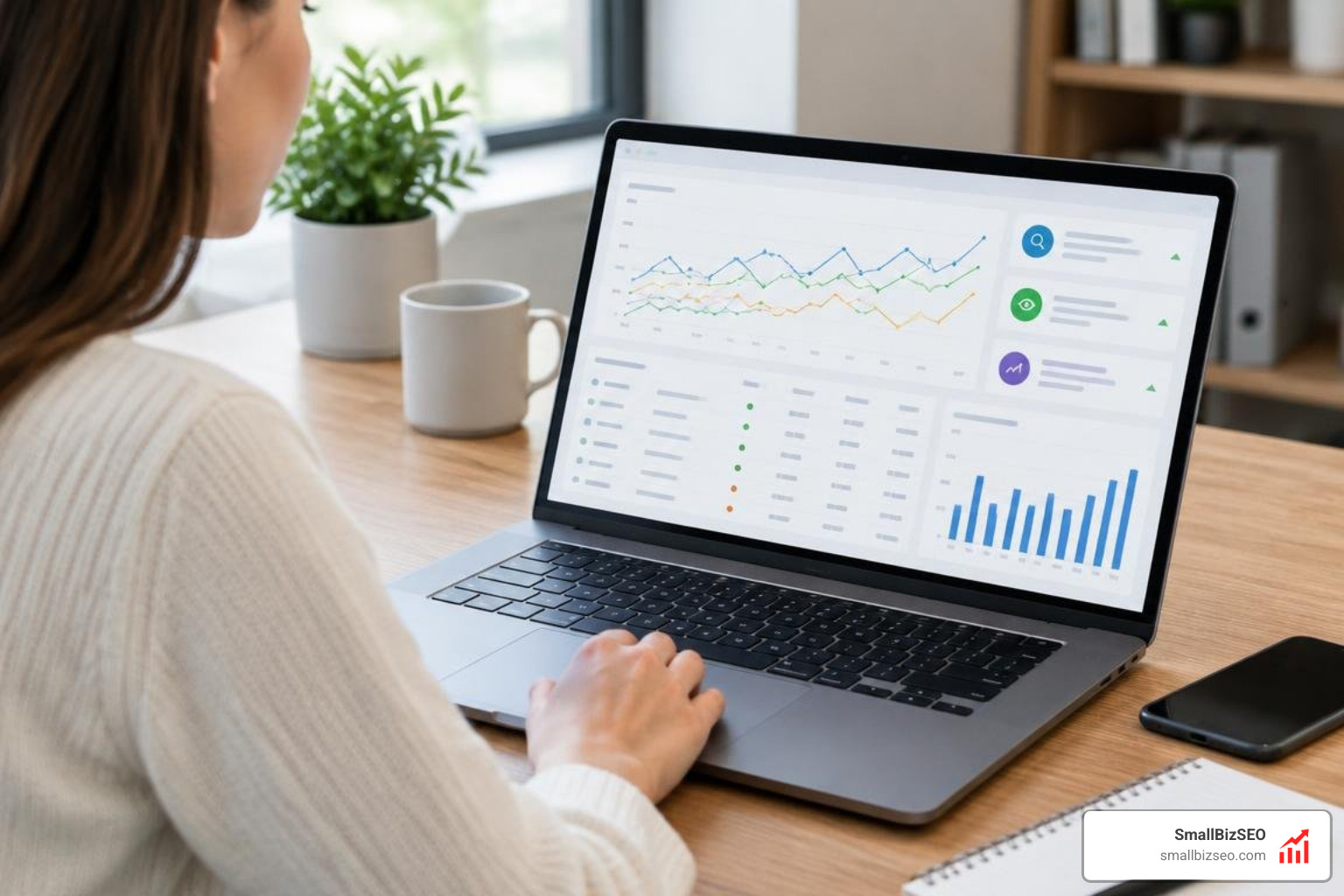
- Impression Share: Track total impressions inside Google Search Console to confirm search engines are displaying your pages for relevant searches.
- Brand Ownership and SERP Features: Measure how many rich snippets, People Also Ask boxes, and sitelinks your domain claims across target terms.
- Month-over-Month Position Distribution: Track how many keywords transition from positions 11–20 into positions 1–3 each month.
- AI Citation Frequency: Monitor brand mentions and direct URL references inside AI Overviews and conversational discovery engines.
Take Command of Your Organic Search Presence
Boosting your search visibility is an ongoing operational process, not a one-time project. By turning striking-distance keywords into top-ranking assets, fixing technical bottlenecks, and optimizing for both rich snippets and AI summaries, you position your brand directly in front of active buyers.
Reach out to our team at SmallBizSEO to audit your current visibility footprint, refine your keyword strategy, and capture the SERP real estate your business deserves.