Track and Interpret Major Google Search Algorithm Shifts
What does a Google core update mean for your site?
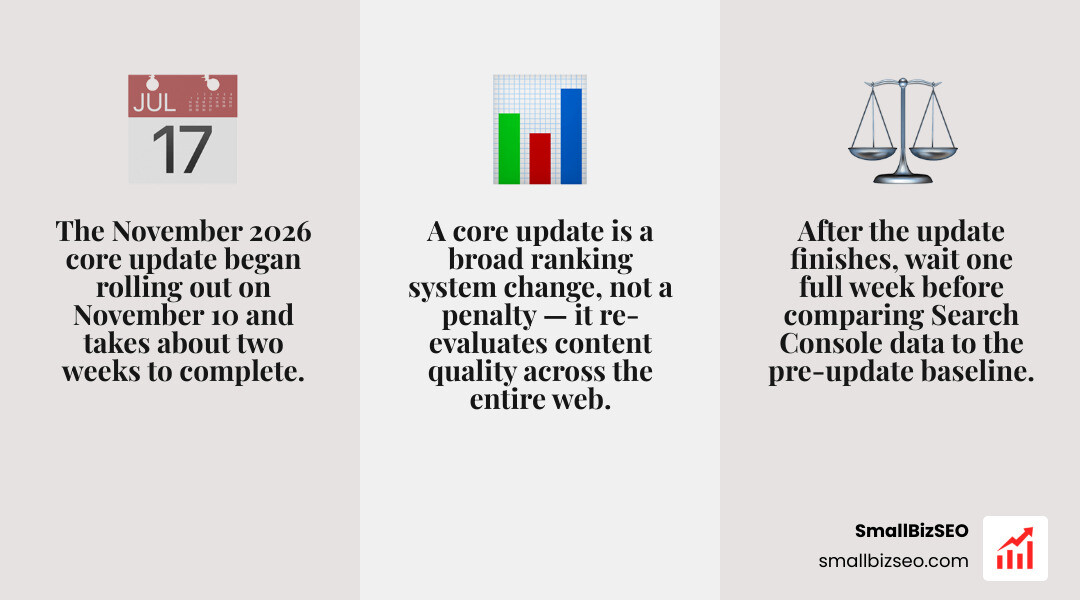
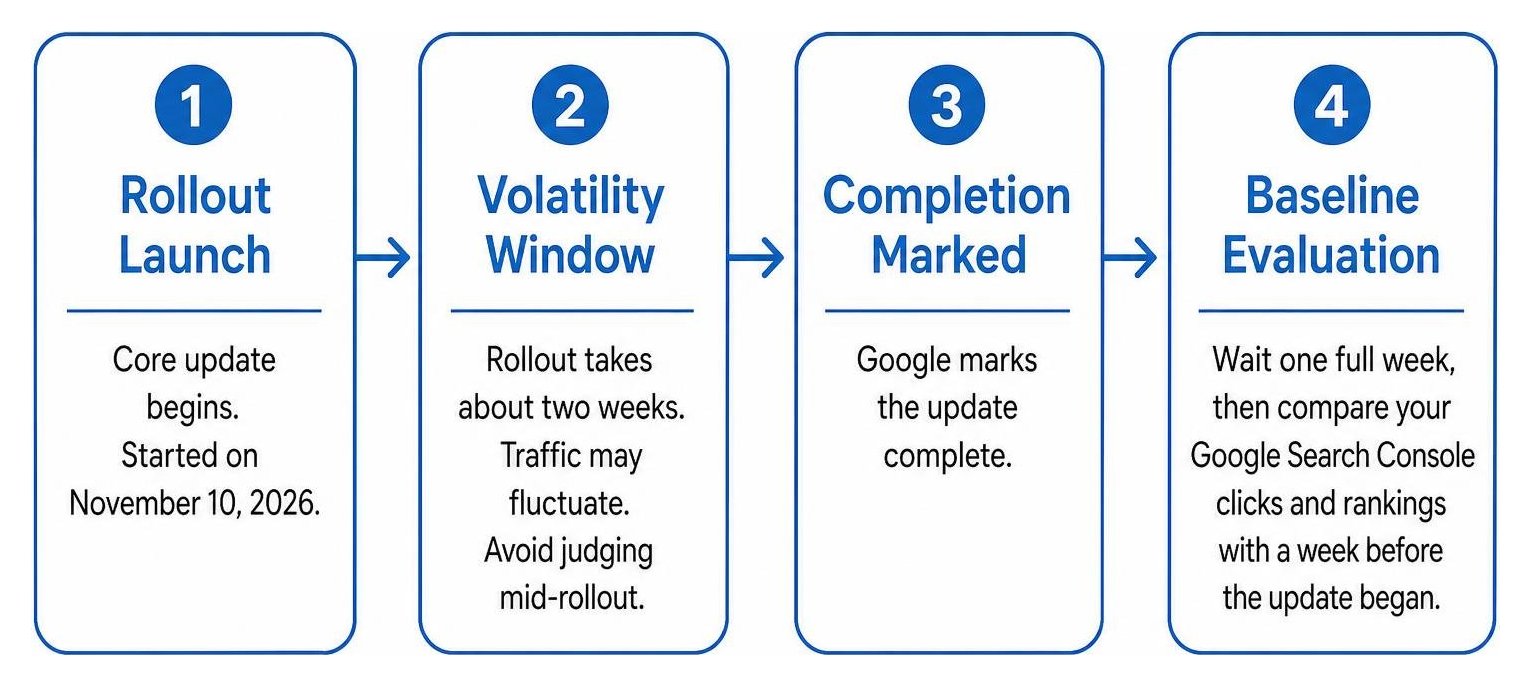
A Google core update is a broad change to how Google ranks search results, not a penalty against your site. Google's November 2026 core update began rolling out globally on November 10, 2026, and Google currently lists it as active on the Search Status Dashboard. Avoid judging traffic changes while the rollout is in progress. Once Google marks it complete, wait one full week, then compare your Google Search Console clicks and rankings with the week before the rollout began.
I'm Clayton Johnson, founder of SmallBizSEO, where I help small businesses connect SEO, content, and authority building with qualified leads. My work on questions like "core update google" focuses on turning search changes into practical steps business owners can use.
What Is a Core Update Google Releases and How Does It Work?
A Google core update is a major, system-wide modification to search ranking algorithms designed to better understand user intent and reward high-quality content across the web. Rather than targeting specific sites, violations, or individual URLs, these updates recalibrate how automated systems evaluate content value on a global scale.
When Google deploys a core update, its ranking systems re-evaluate indexed pages against modern quality baselines. Think of it like a refreshed list of top local restaurants: a previously top-ranked dining spot might slip a few spots not because its food worsened, but because several exceptional new options opened or customer dining preferences evolved.
According to the official Google Search Central core updates documentation, these changes assess site-wide quality signals. When automated systems detect that a domain consistently delivers helpful, original material, its overall baseline authority increases, supporting rankings across multiple queries.
How Does a Google Core Update Differ from Spam and System Adjustments?
A Google core update represents a holistic quality re-evaluation, whereas spam updates and manual actions specifically punish manipulative tactics or policy violations. While a core update adjusts rankings based on relative merit, spam enforcements actively demote or de-index sites attempting to game search results.
Specialized components like the automated search quality reviews system operate continuously in the background to evaluate standalone product or service reviews. In contrast, broad core updates adjust domain-level visibility across all search verticals. You can track official deployment schedules and historical incidents directly via Google's search engine ranking history dashboard.
| Update Type | Primary Objective | Scope | Impact Nature | Recovery Mechanism |
|---|---|---|---|---|
| Broad Core Update | Re-evaluate web-wide content quality and relevance | Domain-wide across all queries and verticals | Algorithmic re-ranking (promotions and demotions) | Comprehensive content and authority overhaul over several months |
| Spam Update | Penalize policy violations (scaled content, expired domains) | Algorithmic demotion of manipulative patterns | Severe traffic loss for offending patterns | Removal of spam assets; reassessment during subsequent spam runs |
| Manual Action | Enforce human-reviewed violations of search policies | Page-specific or entire domain de-indexing | Complete removal from index for targeted sections | Manual submission of a reconsideration request via Search Console |
Why Do Search Rankings and AI Overviews Shift During Rollouts?
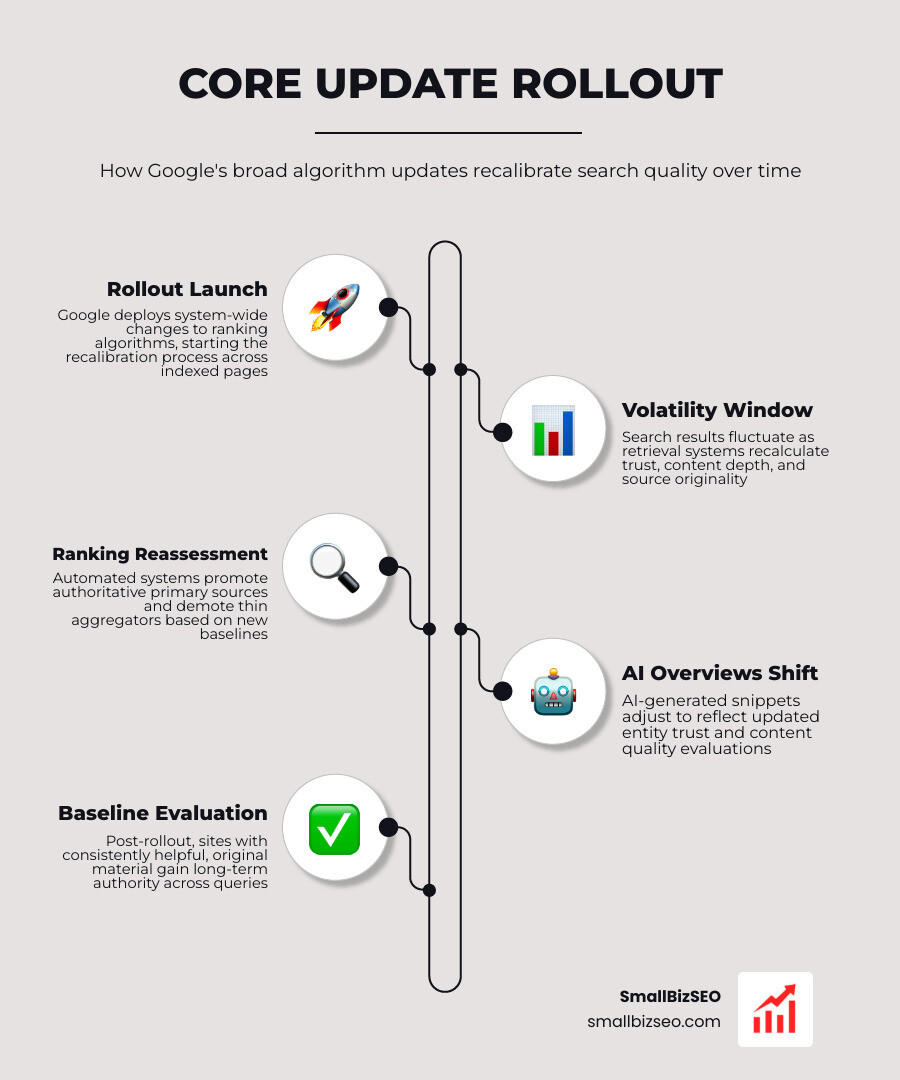
Search rankings and AI Overviews fluctuate during rollouts because Google's underlying retrieval systems are actively recalculating entity trust, content depth, and source originality. During these shifts, search results frequently move away from thin content aggregators and lean toward authoritative primary sources that present first-hand findings.
These algorithmic movements also extend directly into Discover feed performance, where user interest profiles intersect with brand authority. When updates roll out, tracking tools often record massive position drops; however, many lost rankings sit in zero-click positions (ranks 20 through 100) that generate minimal business leads. Knowing how to protect website traffic during volatility spikes helps you separate temporary ranking instability from genuine business risks.
How to Audit and Recover from Ranking Drops After an Update
To audit and recover from a ranking drop, wait until the rollout concludes entirely, isolate true traffic losses from normal seasonal patterns, and systematically upgrade the depth, accuracy, and user experience of underperforming pages. Rushing into reactive site edits during an active rollout often causes more harm than good.
How Should You Diagnose Organic Traffic Drops in Search Console?
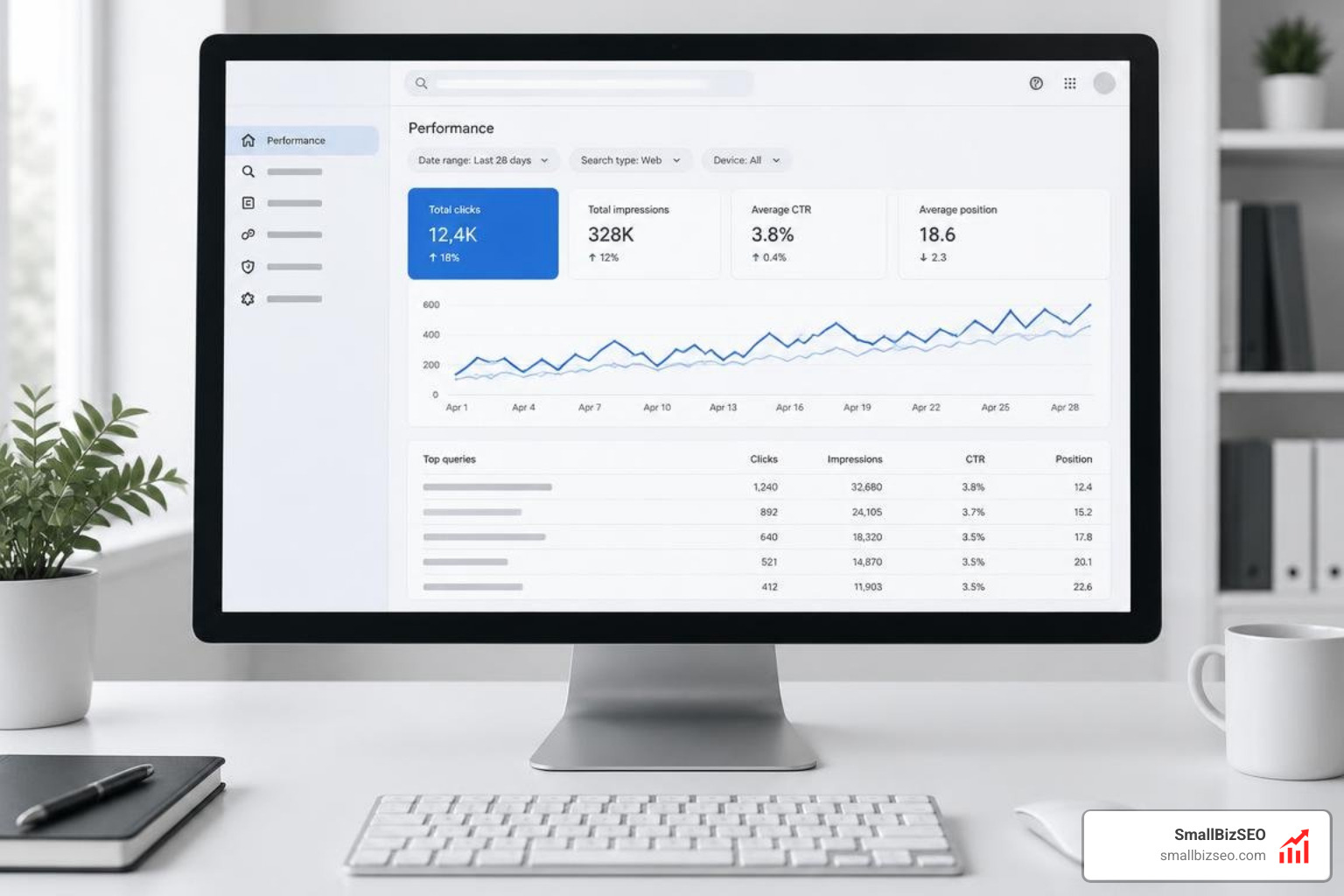
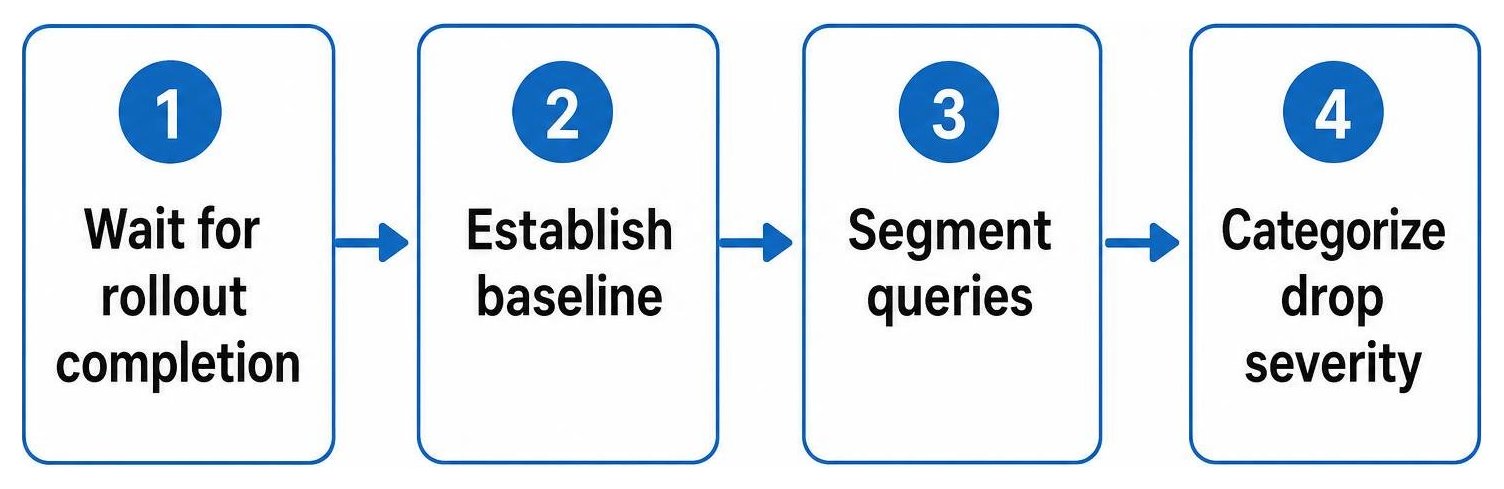
To diagnose traffic changes accurately, access Google Search Console only after the rollout is officially marked complete on the search status dashboard. Wait at least one full week following completion to eliminate transitional data anomalies, then compare that full post-rollout week against a clean baseline week prior to the update's start date.
When you analyze traffic shifts after updates, segment your performance report by search type (Web, Image, Video, News) and query intent. Categorize ranking drops into minor shifts (such as falling from position 2 to position 4) versus large drops (such as dropping from position 4 to position 29). Minor position shifts rarely require structural intervention, while steep drops across core commercial pages signal a need for deep content restructuring.
What Steps Build Lasting Recovery After a Google Core Update?
Building lasting recovery requires auditing your entire domain to eliminate thin, unhelpful copy, upgrading author credibility, and providing verifiable, first-party value that competitors cannot easily replicate.

At SmallBizSEO, we use our proprietary Velocity framework to help businesses build sustainable search visibility through technical precision and authoritative content strategy. Sustainable recovery is not about finding quick technical workarounds; it centers on demonstrating first-hand EEAT across every publication. This standard is especially critical for high-standard YMYL topics, where factual consensus, genuine professional experience, and clear editorial oversight directly dictate organic reach.
Evaluate your content using this self-assessment quality framework:
- Originality and Depth: Does the page offer original information, reporting, research, or analysis beyond summarizing other search results?
- Substantial Value: Does the main content provide a comprehensive, complete explanation of the topic with clear takeaways?
- Source Authority: Is the content produced by or reviewed by an expert with verifiable, transparent credentials?
- Presentation and Experience: Is the material free from excessive ads, disruptive layouts, and obvious factual errors?
- User Focus: Was this page written primarily to help real people, or was it produced solely to capture search engine traffic?
Ranking recovery does not happen overnight. While minor page improvements can reflect in search results within a few days, broad domain-level re-evaluations typically take several months or require subsequent core rollouts before search systems fully recognize your upgrades. For an end-to-end evaluation of your current search performance, explore our comprehensive core update analysis services to secure your visibility against future algorithm shifts.
Navigate Future Search Shifts with Confidence
Understanding how search algorithms assess quality allows you to transform unpredictable ranking shifts into clear growth opportunities. By focusing on primary research, transparent expertise, and authentic user value, your business can build lasting organic visibility that thrives through every search landscape evolution.