Protect Your Website Traffic When Google Search Volatility Spikes
Why Does Google Search Volatility Matter for Your Traffic?
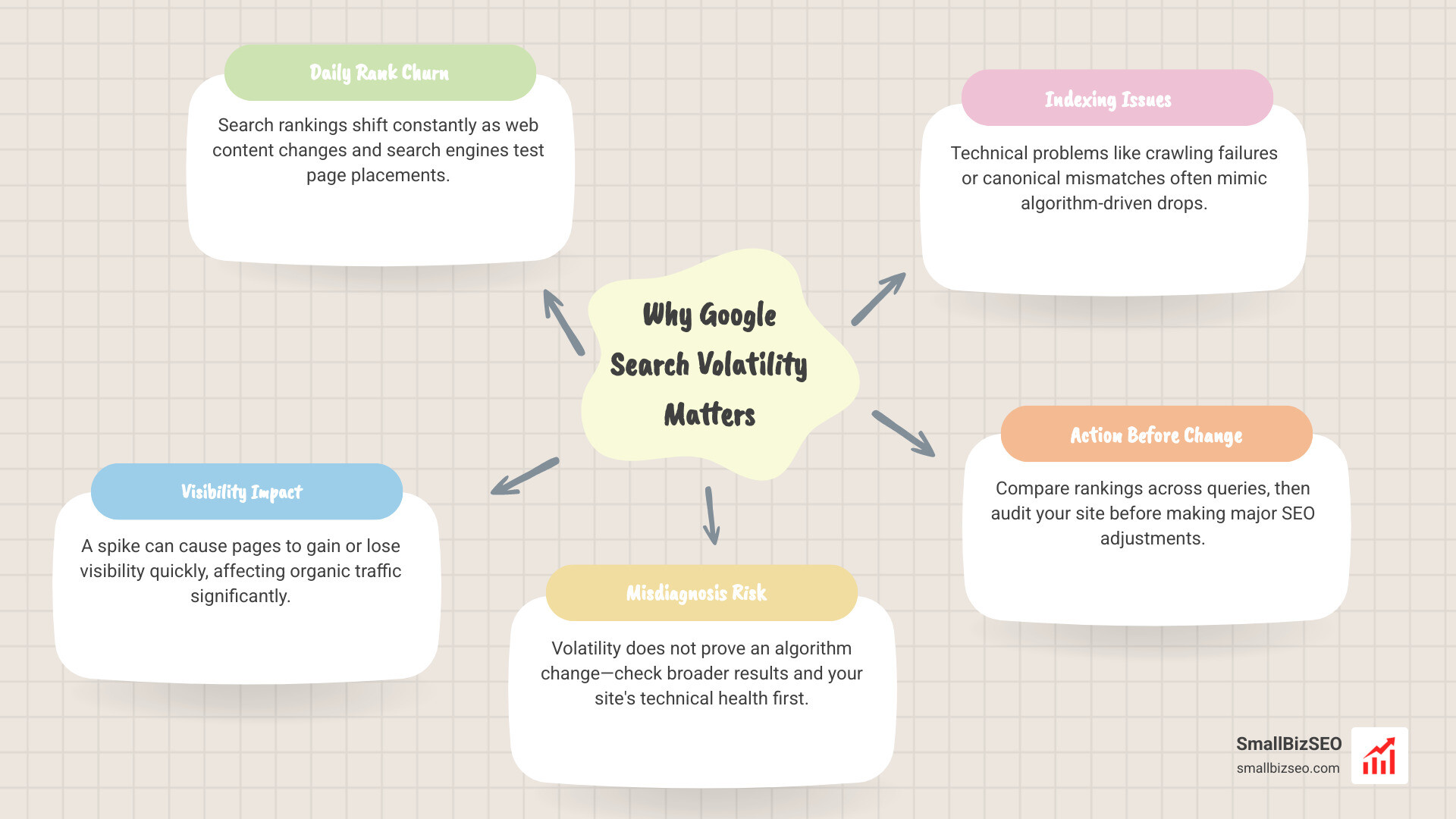
Google search volatility is the day-to-day movement of search rankings. A spike can mean your pages gain or lose visibility, but it does not prove Google changed its algorithm. If your traffic drops, compare your rankings with broader search results, then check your site for indexing or other technical problems before making major changes.
I’m Clayton Johnson, founder of SmallBizSEO. My work in technical SEO and content strategy helps small businesses investigate google search volatility and focus on changes that support lasting visibility.
Understanding Google Search Volatility and Why Rankings Shift
Search rankings are inherently dynamic because web content changes constantly and search engines continually test page placements. When ranking shifts accelerate across thousands of queries at once, overall market instability climbs.
What Is Google Search Volatility and How Is It Measured?
Google search volatility measures the day-over-day rate of change in organic search engine results pages. Tracking platforms calculate this turbulence by monitoring ranking positions and SERP feature shifts for thousands of keywords across desktop and mobile devices.
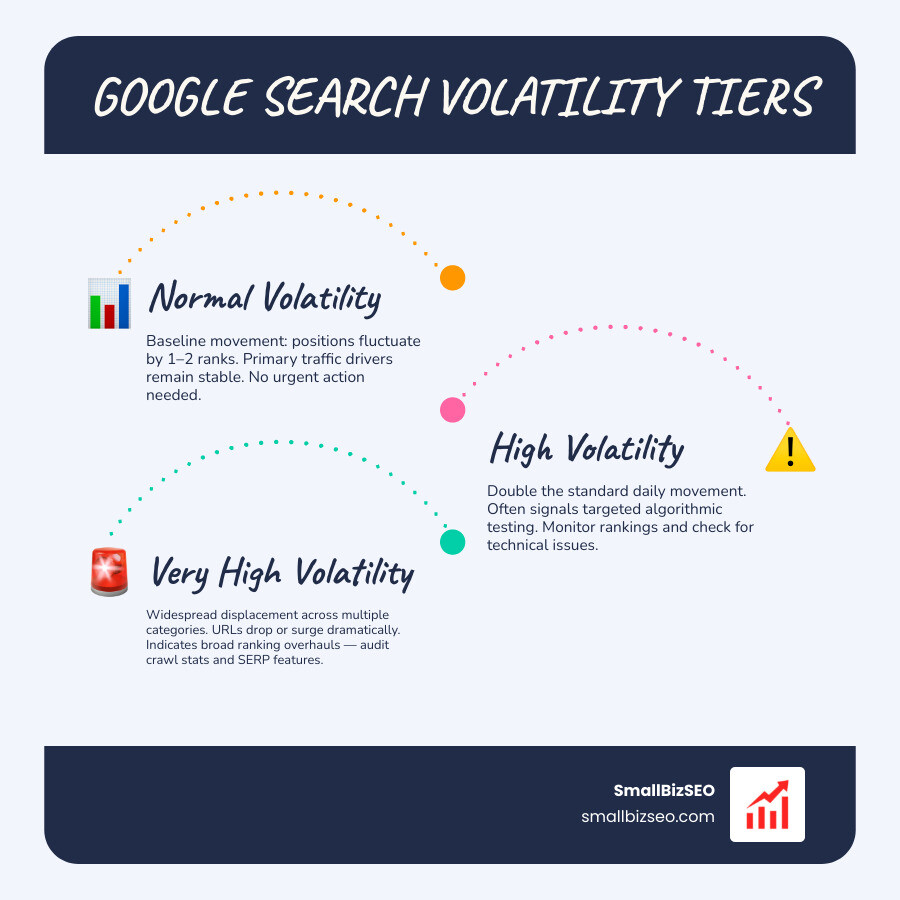
Most tracking platforms group ranking fluctuations into three operational tiers:
- Normal Volatility: Baseline movement where positions fluctuate by one or two ranks without disrupting primary traffic drivers.
- High Volatility: Moderate instability indicating double the standard daily movement, often signaling targeted algorithmic testing.
- Very High Volatility: Widespread displacement where URLs across multiple categories drop or surge dramatically, reflecting broad ranking overhauls.
Tracking systems evaluate changes in modern SERP features alongside standard links because rich snippets, local packs, and visual carousels directly alter click distributions.
What Causes Spikes in Google Search Volatility Across Industries?
Widespread ranking turbulence is triggered by major system rollouts, unannounced ranking adjustments, and automated system rollbacks.
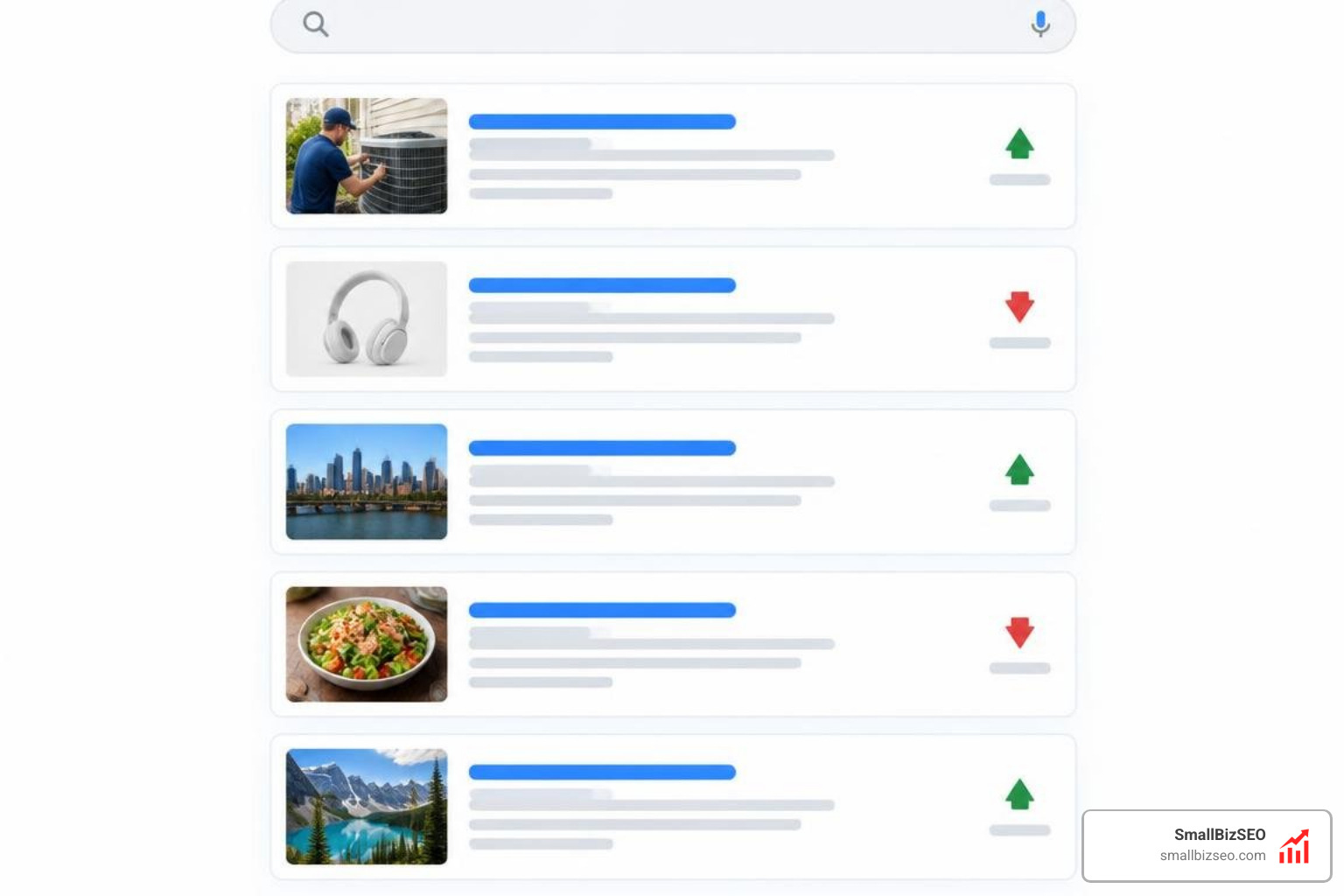
A search algorithm update can target broad content quality, spam patterns, or search intent realignment. In some cases, search engines deploy temporary tests that disrupt rankings for several days before reverting to previous baselines. Layout adjustments like expanded answer boxes and AI summaries also displace standard organic listings, creating visibility shifts even when your underlying URL position remains stable.
How to Diagnose Ranking Turbulence and Protect Organic Traffic
When organic clicks decline, you must systematically determine whether the drop is caused by global search disruption or an internal site error.
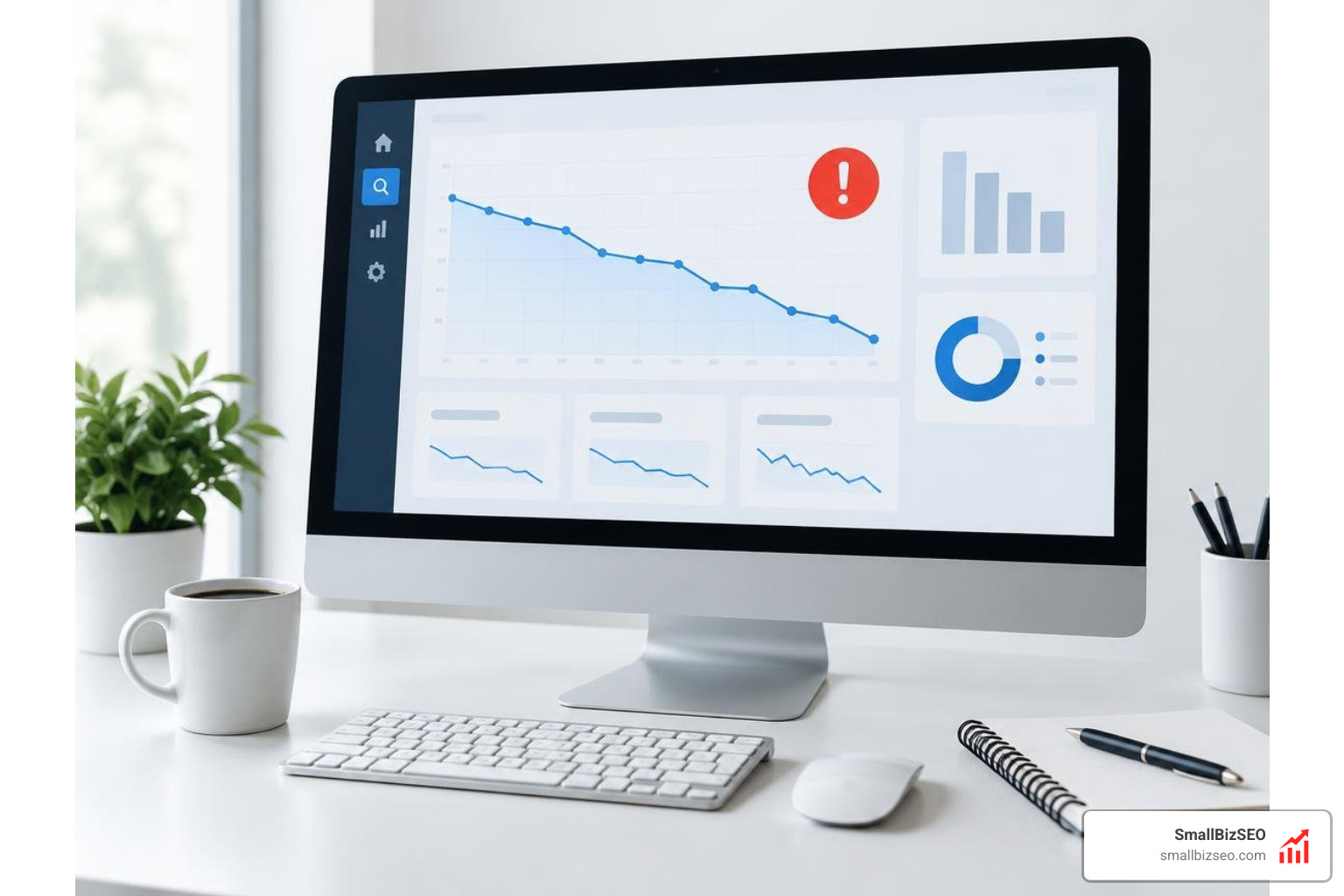
Following the Google Search Central debugging traffic drops guide, analyze your search console performance data over long historical windows to identify whether drops occurred abruptly or steadily over time.
How to Distinguish Global Algorithm Updates from Site-Specific Technical Errors
To separate global algorithmic shifts from technical failures, compare your domain's performance against macro volatility indexes and review community discussions.
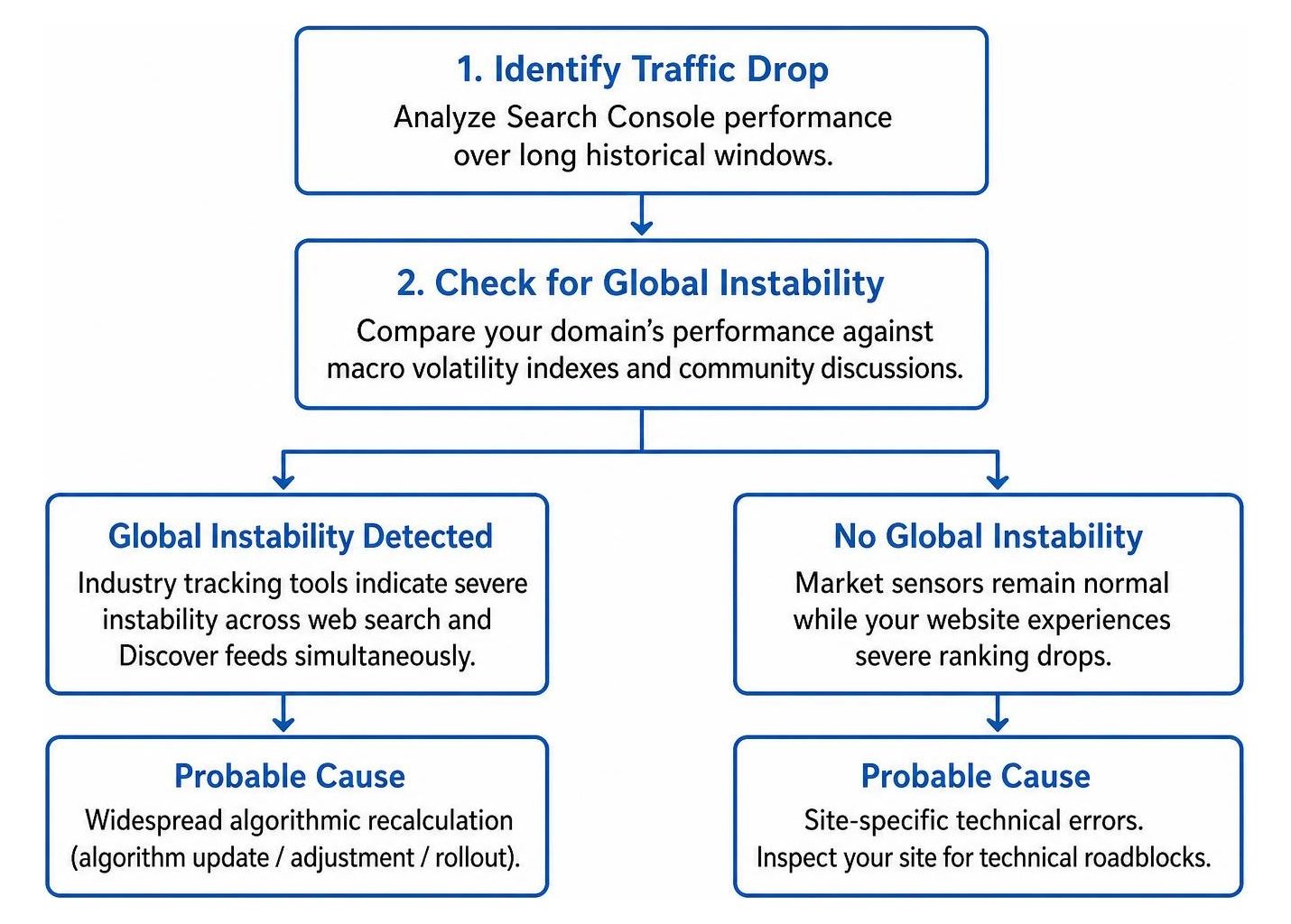
When industry tracking tools indicate severe instability across web search and Discover feeds simultaneously, widespread algorithmic recalculation is the probable cause. Conversely, if market sensors remain normal while your website experiences severe ranking drops, inspect your site for technical roadblocks.
Common technical issues causing sudden drops include:
- Accidental
noindextags injected across key page templates. - Broken redirect maps creating loops or multiple redirect hops.
- Canonical mismatches where user-selected canonicals conflict with indexer selections.
- Server configuration errors that block search crawler user agents.
Reviewing algorithmic penalties and indexing failures helps isolate code-level bugs from automated site quality adjustments. When traffic drops occur without any manual penalty notices, our field guide for visibility loss without manual actions provides a step-by-step audit framework.
Which Tracking Tools Measure Search Volatility Most Accurately?
Different SEO monitoring platforms use unique methodologies, device datasets, and scoring ranges to track ranking instability. Using a SERP tracking volatility aggregator allows you to compare data from multiple sensors to balance single-source anomalies.
| Tool Name | Measurement Scale | Device Coverage | Dataset Focus |
|---|---|---|---|
| Similarweb SERP Seismometer | 0–100 Risk Score | Desktop & Mobile | 10,000+ domains across 30- and 90-day baselines |
| DataForSEO Index | 1–10 Volatility Scale | Desktop & Mobile | Categorized industry keyword sets on Google & Bing |
| Wincher Volatility Index | Normal / High / Very High | Desktop & Mobile | 30,000 keywords across 6 primary national regions |
| Keyword.com Index | 0–100 Movement Scale | Desktop & Mobile | Live client-tracked keywords evaluated in Top 20 |
Evaluating mobile and desktop metrics independently is essential, as search engines frequently test layout updates and ranking signals on mobile devices before updating desktop results.
Action Plan: Responding to Search Volatility Without Hurting Your SEO
When search rankings fluctuate wildly, making sudden, unmeasured site modifications often worsens ranking losses. A structured response stabilizes your organic traffic while data settles.

What Steps Should You Take Immediately After Visibility Drops?
Follow a disciplined diagnostic checklist before altering your content or site architecture:
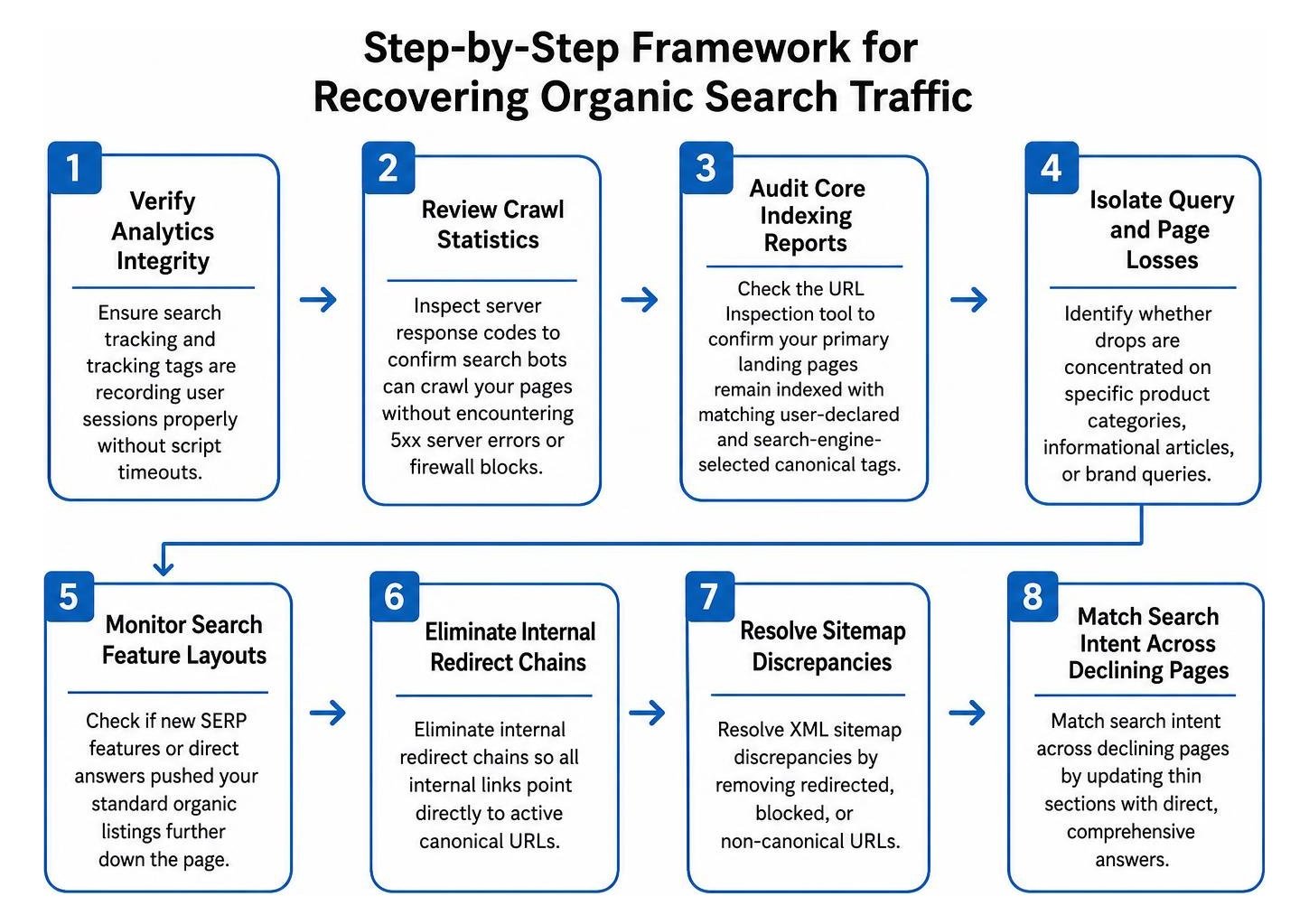
- Verify Analytics Integrity: Ensure search tracking and tracking tags are recording user sessions properly without script timeouts.
- Review Crawl Statistics: Inspect server response codes to confirm search bots can crawl your pages without encountering 5xx server errors or firewall blocks.
- Audit Core Indexing Reports: Check the URL Inspection tool to confirm your primary landing pages remain indexed with matching user-declared and search-engine-selected canonical tags.
- Isolate Query and Page Losses: Identify whether drops are concentrated on specific product categories, informational articles, or brand queries.
- Monitor Search Feature Layouts: Check if new SERP features or direct answers pushed your standard organic listings further down the page.
Conducting a thorough post-rollout core update analysis ensures you base strategic optimizations on finalized performance data rather than mid-rollout volatility.
How to Recover Traffic After Persistent Ranking Instability
When ranking instability continues for months following a CMS overhaul or structural redesign, unresolved technical conflicts are usually preventing authority signals from consolidating.
To resolve long-term ranking volatility:
- Eliminate internal redirect chains so all internal links point directly to active canonical URLs.
- Resolve XML sitemap discrepancies by removing redirected, blocked, or non-canonical URLs.
- Match search intent across declining pages by updating thin sections with direct, comprehensive answers.
- Build authoritative, topically relevant external references to validate domain trust.
At SmallBizSEO, our data-driven Velocity framework identifies root technical blockers, resolves canonical routing issues, and deploys high-impact content optimization to rebuild lasting organic search visibility.
Navigating Search Instability with Confidence
Search volatility is an ongoing reality of digital marketing, but rank fluctuations do not have to disrupt your business growth. By monitoring multi-device tracking sensors, validating technical health before modifying content, and focusing on clear, answer-ready authority, you protect your organic baseline against turbulent updates.
When your business needs expert support to diagnose traffic drops or stabilize search performance, explore our SmallBizSEO search volatility management services to secure your search rankings.