Why Auditing Search Results for Your Business Name Stops Traffic Leaks

Why Auditing Search Results for Your Business Name Protects Your Brand
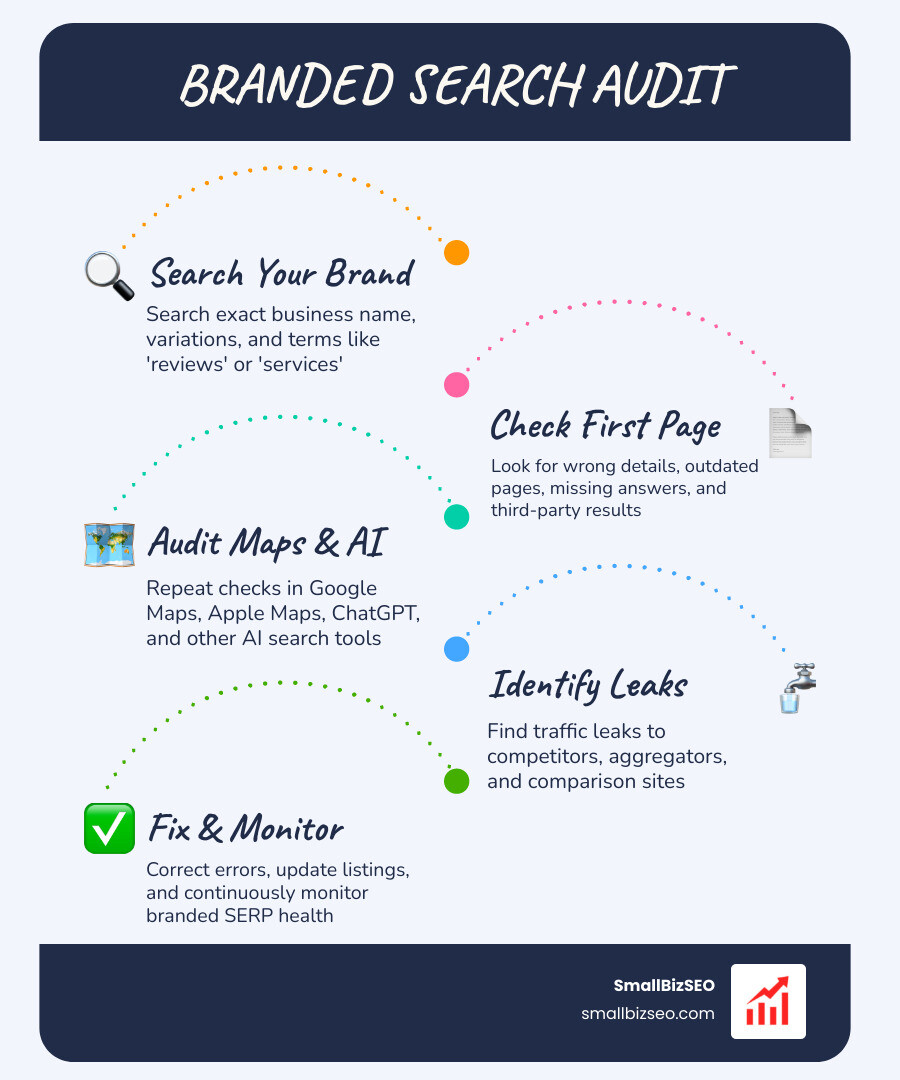
Start by searching your exact business name, common name variations, and your name paired with terms like "reviews" or "services." Check the first page for wrong details, outdated pages, missing answers, and third-party results that may send customers elsewhere. Then repeat the checks in Maps and AI search tools. That is the core of auditing search results for your business name.
Your website can rank first and still leave a buyer with questions. A stale listing might show an old phone number. A review page might appear before the service page they need. The audit shows what customers actually see, so you can fix errors before publishing more content.
I'm Clayton Johnson, founder of SmallBizSEO. My work in SEO, content, and digital PR shapes how I approach auditing search results for your business name: check the full picture, then fix what matters most.
What Is the Difference Between a Website Audit and Auditing Search Results for Your Business Name?
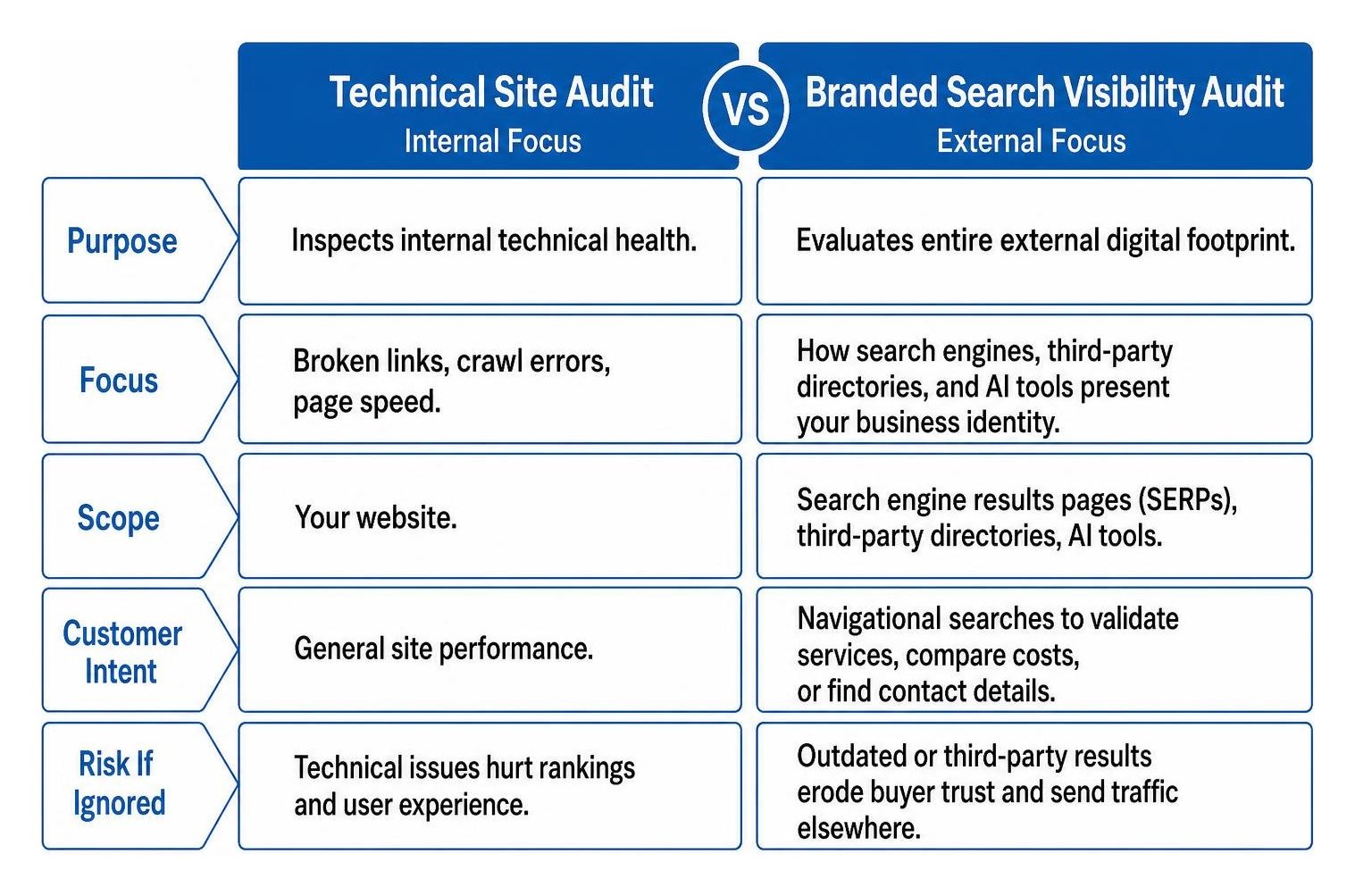
A traditional website audit inspects internal technical health, such as broken links, crawl errors, and page speed. In contrast, auditing your branded search results evaluates your entire external digital footprint across search engine results pages (SERPs). It reviews how search engines, third-party directories, and AI tools present your business identity to real customers.
When prospects search specifically for your company, they are using a targeted navigational keyword to validate your services, compare costs, or find contact details. If your search landscape is cluttered with outdated press releases or third-party comparison sites, buyer trust erodes before they even land on your homepage.
Proactively optimizing your Brand SERP ensures that high-intent prospects see accurate pricing, direct contact links, and verified reviews rather than misleading external summaries.
Why Does Unmonitored Branded Traffic Leak to Competitors and Aggregators?
Unmonitored branded search traffic leaks when competitor ads, middleman review sites, and comparison portals outrank your dedicated subpages for high-intent search queries. When a potential client searches for your business name alongside terms like "pricing" or "reviews," missing information on your primary site forces search engines to surface third-party alternatives.
Review directories and aggregators monetize this traffic by displaying competitor ads right next to your profile. Furthermore, failing to keep track of every unlinked or inaccurate brand mention across the web creates entity confusion that weakens your brand authority.
| Platform / Channel | Owned Assets to Verify | Third-Party Traffic Leak Risks | Key Audit Fix |
|---|---|---|---|
| Google Search | Homepage, Core Service Pages, Sitelinks | Competitor PPC conquesting, negative forum posts | Build dedicated FAQ and review pages |
| Apple Maps | Apple Business Connect verified listing | Inaccurate pin placement, stale contact details | Claim profile and align operating hours |
| AI Answer Engines | Structured data, About page, press releases | Hallucinated pricing, missing service offerings | Implement clear, definition-first content |
How to Conduct a Complete Business Search Audit Step by Step
To conduct a complete business search audit, open a clean private browser window and systematically query your exact business name across search engines, map applications, and AI chat interfaces. Document every result appearing on page one, categorizing each link as owned, third-party positive, neutral, or conflicting.
We follow a structured audit methodology that evaluates query coverage and search intent mapping. Using an automated Brand SERP Tracker tool helps identify sudden shifts in rankings or newly indexed third-party comparison pages.
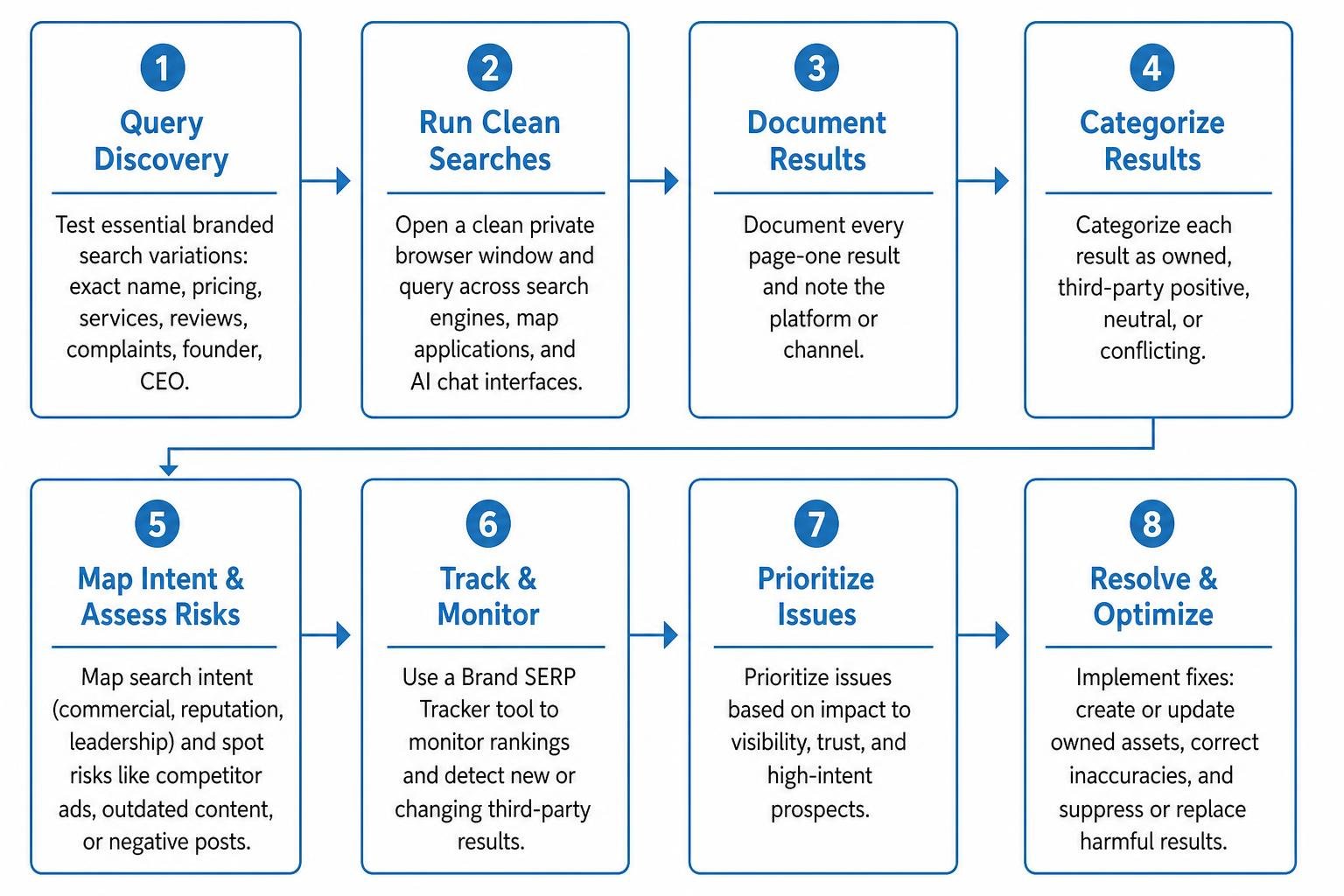
When running your manual queries, test these essential branded search variations:
- Exact business name (e.g., "[Business Name]")
- Core commercial intent (e.g., "[Business Name] pricing," "[Business Name] services")
- Reputation queries (e.g., "[Business Name] reviews," "[Business Name] complaints")
- Leadership queries (e.g., "[Business Name] founder," "[Business Name] CEO")
- Location-specific queries (e.g., "[Business Name] phone number," "[Business Name] hours")
How Do You Check Brand Variations, Executive Profiles, and Entity Signals?
To check brand variations and entity signals, search leadership names alongside the company name to verify that biographies, social profiles, and industry citations present consistent information. Search engines connect executive reputations directly to business entities when assessing trust.
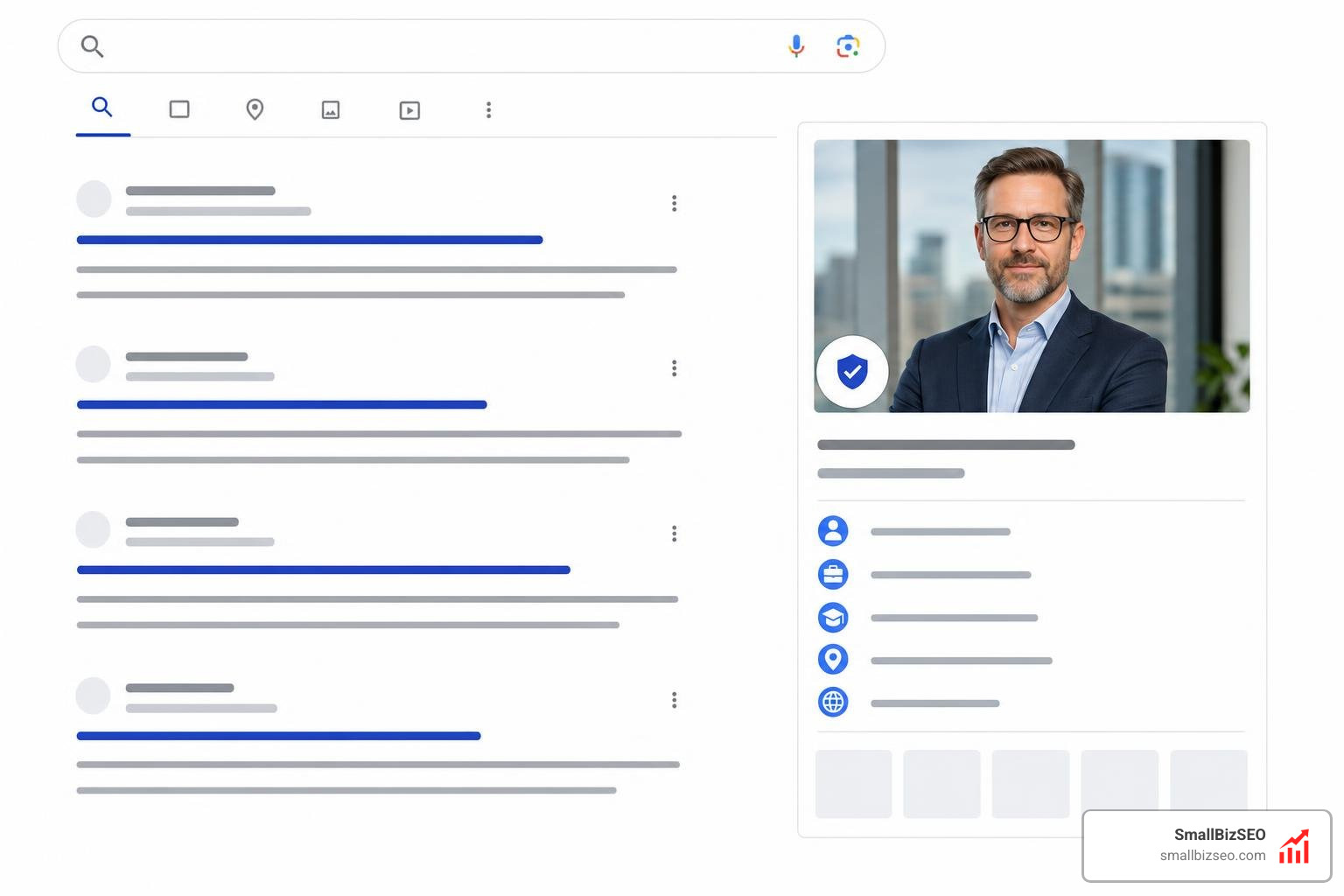
Inaccurate directory data or forgotten corporate milestones can confuse search algorithms. Verifying executive profiles and properly claiming your Knowledge Panel provides search engines with verified data points about your company's ownership, founding history, and core offerings.
What Tools and Methods Help When Auditing Search Results for Your Business Name Across AI Engines?
To audit your brand across AI search engines, submit realistic customer prompts to tools like ChatGPT, Claude, Gemini, Perplexity, and Google AI Overviews. Track whether the models recommend your services, attribute correct business details, or cite direct competitors instead.
Run prompts such as "What does [Business Name] do?" and "Who are the top service providers in [Industry]?" If AI models hallucinate old pricing or fail to name your brand, your digital footprint lacks structured, definition-first copy. Running an automated AI visibility scanner quickly highlights which platforms omit your brand from industry recommendations.
How Do You Audit Local Listings, Maps, and Citation Accuracy?
To audit local listings, inspect your Google Business Profile, Apple Business Connect, and Bing Places accounts to ensure identical contact details, accurate map pins, and matching primary business categories.
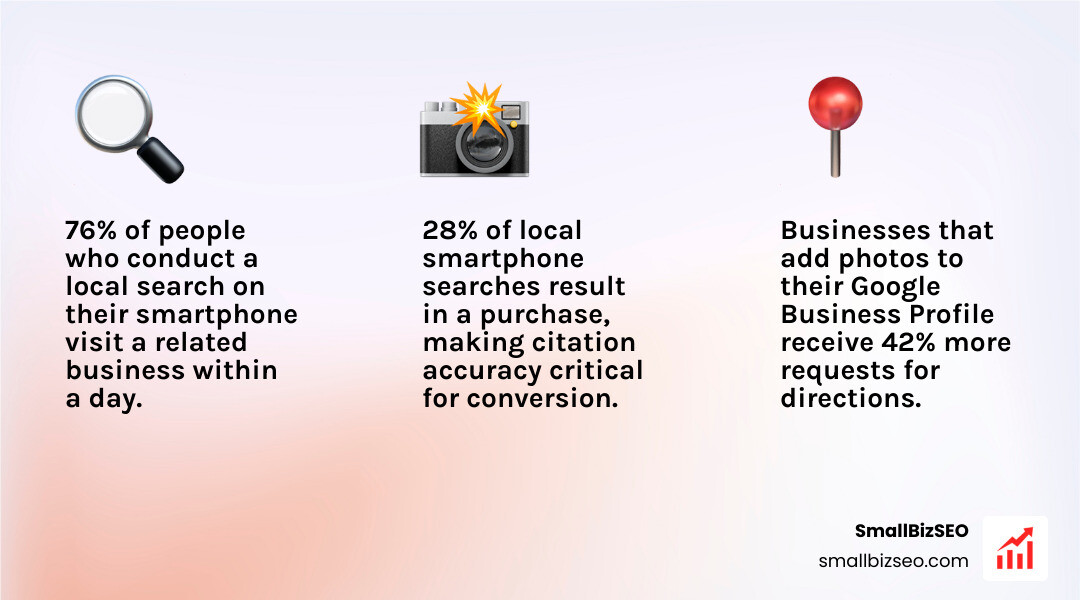
Research indicates that 76% of people who conduct a local search on their smartphone visit a related business within a day, and 28% of those searches result in a purchase. Furthermore, businesses that add photos to their Google Business Profile receive 42% more requests for directions and 35% more clicks through to their websites.
Apple Maps serves as the default navigation app on over 1 billion active Apple devices, while Bing maintains an active share in corporate enterprise environments. Ensuring strict NAP consistency across all platforms prevents algorithmic ranking drops. You can evaluate your directory footprint using a listings audit tool to catch discrepancies.
Turning Audit Insights into an Actionable Fix and Publishing Plan
Turn audit insights into an action plan by categorizing every finding into an impact-versus-effort matrix. Address high-impact, low-effort issues immediately—such as fixing inaccurate business hours or correcting broken links—before producing new content.
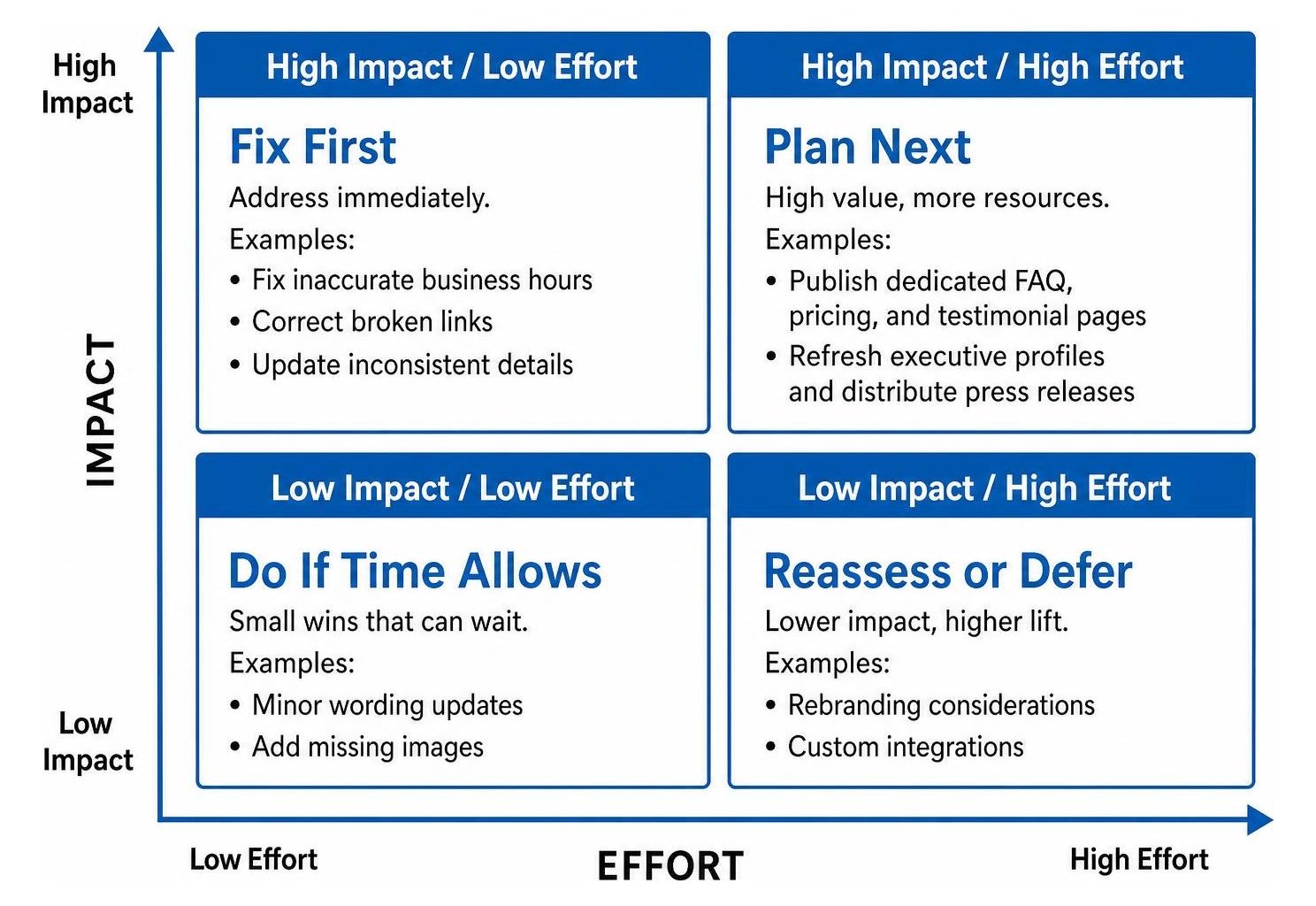
Prioritize your remediation workflow across these three clear tiers:
- Critical Data Corrections: Resolve conflicting phone numbers, wrong addresses, and broken landing pages across core maps and directory profiles.
- Owned Asset Expansion: Publish dedicated FAQ, pricing, and testimonial pages on your website to reclaim search positions held by third-party aggregators.
- External Entity Reinforcement: Update executive profiles, refresh imagery, and distribute clear press releases covering major company milestones.
How Do You Prioritize High-Impact Fixes Using Search Console Data?
To prioritize fixes using Google Search Console, navigate to the Performance report, filter queries by your brand name, and identify high-impression searches with low click-through rates. These patterns reveal where searchers see your snippet but choose another link due to unhelpful page titles or missing answers.
Aligning page titles and meta descriptions with user search intent improves click retention and supports your overall Google visibility score. At SmallBizSEO, we use our data-driven Velocity framework to resolve technical bottlenecks and build authoritative content. If you want a complete assessment of your digital footprint, explore SmallBizSEO's comprehensive SEO visibility audit to protect your brand and stop traffic leaks.
Taking Control of Your Business Search Presence
A successful search presence requires regular maintenance rather than a one-time check. Auditing your brand search results reveals exactly how search engines, directory platforms, and AI assistants represent your business to prospective buyers.
By identifying third-party traffic leaks, cleaning up citation discrepancies, and publishing clear answers to common buyer queries, you build a resilient digital foundation that captures high-intent traffic and consistently converts searchers into loyal clients.