Why Transparent SEO Reporting Is Non-Negotiable for Growth-Stage Founders

Why Transparent SEO Reporting Is Non-Negotiable for Growth-Stage Founders
What Makes Startup SEO Reporting Transparent and Revenue-Focused?
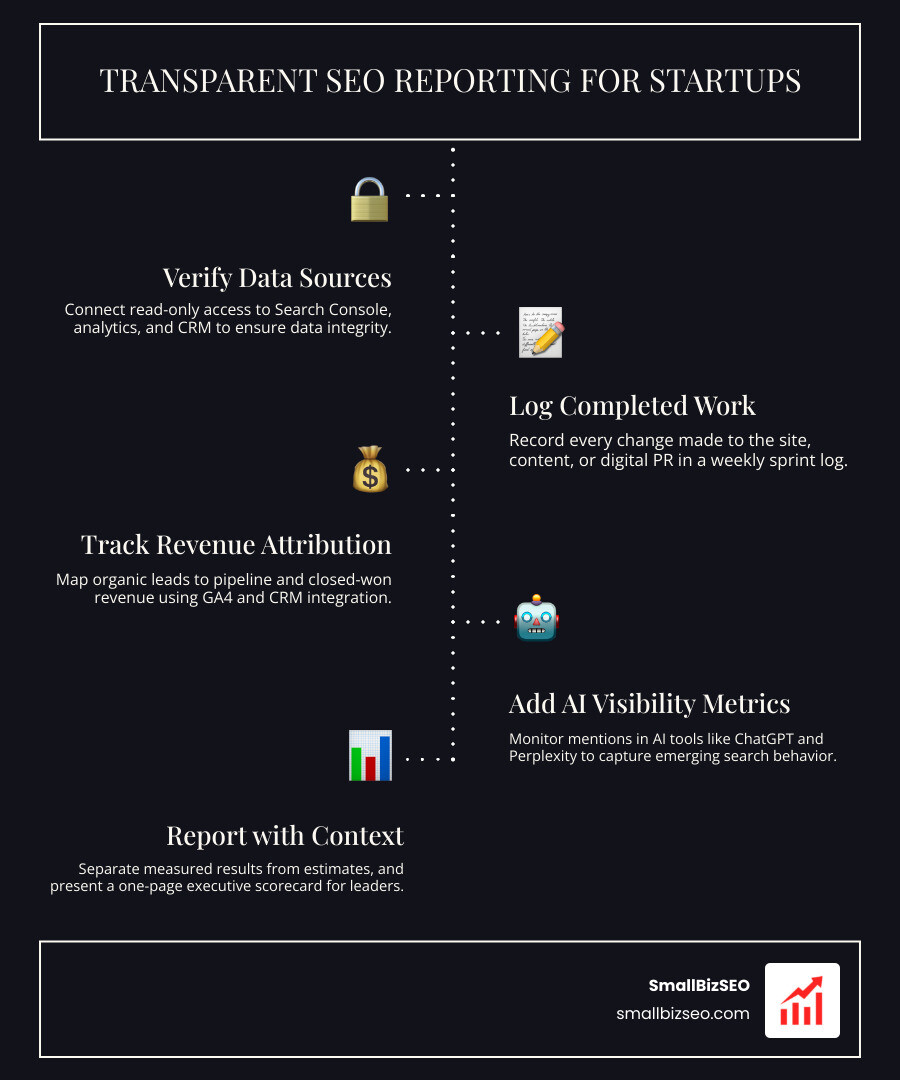
Choose a reporting setup that shows three things: what changed, whether search brought in qualified leads or sales, and how the numbers were measured. A useful report draws from Search Console, analytics, and your CRM; keeps a record of completed work; and separates measured results from estimates. Rankings and AI mentions add context, but they should not stand in for revenue. Founders who want startup SEO reporting transparent enough for real budget decisions need all three elements working together.
This guide compares the reporting capabilities and tools that help founders check the data, understand the work, and decide what to fund next.
I'm Clayton Johnson, founder of SmallBizSEO. My work connects SEO, content, and digital PR to qualified leads, and I focus on making startup SEO reporting transparent as search expands into AI-generated answers.
Related content about startup SEO reporting transparent:
- Why Getting Found Matters
- Local SEO Optimization and Small Business Growth
- Affordable SEO Services for Small Businesses and Firms
Transparent SEO reporting connects search performance to business outcomes, shows what work was done, and makes results easy for leaders to understand.
Most traditional agency decks drown leadership in fifty pages of vanity metrics—such as gross impressions, keyword fluctuations, and pageview graphs. When nobody reads these massive slide decks, nobody trusts the SEO budget. In fact, research indicates that only about 30% of SEO reports are read in full by C-suite executives.
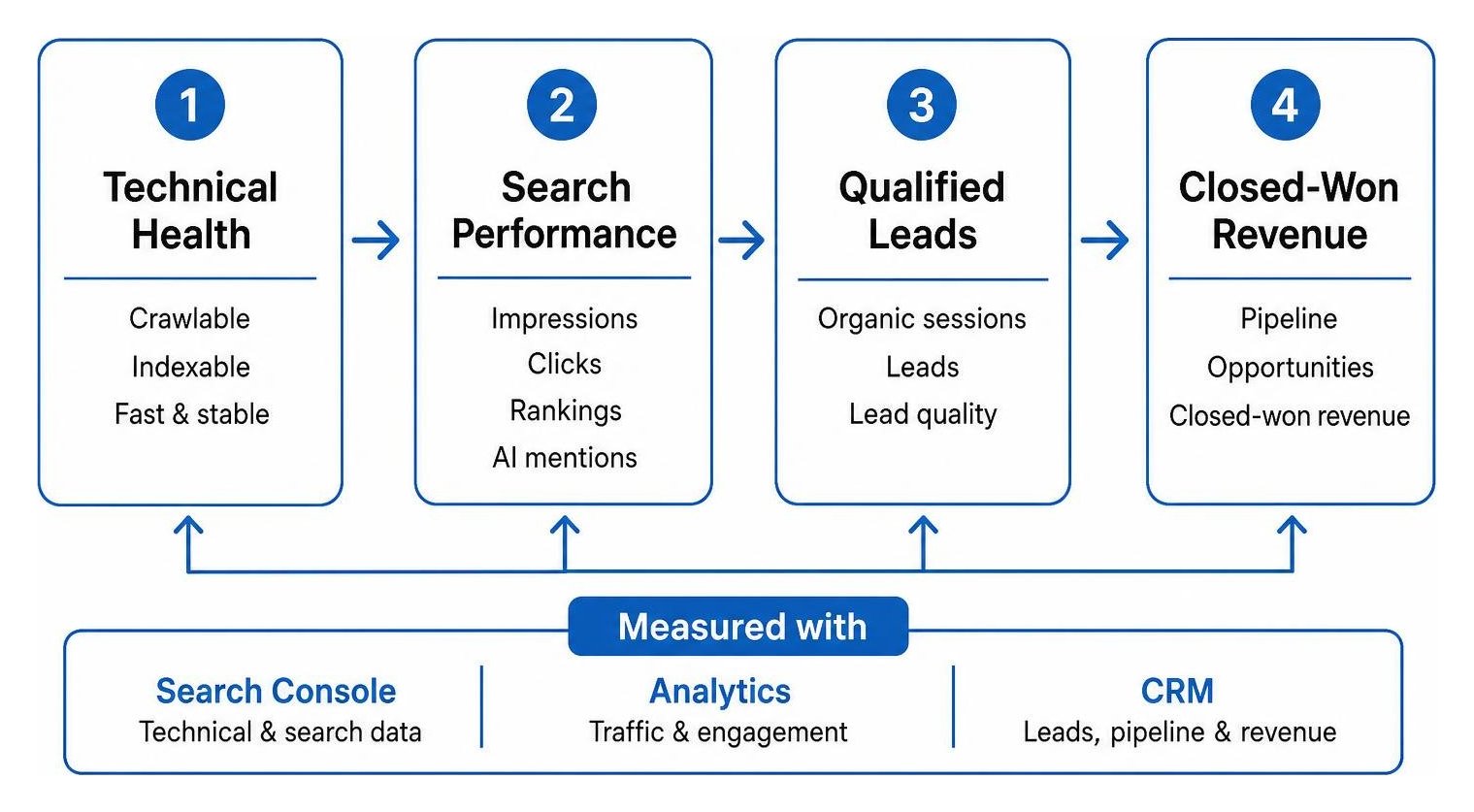
When we shift the conversation from vanity metrics to business value, everything changes. Revenue-linked SEO reports correlate with two to three times higher budget approval rates compared to traffic-only presentations. An executive scorecard should fit on a single page and clearly map how organic acquisition drives pipeline growth.
Why Do Transparent SEO Reporting Workflows Need Revenue Attribution?
Revenue attribution helps founders see whether organic search contributes to leads, pipeline, and sales.
Without closed-loop attribution, organic search is often treated as an unaccountable expense rather than a growth engine. A proper attribution setup connects Google Analytics 4 (GA4) conversion events with customer relationship management (CRM) platforms like HubSpot or Salesforce. This ensures every organic form submission, demo request, or sign-up maps directly to qualified pipeline and closed-won revenue.
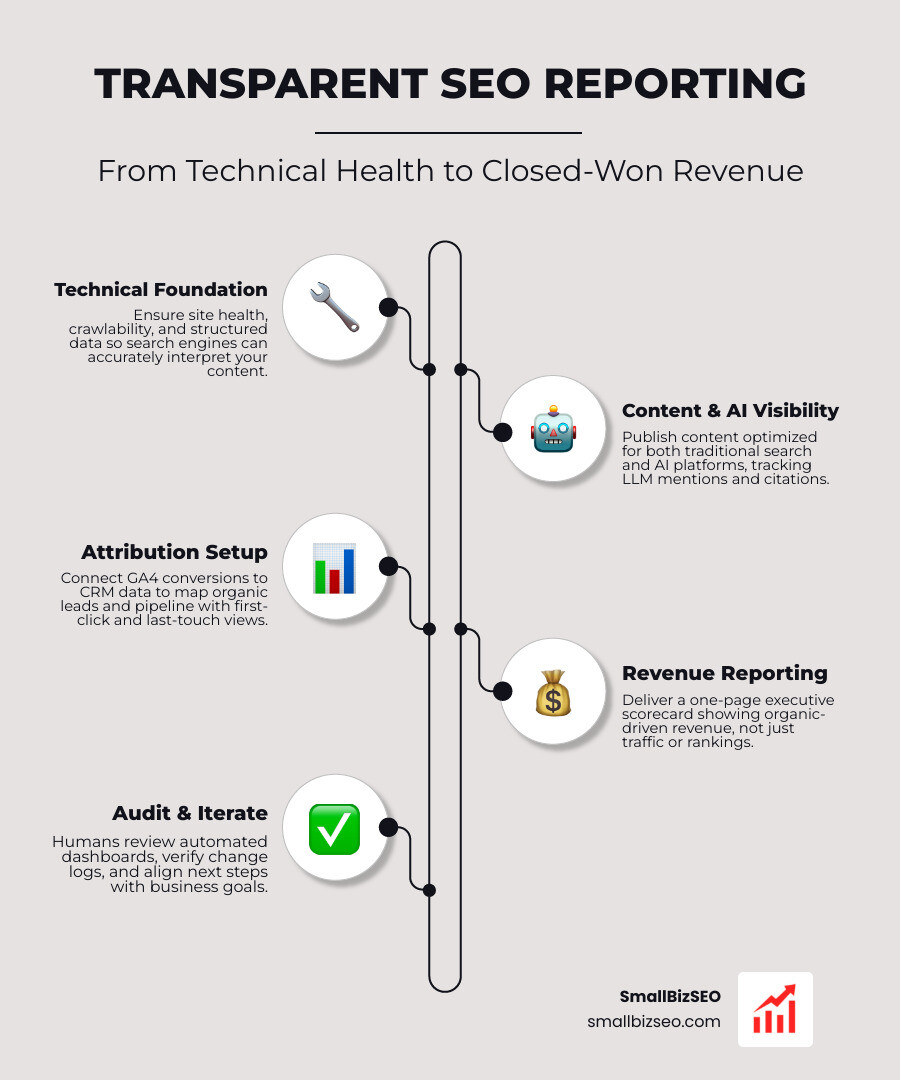
To get a complete picture, founders must examine both attribution perspectives:
- First-Click Acquisition View: Shows which educational blog posts or informational pages initially introduced prospective buyers to your brand.
- Last-Non-Direct Conversion View: Identifies which high-intent product or comparison landing pages sealed the conversion right before the lead entered your CRM.
By auditing GA4 conversion events and tracking the full customer journey, you can see the precise click-to-revenue correlation for every core landing page. We dive deep into this process in our guide on delivering measurable client results.
How Does Multi-Engine AI Visibility Fit Into Modern Executive Scorecards?
AI visibility measures can complement search metrics by tracking whether AI tools mention or cite a business.
Generative search engines and conversational models have created a new discovery layer known as Generative Engine Optimization (GEO) and Answer Engine Optimization (AEO). Modern buyers ask conversational, high-intent questions directly inside tools like ChatGPT, Perplexity, Gemini, and Claude. If your business is missing from these AI-generated answers, you lose high-intent buyers before they ever reach a standard search engine results page.
Tracking AI visibility involves measuring:
- Presence Rate: How frequently your brand is named or cited across a standardized bank of buyer-intent queries.
- Cross-Model Consistency: Whether your product recommendations remain stable across OpenAI, Anthropic, Google, and Perplexity models.
- Entity Clarity: Confirming that AI engines accurately describe your core features and pricing without brand confusion.
Structured data plays a massive role in AI engine discovery. Sites featuring robust schema markup score 16 points higher on technical metrics and 14 points higher on GEO citation benchmarks compared to sites without structured data. You can explore how these elements work together in our guide to measuring SEO visibility.
Evaluating Frameworks and Tools for Auditable Organic Growth
Auditable reporting combines reliable data, clear records of completed work, and metrics tied to business impact.

To build genuine accountability, founders need deterministic reporting that produces consistent, verifiable outcomes rather than speculative estimates. A truly transparent report does not hide behind proprietary black-box calculations; it links directly to live data sources and maintains a task-level changelog of every site modification.Bobby S highlights the value of structured accountability in his breakdown of 3 Essential SEO Reports for Transparent Business Growth.
Which Reporting Capabilities Help Track SEO Results and AI Mentions?
Compare reporting setups by how well they track revenue, AI visibility, and completed changes—not by brand name alone.
When evaluating SEO reporting software or agency retainers, prioritize tools that provide direct access to verifiable data foundations and task-level execution logs.
| Reporting Capability | Traditional Agency Deck | Generic AI Tool | Transparent Modern Framework |
|---|---|---|---|
| Primary Data Source | Exported keyword tables & PDFs | Synthetic estimates | Verified Search Console & GA4 Data |
| Revenue Attribution | None (traffic only) | None (assisted clicks only) | Closed-loop CRM integration |
| AI Engine Tracking | Absent | Single-engine sample | Multi-model coverage (ChatGPT, Claude, Perplexity) |
| Work Verification | Vague monthly summary | Automated content list | Task-level changelog with human sign-off |
| Pricing Predictability | High markup retains ($2,000+) | Low-cost software ($19–$49/mo) | Predictable, outcome-driven scope |
Founders who review real performance data make better strategic decisions.
Which Reporting Architecture Best Combines Technical Health and Content Impact?
A useful reporting setup connects site health and structured data with content performance.
A comprehensive organic scorecard evaluates five interconnected pillars:
- Technical Foundation: Fast load speeds (under 600ms), solid Core Web Vitals, clean crawl paths, and valid HTTP security headers.
- Content Authority: Thorough keyword clustering, front-loaded direct answer summaries, and clear E-E-A-T author signals.
- Structured Data: Comprehensive JSON-LD schema markup applied across pages to clarify brand entities for search crawlers.
- AI Visibility: Citations across major conversational platforms for high-value buyer searches.
- Trust Signals: High-quality editorial backlinks, brand mentions, and directory citations that build domain authority over time.
To understand how to organize these technical and strategic elements into a coherent dashboard, check out our guide to SEO reporting fundamentals.
What Role Does Human Review Play in Automated Dashboards?
Human review helps verify that automated reports and recorded changes are accurate before leaders rely on them.
While automated tools and AI assistants can quickly summarize performance data or suggest content improvements, unmonitored automation risks introducing hallucinations or unhelpful optimizations.
A human-in-the-loop workflow ensures that:
- Every automated insight is validated by an experienced strategist before implementation.
- AI-generated content matches brand guidelines and adheres to search engine quality standards.
- Technical code modifications—such as schema additions or redirect rules—are tested to prevent site errors.
- Each monthly deliverable contains an auditable sign-off, creating clear accountability for all published changes.
Building an Auditable Monthly Reporting Workflow That Secures Budget
A monthly workflow should give leaders a clear view of results, completed work, and next steps so they can make informed budget decisions.

Securing ongoing SEO investment requires aligning your reporting with the specific priorities of internal stakeholders:
- The Chief Financial Officer (CFO) wants to see organic customer acquisition cost (CAC), pipeline value, and direct revenue per landing page.
- The Chief Marketing Officer (CMO) focuses on competitive share of voice, organic conversion rates, and AI citation visibility.
- The Product & Engineering Lead monitors technical site health, Core Web Vitals stability, and crawl efficiency.
Deliver a concise, one-page executive scorecard on the second business day of each month, paired with a deeper, live dashboard for your marketing analysts. Every ninety days, conduct a quarterly business review to adjust the 12-month strategy based on proven revenue contributors.
How Should Founders Build an Auditable Monthly Reporting Workflow?
Founders can build a trustworthy workflow with read-only data connections, regular work logs, and forecasts tied to business goals.
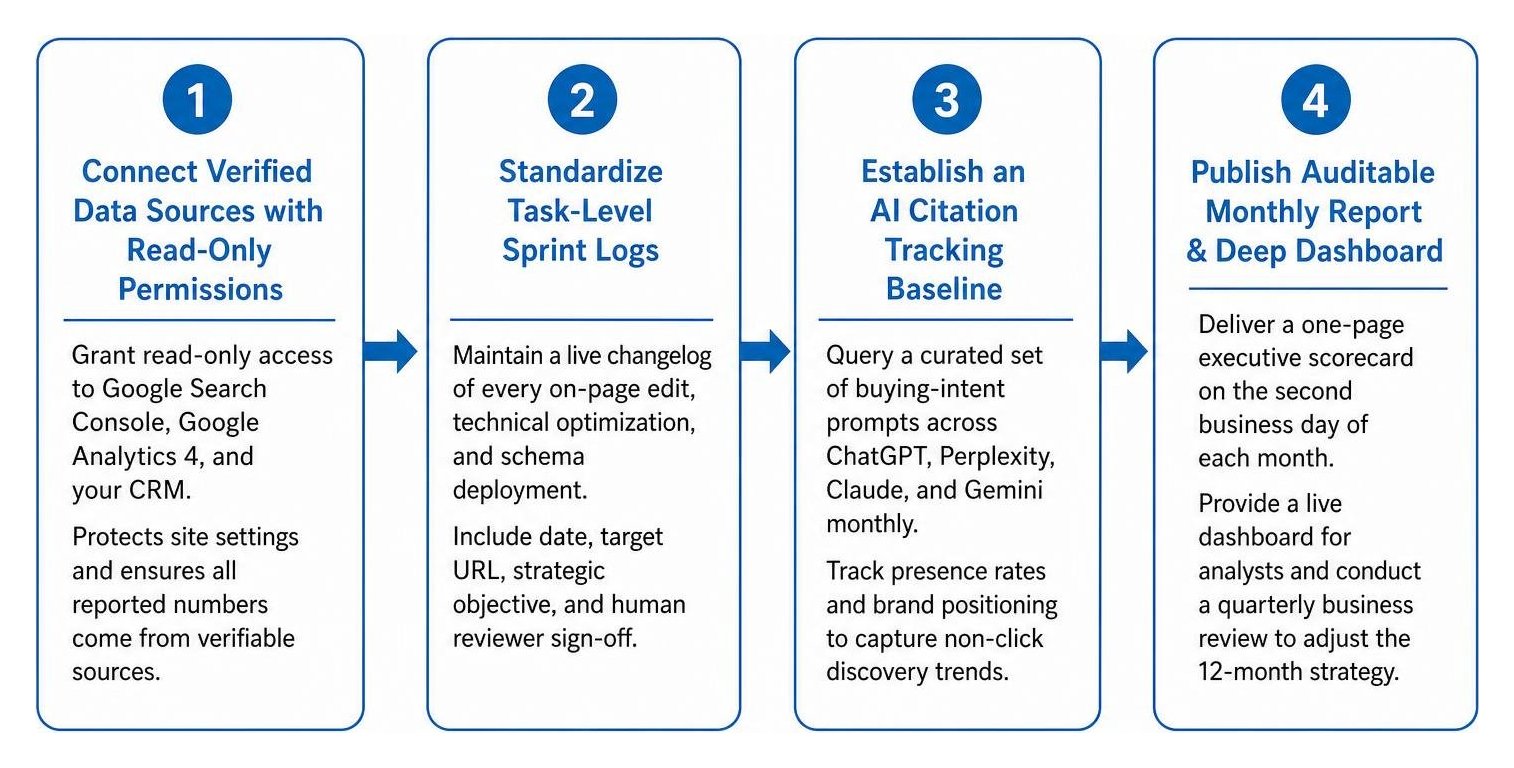
To implement an auditable, revenue-driven reporting system for your startup, follow this four-step implementation process:
- Connect Verified Data Sources with Read-Only Permissions: Grant read-only access to Google Search Console, Google Analytics 4, and your CRM. Read-only permissions protect your site settings while ensuring all reported traffic and conversion numbers come directly from unedited, verifiable sources.
- Standardize Task-Level Sprint Logs: Maintain a live changelog that documents every on-page edit, technical optimization, and schema deployment. Include the date of execution, target URL, strategic objective, and human reviewer sign-off.
- Establish an AI Citation Tracking Baseline: Query a curated set of buying-intent prompts across ChatGPT, Perplexity, Claude, and Gemini monthly. Track presence rates and brand positioning to capture non-click discovery trends.
- Model Business Impact and ROI Forecasts: Translate organic traffic growth into pipeline contribution by calculating your average conversion rate and customer lifetime value.
At SmallBizSEO, we build our client partnerships on our proprietary Velocity framework. We believe growth-stage founders deserve complete clarity on their organic investments—combining technical precision, high-impact content, and transparent tracking to drive real pipeline growth.
Ready to see how your current search presence measures up? Claim your free SEO visibility audit today to uncover technical gaps, map your revenue opportunities, and take control of your organic growth.
Moving Forward with Confident, Revenue-Driven Search
Building a transparent reporting workflow turns organic search from an uncertain expense into a predictable, measurable acquisition channel. When you replace fifty-page data dumps with single-page executive scorecards, connect landing pages to closed-won deals, and track multi-engine AI citations, you give your leadership team the clarity needed to scale confidently. Focus on verified numbers, insist on clear work logs, and let measurable business outcomes guide your search strategy.