A Practical Guide to SEO for Manufacturing Lead Generation
How Does SEO Help Manufacturers Generate Leads?
SEO for manufacturing helps buyers find your company when they search for specific parts, materials, or production capabilities. To turn that visibility into leads, create pages that show what you can make, include the specifications buyers need, and make it easy to request a quote.
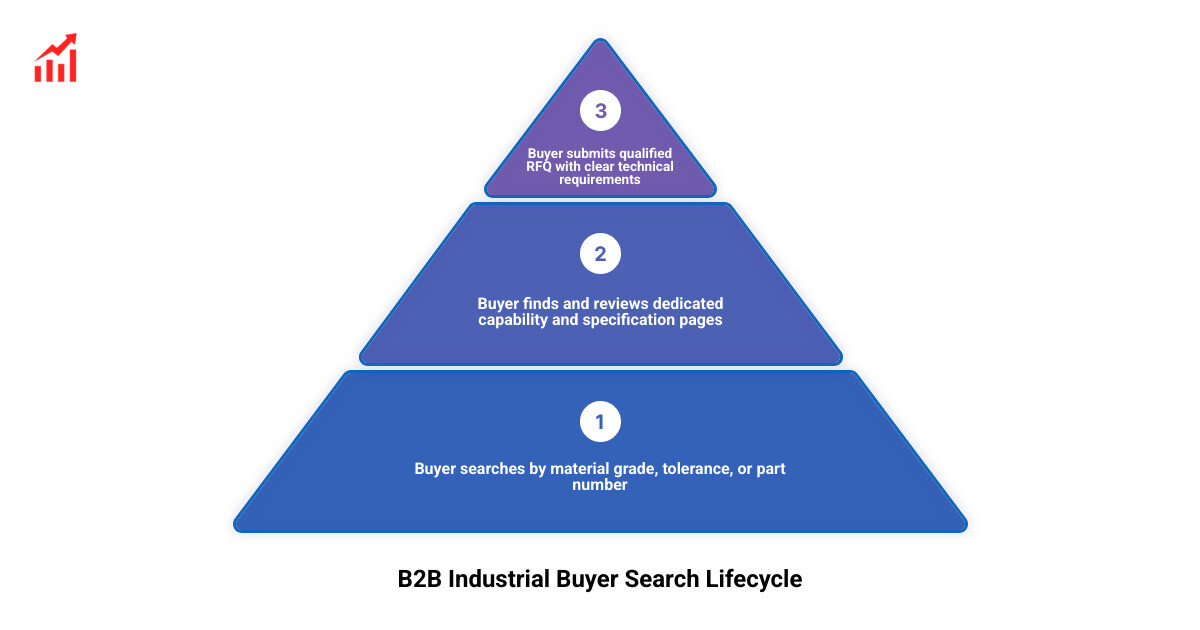
This differs from general SEO because a buyer may search by material grade, tolerance, certification, or part number before contacting a supplier. A page that answers those questions can help the right buyer decide whether to send an RFQ.
I'm Clayton Johnson, founder of SmallBizSEO, where I work on technical SEO, content strategy, and link building for small businesses. In this guide, I apply that experience to SEO for manufacturing, with a focus on clear answers and qualified leads.
SEO for manufacturing vocab to learn:
Industrial buyers no longer rely solely on physical trade shows or print catalogs. Research shows that 89% of B2B researchers turn to the internet during their sourcing phase, and over 60% of B2B marketers report that SEO generates more leads than any other marketing channel. Because organic prospects actively seek solutions to immediate engineering or supply chain hurdles, organic search leads achieve an average 14.6% closing rate compared to just 1.7% for traditional outbound outreach.
Digital marketing accounts for roughly 75% of marketing budgets across industrial sectors. At the same time, shifting global supply chains mean about 40% of companies manufacturing overseas are exploring domestic relocation. A sound search strategy ensures these shifting purchasing committees discover your shop first.
What Makes SEO for Manufacturing Effective?
Effective manufacturing SEO aligns technical search intent with precise capability information, maintains a healthy website architecture, and establishes frictionless pathways for procurement teams to request a quote.
Unlike consumer retail or generic business software, industrial search queries involve specialized terminology, regulatory accreditations, and multi-stakeholder buying committees. To succeed, an industrial website must satisfy both mechanical engineers evaluating technical feasibility and purchasing managers evaluating commercial risk.
| Strategy Component | Generic B2B SEO | SEO for Manufacturing |
|---|---|---|
| Primary Audience | General business managers, HR, marketing | Design engineers, procurement officers, MROs |
| Search Queries | High-volume software features or business tips | Low-volume, hyper-specific alloys, specs, and tolerances |
| Conversion Asset | Instant software demo or gated PDF | Request for Quote (RFQ) or custom CAD download |
| Sales Cycle | 14 to 30 days | 60 to 180+ days involving multi-member review |
| Conversion Rate | 1.0% to 1.5% on broad traffic | 3.0% to 5.0% on high-intent spec queries |
Traditional industrial platforms and manufacturing directories demonstrate that buyers prioritize technical credibility over marketing slogans. When technical errors or crawl bottlenecks arise, reviewing the ultimate guide to SEO audit errors helps prevent indexation drop-offs, while a precise on-page SEO definition ensures every technical asset aligns with search crawler standards.
How Does Keyword Research Differ in SEO for Manufacturing?
Manufacturing keyword research focuses on low-volume, high-intent technical phrases—including alloy grades, tolerance numbers, compliance standards, and part numbers—rather than broad consumer keywords.
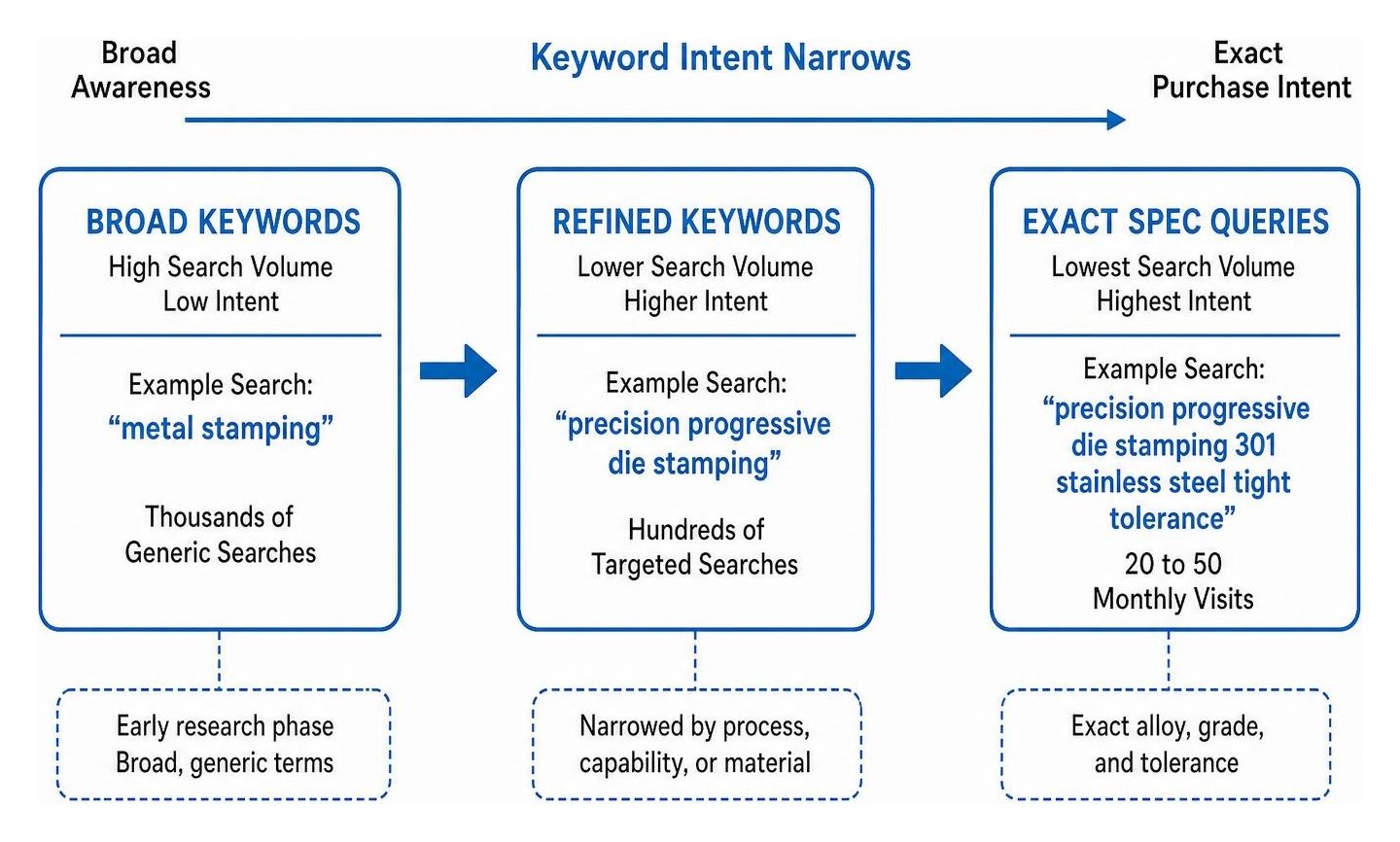
A broad phrase like "metal stamping" may see thousands of generic searches, but an engineer ready to issue an RFQ searches for "precision progressive die stamping 301 stainless steel tight tolerance." Although these hyper-specific searches might generate only 20 to 50 monthly visits, their commercial intent is exceptionally high.
To build an actionable industrial keyword plan:
- Audit historical RFQs: Review past customer quotes and technical emails to extract the exact phrasing procurement officers use.
- Target procurement modifiers: Combine core manufacturing processes with commercial modifiers like "contract manufacturer," "OEM supplier," "custom fabricator," or "ISO certified."
- Map specifications: Use systematic keyword mapping to align every material type, machine capacity, and part dimension to dedicated URLs.
- Evaluate commercial value: Learn how to analyze keywords by looking at high commercial pay-per-click values rather than raw search volume alone.
Why Do Dedicated Capability and Material Pages Outperform Generic Catalogs?
Dedicated capability and material pages outperform generic catalog pages because industrial buyers search for exact manufacturing processes, specific alloys, and distinct regulatory standards that a single generic "Services" page cannot fully address.
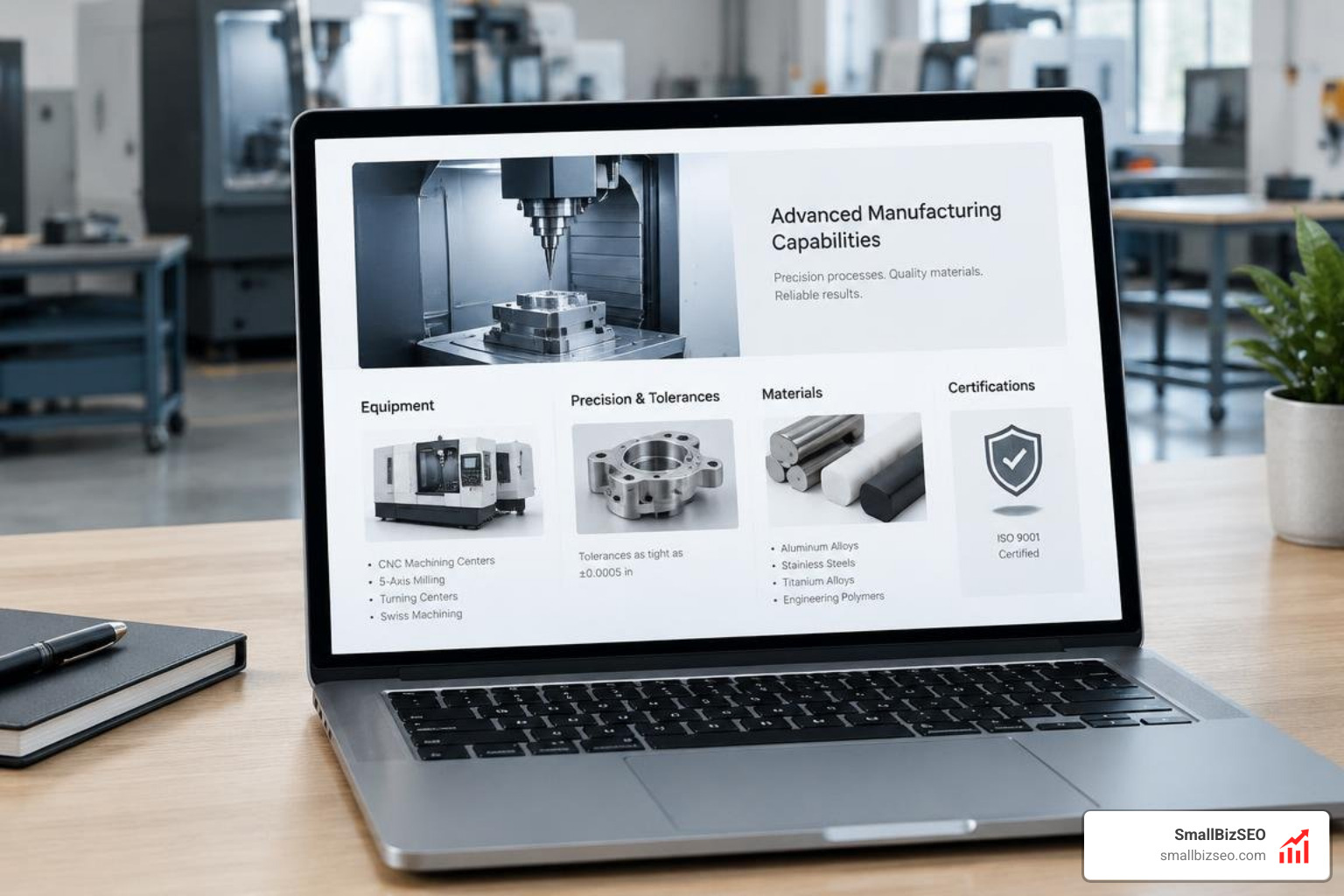
Collapsing diverse offerings into a single page dilutes search relevance. Instead, we use an atomization protocol that builds dedicated URLs for each process and material combination, such as separating titanium CNC machining from aluminum extrusion fabrication.
Every high-converting capability page should display:
- Material specifications: Precise alloy grades, polymer types, and raw material thicknesses.
- Equipment capacity and tolerances: Exact dimensional tolerances (such as ±0.0005 inches) and machine bed dimensions.
- Certifications in plain text: Standards such as ISO 9001, AS9100, or ITAR listed as crawlable text rather than embedded image badges.
- Crawlable specifications: Technical details placed directly in readable HTML rather than locked inside un-indexed PDF datasheets.
Reviewing technical industrial SEO guidance highlights the importance of detailed specification tables. Structuring these pages with proper header tag structure best practices ensures search engines easily read your equipment lists, processing capacities, and compliance standards.
What Technical Factors and Schema Markups Protect Industrial Site Health?
A crawlable site architecture, fast mobile page loading, clean internal links, and structured data schema protect industrial website health and ensure search engines index deep technical catalogs.
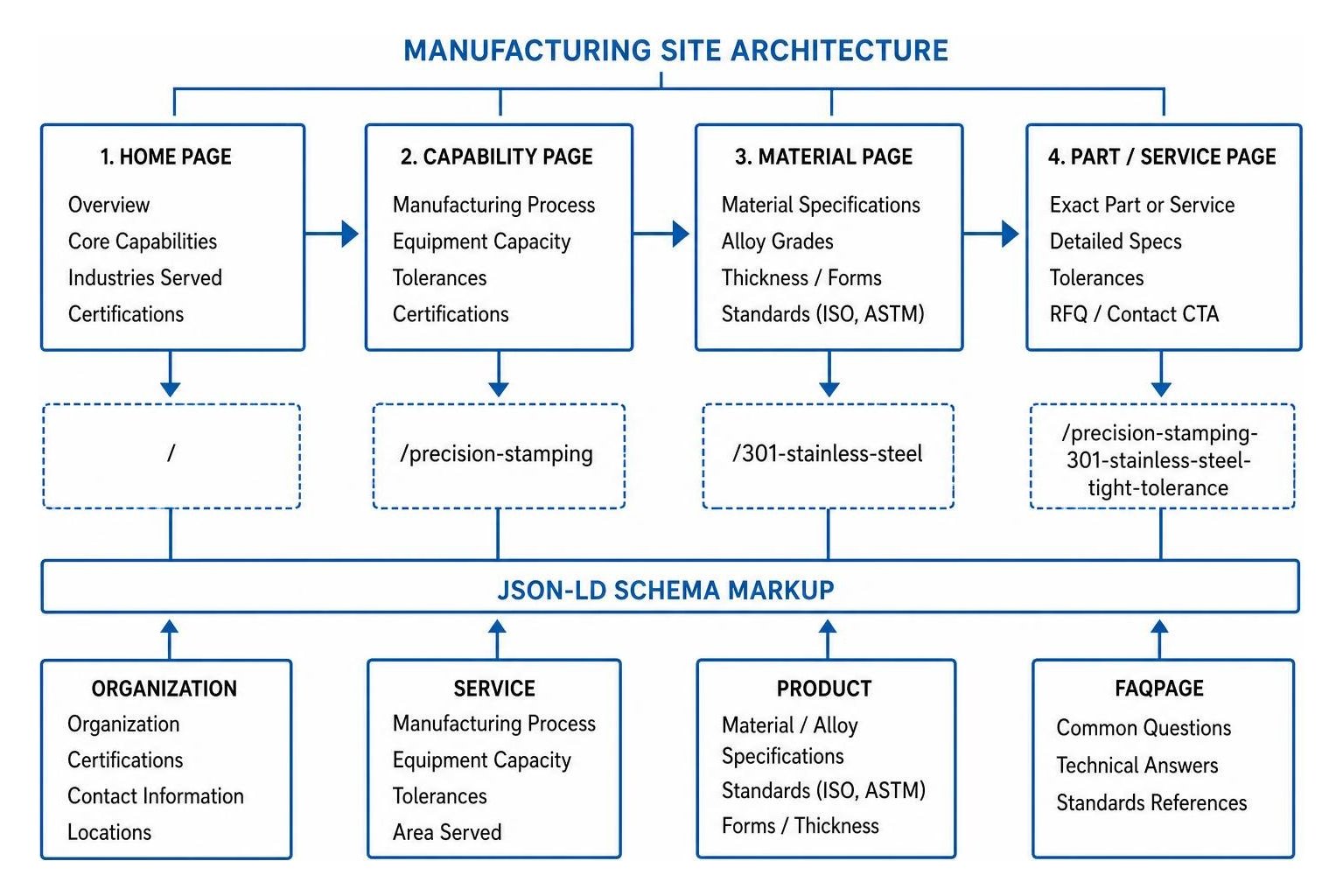
Large industrial catalogs with thousands of component parts can exhaust crawl budgets if navigation is poorly structured. Adhering to technical standards ensures search engines discover every spec sheet:
- Structured Data Schema: Add JSON-LD schema—such as
Product,Organization,Service, andFAQPage—with direct references to standards organizations like ISO or ASTM. - Page Speed and Core Metrics: Meet Google standards by optimizing Core Web Vitals to ensure Largest Contentful Paint (LCP) loads under 2.5 seconds.
- Mobile Usability: Maintain full compliance with mobile-first indexing so engineering spec tables render properly on phones and tablets.
- Flat Linking Structure: Connect technical clusters using an intentional internal linking strategy so deep catalog items remain accessible within three clicks of the homepage.
How Can Manufacturers Measure SEO’s Long-Term Return?
Manufacturers measure SEO return by tracking qualified RFQs, CAD downloads, and spec sheet interactions inside their CRM, attributing closed contract revenue across multi-month sales cycles.

Because high-ticket manufacturing contracts involve multi-stakeholder evaluations lasting from 60 to 180 days, organic performance cannot be judged by vanity traffic alone. Implementing a dedicated B2B SEO playbook allows leadership to connect organic keyword rankings directly to incoming pipeline revenue and multi-year customer lifetime value.
How Can Manufacturers Build High-Authority Industry Backlinks and Local Citations?
Manufacturers build authority by securing citations on prominent industrial directories, earning editorial mentions in trade publications, and maintaining consistent local facility listings.
Search engines evaluate website trust through authoritative industry connections:
- Niche Directory Citations: Claim and optimize profiles on trusted industrial hubs like Thomasnet and specialized trade associations.
- Supplier Co-Marketing: Partner with raw material vendors, equipment suppliers, and distributor networks to earn authoritative contextual links.
- Digital PR: Publish proprietary engineering research, machining guides, and case studies to secure coverage in industrial publications.
- Local Facility Optimization: Optimize Google Business Profiles for regional facilities with accurate Name, Address, and Phone (NAP) details, using local SEO tactics to capture nearby machine shop searches.
What KPIs and Attribution Models Prove the Value of SEO for Manufacturing?
Tracking both macro-conversions like formal RFQs and micro-conversions like CAD downloads proves marketing value when paired with multi-touch attribution models.
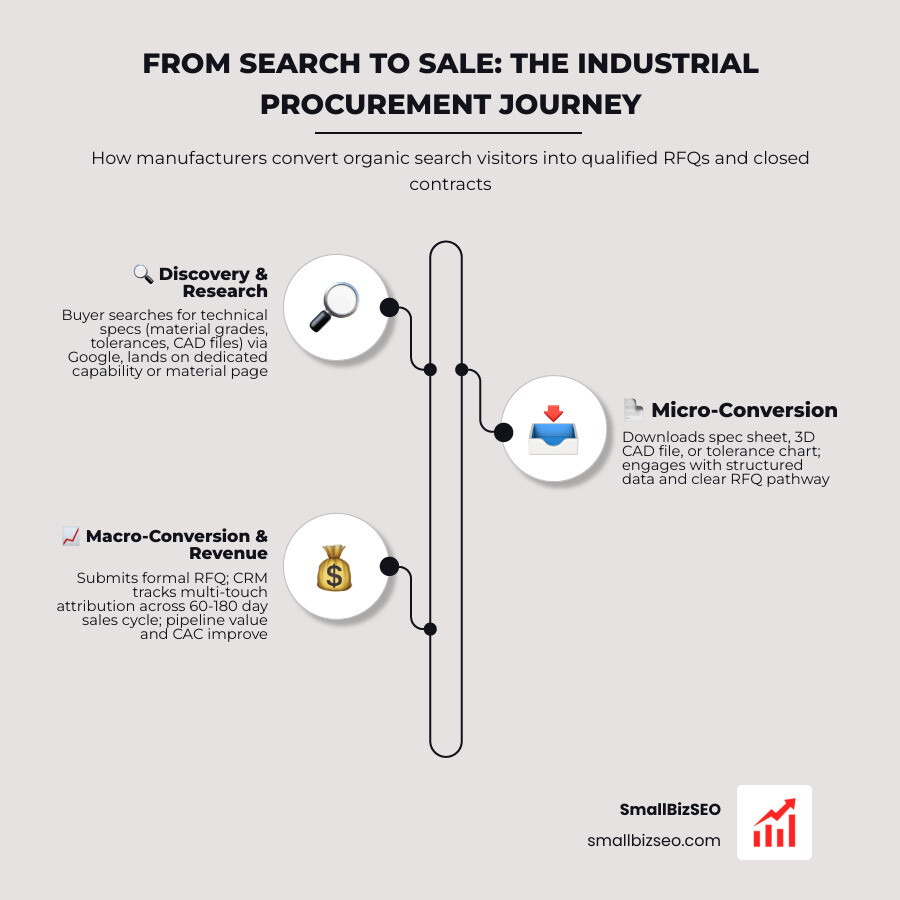
A comprehensive measurement framework tracks:
- Qualified RFQ Volume: The total number of valid quote requests submitted by verified corporate procurement teams.
- Engineering Micro-Conversions: Downloads of 3D CAD files, specification sheets, and material tolerance charts.
- Pipeline Value: Total dollar value of opportunities generated via organic search landing pages.
- Customer Acquisition Cost (CAC): Reduction in long-term lead acquisition costs compared to paid trade advertising.
Applying a structured 7-step B2B SEO strategy helps marketing teams attribute multi-touch interactions across the extended industrial buyer journey.
How Can Manufacturers Choose an SEO Partner for Scalable Growth?
Choose an SEO partner that emphasizes technical accuracy, protects your brand reputation, and demonstrates a clear understanding of complex B2B sales cycles.
Industrial marketing leaves no margin for generic, unverified AI content that misstates tolerances or regulatory standards. Low-quality blackhat link packages risk manual search penalties that can damage an industrial brand.
At SmallBizSEO, we use our data-driven "Velocity" framework to help small and mid-sized businesses build sustainable search visibility and E-E-A-T-compliant authority. Requesting a comprehensive SEO visibility audit provides an objective baseline to uncover technical bottlenecks, identify high-intent keyword gaps, and build a lasting organic pipeline.
Build a Compounding Inbound Pipeline for Your Facility
SEO for manufacturing is not about chasing vanity traffic; it is about placing your specialized capabilities directly in front of engineers and procurement managers ready to place an order. By structuring detailed capability pages, solving technical website errors, targeting high-intent specifications, and tracking CRM pipeline returns, your facility can reduce reliance on trade shows and build a 24/7 engine for qualified RFQs.