How AI Hyper-Personalization Multiplies Email Click-Through Rates

How AI Hyper-Personalization Multiplies Email Click-Through Rates
How Much Can AI Personalization Improve Email Click-Through Rates?
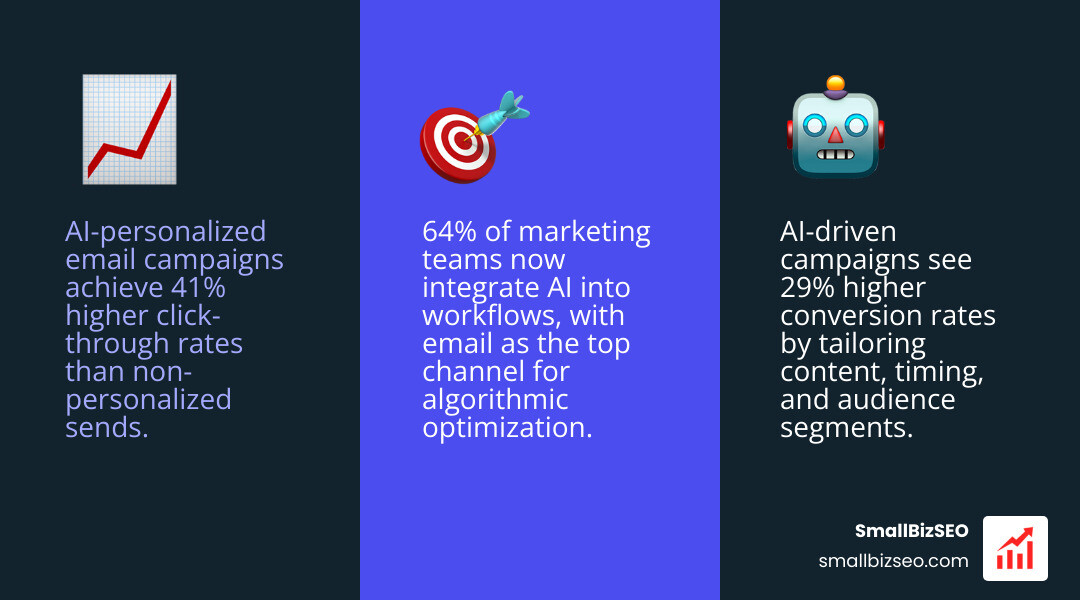
AI-personalized email campaigns have been reported to earn 41% higher click-through rates and 29% higher conversion rates than non-personalized sends. Those figures are useful benchmarks, not a promise for every business. The clearest way to test AI is to compare a targeted campaign with your usual emails, then track clicks, conversions, and revenue per recipient.
Keep automation separate from AI when reading the numbers. A behavior-triggered email can outperform a broad newsletter without using AI at all. AI adds value when it helps choose who gets a message, what they see, and when it arrives.
I'm Clayton Johnson, a digital marketing and SEO strategist focused on data-driven content and AI-driven discovery. In this guide to AI Email Marketing Statistics: Personalization, Engagement, and Campaign Performance, I'll help you judge which benchmarks matter for your campaigns.
What Do AI Email Marketing Statistics Show About Personalization, Engagement, and Campaign Performance?
AI transforms email marketing by replacing static mass broadcasts with real-time predictive tailoring, delivering documented lifts of up to 41% in click-through rates and substantial revenue gains per recipient. Across modern marketing operations, 64% of marketing teams now integrate artificial intelligence into their campaign workflows to accelerate conversions and eliminate production bottlenecks.
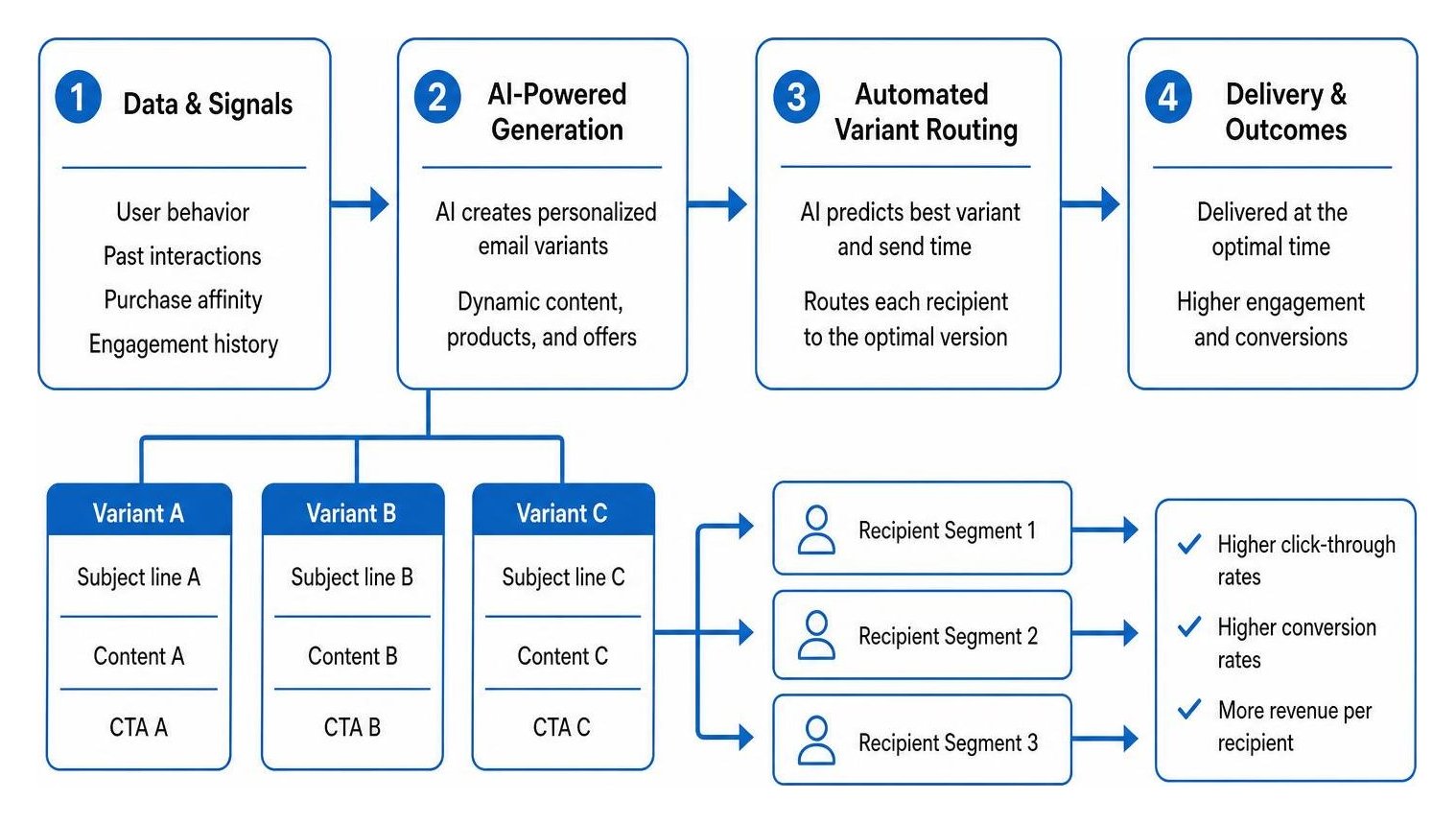
Understanding broader AI adoption metrics across business functions helps clarify why email has become the top channel for algorithmic implementation. Rather than treating an entire email list as a single monolith, machine learning analyzes user browse histories, previous interactions, and purchase affinity to deliver dynamic messaging directly tailored to individual recipients.
How Much Can AI Personalization Lift Email CTR?
AI personalization lifts average click-through rates from a standard 3% baseline up to 13.44% by dynamically restructuring content blocks to match subscriber intent. When messages reflect a user's specific context, subscribers engage at dramatically higher rates, driving a 6x increase in transaction velocity.
Independent academic research on email automation engagement demonstrates that algorithmic timing and dynamic product recommendations explain over 33% of the variance in consumer interaction scores. When algorithms determine content layout, calls to action convert up to 202% better than static, default buttons.
What Workflow Gains and Time Savings Does AI Automation Deliver?
Marketing teams utilizing generative AI save up to 30% of their operational time by automating campaign drafting, creative design variations, and scheduling tasks. Automated data analysis also cuts email response times by up to 90%, allowing smaller marketing departments to run complex multivariate experiments without adding headcount.
These operational speedups mirror broader productivity and ROI benchmarks across digital disciplines. Teams that previously required two weeks to construct complex lifecycle sequences now deploy polished, multi-variant campaigns in fewer than three days.
How Do Traditional Email Broadcasts Compare With AI-Powered Campaigns?
AI-powered and automated campaigns generate 320% more revenue than traditional static broadcasts despite accounting for only about 2% of total outbound email volume. Mass batch-and-blast newsletters induce list fatigue and unsubscribes, whereas triggered, algorithmic sends reach users when their purchase intent is highest.
| Performance Metric | Traditional Static Broadcasts | AI-Optimized & Triggered Sends |
|---|---|---|
| Average Open Rate | 20% – 25% | 42.1% – 52.0% |
| Average Click-Through Rate | 2.0% – 3.0% | 5.4% – 13.44% |
| Share of Send Volume | ~98% of total volume | ~2% of total volume |
| Share of Attributed Revenue | ~59% of email revenue | ~41% of email revenue |
| Revenue Multiple Per Send | Baseline (1x) | 16x higher revenue per send |
Which Metrics Show the Difference Between Traditional and AI-Powered Email Campaigns?
Automated email campaigns achieve average open rates of 42.1% and click rates of 5.4%, leaving generic broadcast numbers far behind. General benchmarks on global email marketing performance show email delivering an aggregate ROI of $36 to $42 for every $1 spent, but advanced segmentation lifts revenue by up to 760% over non-segmented lists.
Top-performing automated workflows generate $16.96 in revenue per recipient, compared to just $1.94 for standard newsletters. This compounding performance gap separates organizations relying on basic batch sends from those running predictive data models.
Why Do Behavioral Triggers and Send-Time Optimization Outperform Static Blasts?
Send-time optimization models analyze historical inbox activity to deliver emails at the precise moment a recipient is reading messages, boosting B2B open rates by up to 22%. By coupling delivery timing with real-time buyer intent signals, triggered campaigns see conversion rate improvements of up to 2,361% over untargeted emails.
How Does AI Email Performance Differ Between B2B and B2C?
B2B and B2C email programs diverge because enterprise buyers require longer, multi-stakeholder nurturing cycles, while consumer brands rely on rapid emotional engagement and impulse conversion. In B2B environments, AI algorithms track engagement scores across target accounts to accelerate pipeline velocity, whereas B2C systems optimize dynamic product grids to capture immediate transactions.
How Do B2B Teams Use Role-Based Micro-Segmentation and Cold Outreach?
B2B revenue teams utilize predictive firmographic filtering and sender name personalization to achieve 41.9% average open rates and a 27% open lift over generic corporate addresses. In cold outreach, keeping campaign sizes below 50 recipients achieves a 5.8% reply rate—a 2.76x performance improvement compared to broad blasts sent to over 1,000 prospects.
- Timeline-Based Hooks: Deliver a 10.01% reply rate in cold outreach versus 4.39% for standard problem-based messaging.
- Intent-Triggered Follow-Ups: Drive 42% of total campaign replies after initial touchpoints.
- Omnichannel Signals: Pairing email touches with secondary channel signals increases qualified reply volume by over 287%.
How Can B2C E-Commerce Brands Improve Cart Recovery With Dynamic Content?
E-commerce brands leverage predictive cart recovery emails to achieve 50.5% open rates, a 23.33% click-through rate, and an average 10.7% recovery conversion rate. Deploying a structured three-email recovery sequence generates 69% more revenue than sending a single abandoned-cart reminder, averaging $3.65 in revenue per recipient.
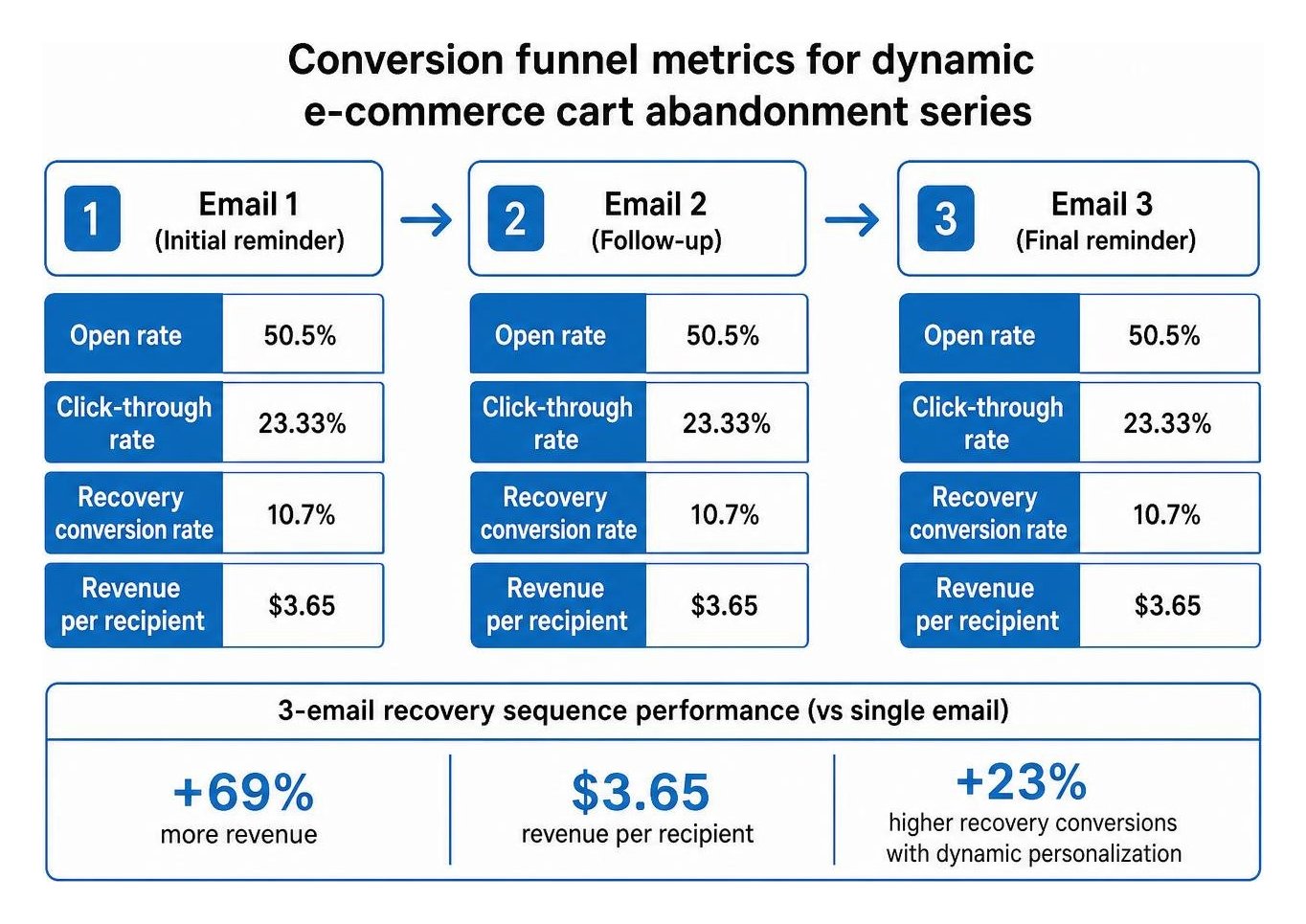
Personalizing abandoned cart sequences with dynamic product imagery and complementary algorithm-driven recommendations increases recovery conversions by an additional 23%.
How Can Businesses Overcome Email Deliverability, Authentication, and Governance Hurdles?
Achieving high click-through rates requires strict technical deliverability hygiene, disciplined customer data integration, and human-guided editorial governance. Even the most persuasive algorithmic copy fails if emails land in spam filters or violate subscriber trust.
How Can Businesses Address List Decay, Spam Traps, and DMARC Gaps?
Global marketing inbox placement hovers at approximately 83.1%, meaning one out of every six marketing emails never reaches the subscriber inbox. Email databases decay by roughly 23% each year as contacts change jobs or abandon accounts, making active hygiene vital to avoid the 0.1% spam complaint ceiling enforced by major mailbox providers.
Adopting modern AI-driven optimization strategies across digital pipelines ensures technical compliance matches user expectations. Publishing strict DMARC, SPF, and DKIM DNS records provides up to 2.7x higher inbox placement compared to unauthenticated sending domains.
How Can Teams Maintain Brand Voice and Quality in Generative Content?
Mitigating AI hallucinations and robotic tone requires establishing brand prompt frameworks and human-in-the-loop review processes before sending campaigns. Marketers find success using generative models for brainstorming and drafting while applying human oversight for final voice alignment.
Practices for scaling content without sacrificing quality apply directly to email messaging. Editorial checks verify that personalization tags pull clean data attributes and protect brand credibility across all customer segments.
Frequently Asked Questions About AI Email Marketing Performance
What Is the Average ROI of AI-Powered Email Marketing Campaigns?
Email marketing delivers an average return of $36 to $42 for every $1 spent, leading all major digital marketing channels. Over a standard multi-year period, marketing automation systems yield an average 544% financial return, with top-performing automated flows returning up to $16.96 per recipient.
How Much Can AI-Driven Subject Line Generation Lift Open Rates?
Natural language subject line models lift open rates by an average of 7.2 to 26% when compared against non-optimized, human-written baselines. AI tools achieve this lift by analyzing emotional resonance, character counts, and subscriber historical click patterns.
What Is the Biggest Barrier to Implementing AI Email Automation?
Data silos between CRM platforms and email tools represent the primary barrier, with only 16% of revenue operations professionals reporting complete trust in their underlying data. Integrating data pipelines across platforms is essential before machine learning algorithms can accurately predict user intent.
Putting Email Marketing Intelligence Into Action
Algorithmic personalization and behavioral automation transform standard email marketing into a high-yield revenue engine by delivering relevant messaging at optimal moments. Achieving these gains requires pairing automated workflows with clean list hygiene, strict domain authentication, and human-reviewed creative copy.
For small businesses seeking sustainable growth, combining data-driven messaging with robust technical foundations accelerates engagement across all digital touchpoints. Review our complete guide to generative AI statistics every business owner should know to explore how predictive technology continues to reshape modern marketing.