Find and Fix Shallow Pages Fast with the Best Thin Content Checker Tools

Which thin content checker should you use?
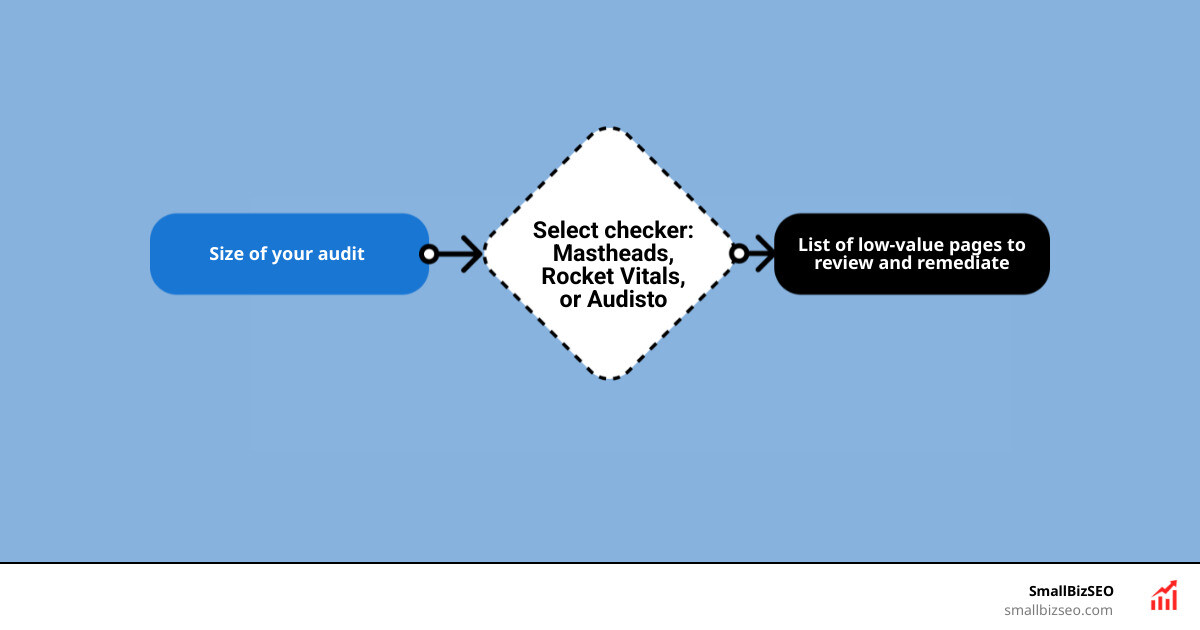
Start with the size of your audit. Mastheads checks one page's visible word count. Rocket Vitals scans for short pages, near-duplicates, and heading issues. Audisto Crawler suits larger audits that need custom content checks. A thin content checker gives you a list to review, not a verdict: a short page may answer its question well, while a long page may add little value.
The roundup below will help you choose a tool and decide what to do with the pages it flags. I'm Clayton Johnson, founder of SmallBizSEO. My work in technical SEO and content strategy informs how I assess thin content checker results against what customers need from each page.
Top Thin Content Checker Tools to Audit Your Site
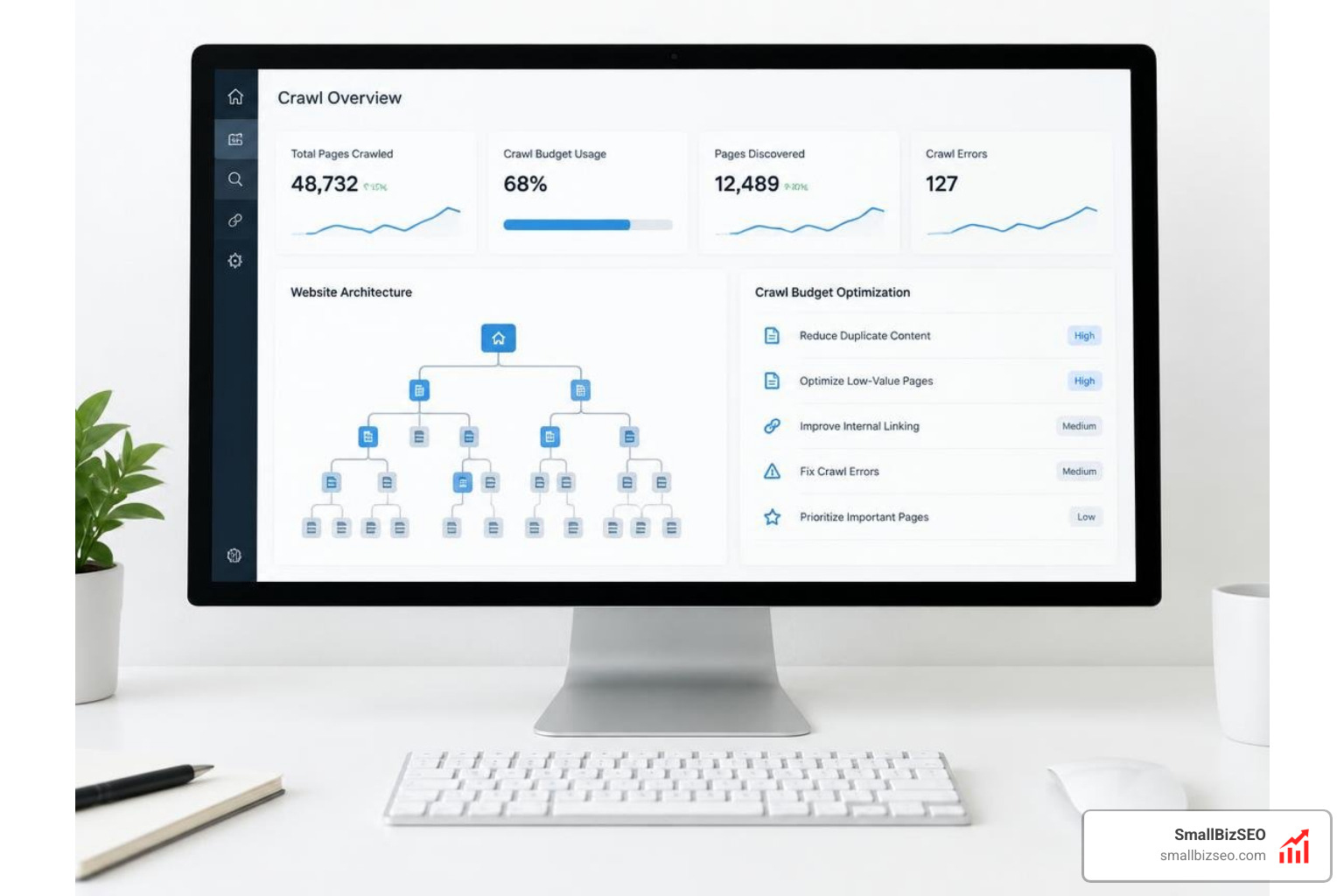
A dedicated thin content audit tool automates the discovery of low-substance pages across your entire domain before search engines demote your organic rankings. Running a site scan isolates weak URLs, extracts raw visible text, and calculates duplicate ratios across templates.
| Tool Name | Crawl Capacity | Boilerplate Stripping Method | Duplicate Detection Capability | Ideal Use Case |
|---|---|---|---|---|
| Datayze Thin Content Checker | 1,000 pages per user per day | Custom CSS selectors and container IDs | Basic character and word variance | Granular DOM text extraction on custom CMS builds |
| Rocket Vitals Content Audit | Full website scan | Automated HTML structural parsing | Exact (95%+) and Near-Duplicate (85%+) | Sitewide audits tracking readability and headings |
| AdSense Low Value Content Checker | Domain or single URL | Visual viewport and iframe isolation | Template repetition and missing text risk | Publisher ad network compliance audits |
| Audisto Crawler | Enterprise scale | Custom XPath structural mapping | Short listing and missing structural element alerts | Large e-commerce catalogs and marketplace audits |
| EcomSEO Analyzer | Bulk check up to 20 URLs | Server-side script and chrome stripping | Severity categorization (Good / Thin / Empty) | Quick ad-hoc checks without account creation |
| Mastheads SEO Tools | 100 pages per site scan | Raw body text isolation | Single-URL 200-word cutoff evaluation | Lightweight, instant single-page verification |
What Features Make the Best Thin Content Checker Software?
The best auditing platforms combine automated crawling with deep technical analysis to evaluate text quality beyond basic word totals. While basic scanners only tally word strings, top-tier software executes a detailed SEO analysis to examine structural markup, readability scores, and unique vocabulary distribution.
When evaluating audit software, we look for these core technical features:
- Automated Text-to-HTML Ratio Analysis: Flags pages where visible body text makes up less than 25% of the total markup, exposing excessive code bloat.
- Readability and Sentence Structure Checks: Evaluates reading ease using Flesch-Kincaid grading to ensure copy matches audience intent.
- Heading Hierarchy Validation: Verifies single H1 tags, monitors sequential subheadings, and flags empty heading tags.
- Lexical Token Exclusivity: Analyzes whether at least 40% of vocabulary tokens are unique to that URL rather than repeated across programmatic templates.
- Flexible Crawl Rates: Tools like Datayze throttle requests to one page every 1.5 seconds with a daily cap of 1,000 pages to protect host servers.
- Programmatic API Scanning: Deep diagnostic platforms such as the Rocket Vitals Content Audit Tool scan large page sets rapidly to detect low-substance directories.
Which Thin Content Checker Tool Fits Your Website Best?
Choose your scanner based on your site's monetization model, content management platform, and total URL count.
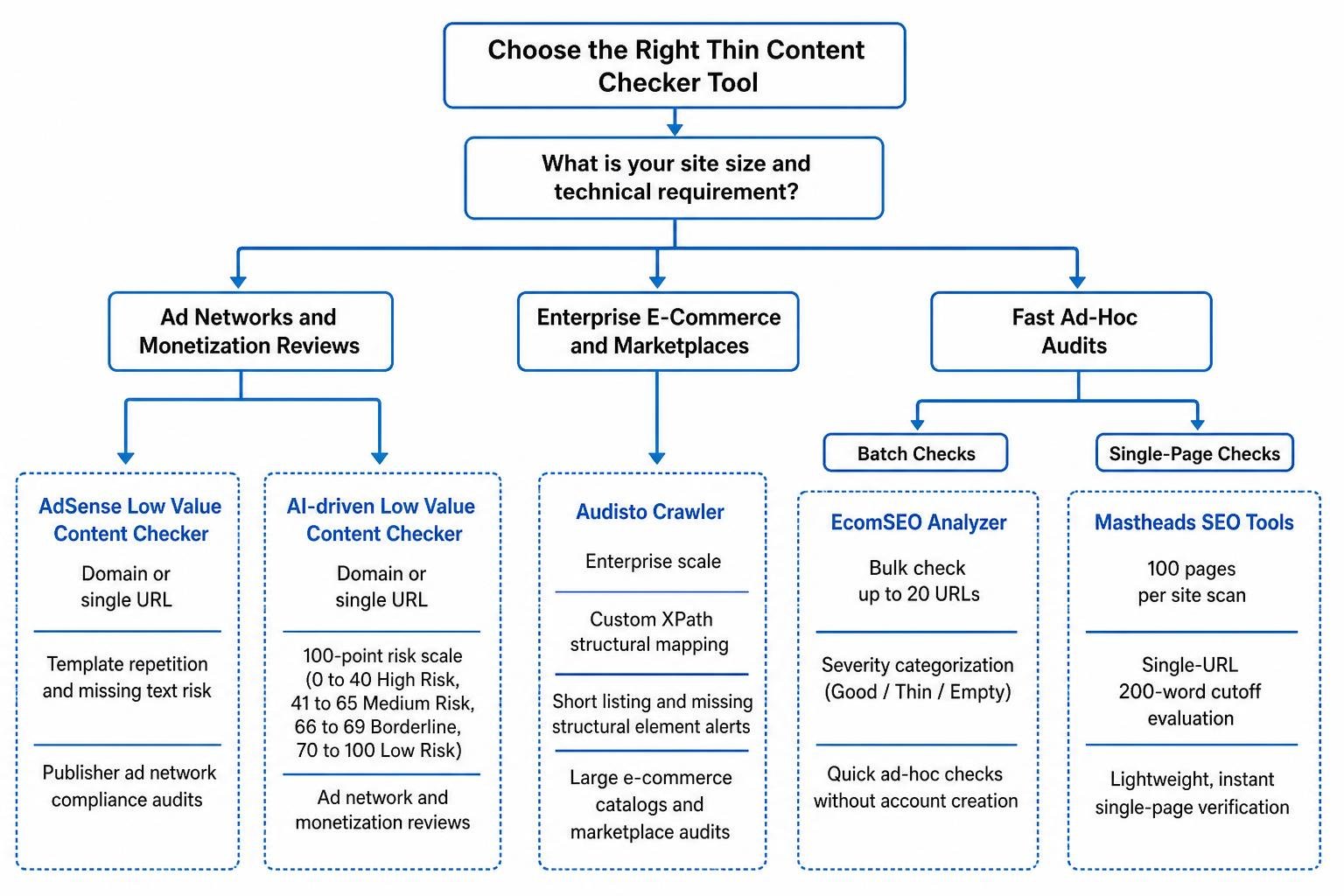
- For Ad Network and Monetization Reviews: The AdSense Low Value Content Checker and the AI-driven Low Value Content Checker evaluate sites on a 100-point risk scale (0 to 40 High Risk, 41 to 65 Medium Risk, 66 to 69 Borderline, 70 to 100 Low Risk). They flag iframe-only embeds, missing author bios, and absent trust pages (Terms, Privacy, Contact).
- For Enterprise E-Commerce and Marketplaces: The Audisto Crawler Thin Content Tool lets you write custom XPath queries to detect category pages with low inventory, missing product tables, or truncated descriptions.
- For Fast Ad-Hoc Audits: The EcomSEO Thin Content & Word Count Checker handles instant batch checks of up to 20 URLs, while the free suite from Mastheads enforces rate limits of 10 checks per hour to give you rapid, single-page word counts.
How Do Advanced Checkers Strip Template Boilerplate and Detect Soft-404s?
Advanced scanners parse the Document Object Model (DOM) to strip header navigation, footers, and sidebars before evaluating content depth. If a crawler includes site-wide menus, a page with only 40 words of unique body copy might falsely register as a healthy 400-word resource.
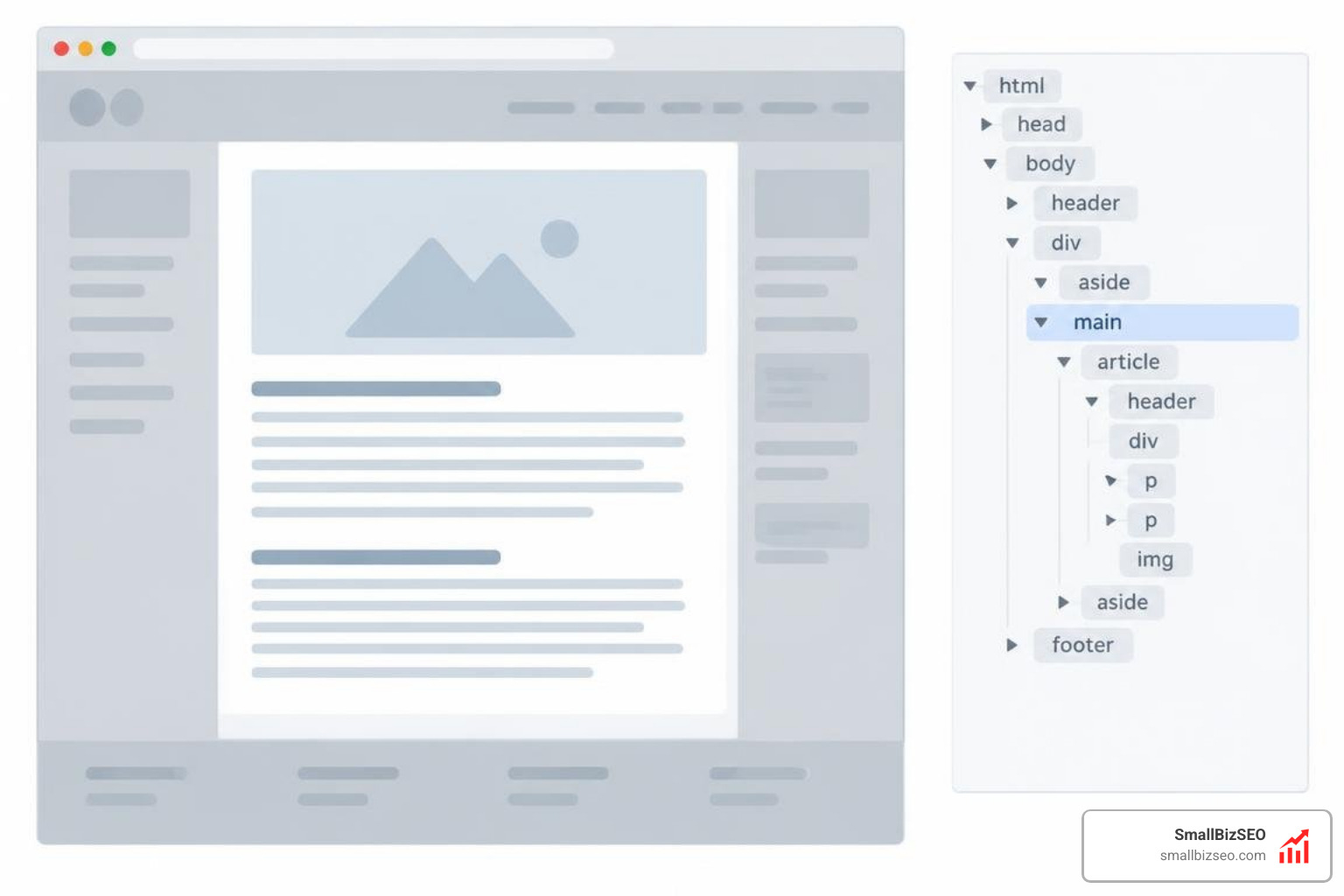
Modern checkers use CSS selectors (like targeting p, #content while excluding nav, footer) to isolate editorial text. To catch auto-generated doorway pages and soft-404s, enterprise crawlers apply 64-bit SimHash algorithms. If two pages share a Hamming distance of 8 or less, or show a Jaccard shingle overlap above 85%, the software flags them as templated boilerplate.
Furthermore, when less than 40% of a page's vocabulary tokens are unique compared to sibling URLs in the same subdirectory, search engines often treat the page as a soft-404 error and drop it from search results.
How to Fix Pages Flagged by a Content Audit
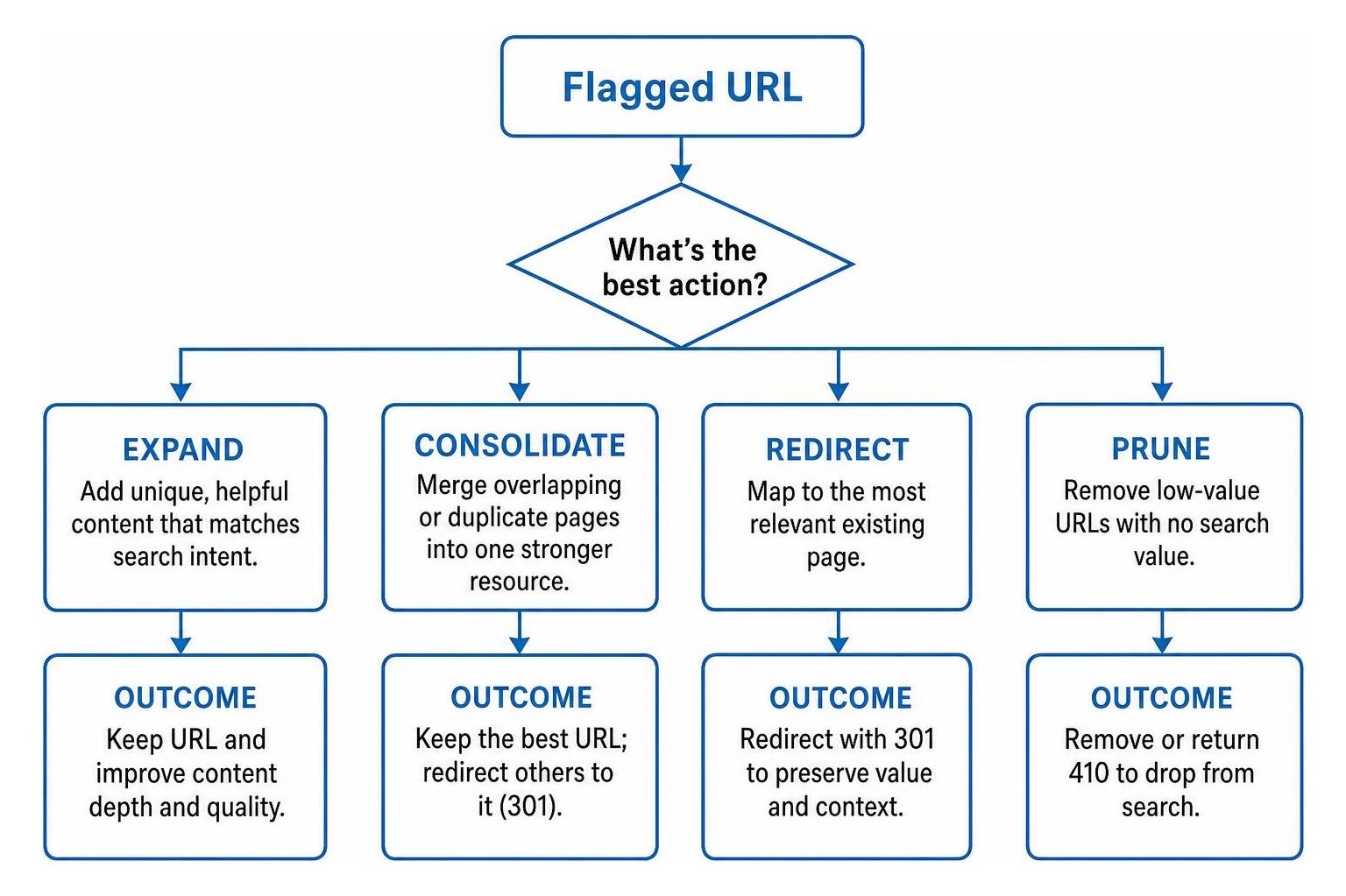
Fixing pages flagged during an audit requires matching search intent rather than padding copy with fluff. Cleaning up low-value URLs protects your site's overall quality score, as sitewide quality downgrades can take 30 to 90 days to lift after search engines recrawl your fixes.
What Word Count Thresholds and Quality Signals Matter Most?
While Google does not enforce a rigid minimum word count, standard automated crawlers use clear benchmarks to detect thin content across different page layouts:
- Very Thin / Ghost Pages (<50 Words): Critical errors requiring immediate rewriting, merging, or removal.
- Thin Content Warning (<200–300 Words): Standard threshold where informational pages lack sufficient depth. Informational queries typically require at least 300 words, and competitive subjects often need 500 or more.
- Near-Duplicate Content (85%+ Similarity): Pages that swap only localized keywords or single variables inside identical sentences.
- Exact Duplicate Content (95%+ Identical): Faceted navigation or uncanonicalized tracking parameters that create duplicate indexation.
Review our guide to modern SEO content guidelines for details on balancing word volume with user intent. For example, interactive tools, converters, or calculators can provide high value with few words, but they still need clear usage instructions, step-by-step guides, and relevant FAQs to avoid automated quality filters.
How Should You Remediate, Consolidate, or Prune Shallow URLs?
Once your crawler generates a list of flagged URLs, sort every page into one of four remediation actions:
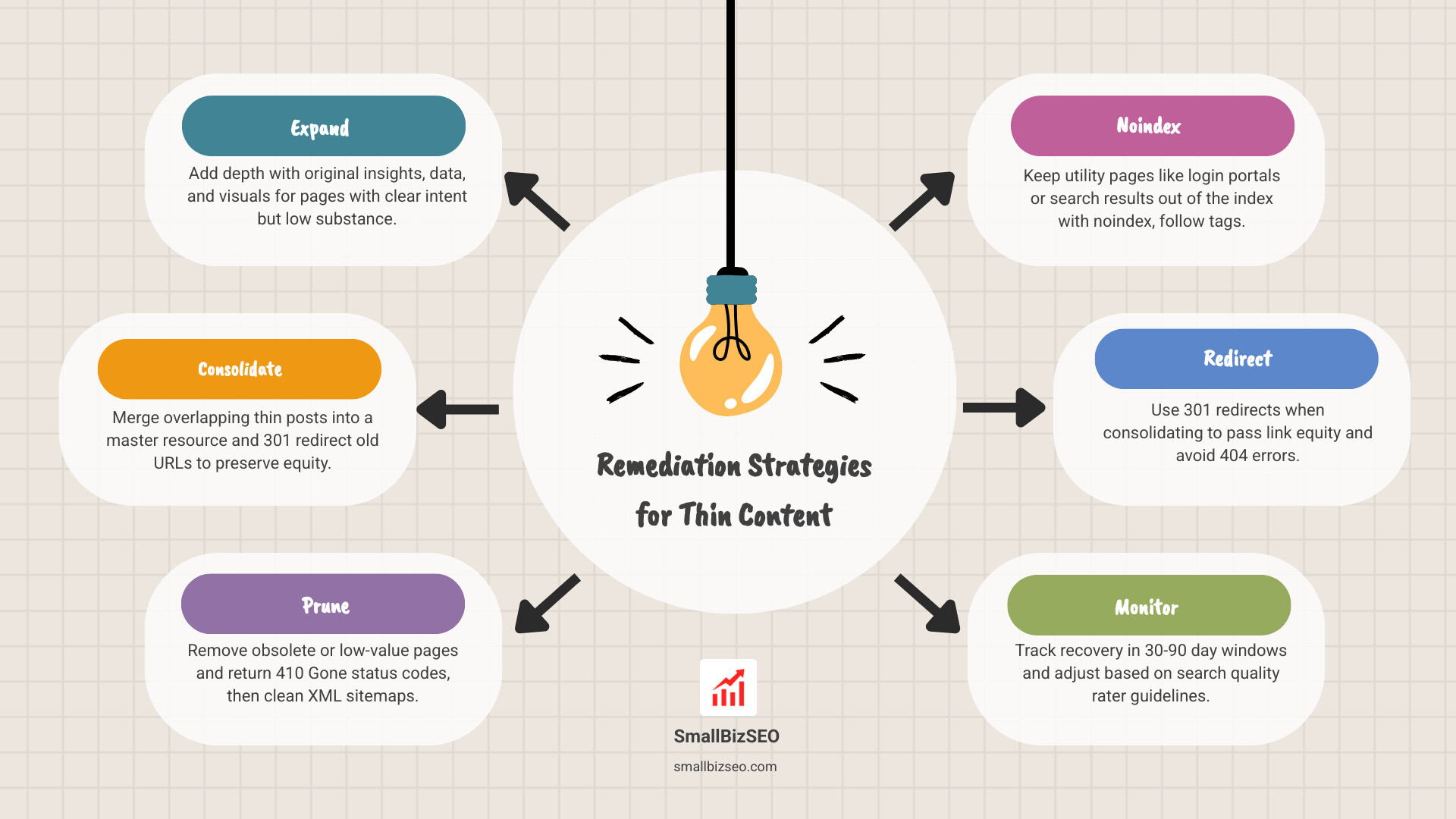
- Expand (Add Depth and Proof): If a page targets a clear keyword but lacks substance, expand it. Add first-hand insights, clear definitions, data points, structured comparison tables, and visual aids.
- Consolidate (Merge Sibling URLs): When multiple short posts cover slight variations of the same topic, choose smarter SEO consolidation over thin standalone pages. Combine the strongest sections into a single master resource and point 301 redirects from the old URLs to preserve link equity.
- Prune (Strategic Removal): Apply systematic content pruning to outdated announcements, empty categories, or obsolete tags. Remove the URLs and return clean 410 Gone status codes, then remove them from your XML sitemaps.
- Noindex (Preserve Utility): For login portals, internal search results, or utility tools that help users but shouldn't target organic queries, add
tags to keep search bots focused on your core content.
At SmallBizSEO, our data-driven Velocity framework pairs rapid technical crawling with automated audits to eliminate content debt and build search authority. If managing technical audits and content pruning feels overwhelming, our team delivers complete professional thin content remediation to get your site back on track.
Build a Healthier, Higher-Ranking Website Today
Regularly scanning your website with an automated audit tool prevents shallow, outdated, or duplicate URLs from dragging down your organic visibility. Categorize flagged pages methodically, expand URLs with real search demand, merge overlapping posts, and remove zero-value pages. Consistent content hygiene protects your domain authority and delivers a better experience for every visitor.