Sample SEO Article: An Annotated Example and Reusable Template

What Is a Sample SEO Article?
A sample SEO article is an illustrative model that shows how a page can answer a real customer question, organize supporting details, and guide a next step. It is useful for planning structure, evidence, metadata, links, and review responsibilities before drafting a live page.
The example below is not a proven ranking case or a record of work for a client. It is an original, low-risk demonstration for a small business owner. Its purpose is to make the editorial choices visible so they can be adapted to a real buyer question, existing site content, and approved expertise.

An Annotated Sample SEO Article
Sample article starts
How to Prepare for a Website Content Review
A website content review starts with a clear business goal, a defined reader, and an organized list of pages that are already public. This preparation gives the reviewer enough context to recommend what to update, keep, combine, or retire without requesting analytics access, account logins, or other sensitive information.
Set the Goal and Gather the Page List
First, decide the business goal for the review. For example, a small business may want its service pages to answer buyer questions more clearly, reduce duplicated topics, or make next steps easier to find. Name the target reader in plain language, such as a homeowner comparing services or an operations manager evaluating a provider.
Create a list of current public URLs and identify the person or team responsible for each page. Add common buyer questions, approved subject-matter expertise, and any sources that can support factual claims. This list creates a practical starting point without relying on private analytics data.
Flag What Needs Attention
Read each page for outdated facts, overlapping topics, and broken or unclear next steps. A page may still be useful but need a clearer purpose. Two pages that answer nearly the same question may be candidates to combine. Record one decision for each page: update, keep, or combine. Add a short reason so the decision can be reviewed later.
For links, use only a known, verified destination. A real known site reference might be SEO content services. For additional education about SEO content and small-business planning, see the Search and AI content optimization guide and foundational SEO principles. If the right hub or service page has not been confirmed, write a placeholder such as “insert verified content-review service URL” rather than inventing a link.
Assign the Review and Next Step
Choose a reviewer who can validate the facts and approve the next action. That person might be the page owner, a subject-matter expert, or a marketing lead. End the review with one next step, such as revising the highest-priority page, confirming a service-page link, or combining two overlapping drafts.
Website Content Review Checklist
- Business goal and target reader are stated.
- Current public URLs and page owners are listed.
- Buyer questions and approved expertise are collected.
- Outdated facts, duplicated topics, and broken next steps are flagged.
- Every page has an update, keep, or combine decision.
- A reviewer and next step are assigned.
Need help turning the review into a practical content plan? Start with the highest-priority public page and confirm the evidence, owner, and next action before expanding the scope.
Sample article ends
You can study diverse publishing blueprints by reviewing these proven blog post frameworks. For small business owners navigating competitive search spaces, applying practical SEO survival strategies helps prioritize high-impact content opportunities over generic blogging.
Sample metadata, shown as planning text only:
- Sample title: How to Prepare for a Website Content Review
- Sample meta description: Prepare a website content review with clear goals, public URLs, buyer questions, page decisions, and accountable next steps.
- Sample proposed slug: website-content-review-prep
Why Each Sample Element Is There
| Sample element | Purpose | What to adapt | Evidence needed |
|---|---|---|---|
| Direct answer | Gives the reader an immediate, useful starting point. | Replace the content-review topic with the buyer question the page must answer. | A confirmed customer need or recurring question. |
| Three focused sections | Breaks the task into preparation, review decisions, and ownership. | Use sections that match the reader’s decision path. | Approved process details and accountable owners. |
| Update, keep, or combine decisions | Turns observations into an actionable review outcome. | Use decision labels that fit the team’s workflow. | Current URLs, page purpose, and overlap notes. |
| Real link versus placeholder | Avoids publishing fabricated destinations. | Link only to verified hub or service pages. | A working public URL and an appropriate destination. |
| Proportionate CTA | Offers one relevant next step without overstating outcomes. | Match the CTA to the reader’s readiness. | A real service, resource, or contact path. |
Establishing these structured workflows is essential for defining SEO business value across your entire team.
How the Same Pattern Changes by Intent
For an informational page, lead with an explanation and practical steps. For a comparison page, organize the decision criteria and show what evidence supports each option. For a service-page intent, explain the customer problem, the scope of help, proof that can be verified, and a relevant contact or consultation step. The structure should follow the reader’s task, not a generic industry template.

What to Carry Forward From the Example
Use the example as a planning framework, not as copy to reuse verbatim. Keep the question, evidence, links, and next step specific to the real page being created. For additional layout ideas, review proven blog post frameworks and practical SEO survival strategies. To connect planning to business outcomes, see defining SEO business value.
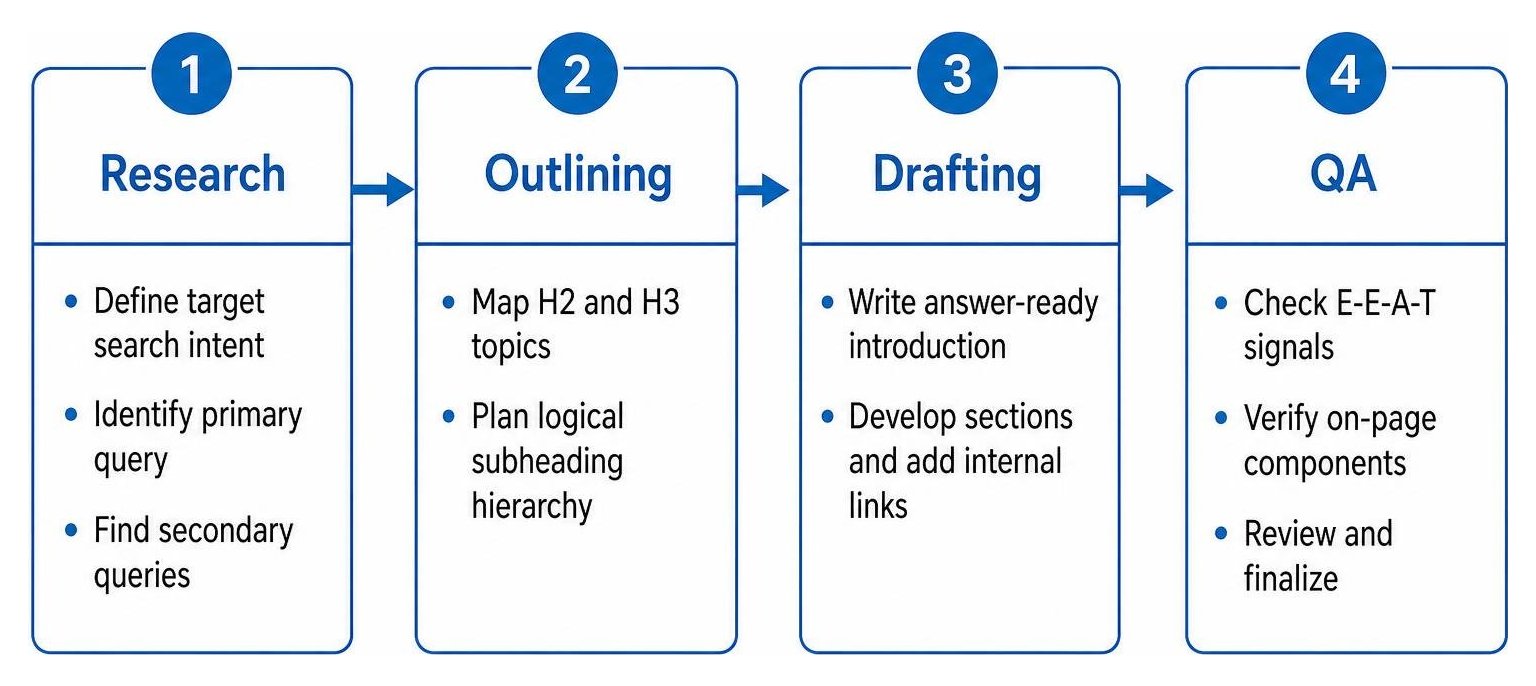
How Do You Turn the Example Into a Reusable Brief?
A reusable content brief defines the reader’s decision, the evidence needed to support the page, and the people responsible for review. It gives writers and reviewers a shared plan without relying on arbitrary keyword counts, fixed heading intervals, or promised search outcomes.
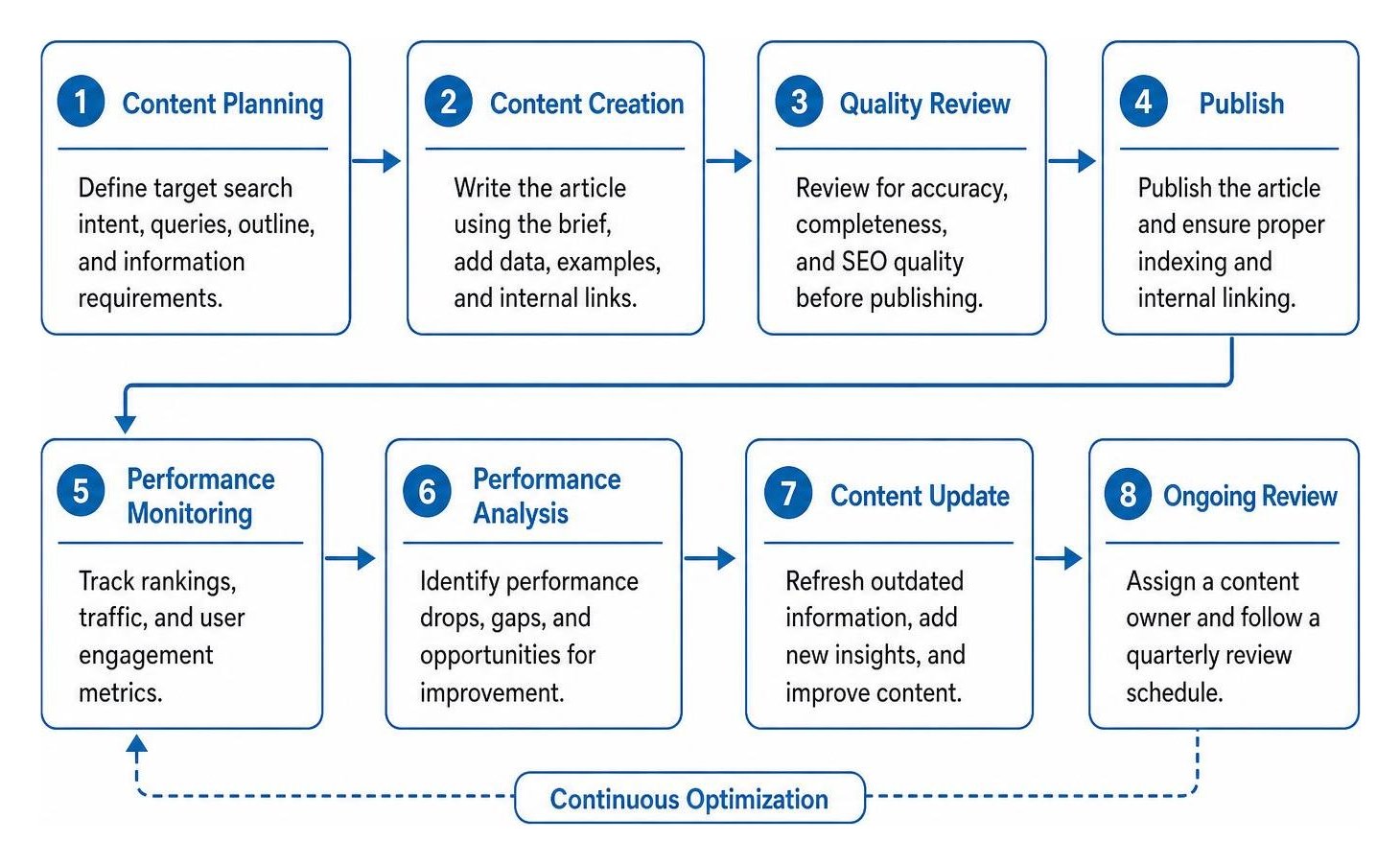
What Should the Brief Include?
Use these fields to turn the sample into a real assignment:
- Reader decision: State what the reader should understand, compare, or do after reading.
- Primary query and cluster: Identify the main search question and the related topic cluster so the page has a clear purpose.
- Existing URL check: Confirm whether a current page already serves the same purpose before creating another one. Potential keyword cannibalization is usually a sign of overlapping content or unclear page purpose, not an automatic penalty.
- Unique contribution: Specify the practical insight, example, process, or perspective this page adds.
- Verifiable proof and source owner: List factual claims, their sources, and the person responsible for confirming them.
- Outline: Use a readable hierarchy of headings that follows the reader’s questions rather than a formula.
- Internal links: Assign descriptive links to verified hub or service pages that help the reader continue.
- CTA: Choose one proportional next step that fits the page’s intent.
- Metadata: Draft concise, accurate titles and descriptions that reflect the page. Google may generate or adjust title links and snippets depending on the query and device, so use them as clear guidance rather than fixed character rules. See Google’s guidance on title links and snippets.
- Useful media and alt text: Add visuals only when they clarify the content, and write alt text that describes the image’s relevant purpose.
- Reviewer and review trigger: Name who approves facts and what change should prompt another review.
If your team struggles with persistent ranking barriers or technical issues, selecting professional SEO support can help audit your existing library and build a scalable publishing roadmap.
What Should You Check Before Publishing?
Use this checklist to prepare a page for review. It does not confirm that live quality assurance has already happened. For teams seeking an outside review of a broader content library, selecting professional SEO support offers a decision framework.
- Sources have been checked and claims can be supported.
- The page offers original value beyond a generic restatement.
- Internal and external links are relevant and working.
- Headings and layout remain readable on mobile devices.
- Metadata accurately reflects the page.
- Image alt text describes useful visuals.
- The CTA is relevant to the reader’s next step.
E-E-A-T is not a certification or a checklist that guarantees performance. Clear authorship, useful first-hand knowledge, accurate sourcing, and transparent limits can make content more trustworthy, but rankings, rich snippets, and AI citations are not assured.
How Should You Review Performance and AI Visibility?
Review performance with context: compare the page, query, device, and reporting period before drawing conclusions from impressions, clicks, click-through rate, or average position. Also compare search visibility with qualified inquiries or other meaningful business outcomes. A low click-through rate can reflect many factors, including search intent, competing results, seasonality, and metadata, not only the title.
Use consent-aware measurement, document attribution limits, and allow for reporting lag. For AI visibility, rely on the platforms and reports available to the business, plus dated samples of the prompts checked. Treat those samples as directional evidence, not an exhaustive census. Google Search Console’s generative AI reporting can show impressions for AI Overviews and AI Mode when sufficient data is available; it should not be treated as a separate measure of all web clicks. See Google’s AI features reporting guidance.
Put the Sample to Work on a Real Buyer Question
Choose one real buyer question from customer conversations, sales notes, or approved support feedback. Adapt the sample by defining the reader’s decision, confirming the existing page or gap, collecting source-backed expertise, and assigning one clear next step. Start small: improve one public page, review the result with the accountable owner, and use that learning to shape the next brief.
For additional planning context, review foundational SEO principles and connect relevant pages to a verified hub or service destination. When a business needs hands-on support with content planning and optimization, SEO content services provides a relevant next step.