SEO 101: What SEO Is and How It Works
What Is SEO, and How Does It Work?
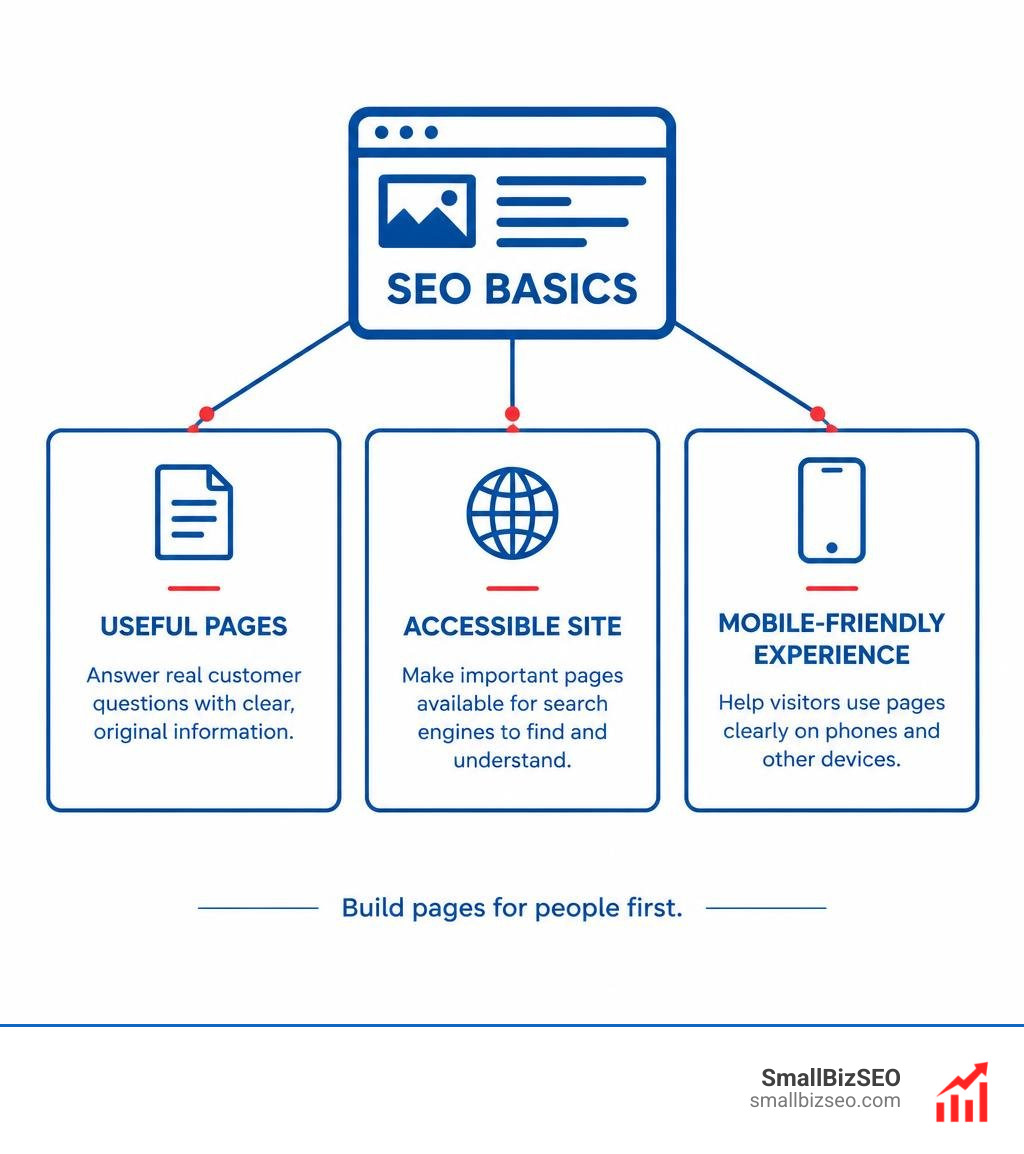
SEO (search engine optimization) helps your website appear in unpaid search results when people look for answers, products, or services you offer. It works by making your pages easier for search engines to find, understand, and consider relevant to a search. Start with useful content that answers a customer’s question, then make sure your site works well on mobile and that search engines can access its pages.
I’m Clayton Johnson, founder of SmallBizSEO, where I connect SEO, content, and digital PR to help small businesses attract qualified leads. In this guide explaining what is SEO and how it works, I’ll focus on the practical basics you can put to work right away.
Related content about what is SEO and how it works:
What Is Search Engine Optimization?
Search engine optimization (SEO) is the process of improving your website so it earns unpaid, organic visibility on search engines like Google. Understanding what is SEO and how it works starts with a simple goal: connect your business with people actively searching for your solutions, turning organic searches into qualified website traffic and revenue.
Organic results are unpaid listings that can appear in different positions depending on the query, the search features shown, and the device. Ads and local map results may also appear, and map results can include paid placements. Hypothetical example: A homeowner might search for "emergency plumbing repair." A plumbing company could publish a clear page about that service, including what the service covers and how to request help. If the page appears for a relevant search and meets the visitor's needs, it may lead to an inquiry. SEO helps a business create useful pages and make them easier for search engines and customers to understand, but it does not promise a particular placement or level of traffic. For practical next steps, see these SEO fundamentals for small business.
What Is SEO and How Does It Work?
SEO works by aligning your site’s technical infrastructure, content quality, and online reputation with the complex mathematical formulas used by search engines. Rather than searching the live web every time someone types a query, search engines query their own massive database of pre-analyzed web pages.
SEO work helps search engines discover and understand pages while making those pages more useful for people. Follow established web standards and official guidance, such as Google's Search Engine Optimization Starter Guide, but avoid treating any technical change as a promise of visibility or rankings.
What Is SEO and How Does It Work Across Crawling, Indexing, and Ranking?
Search engines process the web in three continuous stages: crawling, indexing, and ranking.
- Crawling: Automated systems discover content by fetching pages and following links. A crawl does not guarantee that a page will be indexed.
- Indexing: After crawling, a search engine may analyze a page's text, images, and layout. Eligible content may be stored in its index for possible retrieval later.
- Ranking: When someone searches, systems evaluate eligible indexed pages and other available information to present results that may be helpful and relevant.
Technical problems can make it harder for search engines to discover or process pages. A sitemap can help search engines find URLs, but it does not guarantee indexing. Robots.txt controls crawling, not guaranteed removal from search results. For a page to use a noindex directive, search engines generally need to crawl it first. Canonical tags are signals that search engines may consider when choosing among similar pages, not a guarantee that duplicates will be excluded.
What Are the Technical, On-Page, and Off-Page Pillars of SEO?
Successful SEO relies on three core pillars working together: technical SEO, on-page SEO, and off-page SEO.
| SEO Pillar | Primary Focus Area | Key Actions |
|---|---|---|
| Technical SEO | Website performance and search accessibility | Improve site speed, resolve crawl errors, support mobile usability, and use HTTPS |
| On-Page SEO | Content quality and page-level optimization | Target user search intent, optimize headings and meta tags, structure internal links |
| Off-Page SEO | Authority, credibility, and brand signals | Earn quality backlinks, build digital PR mentions, manage local reviews |
Mastering on-page content optimization helps search engines understand your topics, while relevant off-page mentions and links can help people discover your work and may contribute useful context for search engines.
How Do Search Intent and Keyword Research Drive Organic Results?
Keyword research identifies the specific words and phrases people type into search boxes, while search intent reveals the specific problem they want solved. Aligning content with user intent helps a page address the problem a searcher is trying to solve.
User search behavior generally breaks down into four main intent categories:
- Informational: Searchers seeking knowledge or guides, such as "how to fix a leaking pipe."
- Navigational: Users looking for a specific website or brand, such as "SmallBizSEO login."
- Commercial investigation: Buyers comparing choices and reading reviews, such as "best accounting software for contractors."
- Transactional: Searchers looking to take an action, such as "buy air filter replacement."
Intent can overlap. Someone may research options, compare providers, and be ready to contact a business within the same search journey.
Building a strategic keyword research strategy allows you to map target phrases to dedicated landing pages and blog articles that give readers exactly what they want.
How Do Algorithm Updates, AI, and Quality Signals Shape Search Rankings?
Search systems evolve as search engines refine how they understand queries, assess content, and address spam. For beginners, the practical focus is simple: create useful pages, make them accessible, and avoid manipulative tactics.
Quality guidance changes over time, but the durable approach is to answer the searcher's question clearly, maintain accurate pages, and follow published search guidelines.
E-E-A-T, meaning Experience, Expertise, Authoritativeness, and Trustworthiness, is often discussed through E-E-A-T search trust signals, but it is not a single ranking factor or a direct score assigned to individual sites by quality raters. Google's raters assess the quality of search results to help evaluate and improve search systems; they do not control a page's rankings. Google's guidance on creating helpful, reliable, people-first content is a useful reference for building pages that serve readers well.
How Can You Build a Sustainable SEO Strategy for Long-Term Growth?
SEO is ongoing work, not a one-time website setup. Search behavior, competitors, site content, and business priorities change, so useful SEO work follows a repeatable cycle of learning, improving, and reviewing.
A practical SEO cycle starts by researching the questions customers ask and the searches they use. Next, publish original pages that answer those needs clearly. Revisit important pages as information changes, improve internal links so related content is easier to find, and earn relevant mentions or backlinks through legitimate outreach. Then review qualified leads alongside search data and refine the next round of work.
What Is the Difference Between White Hat and Black Hat SEO?
White hat SEO focuses on building long-term value for searchers within search engine rules, while black hat SEO attempts to exploit algorithm loopholes for fast, unsustainable rankings.
| Feature | White Hat SEO | Black Hat SEO |
|---|---|---|
| Philosophy | User-first, transparent, sustainable | Bot-first, manipulative, risky |
| Content Approach | High-utility, researched, comprehensive | Scraped text, thin content, keyword stuffing |
| Link Building | Digital PR, organic mentions, linkable assets | Private blog networks (PBNs), paid spam links |
| Risk Level | Lower risk when practices follow search guidance, but no tactic removes all risk | Higher risk of lower visibility, manual action, or exclusion when practices violate spam policies |
Manipulative tactics can create avoidable risk and do not build a durable, useful resource for customers. Focus instead on original content, clear site structure, and relevant outreach.
How Do You Measure Search Performance and Organic Business ROI?
Measure SEO by looking at both search visibility and business outcomes. Google Search Console can show impressions, clicks, and the queries or pages that receive search visibility. Analytics can help connect organic visits with actions such as form submissions, calls, or other qualified leads.
A practical first-month checklist:
- List the customer questions and services that matter most.
- Review important pages for clear answers, accurate details, and helpful internal links.
- Publish or improve one useful page that matches a real search need.
- Check Google Search Console for search impressions, clicks, queries, and indexing signals.
- Use analytics to examine on-site behavior and actions such as form submissions or calls, if tracking is configured.
- Use what you learn to choose the next page or improvement. None of these steps guarantees a ranking or inquiry.
A Simple Ongoing SEO Loop
- Research customer needs: Identify the questions, problems, and search terms that matter to prospective customers.
- Publish useful original content: Create pages that answer those needs accurately and clearly. SEO content services can support this work when a business needs help planning or producing content.
- Refresh and connect pages: Update key information when it changes and add helpful internal links between related pages.
- Earn relevant mentions: Build relationships and pursue legitimate outreach that can lead to relevant mentions or backlinks. Link-building services can support an outreach program without relying on manipulative tactics.
- Review and improve: Use Search Console and analytics to review visibility, engagement, and qualified leads, then prioritize the next improvement.
Essential search metrics to track include:
- Organic Impressions and Clicks: Monitored via Google Search Console to evaluate total search presence.
- Keyword Position Trends: Tracking movements for high-intent business terms.
- Core Web Vitals & Mobile Usability: Ensuring quick load times across all screen sizes.
- Organic Conversions: Tracking form fills, phone calls, and direct purchases originating from unpaid search visits.
A business can use this cycle to make steady, evidence-based improvements without treating any single change as a guaranteed result. For broader support across technical SEO, content, and outreach, explore SEO services or book a consultation.
Your Path to Lasting Search Visibility
SEO is not a one-time technical chore or a secret shortcut. It is the practical craft of building an accessible, trustworthy website filled with answers that help real people solve everyday problems. When you understand crawling fundamentals, create intent-driven content, and maintain your technical foundations, you give your pages a stronger opportunity to be discovered and to help the right visitors. Results can vary, so review evidence over time and improve the next priority.