SEO Survival Guide for Outdoor Gear & Camping Stores
How Does SEO for Outdoor Gear and Camping Stores Bring in More Shoppers?
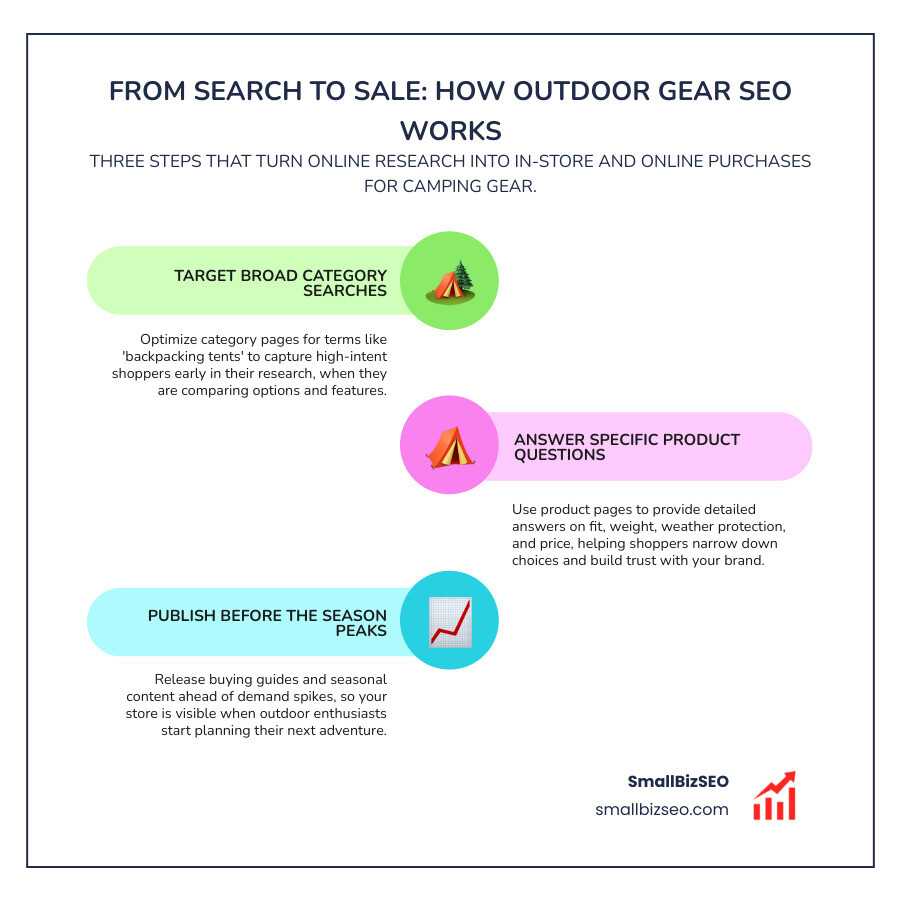
SEO for outdoor gear and camping stores starts with the way people shop for gear. Build category pages for broad searches like “backpacking tents,” then use product pages to answer questions about fit, weight, weather protection, and price. Publish buying guides before seasonal demand rises. Make every page easy to find, fast to load, and useful on a phone.
This approach helps shoppers move from research to a purchase without getting lost in a large catalog. For a local shop, it also means making store details easy to find and sharing advice tied to nearby outdoor activities.
I’m Clayton Johnson, founder of SmallBizSEO. My work in technical SEO, content strategy, and authority building informs this guide to SEO for outdoor gear & camping stores, starting with the pages and search habits that matter most.
SEO for outdoor gear & camping stores helpful reading:
Why Traditional Search Strategies Fail and How SEO for Outdoor Gear & Camping Stores Drives Revenue
Traditional marketing agencies often treat outdoor recreation catalogs like any standard commodity store. However, outdoor equipment represents a massive recreation economy where 81% of shoppers conduct extensive online research before buying. High-ticket items like four-season tents, technical apparel, and GPS navigators involve extended consideration cycles. Buyers scrutinize technical specifications, weight ratings, material durability, and real-world performance.
When generic marketing teams focus solely on isolated high-volume keywords, they miss the nuanced search intent that drives genuine gear conversions. Capturing these buyers requires answering deep research questions across every stage of the journey.
Why Should Retailers Prioritize Category Pages Over Product Listings?
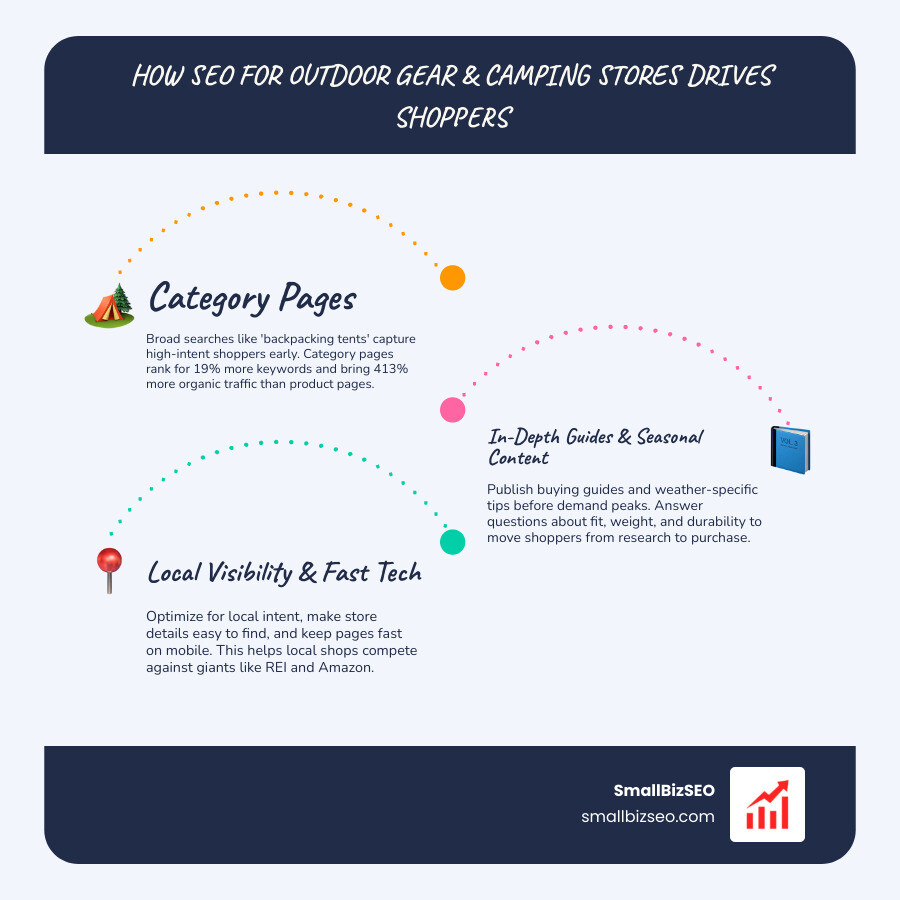
Category pages serve as the primary discovery engines for e-commerce websites because they capture broad, high-intent searches. In fact, e-commerce data shows that category pages rank for 19% more keywords and drive 413% more organic traffic than individual product listings.
Shoppers looking for "ultralight backpacking tents" rarely start with a specific SKU name; they want to compare weights, capacities, and weather ratings across multiple models. By building well-structured category hubs supported by strategic on-page SEO techniques for measurable growth, retailers capture early-stage search volume and seamlessly guide traffic deeper into the catalog.
Industry analysis on how outdoor brands can use SEO data to grow visibility highlights how category hubs systematically aggregate authority across product families:
| Metric / Dimension | Category Hub Pages | Individual Product Pages |
|---|---|---|
| Keyword Reach | Broad, comparative head terms | Specific brand, model, and SKU queries |
| Traffic Potential | 413% higher aggregate traffic | Lower individual search volume |
| Buyer Intent Stage | Mid-funnel research and comparison | Bottom-funnel transactional intent |
| Internal Linking Power | High distribution via faceted links | Targeted links to accessories/upgrades |
| Longevity | Permanent evergreen ranking assets | Subject to stock changes and discontinuations |
To make these hubs crawlable, maintain clean breadcrumb trails and manage faceted navigation carefully so search bots index primary collections without getting trapped in filter combinations.
How Does Seasonality Reshape Keyword Strategy in SEO for Outdoor Gear & Camping Stores?
Outdoor retail search demand follows distinct seasonal waves. Winter recreation items like mountaineering axes and cold-weather sleeping systems spike in early winter, while family tents and camp cooking setups surge throughout spring.
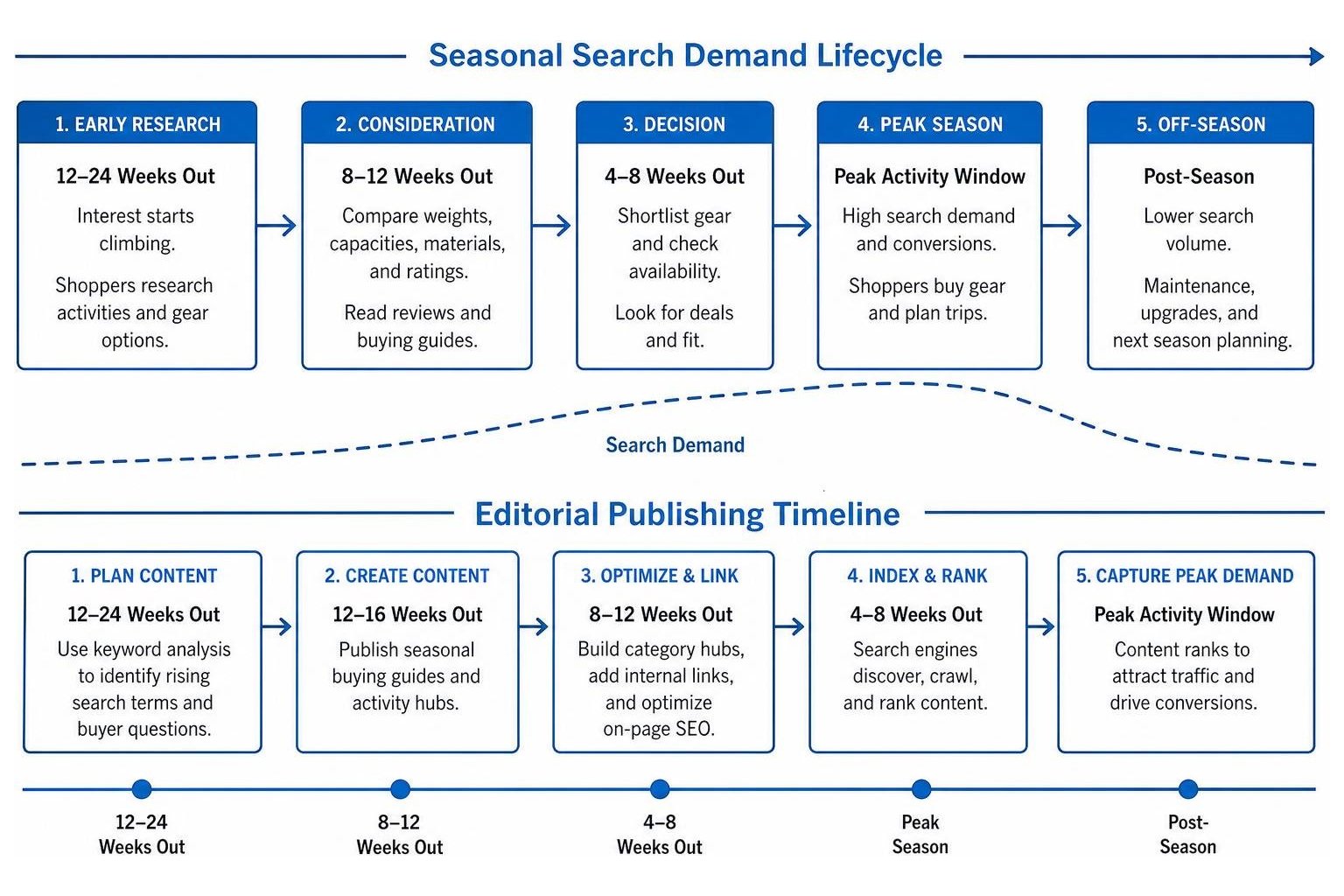
To capture peak traffic, publish your seasonal buying guides and activity hubs 12 to 24 weeks before peak outdoor activity occurs. If you wait until peak season to publish, search engines will not have sufficient time to discover, crawl, and rank your content. Using systematic keyword analysis, such as learning how to use Ahrefs for keyword research without losing your mind, helps identify when interest starts climbing so you can align updates with actual consumer demand curves.
Core Pillars of High-Impact Camping Store Search Optimization
A sustainable outdoor search framework balances in-depth content marketing with rock-solid e-commerce mechanics. You can explore comprehensive implementation methods in this guide to outdoor gear e-commerce SEO: rank for adventure-ready searches and drive consistent sales.
High-performing outdoor websites prioritize:
- Comprehensive Gear Guides: Address specific packing lists, climate requirements, and trail types to solve customer problems directly.
- Visual Optimization: Use responsive images, efficient image compression, and descriptive alt text detailing gear specs (e.g., "three-person waterproof dome tent packed profile").
- Authentic Social Proof: Incorporate user-generated reviews, community Q&As, and customer trail photos directly into product templates.
How Can Local Outfitters Outrank National Giants Like REI and Amazon?
Independent retailers can readily outperform major chains for localized searches by leveraging community-specific expertise and maintaining strong directory signals.
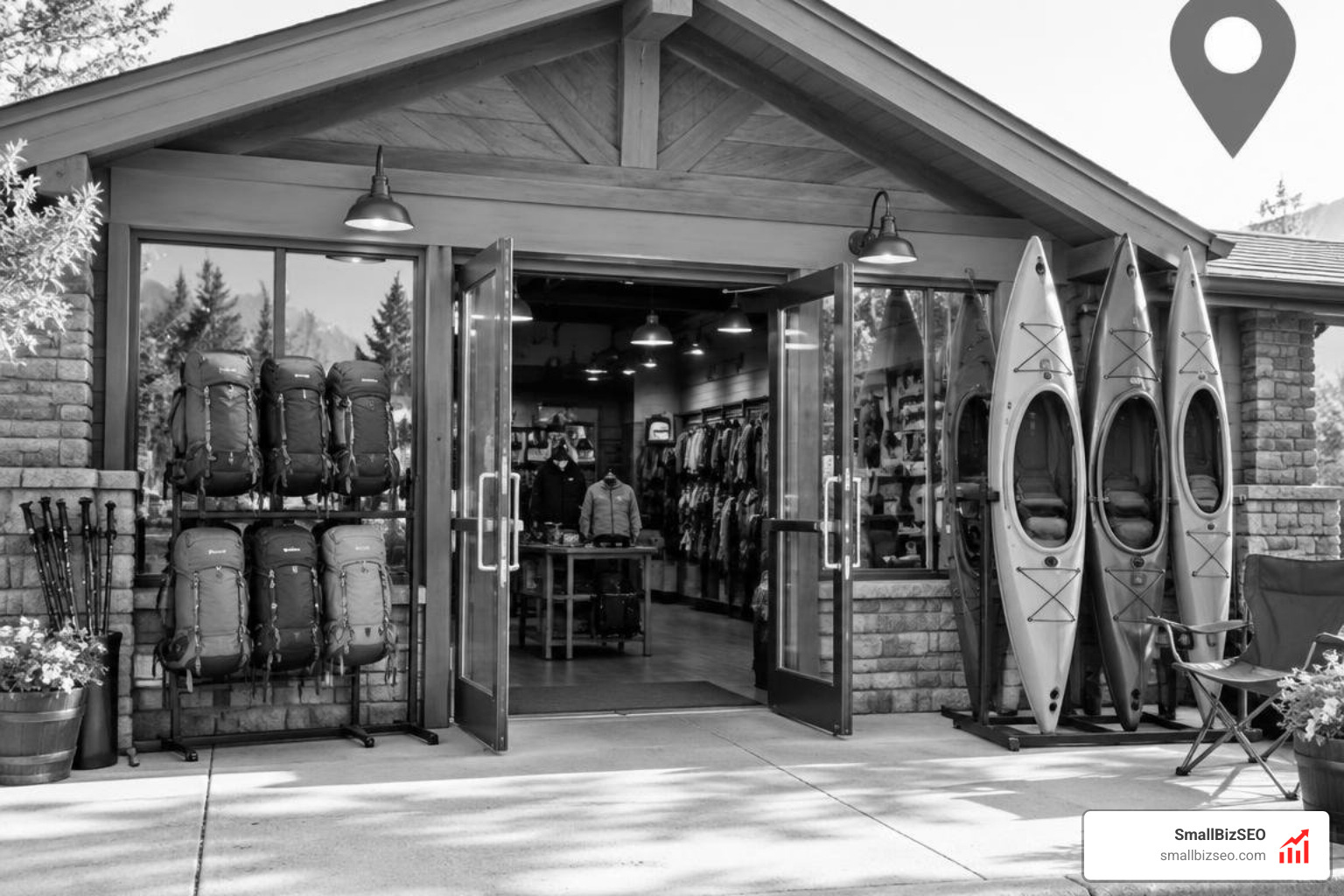
With 46% of all searches carrying local intent, outfitting shops capture ready-to-buy adventurers preparing for imminent weekend trips. By pairing optimized Google Business Profiles with dedicated service pages—such as boot-fitting clinics, ski tuning, or rental gear reservations—local stores dominate local map packs. Reviewing features on the best independent gear shops in the USA demonstrates how community hubs win local loyalty.
Executing strategic local SEO optimization and small business growth tactics allows regional shops to turn "gear shop near me" searches into foot traffic and in-store pick-up sales.
What Makes Generative Engine Optimization Vital for SEO for Outdoor Gear & Camping Stores?
Generative Engine Optimization (GEO) focuses on structuring content so AI-powered search engines, such as Google AI Overviews, reference your business during conversational gear queries. When a shopper asks an AI engine, "What is the best freestanding tent for windy mountain passes?", the system sources data from authoritative, structured websites.
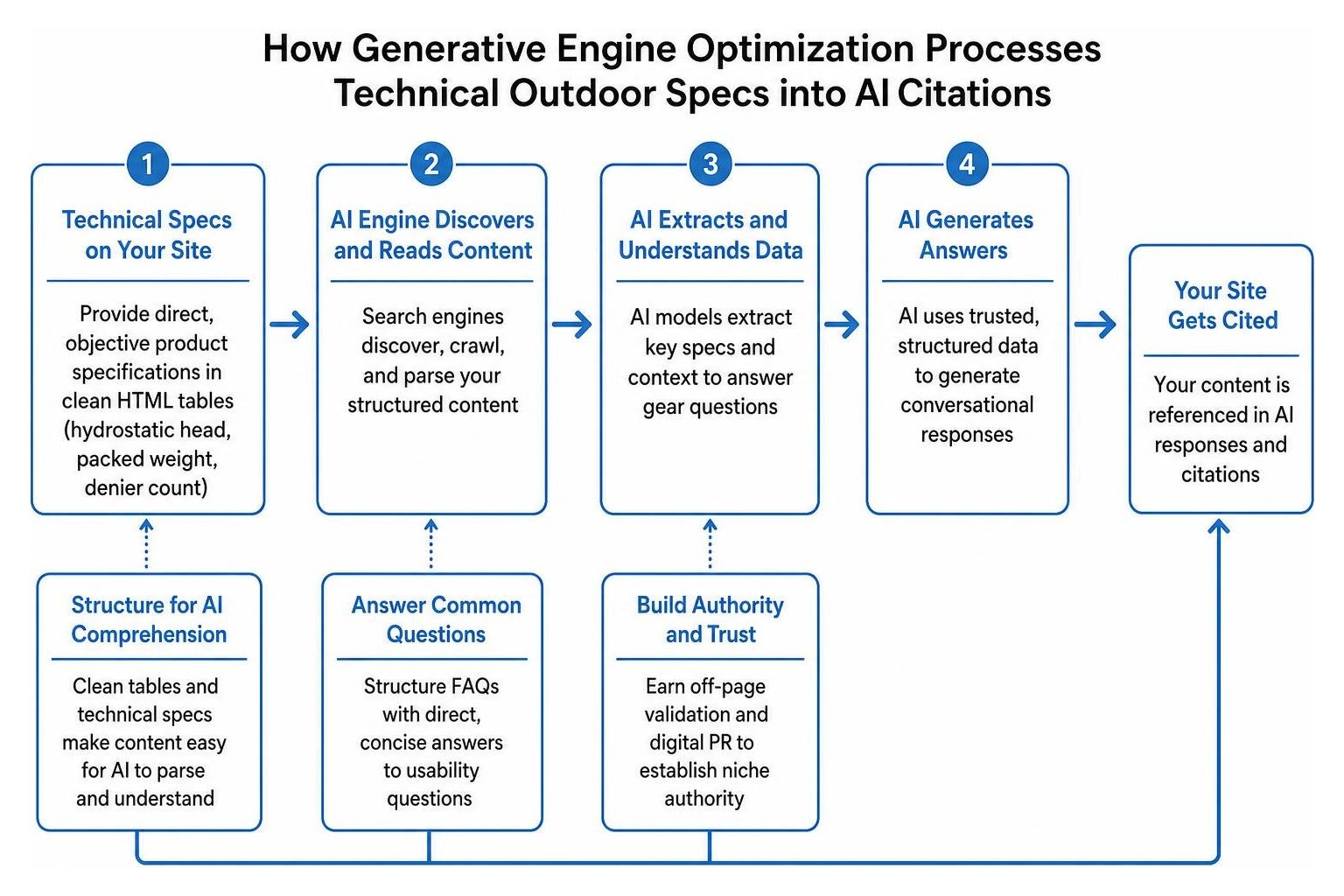
To ensure your catalog is cited:
- Provide direct, objective product specifications (hydrostatic head ratings, packed weight, denier count) in clean HTML tables.
- Structure FAQs with direct, concise answers answering common usability questions.
- Establish niche authority through off-page validation and digital PR; resources explaining demystifying backlinks in digital marketing for beginners show how authority signals confirm your site's trustworthiness to search models.
Which Technical Architecture and Schema Markups Prevent Lost Sales?
Technical SEO ensures that search engines index your gear catalog efficiently while delivering an instant, seamless mobile experience for outdoor shoppers.
Implementing structured data gives search engines explicit product information:
- Product Schema: Defines item names, descriptions, and high-resolution visuals.
- Offer Schema: Communicates real-time pricing, currency, and stock availability to trigger rich snippets.
- AggregateRating Schema: Highlights verified customer review scores directly within search results.
- Faceted Navigation Controls: Use canonical tags and robots.txt rules to prevent filter parameters (such as color or size swatches) from creating duplicate URLs.
- Mobile Performance: Optimize Core Web Vitals to maintain fast loading speeds for shoppers browsing on mobile connections near trailheads.
Scaling Technical Performance and Tracking Long-Term SEO Growth
Sustainable organic revenue requires tracking metrics that directly reflect business health rather than vanity numbers alone. At SmallBizSEO, we rely on our proprietary "Velocity" framework to deliver rapid, measurable rankings while maintaining full technical integrity and transparent reporting.
We recommend monitoring:
- Organic transaction volume and assisted conversion revenue.
- Top 3 keyword rankings for high-intent category terms.
- Crawl health, Core Web Vitals pass rates, and indexation rates.
- High-authority link acquisition from outdoor media and trail organizations.
To identify hidden technical roadblocks and prioritize revenue-driving search opportunities, claim your comprehensive SEO visibility audit today.
Shopify or WooCommerce: How Do Platform Technicals and ROI Timelines Differ?
Both Shopify and WooCommerce provide capable foundations for outdoor catalogs, but their technical management requirements differ substantially.
| Platform Feature | Shopify | WooCommerce (WordPress) |
|---|---|---|
| URL Structure | Rigid subdirectory nesting (/collections/, /products/) |
Fully customizable permalink architecture |
| Canonical Control | Requires theme adjustments to fix collection product duplicates | Easily managed via standard SEO plugins |
| Speed & Hosting | Fully hosted CDN, but vulnerable to app script bloat | Requires dedicated high-performance hosting |
| Technical Flexibility | Simple to launch; limited server-level control | Deep control over database queries and custom schema |
Achieving substantial organic rankings typically takes three to six months for technical optimizations and initial content hubs, with compounding revenue growth accelerating between six and twelve months.
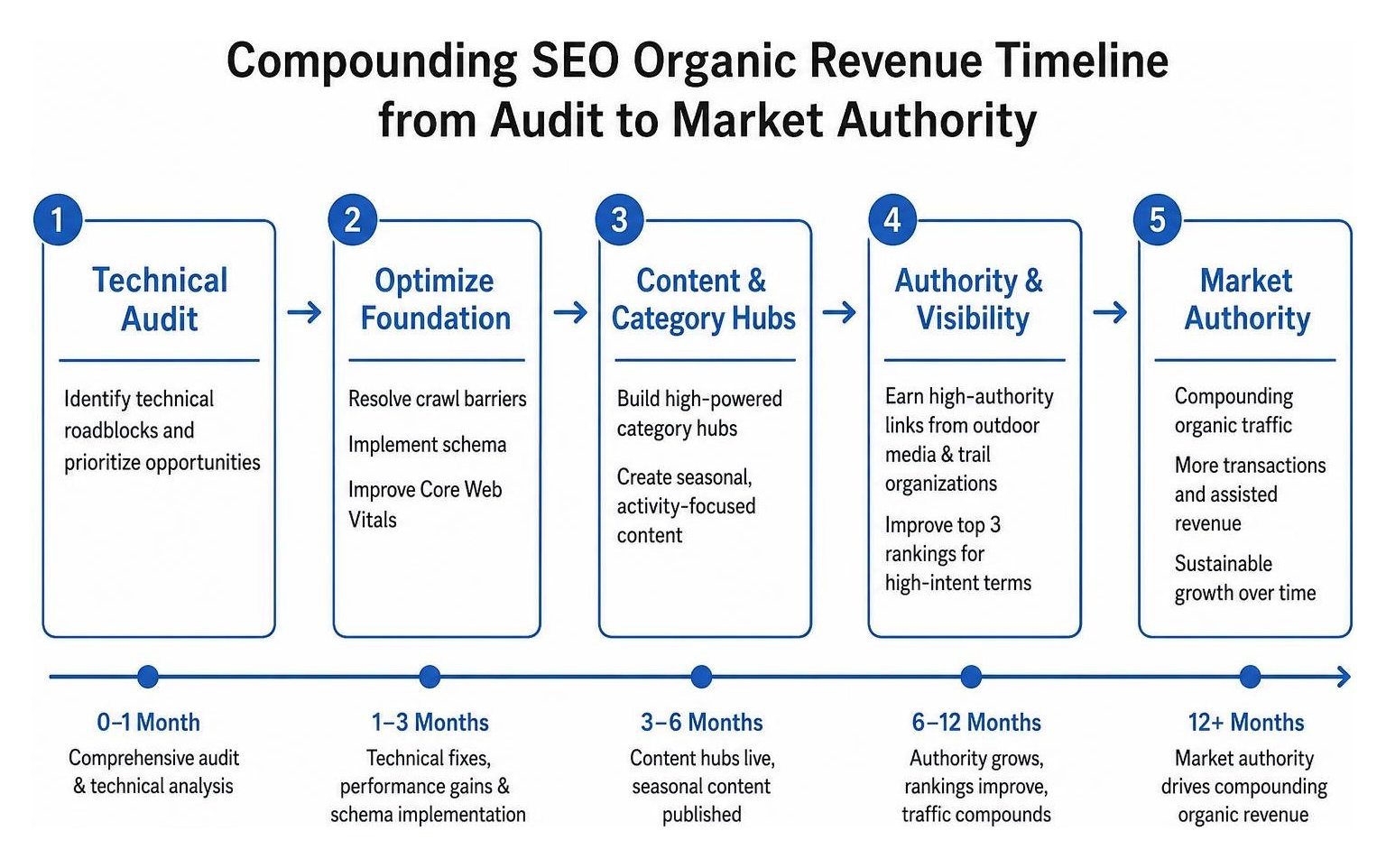
Partnering with a dedicated outdoor gear and camping stores SEO company ensures your store avoids technical bottlenecks, capitalizes on seasonal search spikes, and scales sustainable organic sales across every trail, activity, and product line.
Take Command of Your Outdoor Gear Search Visibility
Capturing high-intent outdoor shoppers requires aligning your store's architecture with the way adventurers explore, compare, and select gear. By structuring high-powered category hubs, timing content production to precede seasonal interest, resolving technical crawl barriers, and optimizing for both local map packs and generative search engines, you build an enduring acquisition engine. Stop losing qualified outdoor enthusiasts to national retail chains—implement a strategic search framework that puts your outdoor catalog at the top of every expedition packing list.