Demystifying the Search Volume of a Keyword for Modern SEO Planning

What Does the Search Volume of a Keyword Tell You?
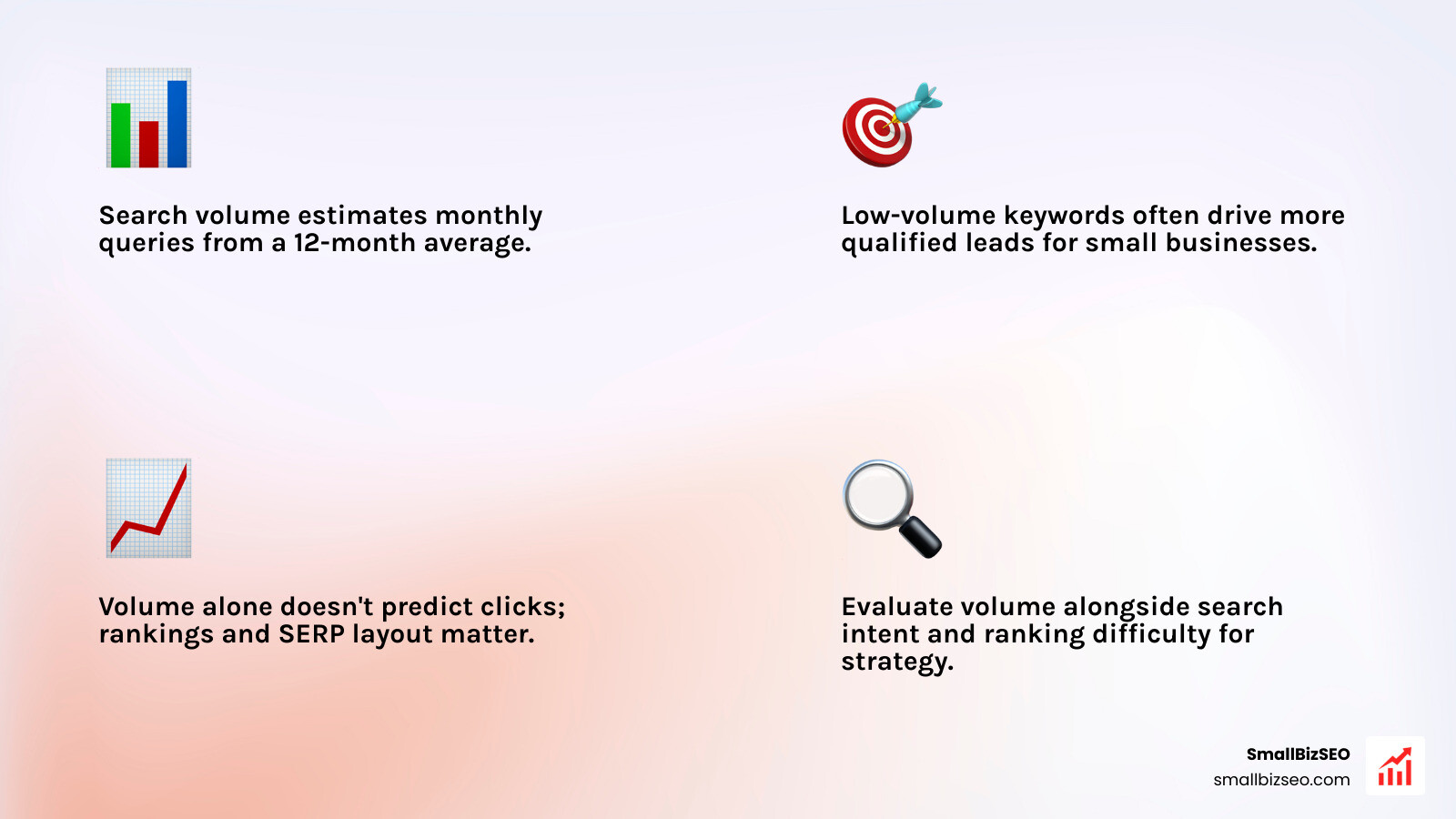
The search volume of a keyword is the estimated number of times people search for that phrase each month in a chosen location. It is often based on the average of the past 12 months. Use it to compare demand for topics, but not as a promise of website visits: your rankings and the search results affect how many people click.
For a small business, a useful keyword does not need a huge search volume. A specific phrase with fewer searches may bring more qualified leads if it matches what your customers need. This guide explains how to check volume, spot changes in demand, and weigh it alongside search intent and ranking difficulty.
I’m Clayton Johnson, founder of SmallBizSEO. My work in SEO and content strategy focuses on turning research, including the search volume of a keyword, into useful content that helps small businesses attract qualified leads.
Must-know search volume of a keyword terms:
- check search volume for keywords
- how to evaluate keywords with zero reported search volume
- keyword research search volume
How to Accurately Determine the Search Volume of a Keyword
To accurately determine the search volume of any query, you must look at standardized monthly estimates across specific locations using established SEO tools rather than raw intuition. Search demand reflects total audience interest over time, serving as a directional signal for your content marketing investments.
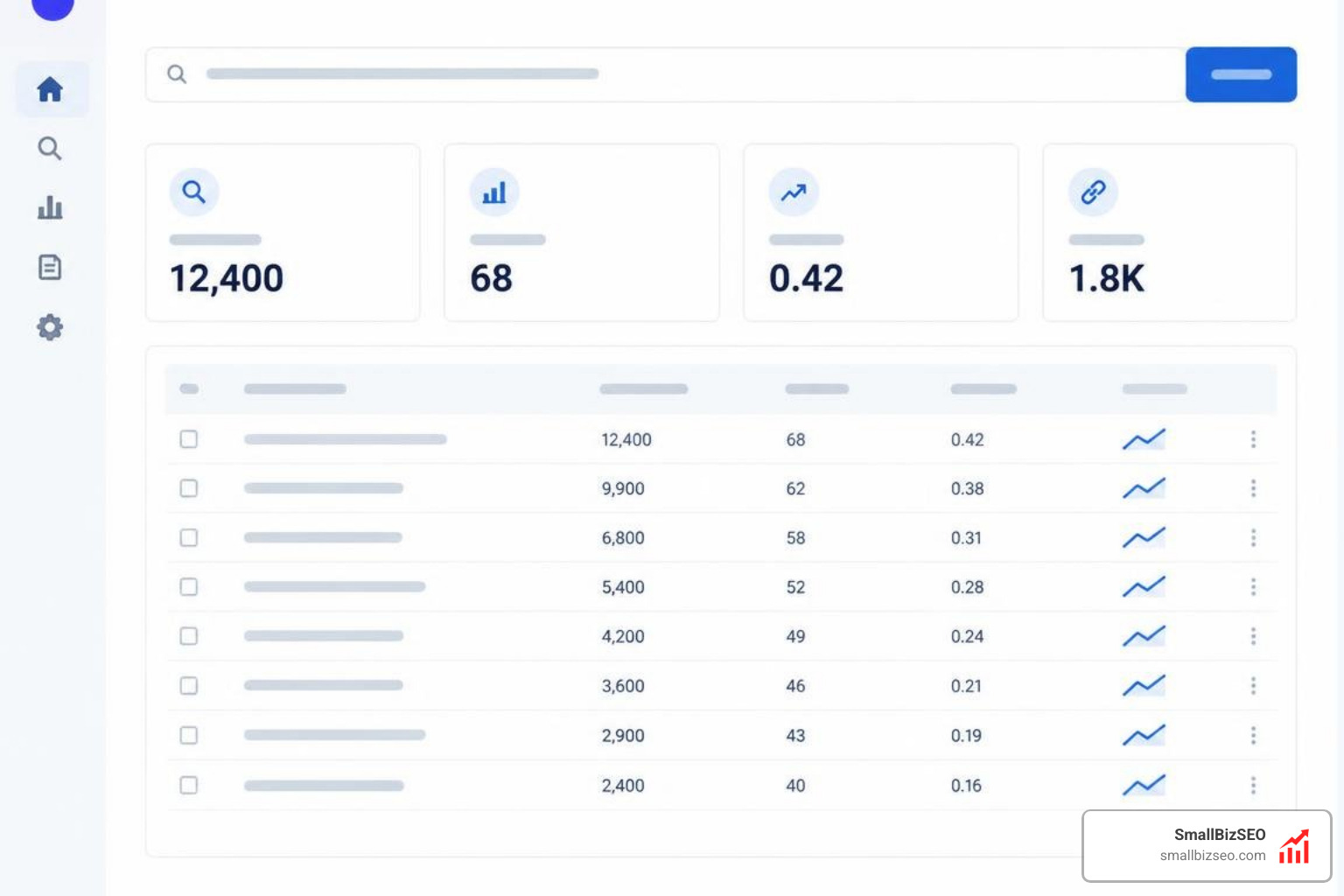
When we evaluate keyword viability, we rely on dedicated platforms and native platforms like the Google Ads Keyword Planner, or a Google Search Volume Tool - Check Monthly Search Volume overlay. These tools aggregate query frequencies to help small businesses decide where to allocate their content budgets.
What Calculates the True Search Volume of a Keyword?
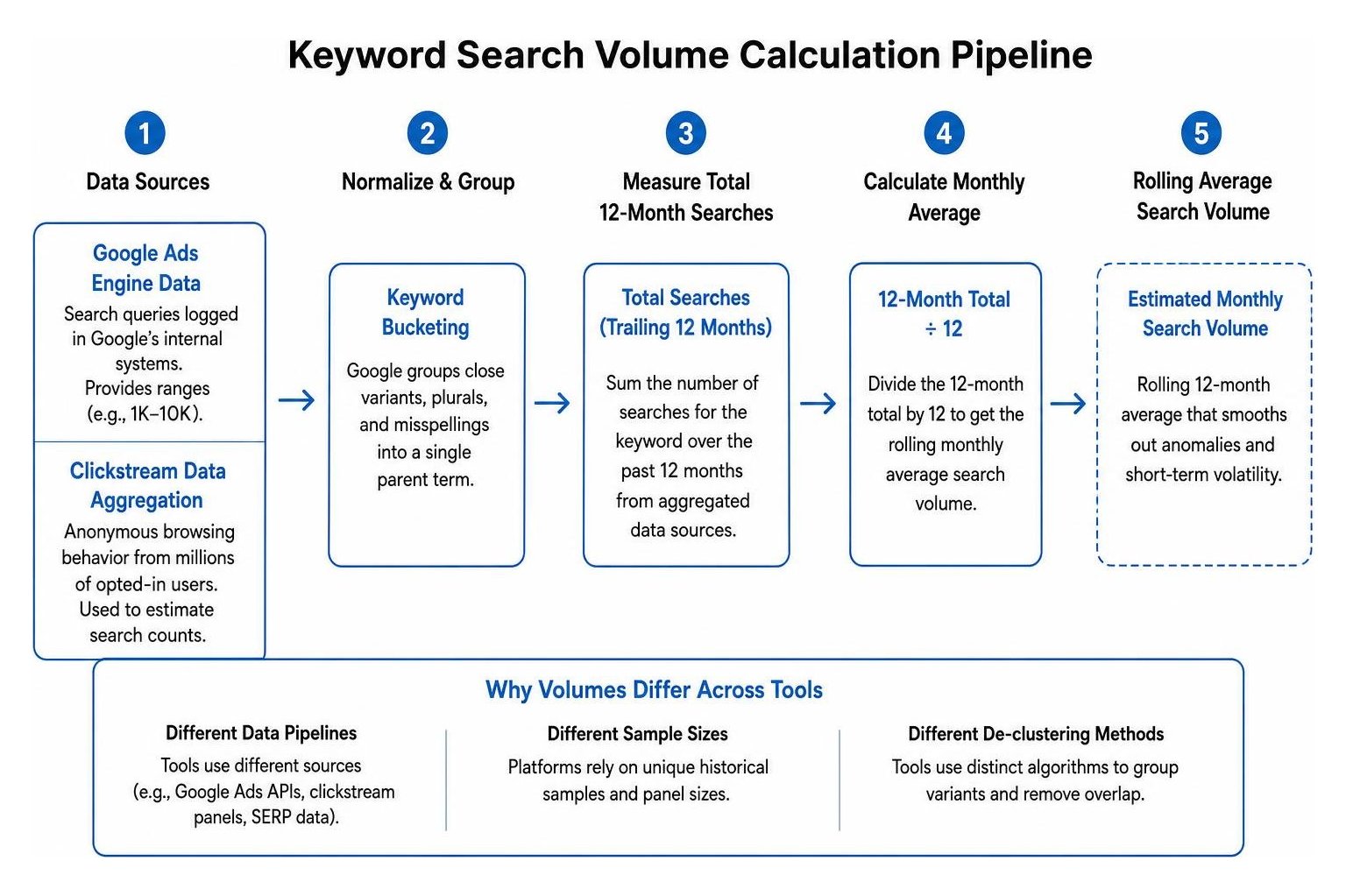
Search volume is calculated by taking the total number of searches for a phrase over a trailing 12-month period and dividing that number by 12 to produce a rolling monthly average.
This calculation smooths out monthly anomalies and short-term volatility. The main data sources powering these numbers include:
- Google Ads Engine Data: Native search queries logged directly in Google's internal systems. Unless an account actively runs paid campaigns, Google provides broad ranges (such as 1K–10K) rather than exact figures.
- Clickstream Data Aggregation: Anonymous browsing behavior gathered from millions of opted-in users via browser extensions and apps. SEO platforms use machine learning models on this data to estimate actual search counts.
- Keyword Bucketing: Google often groups close grammatical variants, plurals, and misspellings into a single overarching parent term.
When conducting initial search query analysis from an initial seed term discovery phase, understanding this rolling average helps ensure you are targeting terms with consistent baseline demand.
Why Does the Actual Search Volume of a Keyword Differ Across SEO Tools?
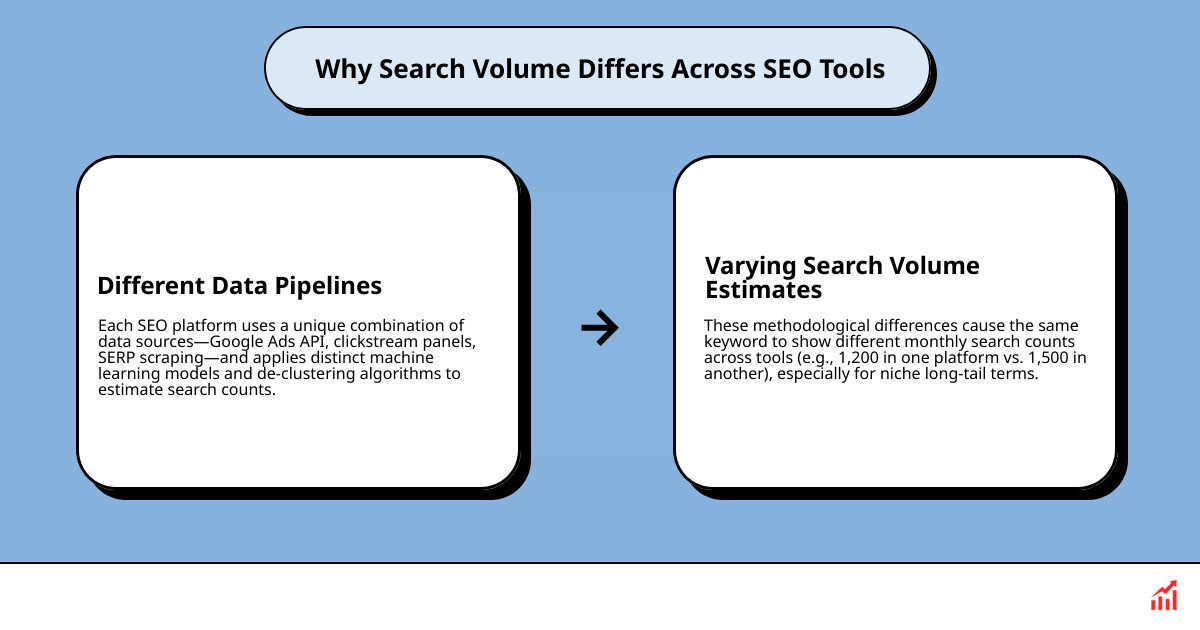
Search volumes differ across SEO platforms because every tool relies on distinct data pipelines, historical sample sizes, and de-clustering algorithms. While one platform might rely strictly on Google Ads APIs, another might blend multi-source clickstream panels with SERP scraping models.
Understanding these search volume measurement nuances helps prevent confusion when comparing reports across software providers:
| Data Source / Tool Type | Primary Calculation Method | Major Strengths | Key Limitations |
|---|---|---|---|
| Google Keyword Planner | Native Google Ads historical query logs | Official first-party database | Broad volume ranges for free accounts; groups close variants |
| Clickstream-Based Platforms | Machine learning applied to sampled user browser data | Disaggregates grouped terms; reveals niche long-tail counts | Relies on statistical sampling; can vary across niche markets |
| Hybrid Real-User Systems | Blended clickstream, SERP results, and 28-day recency trends | Provides fresh, short-term velocity alongside yearly averages | More complex data views across different geographic regions |
Tools like Semrush draw from databases exceeding 28 billion keywords, while Ahrefs processes billions of queries to separate distinct keywords that Google otherwise aggregates. These differing methodologies explain why a phrase might show 1,200 monthly searches in one platform and 1,500 in another.
What Factors Cause Keyword Query Demand to Fluctuate?
Keyword query demand fluctuates continuously due to seasonal cycles, breaking trends, geographic demand, and broader macroeconomic shifts. A static 12-month average provides a helpful anchor, but real-world search behavior changes based on real-world events.
- Seasonality: Search queries like tax preparation or holiday gifts experience predictable annual surges followed by low-volume valleys.
- Trending Events and Product Launches: Viral cultural movements or major technology rollouts can temporarily spike search numbers before tapering off.
- Geographic Variations: Search intent changes dramatically based on population density and local terminology. Analyzing geo-targeted query behavior ensures you are evaluating volume within your exact customer radius.
- Shifts in Consumer Mindset: The nature of informational search patterns naturally evolves as consumers adopt new digital habits and tools.
Turning Keyword Demand Data into High-Ranking SEO Campaigns
Transforming search volume numbers into consistent organic traffic requires organizing keywords into structured topic clusters rather than pursuing disconnected phrases. High-volume head terms serve as core pillar topics, while specific long-tail queries form supporting articles.
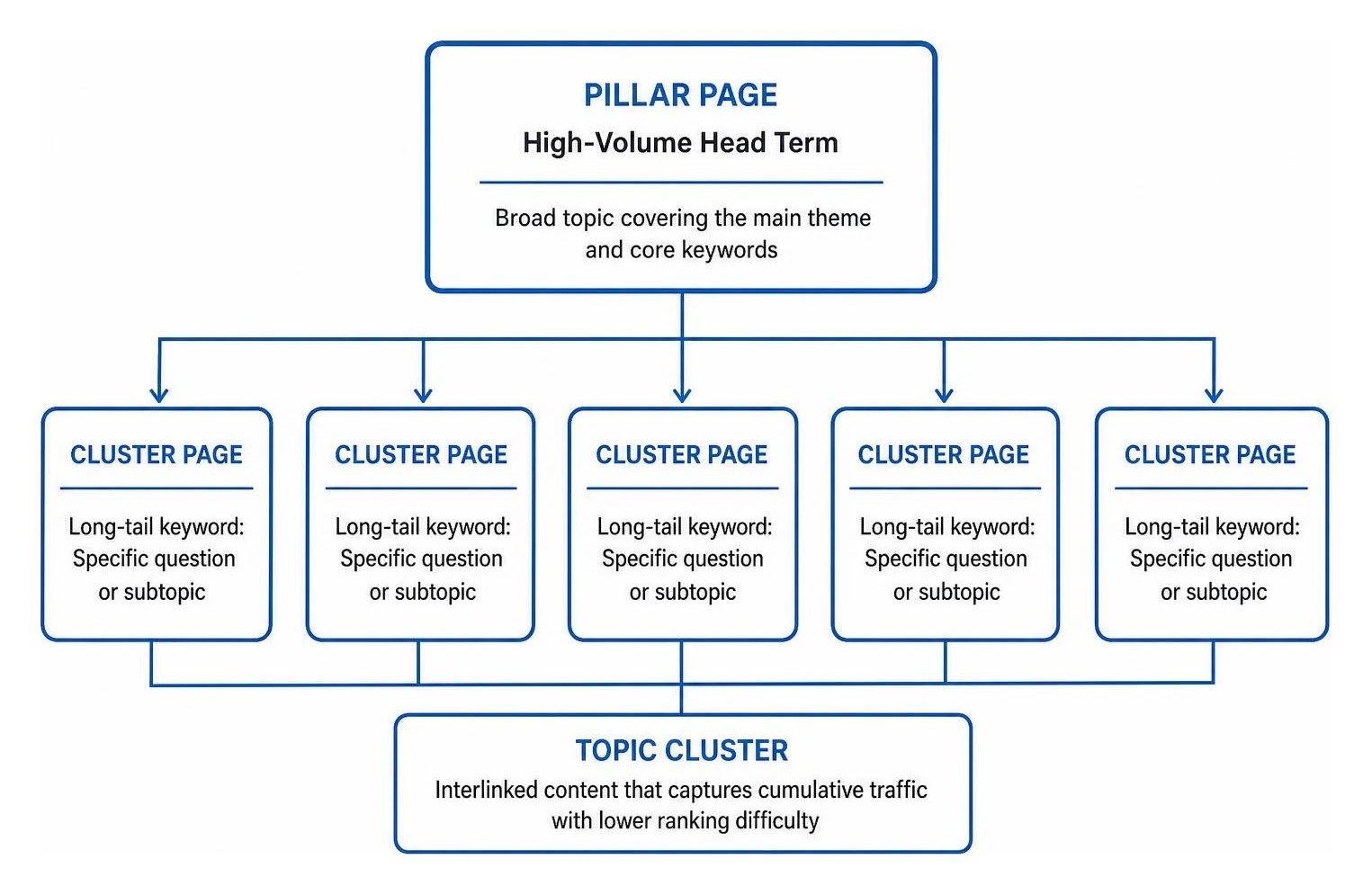
Long-tail keywords make up about 70% of all search queries across the web. While individual long-tail terms carry modest monthly volume, grouping dozens of related questions under a central theme captures cumulative traffic with lower ranking difficulty.
When assessing keywords for an organic campaign, we review:
- Search volume relative to the niche and geographic focus
- Search intent alignment (informational, commercial, or transactional)
- Keyword Difficulty (KD) and domain authority requirements
- Cost Per Click (CPC) as a signal of commercial buying intent
- Existing SERP layout and presence of rich features
How Do You Distinguish Monthly Search Volume from Actual Organic Clicks?
Monthly search volume represents total search demand, whereas organic clicks represent the actual website visits captured by ranking pages. These two metrics are rarely identical because modern search result pages satisfy many queries directly on the screen.
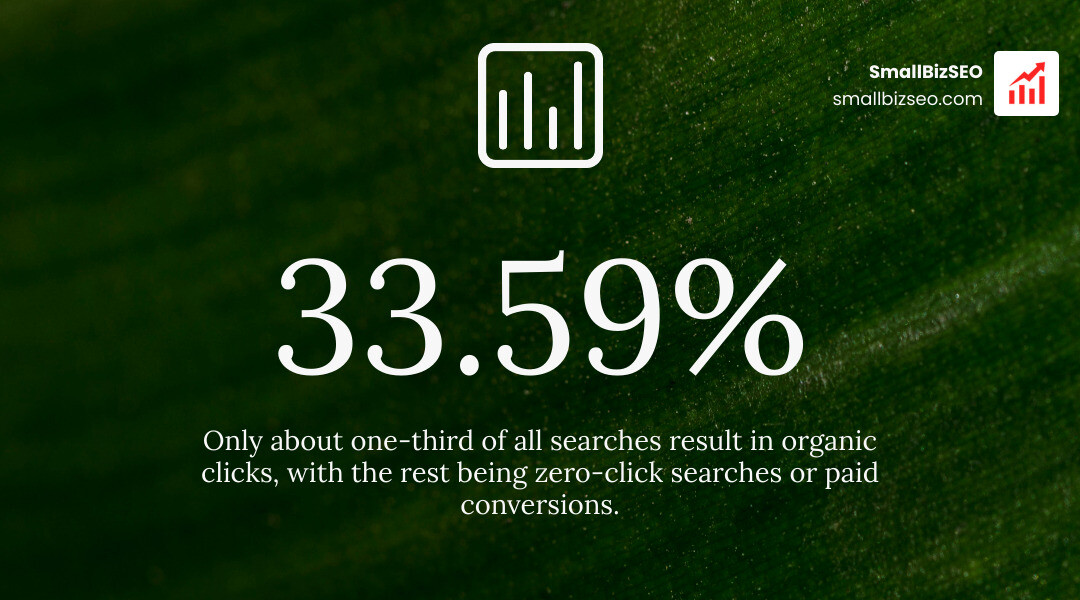
In fact, out of trillions of searches conducted online, only about 33.59% result in clicks on organic listings, leaving roughly two-thirds as zero-click searches or paid conversions.
Several elements influence this click disparity:
- Zero-Click Features: Instant answers, knowledge panels, and AI Overviews resolve simple queries immediately, reducing organic click-through rates.
- SERP Layout & Ads: Heavy ad placements push organic results down the screen.
- Search Intent Drift: Tracking regular intent shift analysis prevents you from targeting terms where user expectations have moved away from standard web pages.
- Intent Mismatch: Applying practical intent matching frameworks ensures your page format mirrors what users actually want to see when searching.
What Is Considered a Good Keyword Volume for Business Growth?
A good keyword search volume is any level of consistent search interest that yields a positive return on investment for your specific business model. There is no single universal volume target; value depends on conversion intent and customer lifetime value.
For a local service business, a search volume of 70 to 200 searches per month can generate high-value inquiries. Conversely, an online publication targeting broad informational terms might require queries with 5,000 to 20,000 monthly searches to support an ad-driven revenue model. Evaluating high CPC numbers alongside moderate volume often highlights searches with immediate buyer intent.
Scaling Your Organic Growth with Modern Keyword Intelligence
Successful SEO campaigns balance high-intent, low-volume terms with scalable topic clusters to capture real business leads. At SmallBizSEO, our data-driven "Velocity" framework combines technical audits, content strategy, and quality link building to help growing companies turn keyword search demand into qualified customer acquisition.
If you are ready to refine your keyword roadmap and build an organic growth engine, explore our structured strategic keyword execution resources or reach out for a custom SEO campaign consultation tailored to your target market.