Measure the Real Impact of AI Mentions Beyond Direct Click Tracking

Can AI citations influence customers without referral clicks?
Yes. An AI citation can put your business in front of a customer without sending a trackable visit. The answer may settle their question, the source link may go unclicked, or they may search for your business later. That is why AI citations do not always produce measurable referral visits.
Referral traffic tells you who clicked, not everyone who saw your business. Track AI citations and referral visits separately, then watch branded searches and leads for signs of wider influence. Those changes can suggest a connection, but they do not prove the citation caused it.
I’m Clayton Johnson, founder of SmallBizSEO. My work in SEO and AI-driven discovery focuses on why AI citations do not always produce measurable referral visits and how small businesses can measure visibility without overstating the results.
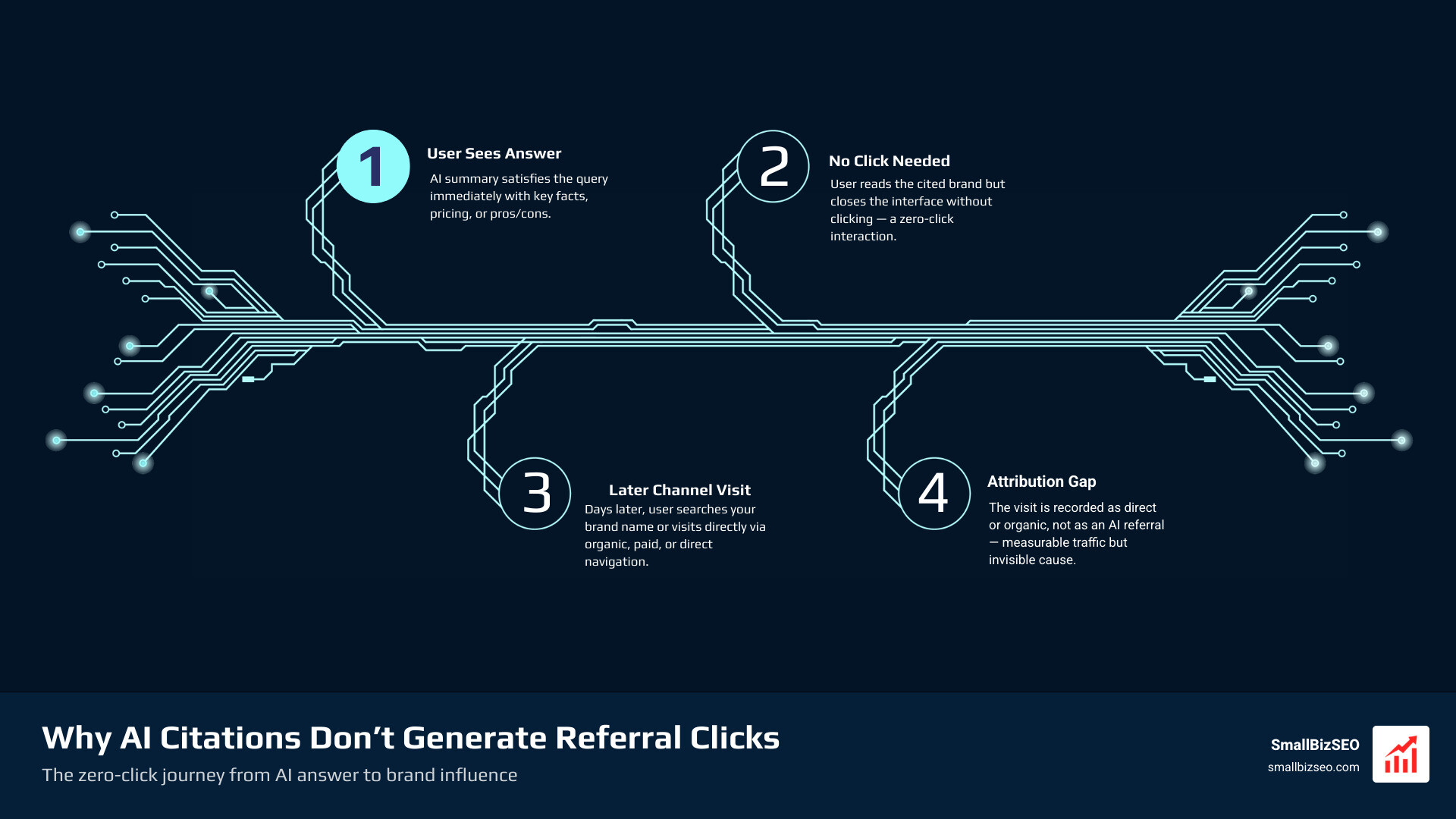
Why don’t AI citations always produce measurable referral visits?
Direct answer: Users frequently read an AI-generated summary, absorb the recommended brand or solution, and either close the interface without clicking or visit later via organic search, paid ads, or direct navigation.
When evaluating why AI citations do not always produce measurable referral visits, we have to understand the zero-click nature of generative search. Research from the Pew Research Center highlights that users are less likely to click on organic links when an AI summary satisfies their query immediately. If an answer engine synthesizes key facts, pricing, or product pros and cons, the reader gets immediate value without navigating to the underlying source.
Several structural factors explain why direct clicks fail to materialize:
- Immediate Query Resolution: Many informational queries are fully answered within the chat interface. When an AI tool provides complete details, clicking an outbound link is unnecessary.
- Non-Clickable References and Offline Answers: An AI engine might reference a company by name without creating an outbound hyperlink. In fact, research shows Gemini generates no clickable citation in 92% of evaluated responses, while significant portions of answers across major models are generated from internal training weights without an explicit web fetch.
- Attribution and Referral Drop-Off: Outbound visits from generative platforms frequently suffer from stripped referral headers, in-app browser restrictions, or analytics misclassification, often grouping visits into direct traffic or unspecified mediums.
- Mismatched Journey Stages: Discovery and evaluation pages make up roughly 57.0% of AI citations, but capture only 8.9% of AI referral traffic. Conversely, homepages capture over 57.7% of AI traffic while receiving only 3.0% of citations. Citations happen during research, but clicks happen when users are ready to take action.
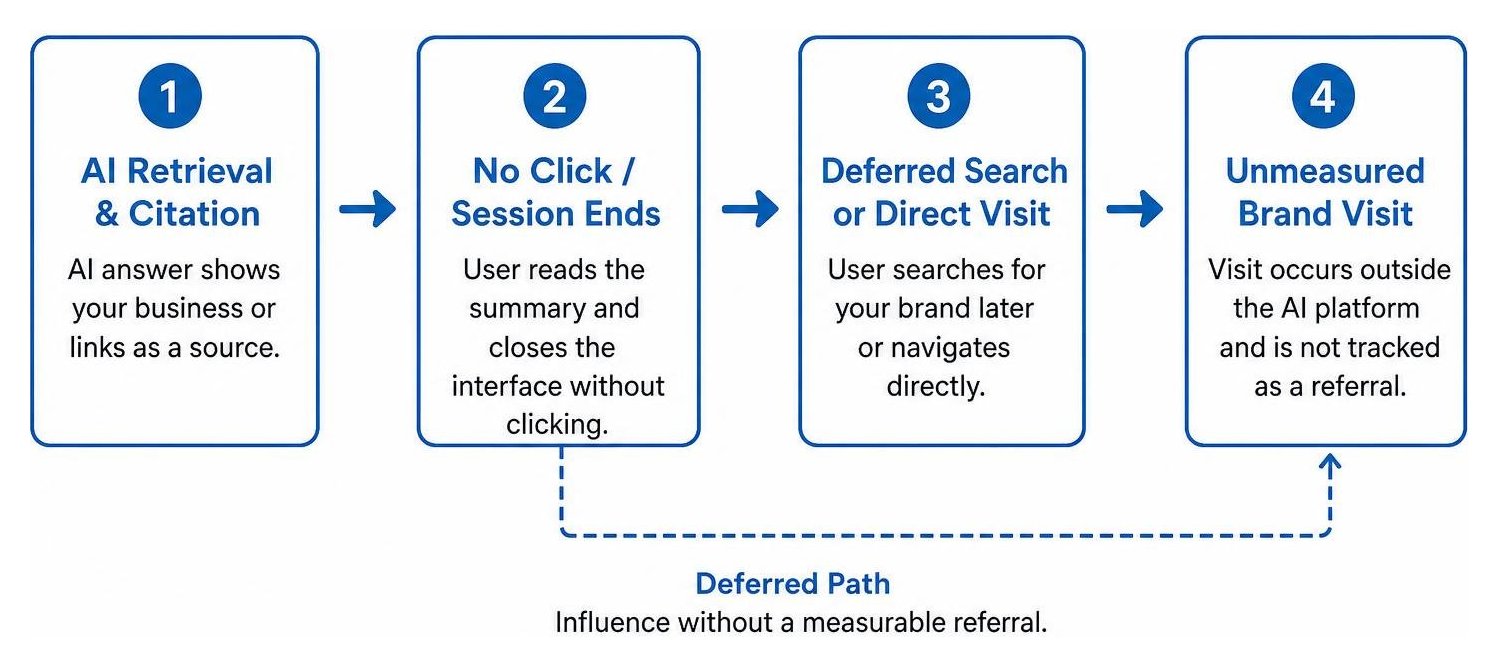
Understanding AEO mentions vs citations is essential for any digital marketing team. A mention occurs when an engine names your brand in its generated response text, building brand awareness. A citation occurs when the system references your URL as a source footnote or linked card. Brand mentions occur roughly 3.2 times more often than clickable citations. While an AI citation rate reflects technical authority, neither a mention nor a citation guarantees an immediate ai referral traffic session.
What should you measure beyond referral clicks?
Direct answer: Teams must track a combined set of brand discovery indicators, including branded search impressions, direct navigation baseline lifts, and assisted conversions, rather than relying exclusively on last-click referral sessions.
Evaluating generative visibility solely through referral dashboards creates a skewed perspective. When analyzing the rising share of website traffic generated by ai assistants, total AI referral volume remains a small fraction of organic search. Across standard industry benchmarks, AI traffic represents approximately 0.19% of total visits, while traditional organic search accounts for over 20.45%—making organic search roughly 108 times larger.
To capture true commercial value, establish a multi-layered dashboard covering:
- Confirmed AI Referral Traffic: Track visits coming directly from known engine domains (such as ChatGPT, Perplexity, and Copilot) via analytics tools, and configure filters to turn invisible ai search visits into measurable ga4 metrics.
- Branded Organic Search Volume: Monitor Google Search Console for lifts in branded impressions and clicks following sustained AI visibility.
- Direct Traffic Baselines: Watch for upward shifts in direct sessions to core landing pages that coincide with AI citation appearances.
- Assisted and Post-View Conversions: Assess whether buyers mention finding your business through an AI assistant during sales calls or form submissions.
Monitoring these metrics helps teams understand the broader value of visibility, as outlined in AI Search Visibility KPIs: Citations and Referral Traffic. A user who discovers your business via an engine synthesis might verify your reputation and convert days later via a bookmark or search engine, demonstrating the conversion power of ai referral traffic versus google search.
How can you check whether an AI mention may be influencing results?
Direct answer: Check AI visibility by running scheduled prompt queries across core commercial topics, logging mention and citation frequency, and comparing those dates against trends in your branded search, direct sessions, and lead volume.
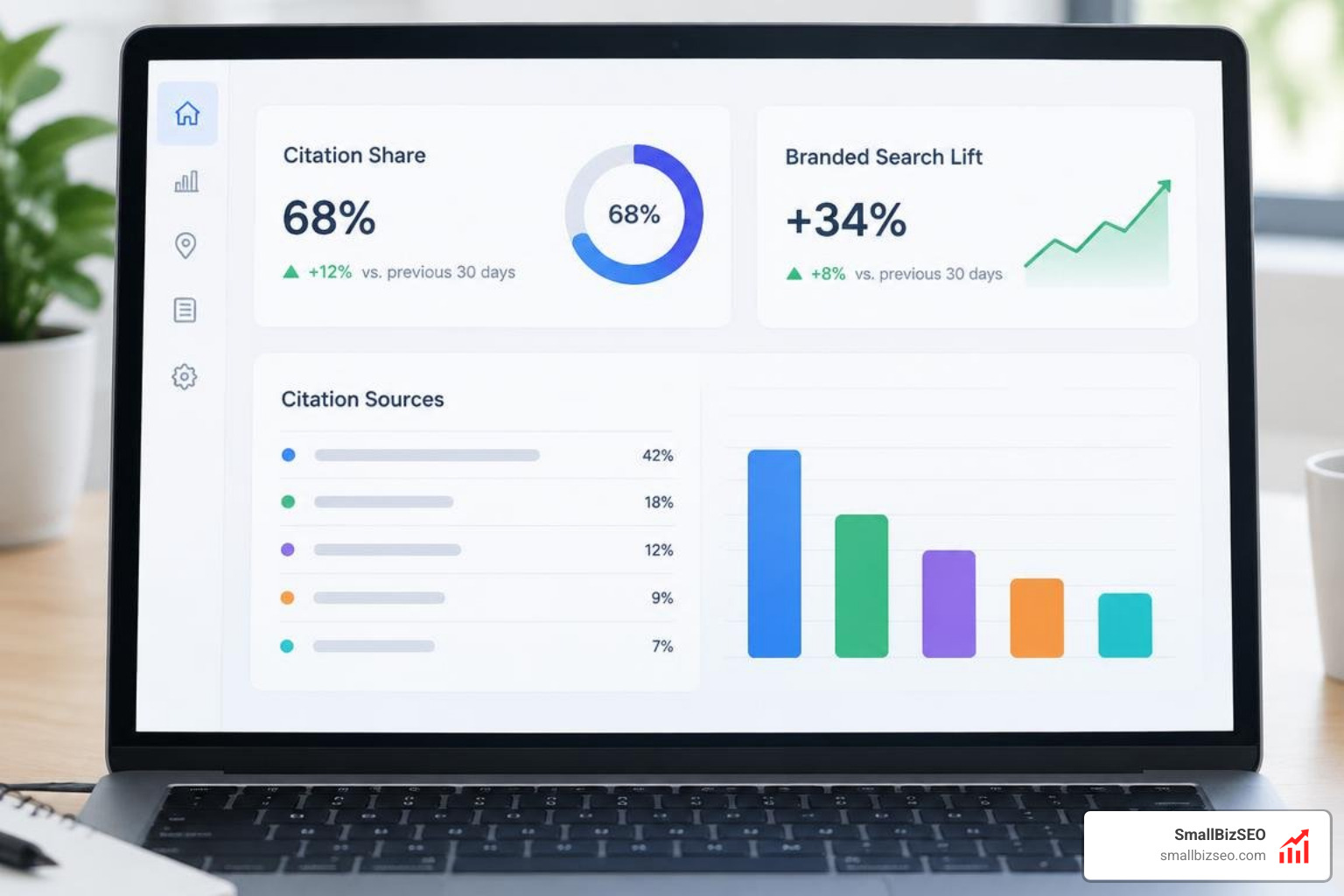
To establish whether an engine appearance corresponds with business growth, follow a structured tracking routine:
- Establish a Fixed Prompt Library: Build a controlled set of 20 to 50 buyer-intent prompts representing your primary services and industry solutions.
- Log Mentions, Citations, and URLs: Run these prompts on a weekly schedule across platforms like ChatGPT Search, Perplexity, and Google AI Overviews. Record whether your brand was mentioned, which specific URLs were cited, and if links were clickable.
- Track Content Authority and Entity Signals: Review how well your underlying pages communicate clear facts. Pages with high topical authority, clean structured data, and clear entity definitions earn higher citation stability, as detailed in research on why ChatGPT isn't citing your pages (and how to fix it).
- Compare Visibility Against Channel Growth: Map your weekly citation scorecards against your web analytics over a one- to four-week lag window. Watch for directional correlations in direct traffic and brand queries.
- Account for Confounding Variables: Always cross-reference marketing campaigns, seasonal trends, and organic ranking fluctuations before attributing increases solely to AI engine mentions.
Hypothetical Impact Scenario
Consider a business-to-business equipment supplier that appears in generative comparison answers:
- Week 1–2: The supplier earns source citations across three major AI platforms for competitive evaluation queries. Direct referral visits recorded in analytics total only 4 sessions.
- Week 3–4: Outbound referral clicks remain flat at 5 sessions. However, branded search queries in Google Search Console increase by 28%, and direct visits to the primary product catalog rise by 19%.
- Outcome: While last-click referral tracking showed negligible activity, the sustained citations introduced the brand during buyer research, leading users to navigate to the site later through standard channels.
Tools outlined in the AI search visibility checklist help quantify these patterns over time without assuming direct causation.
How should you report AI citation impact when attribution is uncertain?
Direct answer: Structure your client and executive reports into distinct, unbundled tiers—separating verified referral visits, citation share of voice, and downstream brand demand—while explicitly stating measurement limitations.
When presenting data to stakeholders, do not merge citations and traffic into a single aggregate metric. Clearly differentiate between what the AI engine retrieved and how human users interacted.
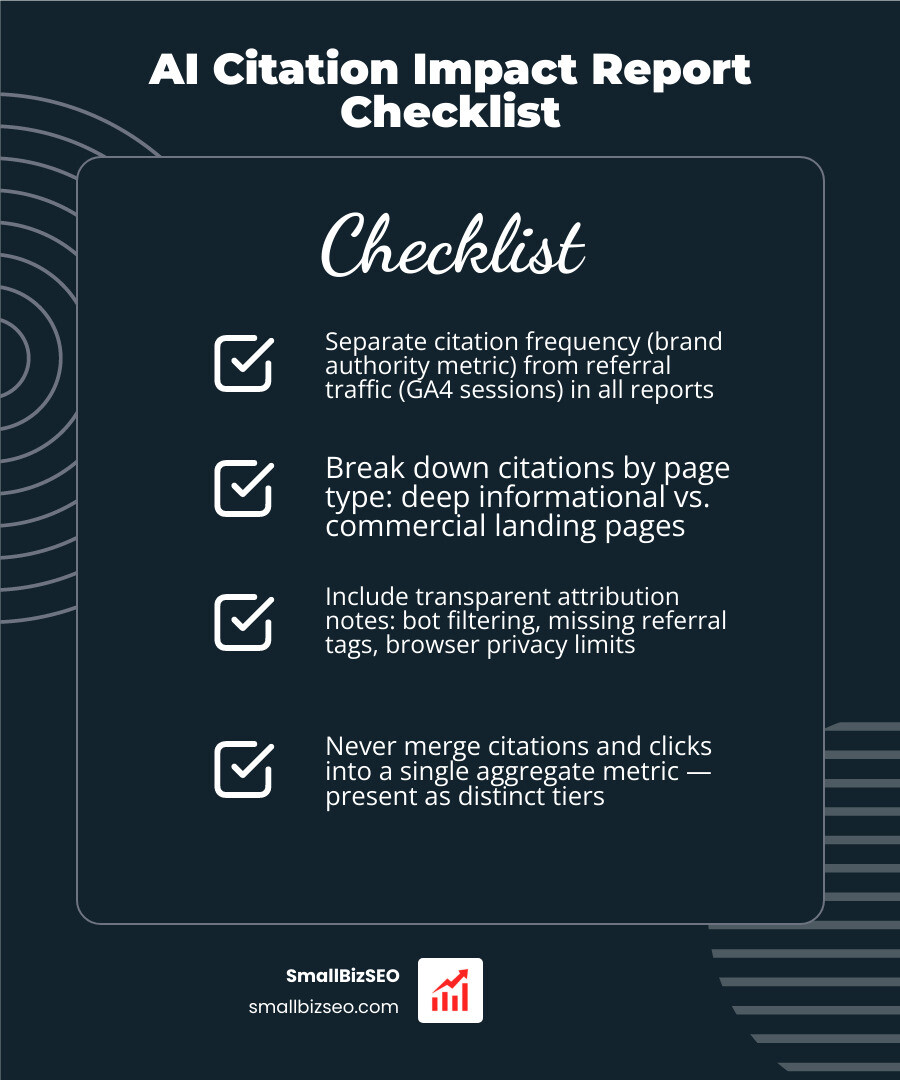
Ensure your reports include:
- Citations vs. Traffic Segmentation: Present citation frequency as a measure of brand authority and retrieval relevance, while reporting GA4 sessions as direct referral engagement.
- Page-Type Breakdown: Highlight whether citations are landing on deep informational resources or commercial pages to clarify user intent.
- Transparent Attribution Notes: Note any tracking gaps, including bot filtering, missing referral tags, and browser privacy features that prevent exact source verification.
- Long-Term Demand Trends: Show multi-week rolling averages for brand search impressions alongside your AI visibility score to illustrate directional brand lift.
By framing AI search optimization as top-of-funnel consideration rather than purely direct-response acquisition, teams avoid making unverified ROI claims while accurately demonstrating market presence.
Build a Measurable AI Search Strategy
Direct answer: Transition your search strategy by combining structured, citation-ready content architecture with multi-signal analytics tracking to capture both direct visits and downstream brand demand.
Turning AI discovery into meaningful business growth requires clear content structure and realistic measurement. Because AI models prioritize well-structured, authoritative data, organizing your pages with concise summary answers, clear headings, and schema markup helps machines extract and reference your content accurately.
At SmallBizSEO, we help businesses navigate search visibility through technical precision and transparent reporting. Our data-driven Velocity framework focuses on building E-E-A-T-compliant content clusters, strengthening technical site health, and monitoring multi-channel brand growth across traditional search and generative engines.
If you are ready to modernize your tracking, audit your entity footprint, and capture demand across modern discovery platforms, review our AI SEO services or reach out through our contact page to evaluate your digital visibility strategy today.