How to Track Local Rankings Across Multiple Locations Accurately

How Do You Track Local Rankings Across Town?
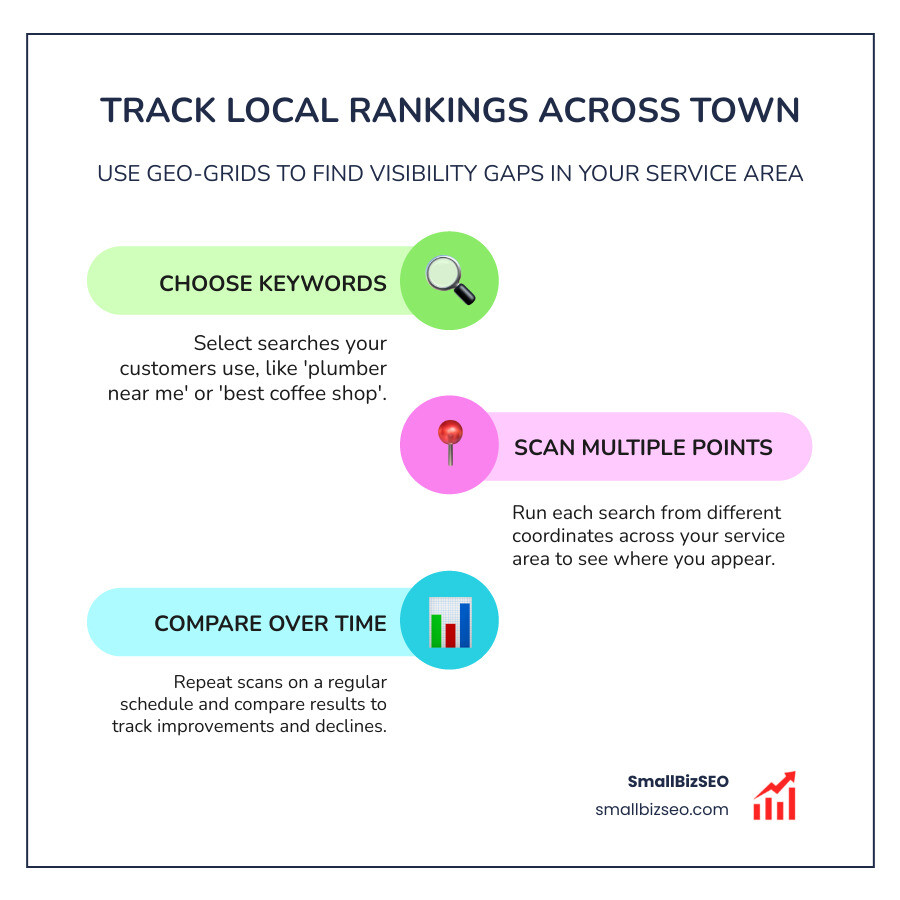
For tracking local rankings from multiple locations, choose a few searches your customers use, then run each search from points across the area you serve. A geo-grid shows where your business appears in Google Maps results and where it drops out. Save the first scan, repeat it on a regular schedule, and compare the same points over time. Check organic results separately so you do not mistake a Maps ranking for a website ranking.
One search from your business address cannot show what customers see across town. The goal is to find visibility gaps you can act on, not chase a single ranking.
I’m Clayton Johnson, founder of SmallBizSEO. My work connects SEO research with practical reporting, and this guide explains how to make tracking local rankings from multiple locations useful for a small business.
Why Do Local Search Rankings Vary Across Town?
Local rankings change from one neighborhood to another because search engines prioritize geographic relevance to serve users the most convenient options. When a customer searches for a service, search algorithms evaluate the user's exact physical coordinates, creating a dynamic radius where nearby businesses gain a distinct advantage.

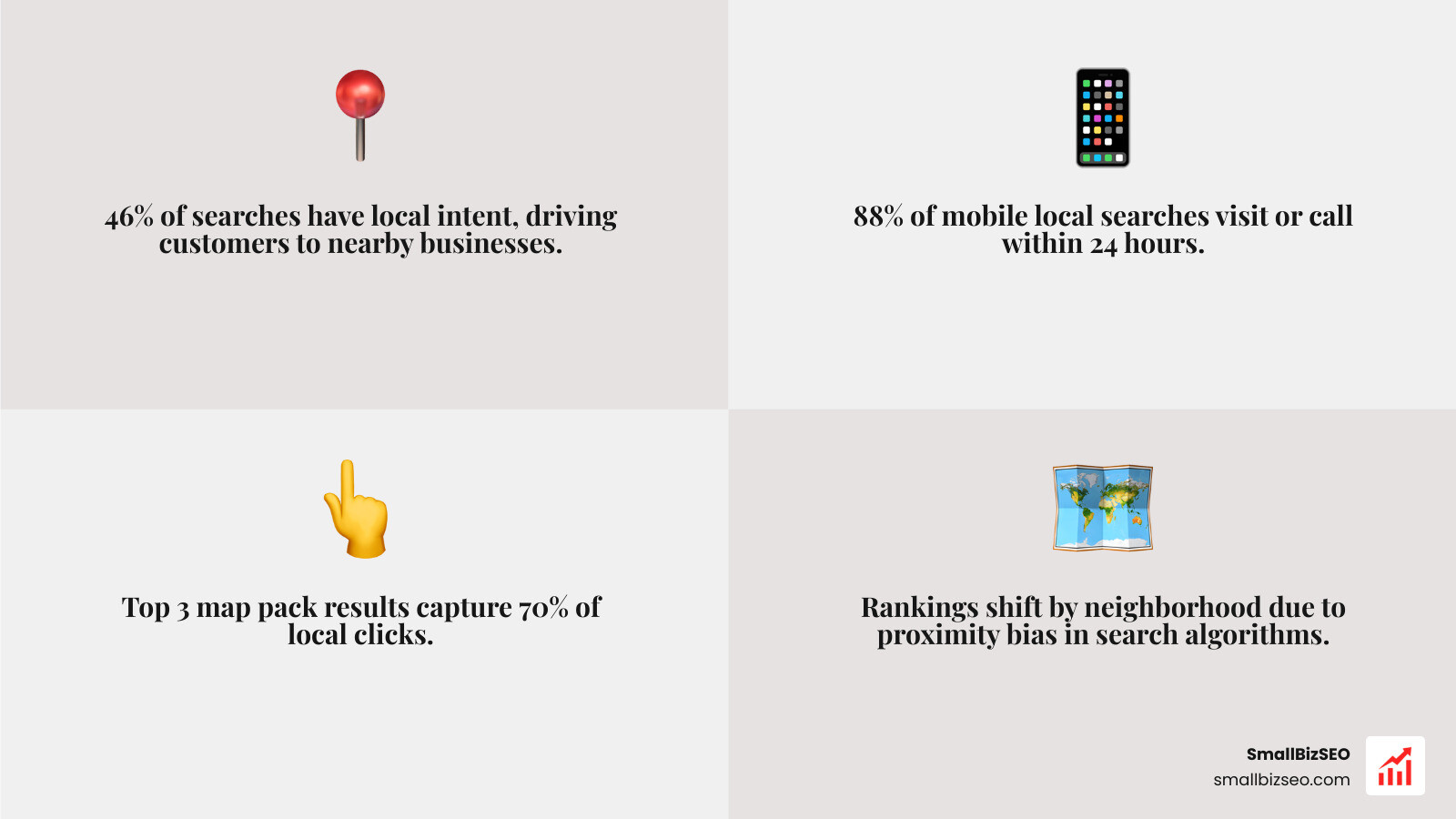
Research shows that 46% of all searches have local intent, and 88% of consumers who search for a local business on a mobile device visit or call within 24 hours. Furthermore, the top three map placements capture roughly 70 percent of local clicks. Because search engines weigh physical distance heavily, a business might rank in the top spot right outside its front door but vanish from results just three blocks away.
Traditional desktop lookups often rely on broad city centroids, masking the micro-market shifts that occur across different streets. Understanding how location-based personalization influences results helps business owners avoid the false assumption that a single strong ranking at the office means total market dominance.
How Can You Track Local Rankings from Multiple Locations?
To track local visibility accurately across a broader service area, deploy a dedicated rank checker that queries search results across a multi-point geographic grid. This separates what users see in localized pack results from traditional organic website listings.
When tracking visibility across an entire market, you must distinguish between the prominent Local Pack, extended results in the Local Finder, and standard organic blue links. A mobile user typing a Near Me query triggers an immediate proximity filter that can completely change which companies appear. Monitoring multiple coordinates simultaneously reveals whether your brand holds real digital market share or merely captures immediate foot traffic near your building.
Why Do You Need Geo-Grids to Track Local Rankings from Multiple Locations?
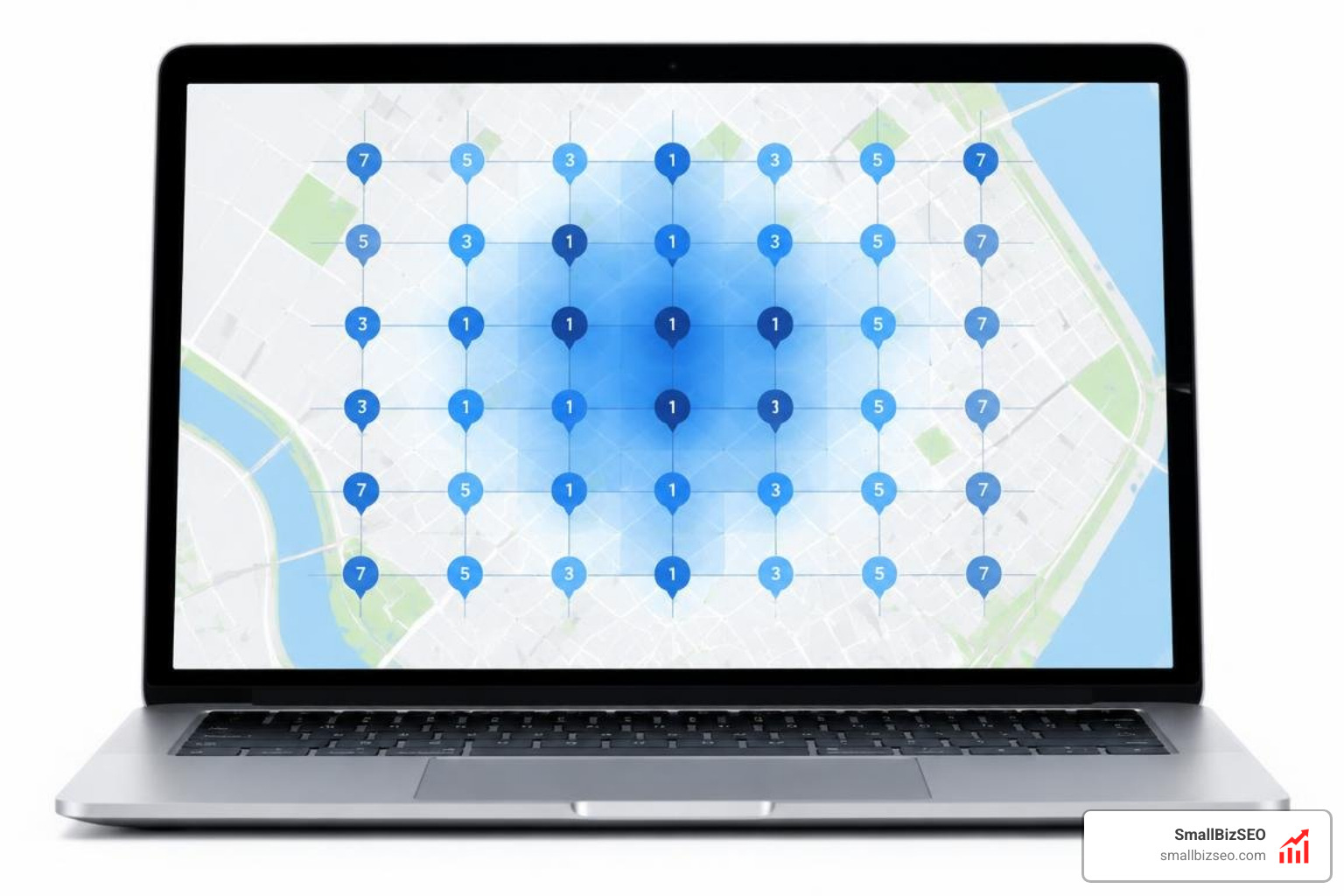
Geo-grids simulate real search queries from precise GPS coordinates laid out in a matrix over your service territory, providing a visual heat map of your local standing.
Rather than relying on a single data point, a Local Rank Grid runs queries from matrix sizes ranging from 3x3 up to 13x13 points. Because proximity is a major ranking factor, geo-grids pinpoint the exact streets where your digital presence weakens. Coordinate-level queries can be automated through developer APIs, allowing businesses to map visibility boundaries and identify underserved zones that require stronger localized optimization.
How Do You Set Up Multi-Point Rank Tracking?
Setting up multi-point tracking requires defining your target geography, choosing the right terms, and configuring the scanning parameters.
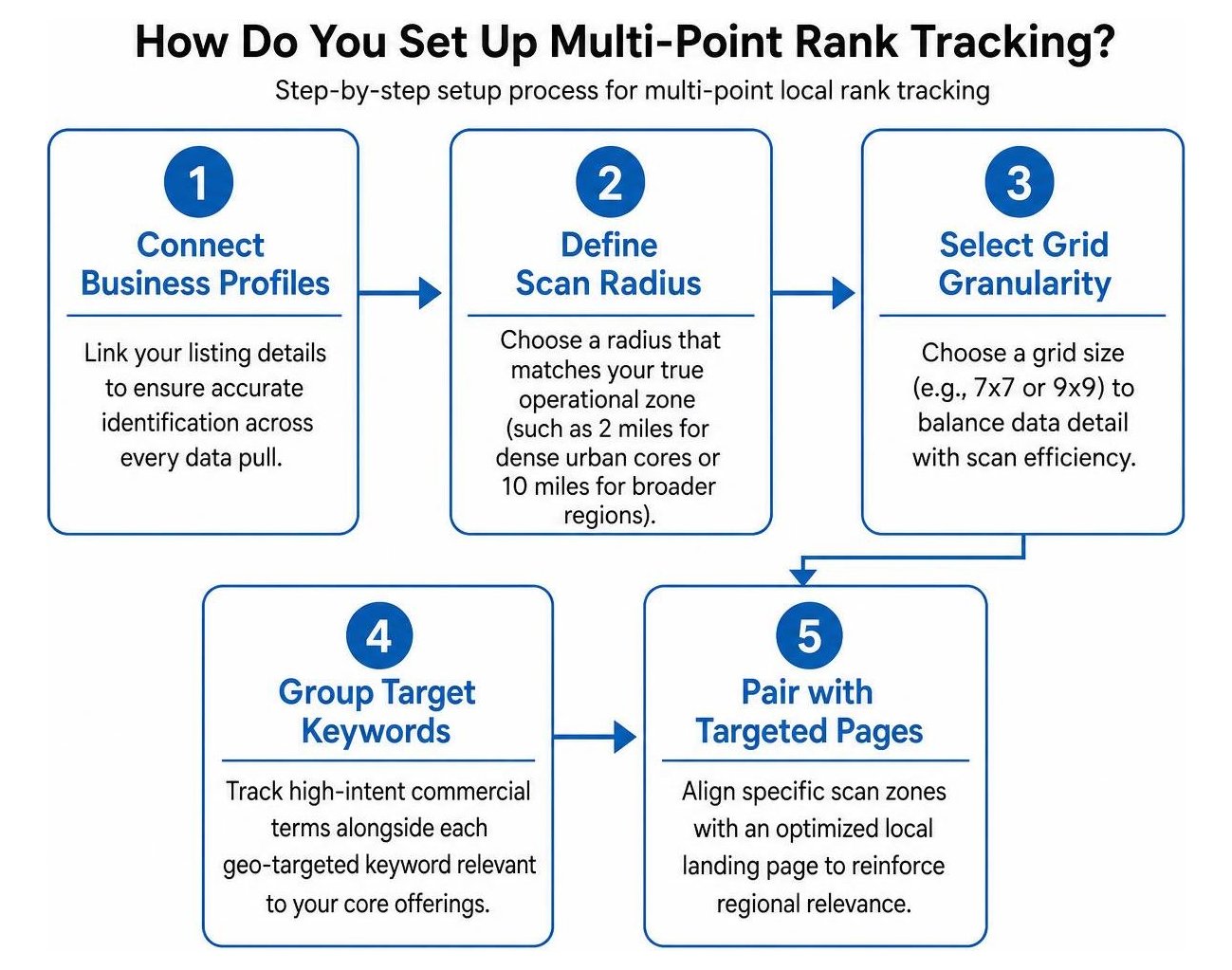
- Connect Business Profiles: Link your listing details to ensure accurate identification across every data pull.
- Define Scan Radius: Choose a radius that matches your true operational zone (such as 2 miles for dense urban cores or 10 miles for broader regions).
- Select Grid Granularity: Choose a grid size (e.g., 7x7 or 9x9) to balance data detail with scan efficiency.
- Group Target Keywords: Track high-intent commercial terms alongside each geo-targeted keyword relevant to your core offerings.
- Pair with Targeted Pages: Align specific scan zones with an optimized local landing page to reinforce regional relevance.
- Schedule Scan Frequency: Establish automated recurring scans (weekly or monthly) to establish consistent baseline comparisons as outlined in our multi-location SEO strategy guide.
Which Metrics and Tools Help Track Local Rankings from Multiple Locations?
Evaluating tracking tools requires comparing their data accuracy, reporting capabilities, pricing structures, and core metrics.
Key metrics summarize grid-level performance effectively:
- Top 3 Presence: The percentage of scanned grid pins where your business ranks in positions 1 through 3.
- Presence Rank: The average rank calculated exclusively across points where your business actually appears.
- Total Rank: The comprehensive average rank across all scanned pins in the grid, including points where your profile drops out of the top results.
- Aggregated Performance: Overall Visibility Score metrics that estimate click-through potential based on total grid dominance.
| Tool / Platform | Best Use Case | Tracking Mechanism | Pricing Model |
|---|---|---|---|
| Specialized Geo-Grid Trackers | Visual client reporting & heat maps | Multi-point coordinate grids (3x3 to 13x13) | Monthly subscription or scan credits |
| Developer Search APIs | Custom dashboards & bulk multi-location audits | Direct coordinate & ZIP endpoint queries | Per-request pricing from low-cost units |
| Comprehensive Daily Trackers | Unified local & national tracking | Combined SERP snapshots & local map sweeps | Tiered software subscriptions (see our review of the best daily rank software) |
How Can You Analyze Multi-Location Data and Improve Local Visibility?
Once scan data is collected, evaluate the distribution patterns across your market to diagnose why certain neighborhoods perform better than others.
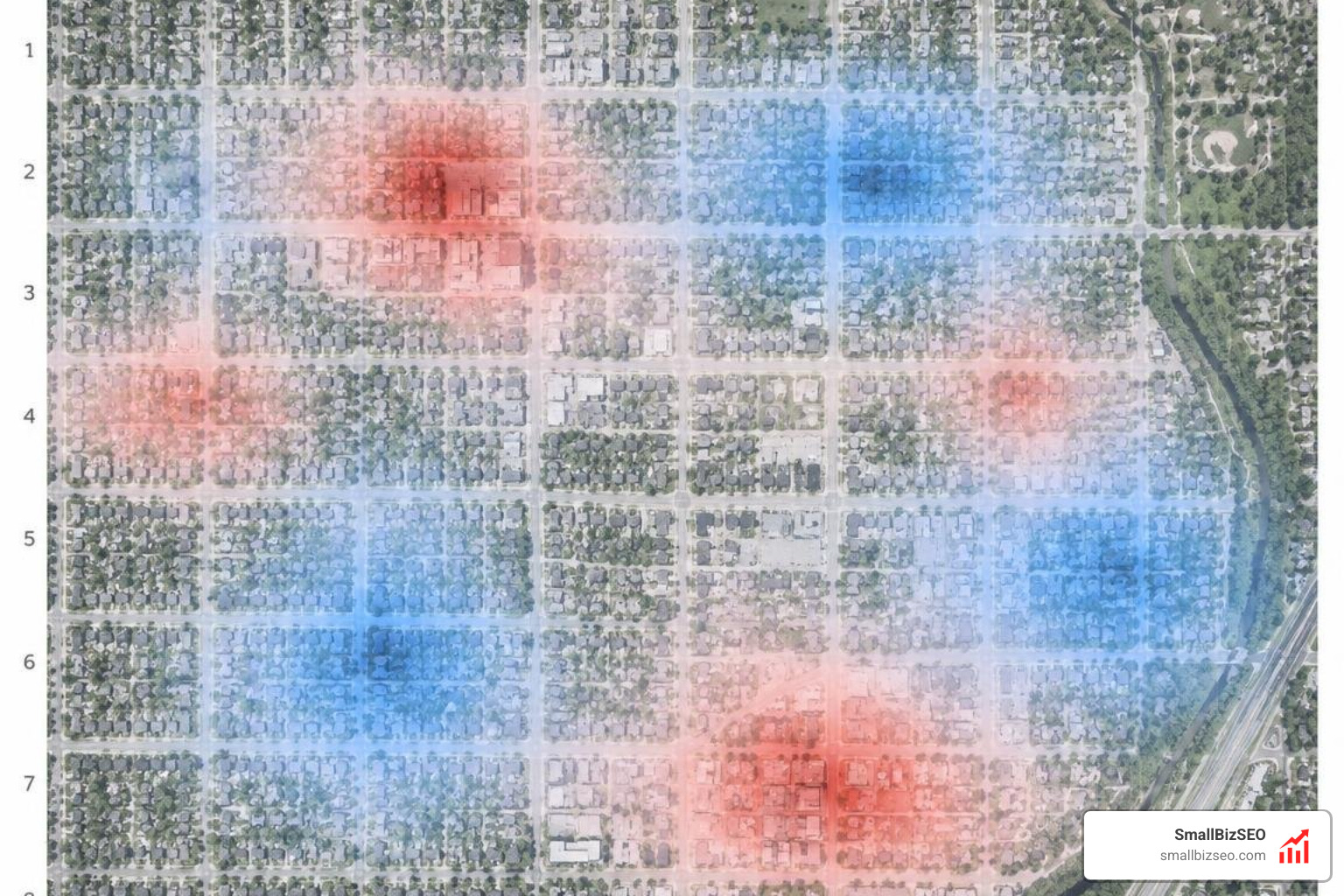
Centralizing multi-point data in an SEO reporting dashboard helps identify sudden ranking drops caused by algorithmic updates or emerging map spam from competitors utilizing improper naming tactics. Reviewing neighborhood variations enables you to allocate marketing resources directly toward the sub-markets showing the highest revenue potential.
How Can You Benchmark and Outrank Competitors Across Every Grid Point?
To systematically outrank competitors across an entire town, analyze the profiles outranking you at specific weak grid coordinates.
- Audit Categorization: Ensure your primary category perfectly matches market leaders and fully configure all relevant GBP services.
- Evaluate Review Velocity: Compare the frequency and overall volume of incoming customer reviews against leading competitors in low-performing zones.
- Unify Entity Signals: Secure structured citations across major business directories to build authority; maintaining local citation consistency strengthens search engine trust.
- Review Sentiment: Analyze customer sentiment trends in competing reviews to identify service gaps your business can highlight.
How Can You Maintain Local Ranking Momentum?
Sustaining ranking improvements across multiple geographic points requires continuous optimization and structured tracking routines.
Track recurring engagement signals like customer direction requests and publish weekly GBP posts highlighting service updates to maintain listing activity. With generative AI tools and search engine answer summaries now impacting how consumers discover service providers, maintaining clear entity data ensures inclusion in AI-driven summaries. At SmallBizSEO, we utilize our proprietary data-driven Velocity framework on our Vicinity local SEO platform to streamline rank tracking, automate technical updates, and turn multi-location ranking insights into sustainable business growth.
Turn Multi-Point Location Data into Measurable Growth
Tracking your local positions across town removes the guesswork from local search strategy. By deploying multi-point geo-grids, monitoring core metrics like Top 3 Presence, and benchmarking directly against area competitors, you can systematically expand your visibility footprint.
If you are ready to eliminate visibility blind spots and capture more market share across every neighborhood you serve, explore our specialized local SEO packages or schedule a thorough SEO visibility audit with our team today.