SEO Automation Made Simple with AI Agents

SEO Automation Made Simple with AI Agents
How Can AI SEO Automation Save Your Small Business Time?
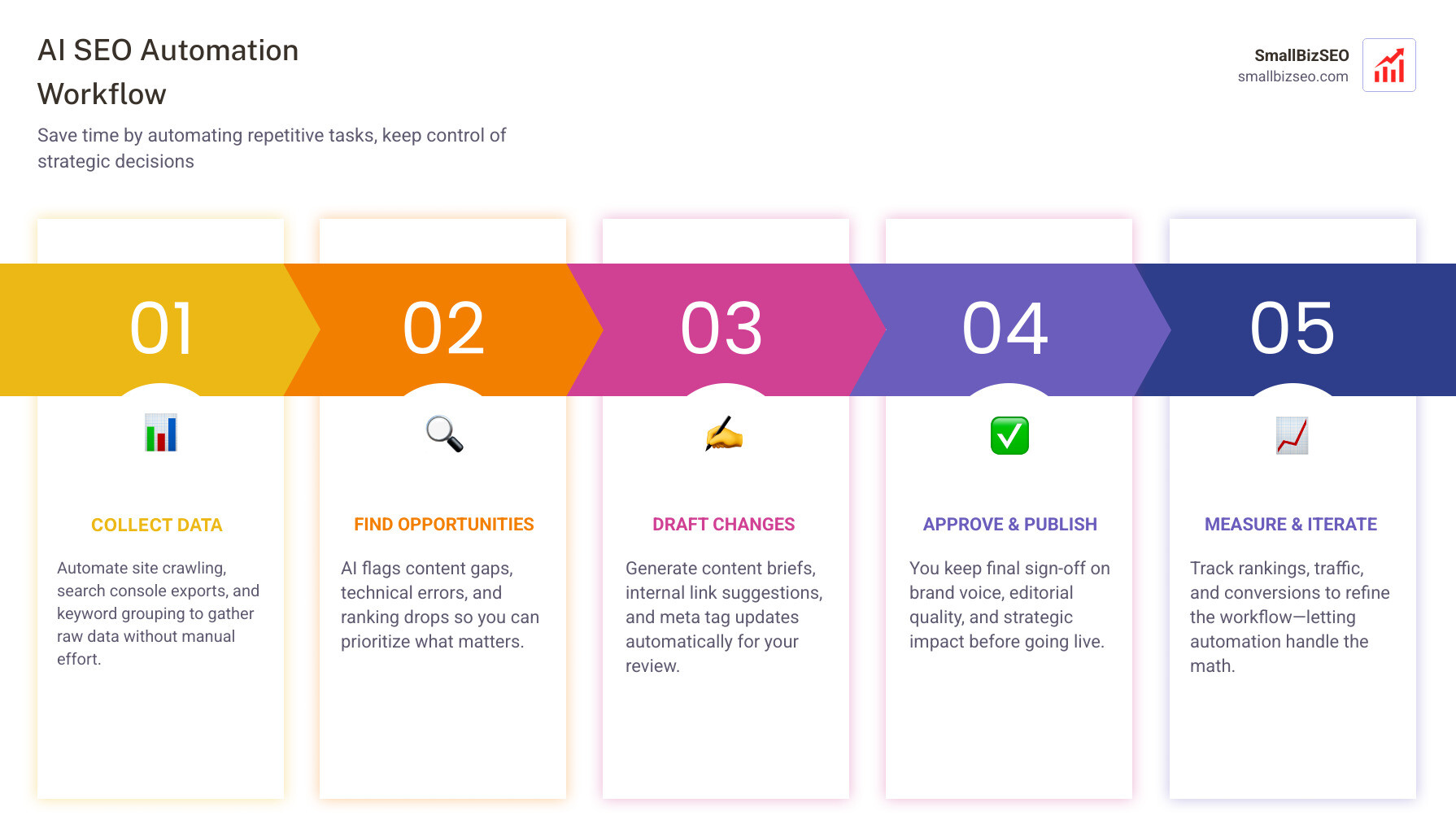
Start by automating the SEO work you repeat: schedule site checks, collect search data, group related keywords, and draft content briefs. Then review the findings, choose which opportunities matter, and approve any content or site changes before they go live. AI SEO automation can help you keep up with these tasks, but it should not make brand and business decisions for you.
I’m Clayton Johnson, a digital marketing and SEO strategist whose work connects search, content, and digital PR to help businesses become easier to find and trust. I’ll show you where AI SEO automation can save time and where your judgment still matters.
Related content about AI SEO automation:
What Is AI SEO Automation and How Does It Transform Search Strategy?
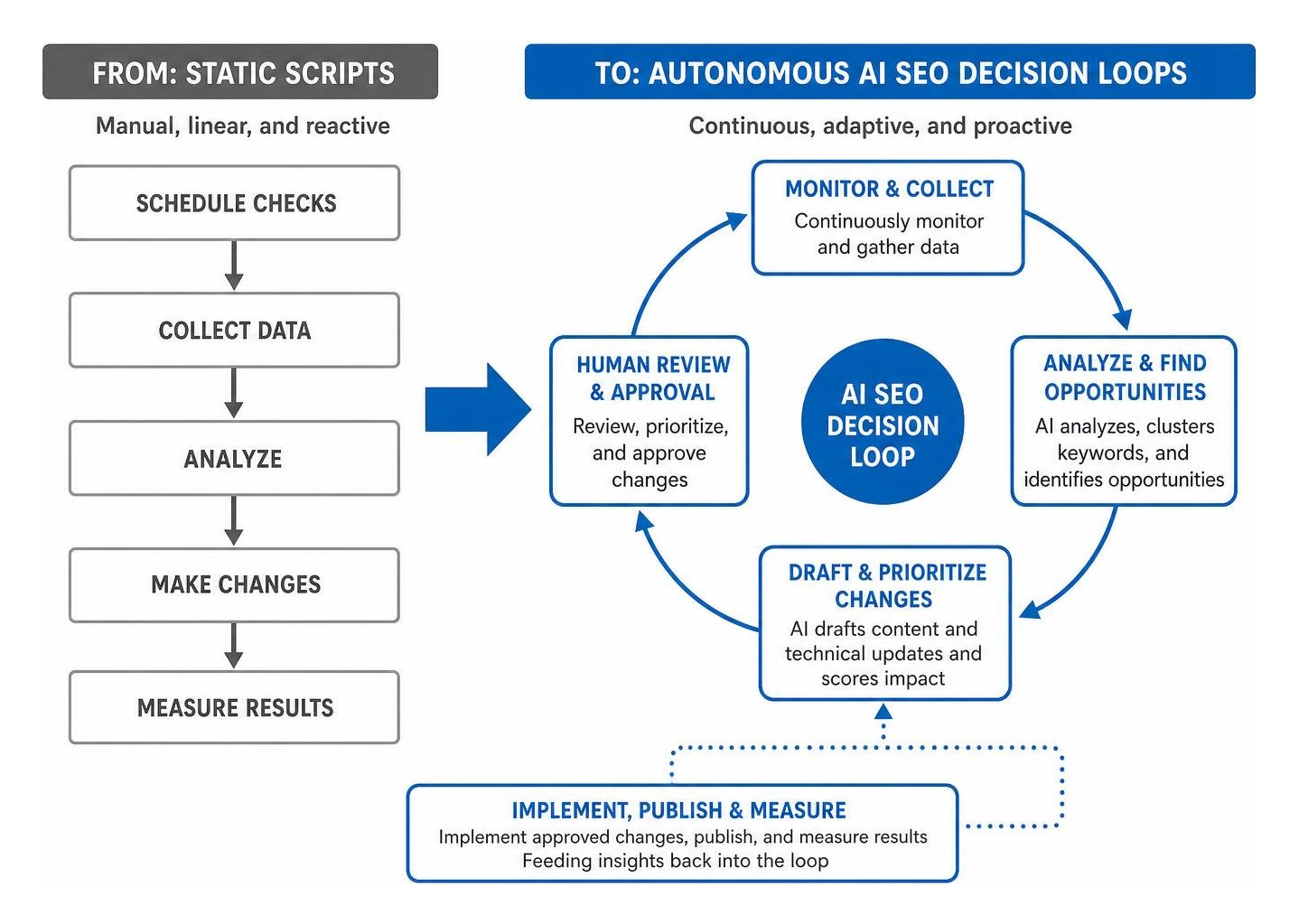
AI SEO automation uses machine learning models, autonomous software agents, and intelligent algorithms to handle repetitive search optimization workflows without constant manual input. Unlike legacy tools that follow static rules, modern systems evaluate real-time search engine results, identify technical errors, group keywords semantically, and generate structured content drafts.
The AI-powered SEO software market is expanding rapidly, projected to grow from $3.98 billion to $32.6 billion over the coming decade at a 23.4% compound annual growth rate (CAGR). Understanding what are AI SEO tools begins with recognizing how search itself has evolved. Modern search involves traditional search engines alongside AI answer engines like ChatGPT and Perplexity. Generative Engine Optimization (GEO) requires your digital presence to be direct, structured, and citation-ready.
| Feature Category | Traditional Rule-Based Automation | Autonomous AI SEO Systems |
|---|---|---|
| Data Processing | Static crawls run on fixed schedules | Continuous monitoring with anomaly detection |
| Keyword Research | Exact-match query pulling and volume sorting | Intent clustering, semantic analysis, and AI query mining |
| Content Creation | Basic programmatic template scraping | Multi-model drafting with brand context and schema integration |
| Optimization Strategy | Manual adjustments based on rigid checklists | Real-time predictive scoring for search engines and answer engines |
| Workflow Governance | Siloed spreadsheets requiring manual transfers | Unified pipelines with built-in human approval gates |
Which SEO Tasks Should You Automate Versus Keep Human-Led?
You should automate repetitive, data-intensive tasks—such as technical health crawls, keyword clustering, and dashboard reporting—while keeping positioning, brand voice, and final editorial sign-offs human-led. Automating data collection lets your team focus on high-impact strategy instead of spreadsheet maintenance.
Using SEO visibility audit automation let the robots do the heavy lifting allows a single technical specialist to manage dozens of sites without dropping quality.
| SEO Task Category | Automation Level | Operational Risk Profile | Oversight Model Required |
|---|---|---|---|
| Technical Crawling & Audits | 90% Automated | Low (Diagnostic only) | Exception-based engineer alerts |
| Keyword Clustering & Mining | 85% Automated | Low (Requires strategic filter) | Strategist intent review |
| Reporting & KPI Dashboards | 95% Automated | Very Low (Data assembly) | Account lead narrative check |
| First-Draft Content Briefs | 75% Automated | Medium (Context drift) | Editor brief approval |
| Long-Form Content Production | 50% Automated | High (Quality and accuracy risks) | Pre-publish human editorial QA gate |
| Brand Positioning & Strategy | 10% Automated | Critical (Core commercial identity) | Executive and senior strategist led |
Which Technical and Reporting SEO Tasks Can You Automate?
You can automate technical health monitoring, indexation checks, sitemap validation, and reporting pipelines. Automated crawlers run delta checks to surface broken links, schema discrepancies, and Core Web Vitals regressions.
For reporting, automation connects data from Google Search Console, analytics platforms, and rank trackers into unified dashboards, freeing account managers to focus on strategic insights rather than pulling numbers.
Which SEO Tasks Need Strategic Human Approval?
Strategic positioning, unique value propositions, thought leadership, and high-stakes outreach require human guidance. While AI can analyze competitor footprints, it cannot define your brand's unique point of view or build authentic industry relationships. Every client-facing deliverable and published page requires a human approval gate to protect commercial authority.
How Can You Automate Your SEO Workflow?
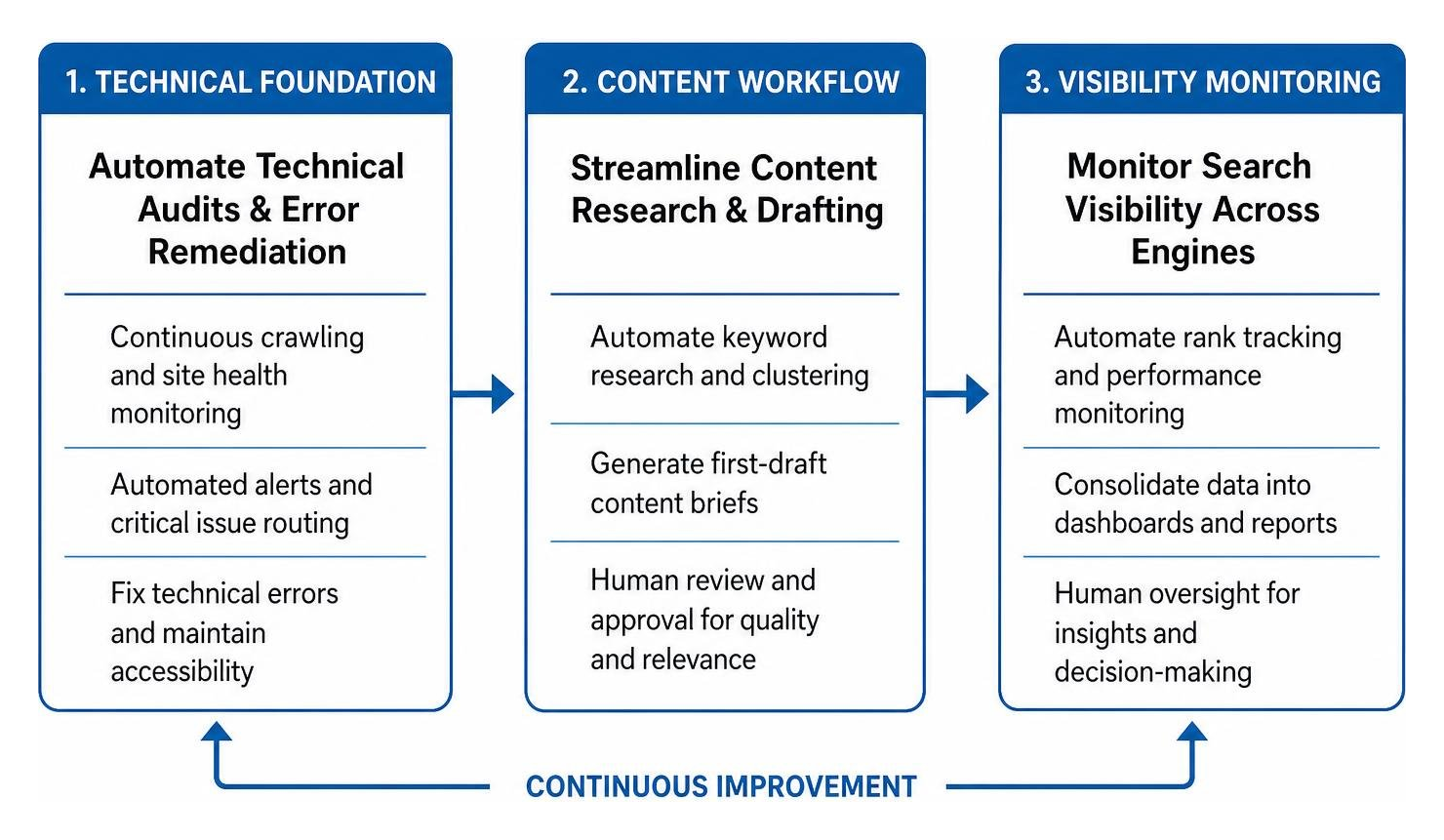
Automating your SEO workflow requires a phased rollout: start by securing your technical foundation, streamline content research and drafting, and monitor search visibility across both search engines and AI answer engines.
Step 1: How Can You Automate Technical Audits and Error Remediation?
Set up continuous crawling systems that monitor site health and route alerts based on severity. Instead of generating hundreds of daily notifications that cause alert fatigue, configure your monitors to trigger tickets only when critical issues arise—such as broken indexation tags, 404 spikes, or schema markup failures.
Running the AI SEO audit tracking signals that matter ensures your pages stay accessible and properly structured for both traditional crawlers and large language models.
Step 2: How Can AI SEO Automation Streamline Content and Research?
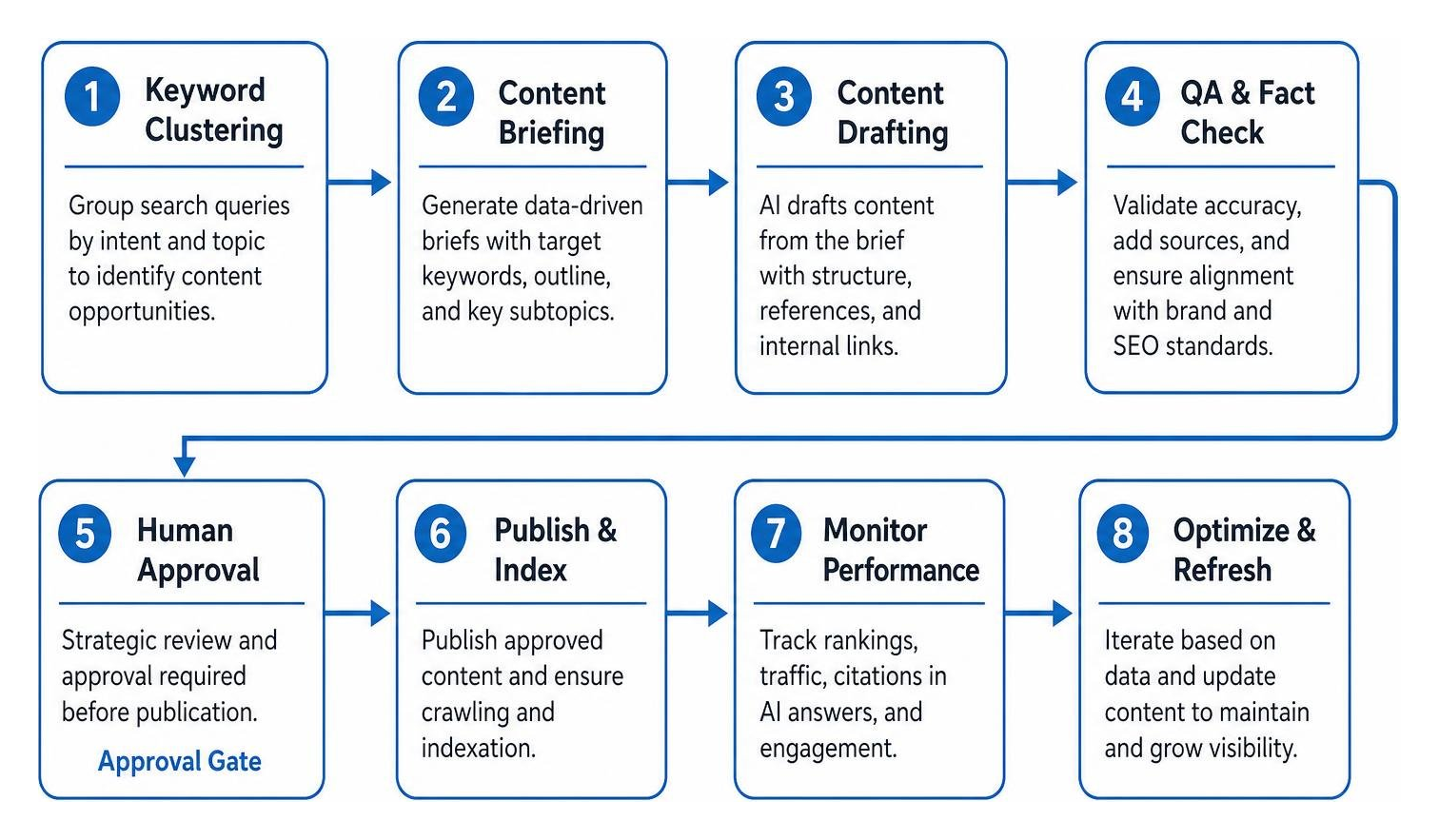
Streamline content research by using automated pipelines to extract search queries, group them by buyer intent, and generate structured content briefs. Rather than spending hours building outlines from scratch, automated tools can scan top-ranking pages, extract essential subtopics, and prepare detailed drafting templates.
When producing content, scaling AI content balancing massive output with human quality ensures that articles contain accurate business details, original insights, and clear internal linking structures.
Step 3: How Can You Track Generative Engine Optimization (GEO) and AI Answers?
Track Generative Engine Optimization by monitoring how frequently your brand appears as a cited source in AI answer platforms like ChatGPT, Perplexity, and Google AI Overviews.
To improve citation rates, ensure your content features structured definitions, clean comparison tables, and comprehensive JSON-LD schema. Understanding beyond keywords a guide to generative AI SEO services and GEO helps ensure your business remains visible wherever customers search.
How Should You Choose Between SEO Point Tools and Full-Stack Platforms?
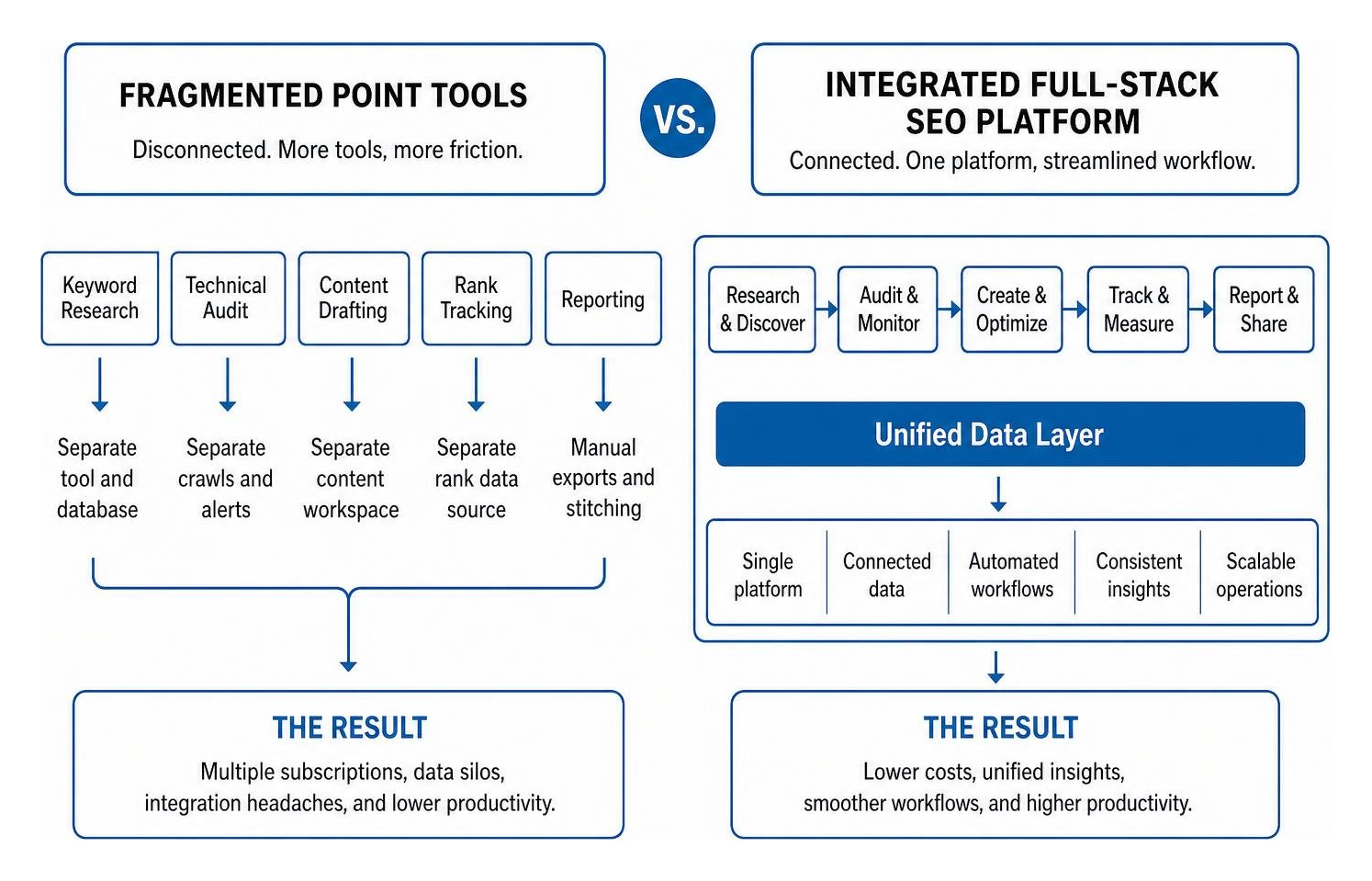
Choose integrated full-stack platforms when managing multiple sites to avoid the software subscription costs, data silos, and workflow friction of disconnected point tools. Connecting separate tools for keyword research, auditing, drafting, and rank tracking often introduces integration headaches that reduce productivity.
What Types of Autonomous Agents and SEO Software Are Available?
Modern SEO software falls into three main categories:
- Autonomous SEO Agents: Tools that handle recurring technical scans, opportunity discovery, and draft generation inside an automated execution loop.
- All-in-One Enterprise Suites: Comprehensive platforms that centralize keyword discovery, backlink intelligence, competitor auditing, and reporting dashboards.
- Content Optimization and Indexing Tools: Specialized solutions focused on real-time on-page scoring, structured data injection, and automated search engine indexing.
How Can You Avoid Over-Automation and Govern SEO Workflows?
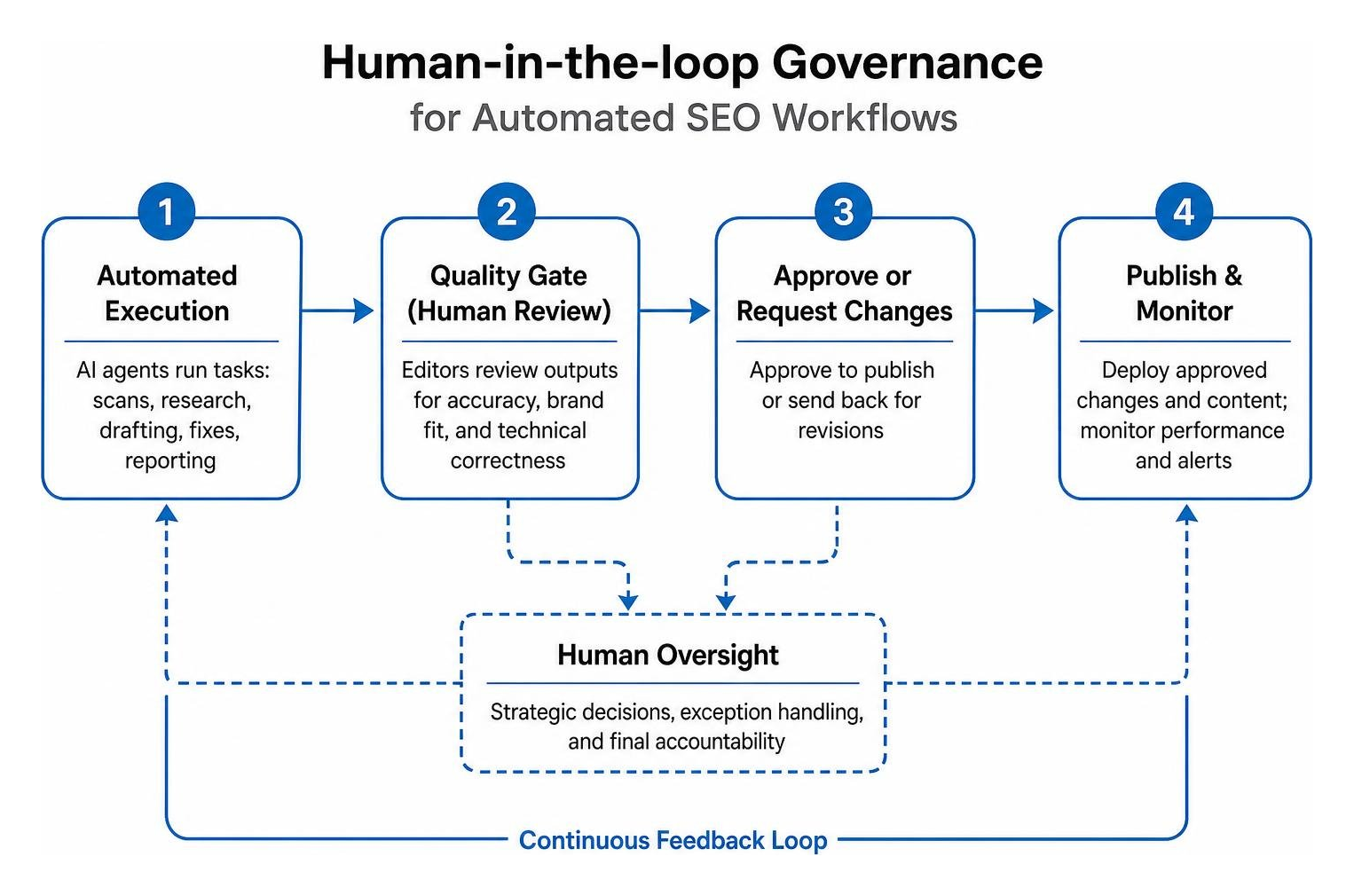
Avoid over-automation by establishing firm quality gates before any content or technical changes go live. Relying entirely on unmonitored automation can lead to repetitive content, factual errors, and noisy alert systems that teams eventually ignore.
Every automated pipeline should include an editorial review step. Human editors check drafts for brand accuracy, verify technical fixes in staging environments, and review automated performance summaries before sharing them with stakeholders.
Frequently Asked Questions About SEO Automation
Can AI completely replace an in-house SEO team or agency?
No, AI cannot replace the strategic problem-solving, commercial understanding, and creative thinking of experienced SEO professionals. Instead, automation acts as an efficiency multiplier, handling tedious operational tasks so strategists can manage campaigns more effectively and focus on growth.
Is AI-generated automated content safe from Google search penalties?
Yes, automated content is safe as long as it is helpful, accurate, and created to answer search intent rather than manipulate rankings. Search engine guidelines reward reliable, high-quality information regardless of how it is produced. Adding human editorial review ensures your content meets rigorous E-E-A-T (Experience, Expertise, Authoritativeness, and Trustworthiness) standards.
How much time and money does automating SEO workflows actually save?
Automating routine workflows can reduce research and auditing hours by over 60%, allowing account leads and strategists to support significantly more accounts without compromising work quality. Marketing automation can also drive an 80% lift in qualified lead volume by maintaining consistent publishing schedules and rapid technical error remediation.
Scaling Your Search Visibility with Autonomous Precision
Modern SEO requires combining automated data processing with experienced strategic oversight. By automating technical monitoring, keyword discovery, and routine reporting, your business can build compounding organic visibility while maintaining total control over brand quality and messaging.
At SmallBizSEO, our data-driven Velocity framework uses proven AI SEO services to eliminate operational bottlenecks, resolve technical issues quickly, and deliver sustainable organic growth. Connect with our team to discover how our automated workflows and strategic guidance can scale your search presence.