Catch the Lies Before Google Does by Fact-Checking AI-Generated SEO Articles

Why Fact-Checking AI-Generated SEO Articles Is Critical for Search Rankings
Manual fact-checking is critical because search algorithms assess content reliability, factual accuracy, and real-world helpfulness rather than writing fluency alone. Unchecked AI drafts often introduce fabricated details that damage search performance, trigger spam demotions, and erode domain authority. When teams skip verification, fact-checking AI-generated SEO articles becomes the missing safeguard between raw output and trustworthy publishing.
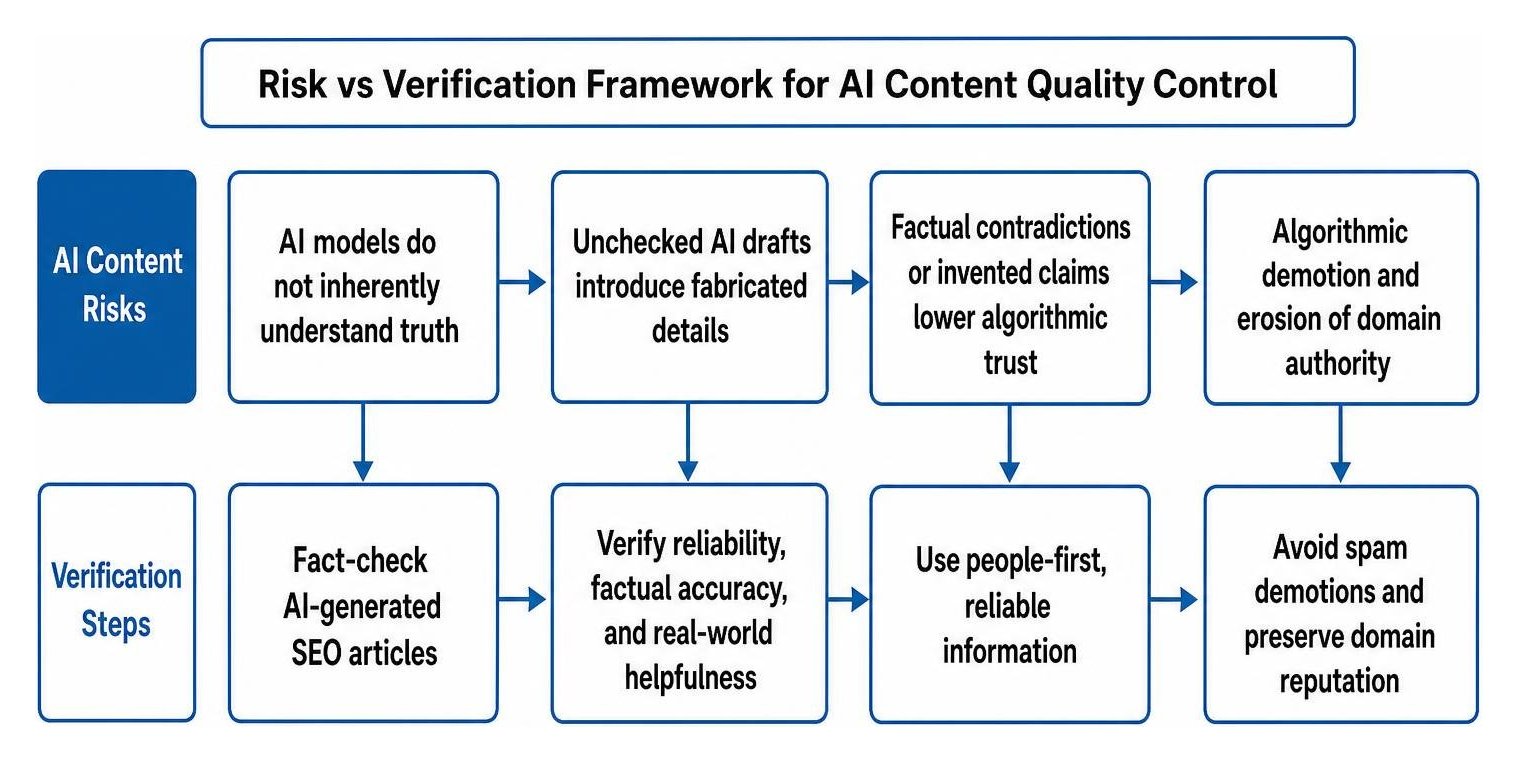
Search engines evaluate web pages using systems designed to reward reliable, people-first information. While generative models produce grammatically clean sentences in seconds, they do not inherently understand truth. Major search quality guidelines specifically warn that unverified automated text creates severe AI content risks, especially when teams attempt scaling AI content without proper oversight.
When search engines encounter pages filled with factual contradictions or invented claims, algorithmic trust drops. Search quality updates actively devalue low-quality and unhelpful content across the web, demoting large volumes of uncurated automated text. Industry reporting confirms that Google tells sites to fact-check AI content before publishing to avoid algorithmic demotion and preserve domain reputation.
What Common Hallucinations Occur When Fact-Checking AI-Generated SEO Articles?
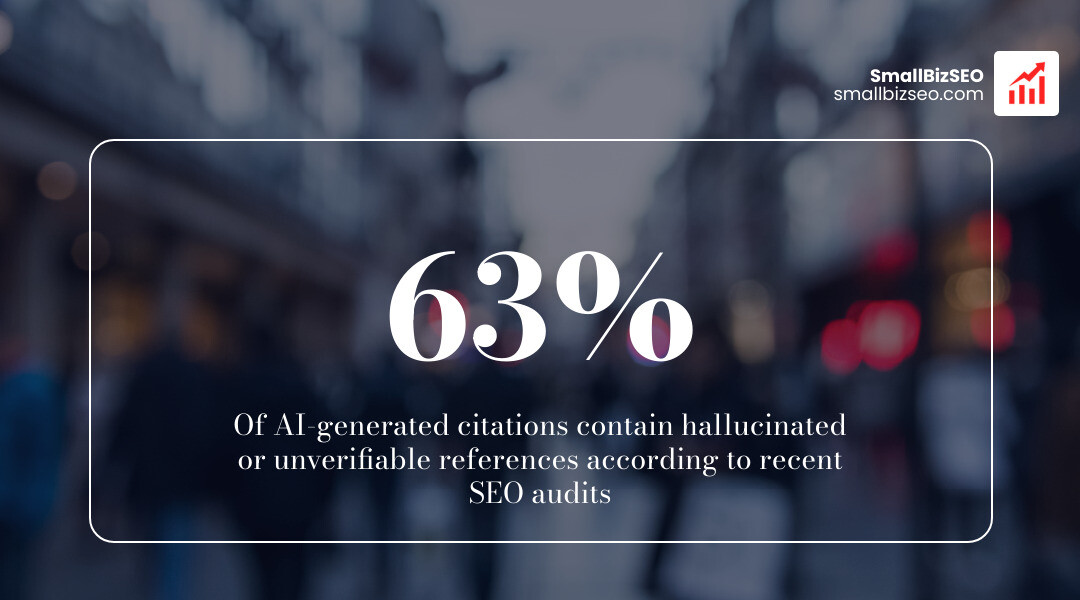
The most common hallucinations include phantom statistics, ghost URLs, citation laundering, fabricated quotes, and temporal drift. These errors occur because language models predict probable sequences of words based on training data rather than pulling verified facts from an indexed database.
When evaluating hallucination risks, editorial teams must watch for specific failure modes:
- Phantom Statistics: Plausible-sounding percentages or data points attributed to real institutions that never conducted the cited research.
- Ghost URLs: Web addresses that look structurally correct but lead to broken or nonexistent pages.
- Citation Laundering: Attributing genuine market data to the wrong organization or mixing real authors with invented findings.
- Fabricated Quotes: Generating statements and assigning them to industry leaders who never made those remarks.
- Temporal Drift: Stating outdated technical guidelines, pricing tiers, or algorithm rules as current facts.
These issues are particularly harmful for Your Money or Your Life (YMYL) topics, such as financial and technical guides, where even a slight error can mislead users.
How Does Proofreading Differ From Fact-Checking AI-Generated SEO Articles?
Proofreading focuses on language mechanics such as grammar, spelling, punctuation, and flow, whereas fact-checking evaluates the objective truth, source alignment, and data provenance of every specific claim.
Relying on proofreading alone leaves AI drafts vulnerable because language models excel at writing fluent, convincing prose that contains hidden factual falsehoods.
| Review Dimension | Proofreading | Fact-Checking |
|---|---|---|
| Primary Focus | Syntax, grammar, spelling, tone | Factual accuracy, empirical truth |
| Core Activity | Polishing flow and sentence structure | Cross-referencing data with primary sources |
| Error Type Caught | Typos, awkward phrasing, tense shifts | Invented stats, ghost links, false claims |
| Tool Dependency | Style guides, spell-checkers | Original research papers, archives, source URLs |
| Outcome | Readable, engaging prose | Verifiable, E-E-A-T-compliant information |
How Does Google Evaluate Metadata and Structured Data Accuracy?
Search engines evaluate metadata and structured data for exact factual alignment with the visible on-page body text. If title tags, meta descriptions, image alt text, or schema markup contain inaccurate claims or mismatch the page content, search engines consider it misleading.

Search guidelines extend quality expectations to technical tags:
- Title Tags and Meta Descriptions: Promising data, pricing, or outcomes that the article does not substantiate creates a negative user signal.
- Image Alt Text: Describing imagery with inaccurate technical claims causes accessibility issues and semantic confusion.
- Structured Data: JSON-LD entities, including ClaimReview schema, must strictly reflect facts present in the readable text. Implementing structured data as explored in Fact-Checking in the Age of AI: Navigating Truth, Entities, and SEO helps connect verified claims with recognized knowledge graphs, provided all properties remain verifiable.
Carefully auditing AI snippets and schema markup prevents structured data penalties and preserves search integrity.
Step-by-Step Workflow for Verifying AI Content Before Publishing
An effective AI verification workflow separates research validation from stylistic editing. By establishing a repeatable quality assurance framework, content teams ensure every published page provides accurate answers and satisfies search intent.
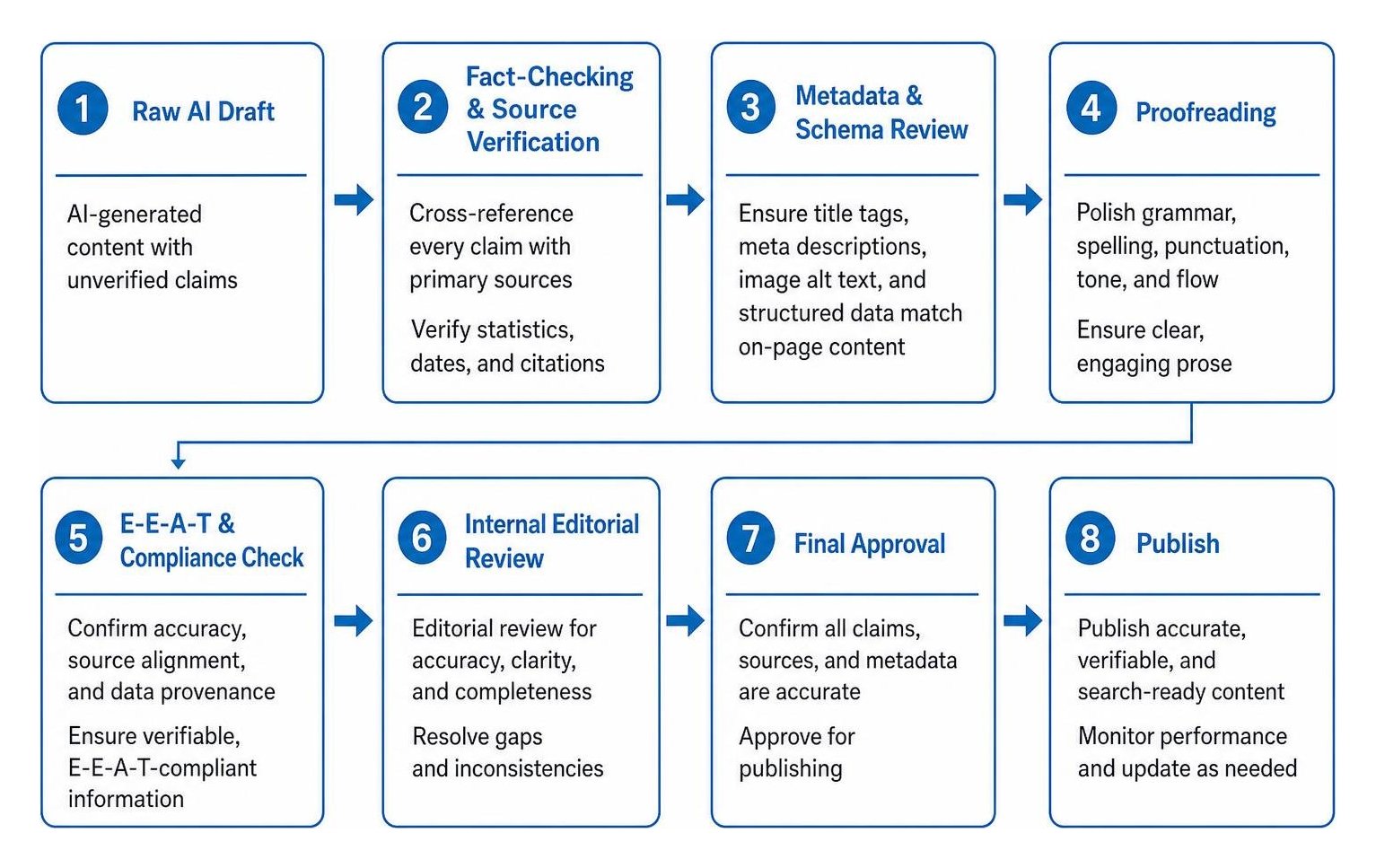
At SmallBizSEO, our data-driven approach prioritizes accurate information architecture. Integrating systematic review stages within AI SEO content optimization turns raw drafts into search-ready assets. When deploying professional AI generated content services, using structured checkpoints maintains consistent output without compromising accuracy.
How Can You Verify Statistics, Dates, and Citations Against Primary Sources?
Verify statistics, dates, and citations by manually locating the original study, official document, or primary dataset rather than trusting secondary blog summaries or generated references.
When verifying AI sources before you publish, apply a strict validation sequence:
- Locate the Primary Source: Search for the original publisher of the metric using academic portals, government filings, or official corporate reports.
- Resolve URLs: Test every hyperlink to ensure it leads to a live, authoritative page that directly supports the surrounding sentence.
- Audit Dates and Context: Ensure the research timeframe matches the context in your article and is not presenting historical data as current conditions.
- Use Verification Checklists: Following steps to catch fake references before publishing ensures unverified names, quotes, and studies are removed immediately.
How Can You Build a Two-Stage Editorial and Technical Verification Pipeline?
A two-stage verification pipeline separates factual auditing from language polishing, ensuring that editors check source integrity before refining voice, formatting, and keyword placement.

To build this pipeline within your team:
- Stage 1: Factual and Technical Audit: An editor reviews the text specifically to audit your research. They highlight every falsifiable statement, verify primary links, check schema markup, and validate metadata. Automated verification repositories like gbessoni/seobuild-verify can help parse custom tags and confirm external data matches before human review.
- Stage 2: Language, Style, and SEO Polish: Once all claims are confirmed, a second editor refines clarity, ensures proper keyword usage, formats headings for readability, and confirms proper search intent alignment.
What Should You Do When an AI Claim Cannot Be Verified?
When an AI-generated claim cannot be confirmed against a trustworthy primary source, you must modify, replace, or remove the statement entirely before publishing.
Follow this standard triage protocol for unverified statements:
- Remove the Claim: Delete unverified numbers, quotes, or case examples completely if they are not essential to the article's core argument.
- Rephrase into General Principles: Transform specific phantom data into broader, accurate industry observations that do not require an exact citation.
- Conduct Primary Research: Replace the hallucination with internal client data, original surveys, or direct quotes from your subject-matter experts.
- Consult a Subject-Matter Expert: Have an experienced professional review complex technical points to ensure theoretical accuracy.
Protecting Your Search Visibility with Verified Publishing Standards
Publishing reliable, fact-checked content is the most dependable way to build sustainable organic search traffic. As generative tools flood the web with generic copy, search engines continue to refine their quality algorithms to reward pages backed by real-world expertise, verified citations, and reliable data.
By establishing rigorous fact-checking workflows that inspect main body text, metadata, and structured data, your brand protects its authority and delivers genuine value to readers on every search query.