Perplexity Brand Monitoring Terms Demystified

What Is Perplexity Brand Monitoring?
Perplexity Brand Monitoring means checking whether Perplexity names your business, how it describes you, and which pages it cites. To start, ask the same customer-style questions each week. Record your brand's mentions, the cited URLs, and which competitors appear instead. This gives you a baseline for spotting errors and missed opportunities.
Unlike a traditional search results page, Perplexity uses web sources to write a direct answer. A customer may form an opinion about your business without visiting your site. Because the sources and answers can change, one check is not enough.
I'm Clayton Johnson, founder of SmallBizSEO. My work in SEO, content, and digital PR informs how I approach Perplexity Brand Monitoring: check what the answer says, trace its sources, and use what you learn to make your business information clearer.
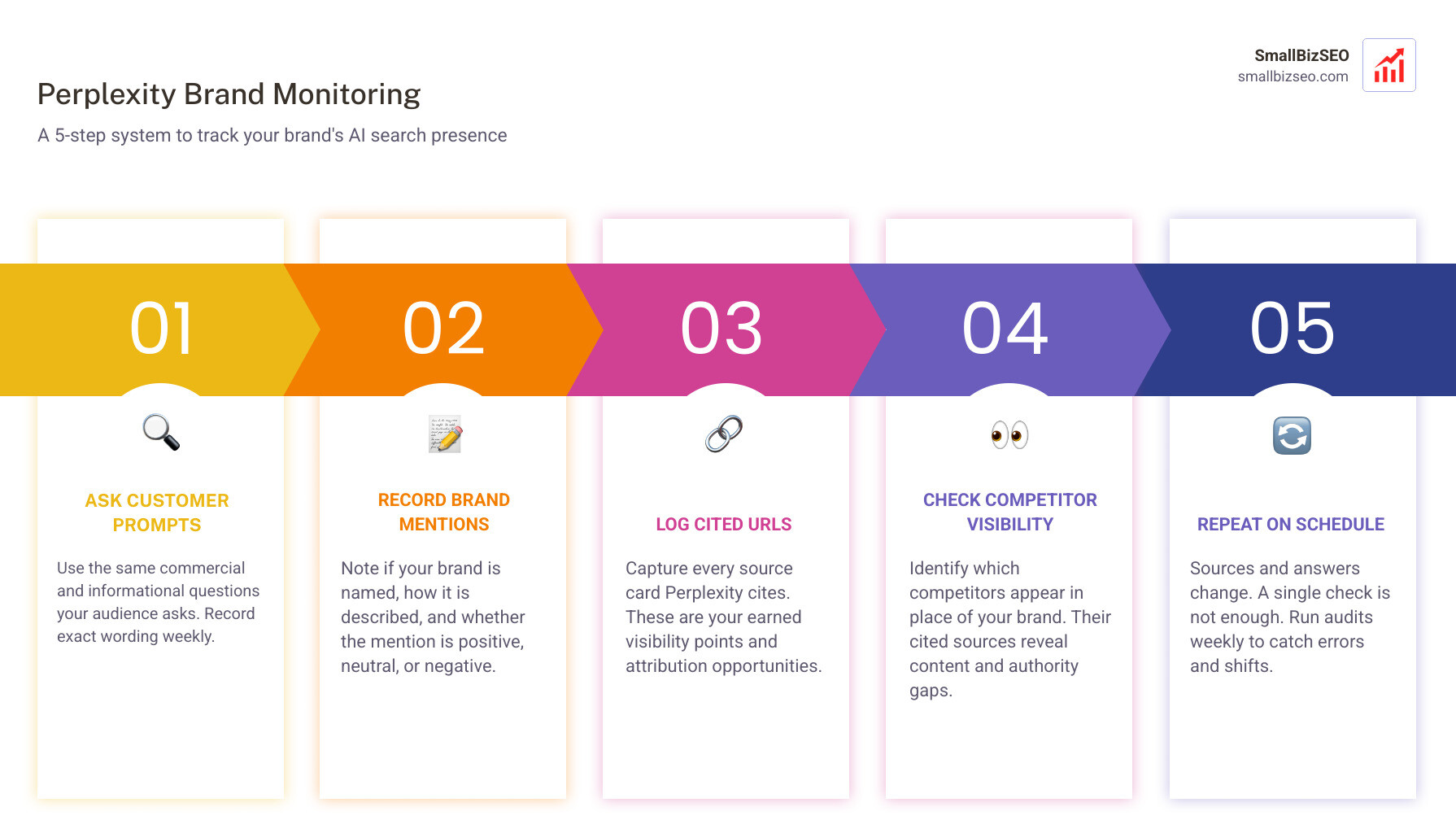
Perplexity Brand Monitoring word guide:
Why Does Perplexity Brand Monitoring Matter for Modern Search Visibility?
Perplexity directly influences customer buying decisions right on the query screen, making proactive monitoring vital for protecting your reputation and driving high-intent leads. With Perplexity handling over 159.7 million monthly visits and processing more than 400 million monthly queries across 15 million active users averaging 23 minutes per session, conversational search has become a primary discovery engine.
As Google's zero-click rate approaches nearly 60%, users increasingly consume complete AI syntheses rather than visiting traditional search engine result pages. In this environment, your Brand SERP is evolving from ten blue links into a single conversational narrative. If an answer engine misrepresents your offerings, buyers may eliminate your business before ever reaching your website. Tracking Perplexity ensures you maintain positive AI Visibility and catch reputational risks early.
What Is Perplexity Brand Monitoring, and How Does It Work?
Perplexity brand monitoring works by querying the conversational engine with real buyer prompts, analyzing the text summaries generated by its Sonar model family, and inspecting the real-time citations supporting each response.
Unlike static large language models limited by training cutoffs, Perplexity relies on dynamic AI Search and real-time retrieval via PerplexityBot web crawling. When a user submits a query, the platform searches its live index, retrieves authoritative evidence URLs, and synthesizes an answer with numbered citation links.
Because the engine draws from diverse digital publications—which have generated broader industry conversations around legal scrutiny over AI scraping—monitoring allows you to audit the specific external reviews, community threads, and news sources shaping your brand narrative.
What Is the Difference Between Mentions, Citations, and Links?
A mention names your business in the generated prose, a citation references your page or third-party coverage in the numbered source list, and a link provides a clickable path for users to visit the source.
| Dimension | Plain Text Mention | Source Citation | Direct Referral Link |
|---|---|---|---|
| Definition | Business name appears in the written answer | URL or domain listed as reference evidence | Clickable anchor or source card driving visits |
| Primary Value | Brand awareness and categorical inclusion | Verification of domain authority and trust | Direct, high-converting referral acquisition |
| Key Metric | Share of voice and sentiment favorability | Source card position hierarchy (1st-3rd) | AI Referral Traffic volume and conversions |
Understanding these distinctions allows you to measure the real impact of AI mentions beyond direct click tracking. Scoring brand prominence and qualitative sentiment gives you a complete view of your authority across AI answers.
How Does Perplexity Differ From Other AI Search Platforms?
Perplexity operates an independent search index that provides distinct, highly reproducible, live-retrieved citations rather than relying on standard search engine results or static training data.
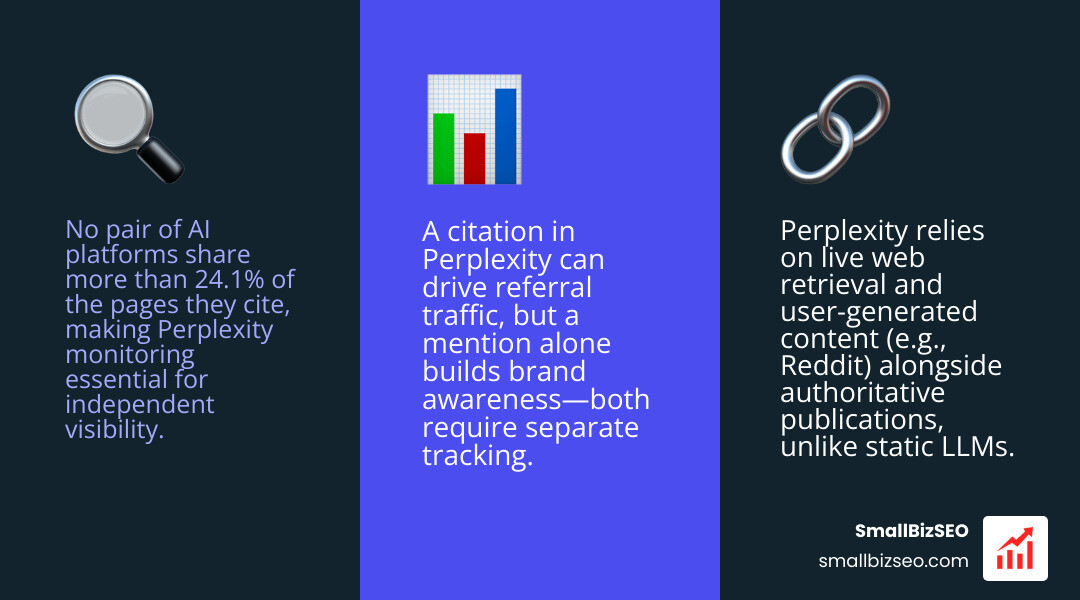
Research shows that no pair of AI platforms share more than 24.1% of the pages they cite. Visibility in tools like ChatGPT Search, Google Gemini, or Claude does not guarantee visibility in Perplexity. Reviewing the most cited content categories across leading AI platforms reveals that Perplexity relies heavily on user-generated content platforms, particularly Reddit, alongside authoritative digital publications and niche directories. Because each AI assistant evaluates trust differently, Perplexity requires dedicated tracking.
How Can You Track and Improve Your Brand’s AI Search Presence?
You can track and improve your presence by running structured prompt tests, identifying gaps where competitors earn citations, and applying Answer Engine Optimization (AEO) to structure your digital footprint for accurate extraction.
By leveraging AEO strategies alongside Generative Engine Optimization (GEO), businesses can ensure their core value propositions, pricing, and service differentiators are easily parsed by language models. Following our proven guide to showing up in LLM answers, you can turn visibility data into higher referral conversions.
How Do You Set Up a Perplexity Brand Monitoring Audit?
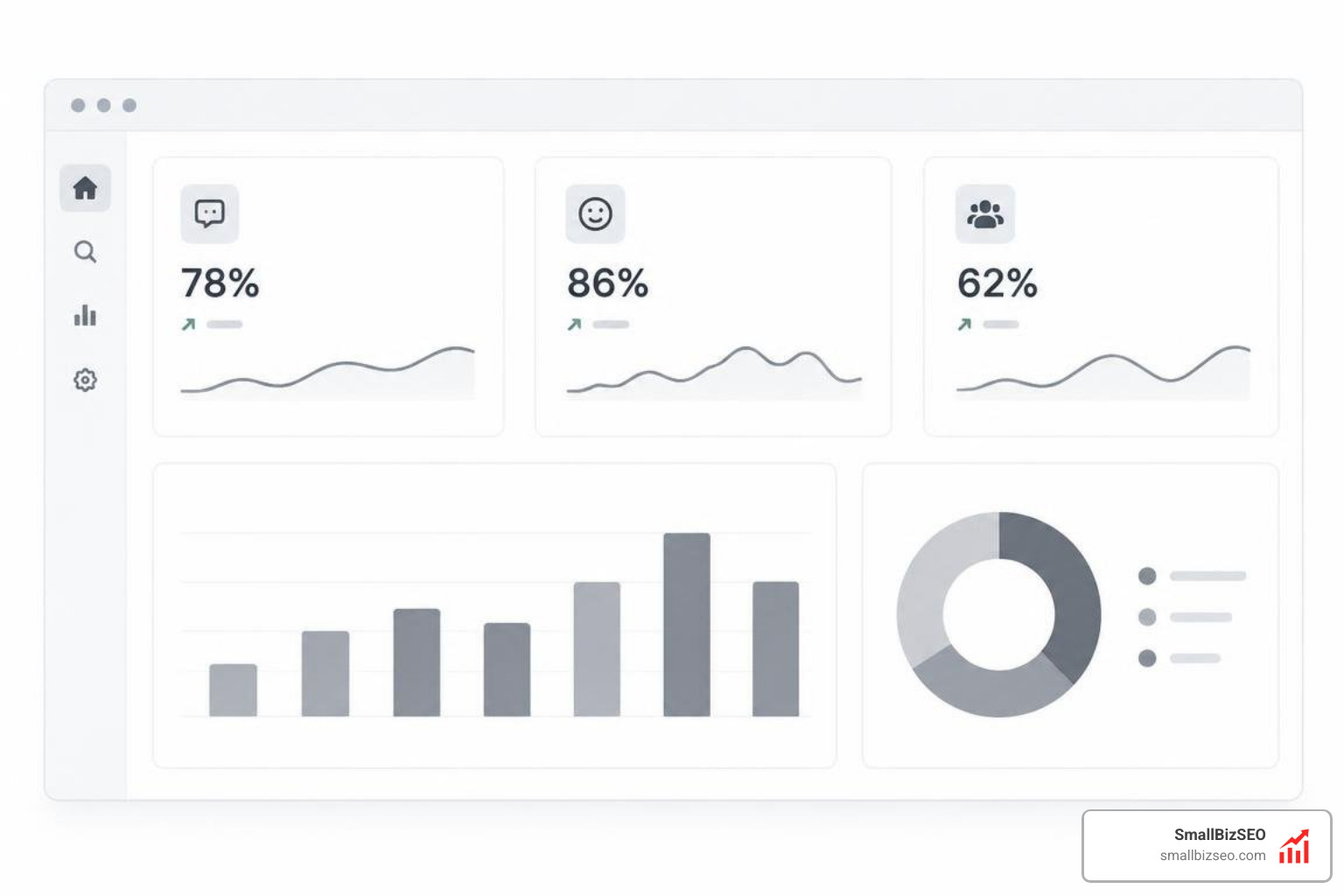
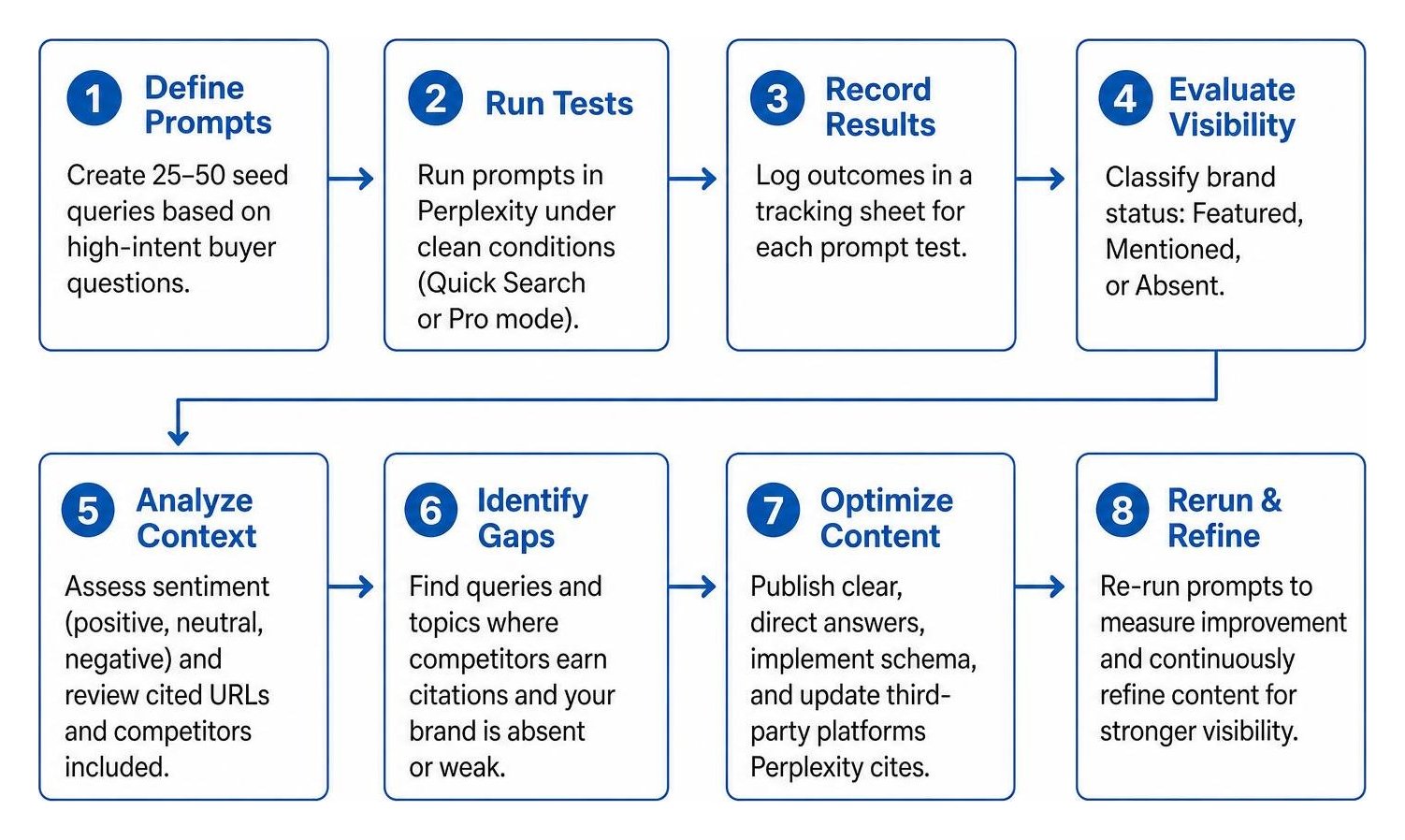
To set up an audit, create a standardized prompt library of 25 to 50 seed queries reflecting high-intent buyer questions, run them under clean testing conditions, and record the results in a structured tracking sheet.
- Query Prompt: Record the exact natural language question used.
- Intent Stage: Tag as discovery, comparison, problem-solving, or branded.
- Model / Mode: Log whether you tested default Quick Search or Pro mode.
- Brand Status: Categorize presence as Featured (primary recommendation), Mentioned (passing inclusion), or Absent.
- Sentiment Framing: Rate the tone as positive, neutral, or negative.
- Cited URLs: Document all numbered source card links provided in the answer.
- Competitors Included: List which alternative brands were recommended.
Because conversational queries often mirror autonomous agentic search behavior, standardized tracking prevents personalization bias and provides clean baseline metrics over time.
How Can You Improve Your Content and Fix Visibility Gaps?
To fix visibility gaps, publish clear, direct answers on your website, implement structured schema markup, and correct outdated claims on the third-party platforms Perplexity frequently cites.
Language models often alter recommendations when information is ambiguous. Understanding why generative search engines keep changing their top brand picks helps you stabilize your presence.
When you discover inaccuracies—a challenge faced by 27% of marketers whose brands have been misrepresented by AI—audit the cited sources. Publish front-loaded answer summaries and FAQ schema on your owned assets, while pursuing digital PR outreach to update outdated third-party reviews, directory listings, and forum discussions.
How Can AI Search Insights Guide Your Content Strategy?
Analyzing Perplexity citations reveals the exact content types, comparison frameworks, and customer pain points answer engines prioritize, giving you a clear blueprint for your content production.
Tracking competitor mentions shows you where other brands dominate category recommendations. Because AI referral traffic often converts at higher rates than traditional search visits, targeting bottom-of-funnel comparison queries delivers measurable business growth.
At SmallBizSEO, our data-driven Velocity framework pairs deep technical optimization with proactive brand mention optimization to help businesses build enduring topical authority across modern search channels.
Turn AI Citations Into Measurable Business Growth
Monitoring your presence in Perplexity provides the narrative intelligence needed to guide your organic growth strategy. By tracking conversational prompts, analyzing citation source cards, and refining your content for clear machine extraction, you protect your digital reputation and capture high-intent buyer interest across conversational search. Start building your synthetic prompt library today to ensure your business remains the trusted recommendation in AI-generated answers.